How to Hang Wall Art at the Right Height
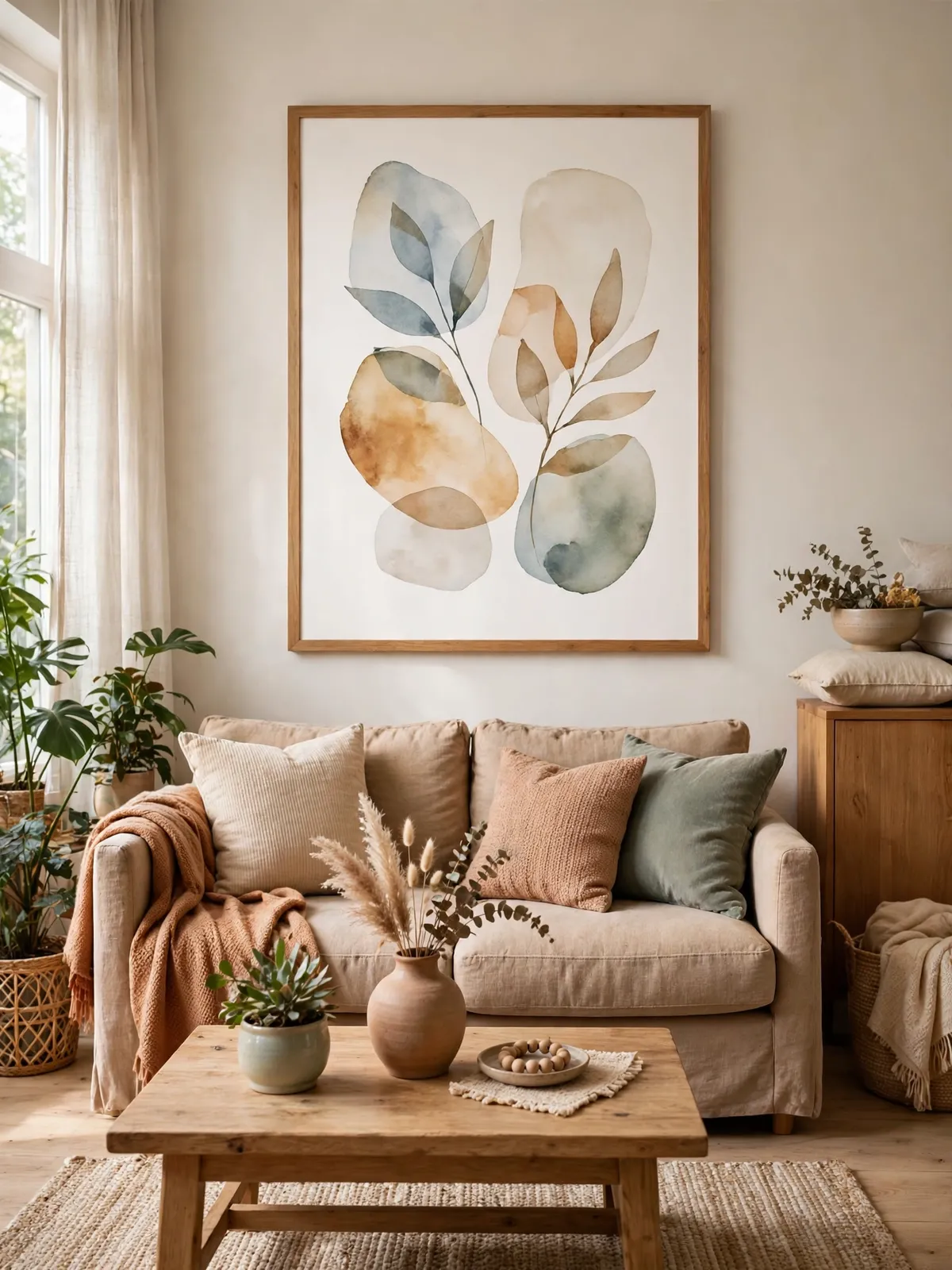
Most people hang their wall art too high. It is the most common mistake in home decor, and it is easy to see why — you stand up close, hold the frame up, and it looks fine from where you are standing. Then you step back, sit down on the sofa, and the picture feels like it is floating near the ceiling.
The good news is that hanging art at the right height is not hard at all. There is a simple rule that works in almost every room, plus a few easy tweaks for sofas, hallways, and gallery walls. Once you know the numbers, you can hang any picture with confidence and it will look like it belongs right where it is.
1. Start with the 57-Inch Rule
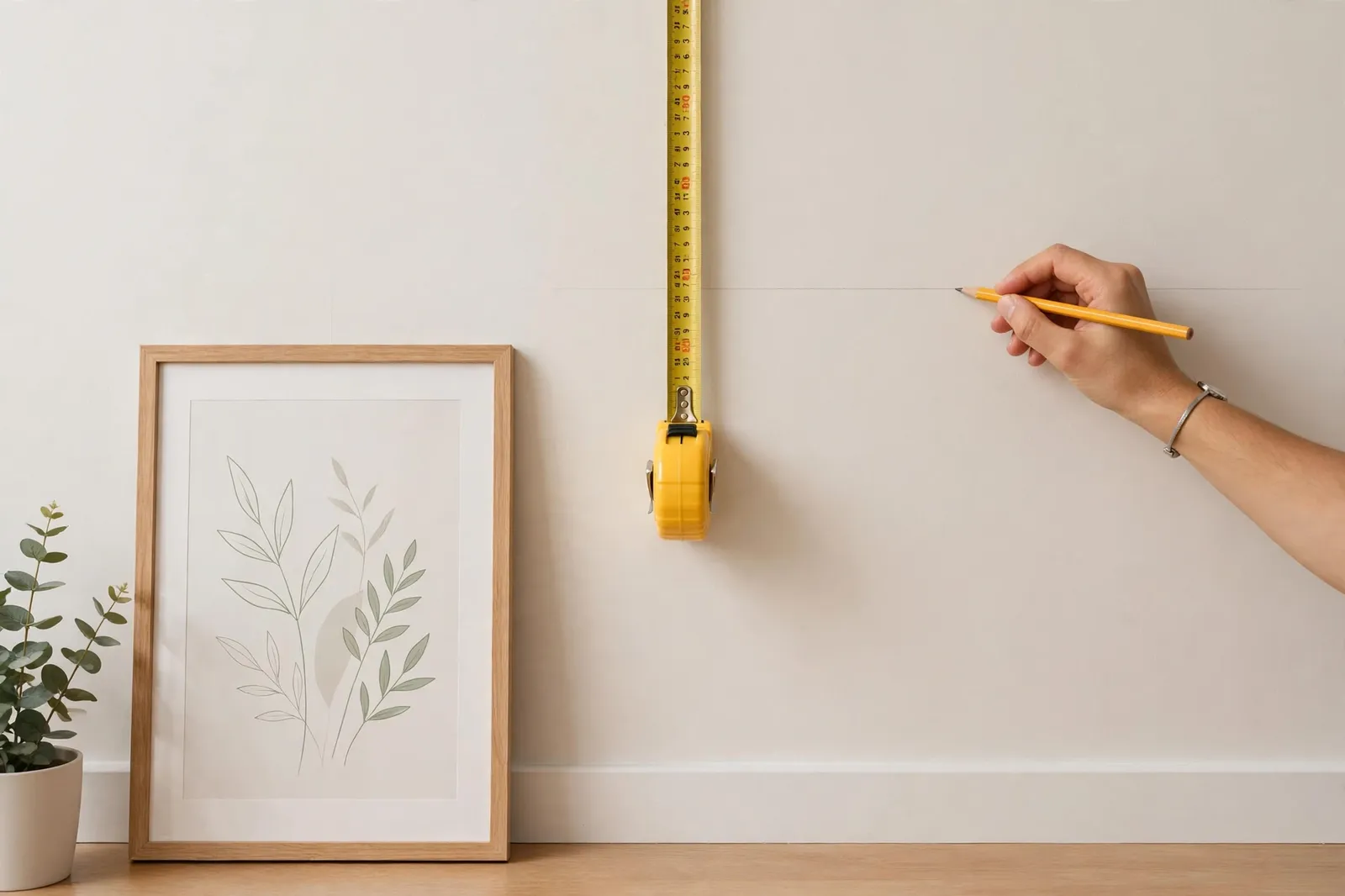
Galleries and museums hang art so the center of the piece sits 57 inches from the floor. That number is not random — it matches the average eye level of a person standing up. When you hang your art the same way, it feels natural to look at, and the room feels calm and settled.
To use the rule, measure 57 inches up from the floor and mark the spot lightly with a pencil. That mark is where the center of your picture should land, not the top of the frame and not the hook. Measure from the center of the picture down to the wire or hook on the back, then hang it so the center lands on your mark. It takes two minutes, and it makes a big difference.
2. How to Hang Wall Art Above a Sofa
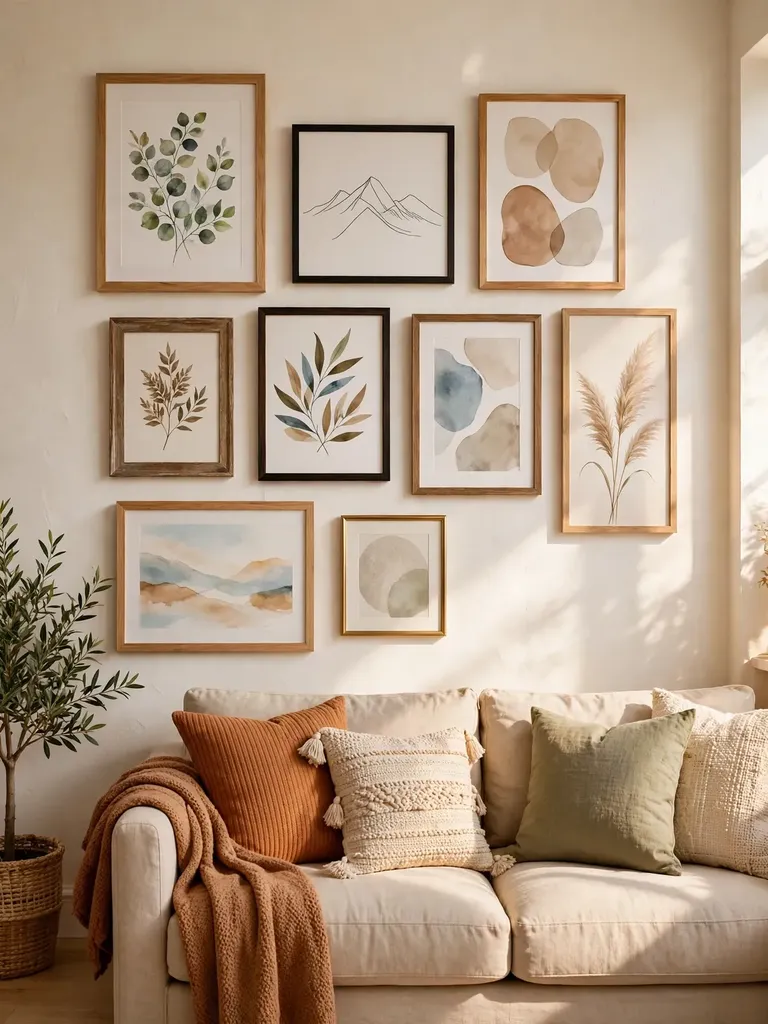
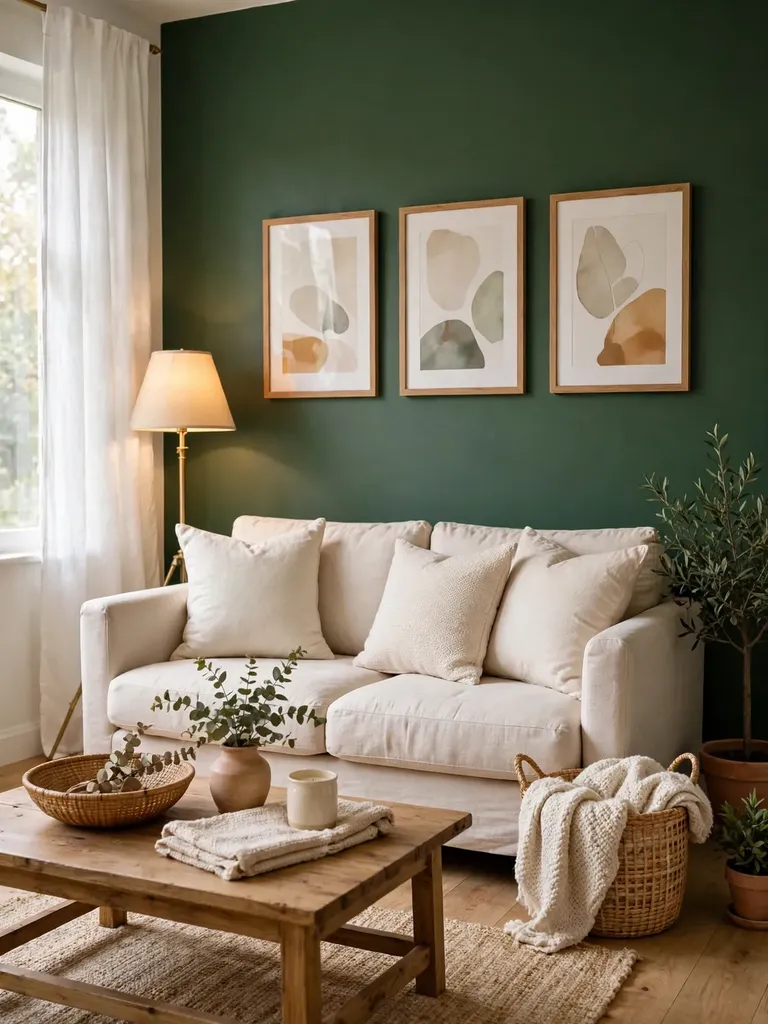
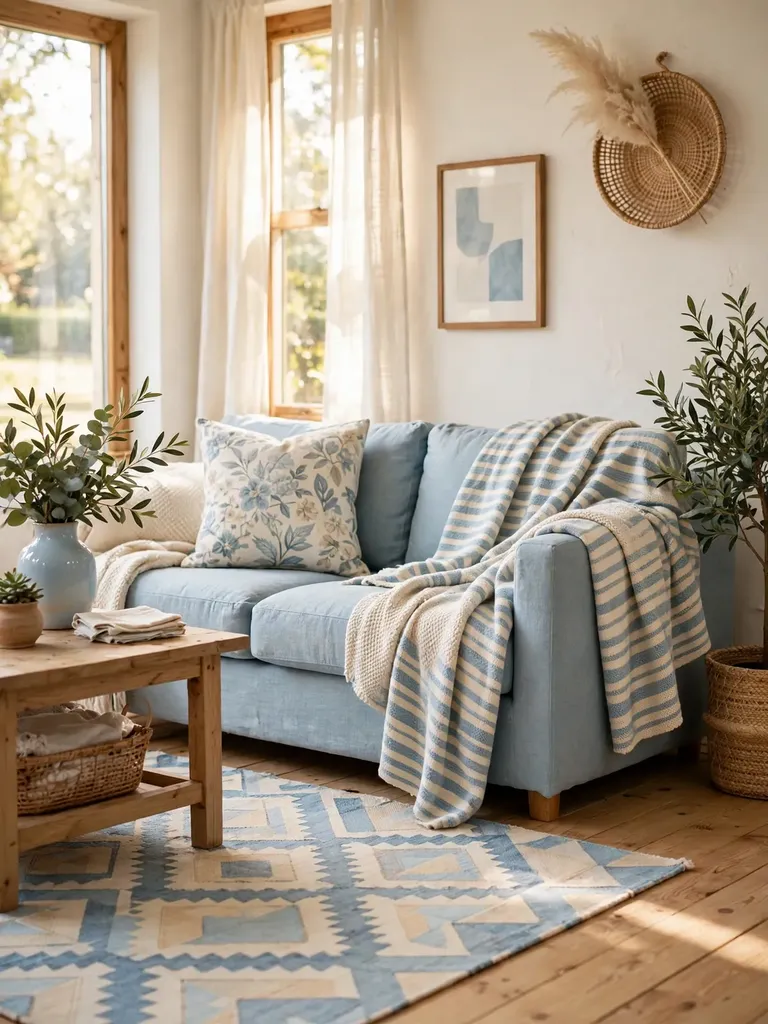
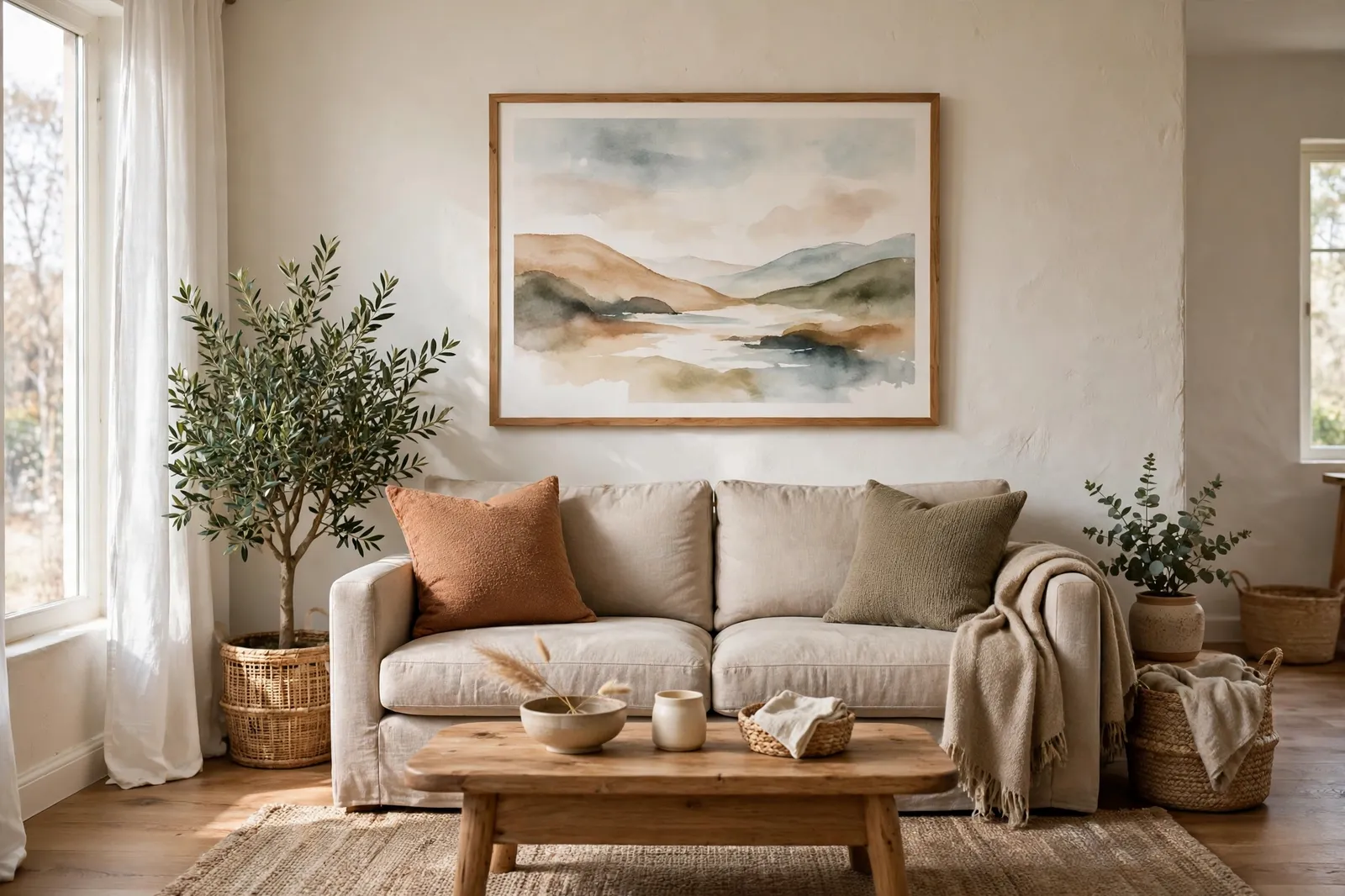
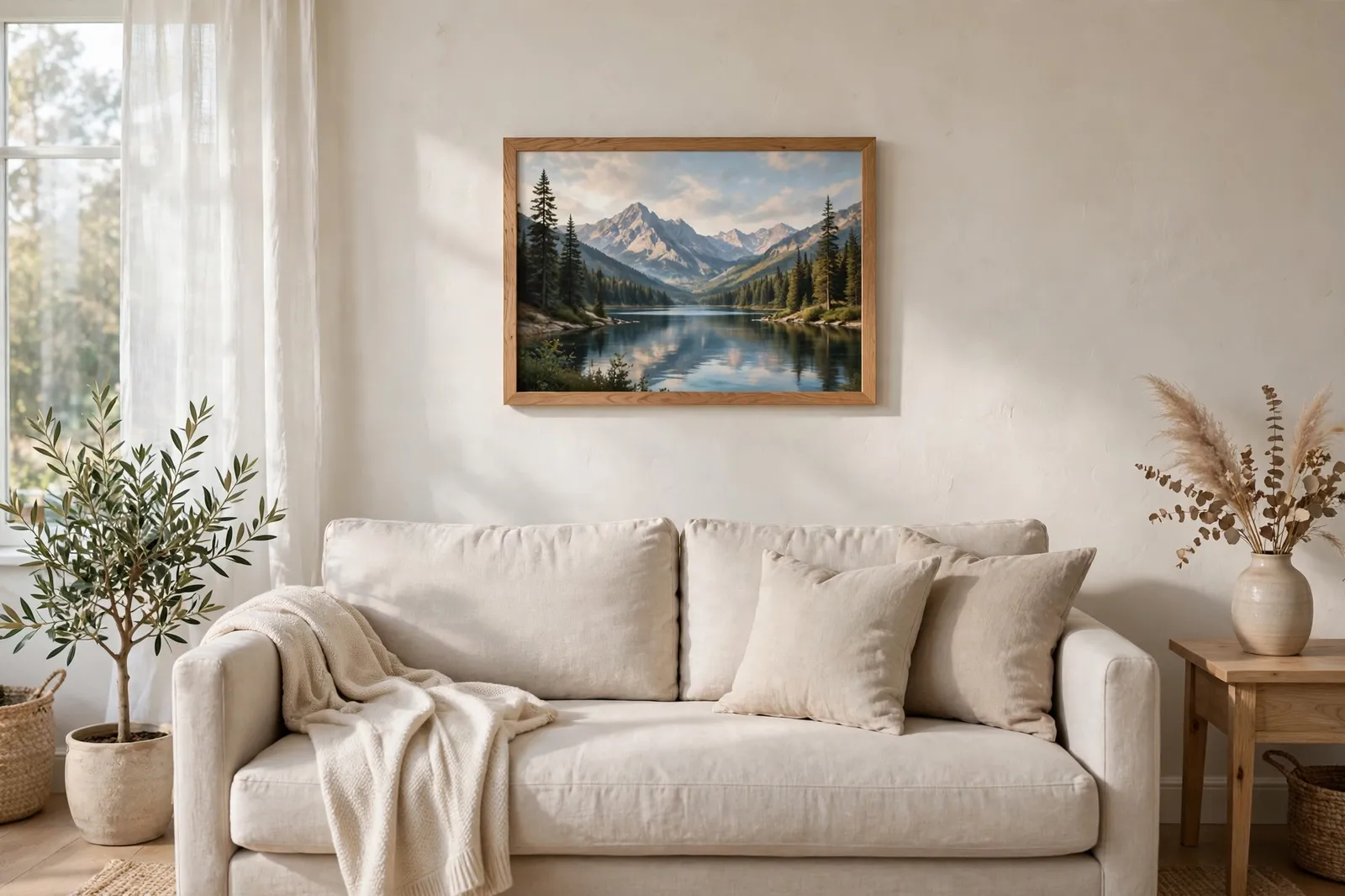
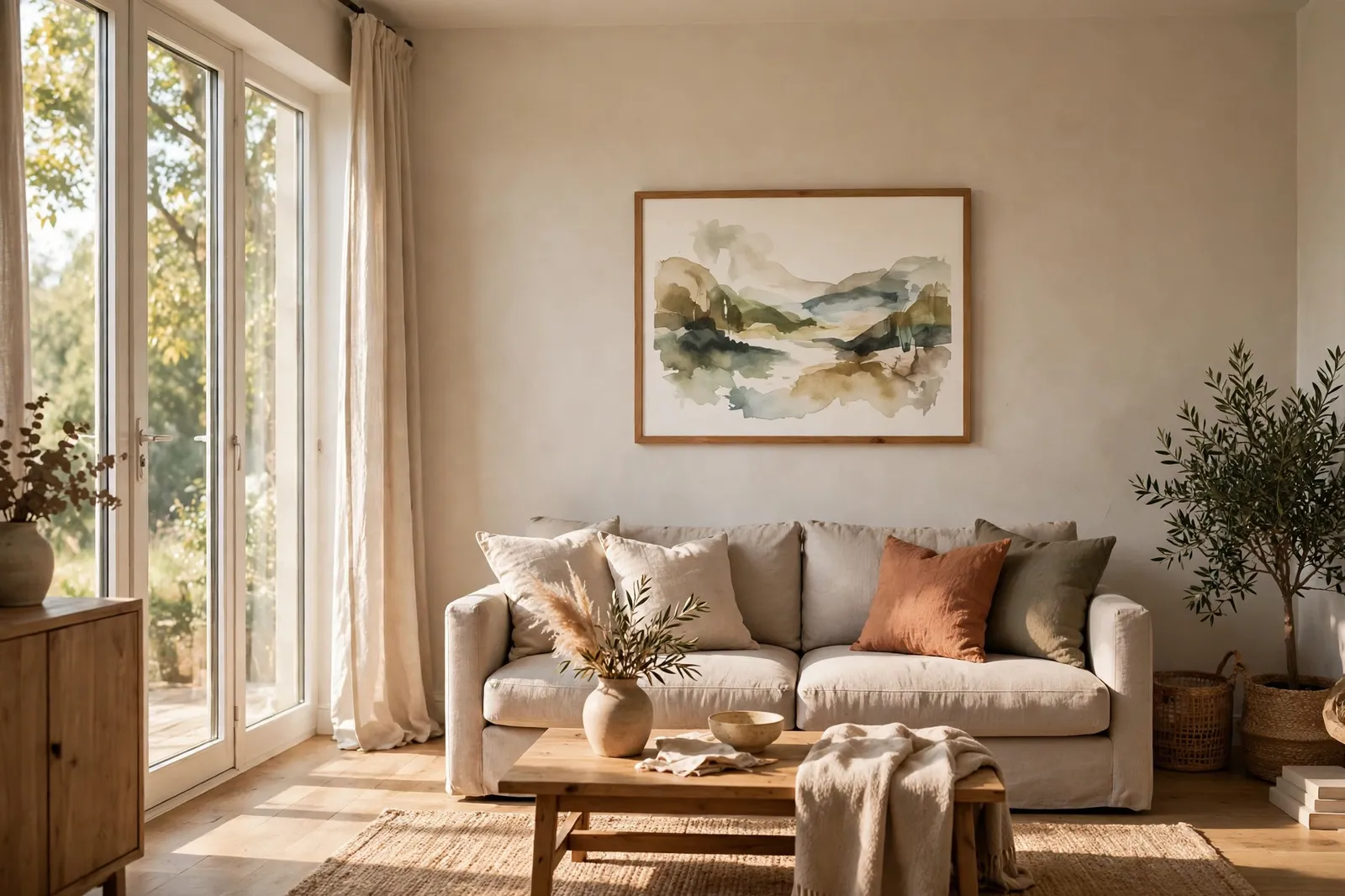
Hanging art above a sofa is where most people go wrong, because they treat the wall like a blank space and hang the picture in the middle of it. The trick is to think of the sofa and the art as one group, not two separate things. The bottom of the frame should sit about six to eight inches above the top of the sofa back.
That gap is close enough that the art and the sofa feel connected, but not so close that you bump the frame when you stand up. The art should also be about two-thirds as wide as the sofa — a piece that is too small looks lost, and one that is too wide crowds the wall. If your art is small, hang two or three pieces side by side to fill the same space.
3. Getting the Spacing Right Between Pieces
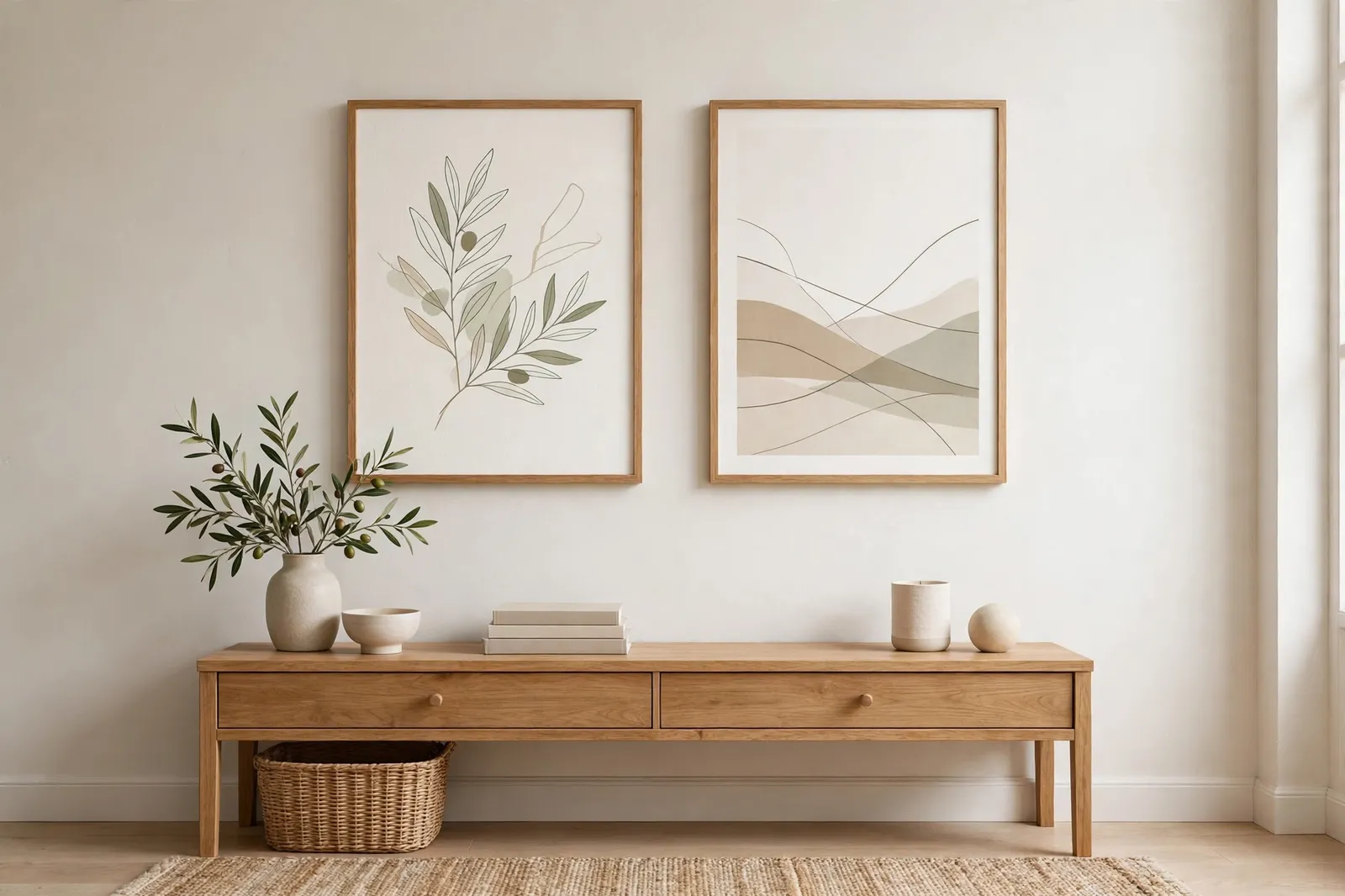
Spacing is what makes a wall of art look neat instead of messy. When you hang two or more pieces side by side, leave two to three inches between the frames. That gap is small enough that the pieces read as a group, but wide enough that each one still has room to breathe.
The same idea applies to pieces stacked one above the other — keep the gap between them at two to three inches as well. And always measure the gap the same way, edge to edge, not from the center of one frame to the center of the next. A tape measure and a level are all you need, and it is worth taking the time to get it right the first time.
4. Hanging Art in Pairs and Groups
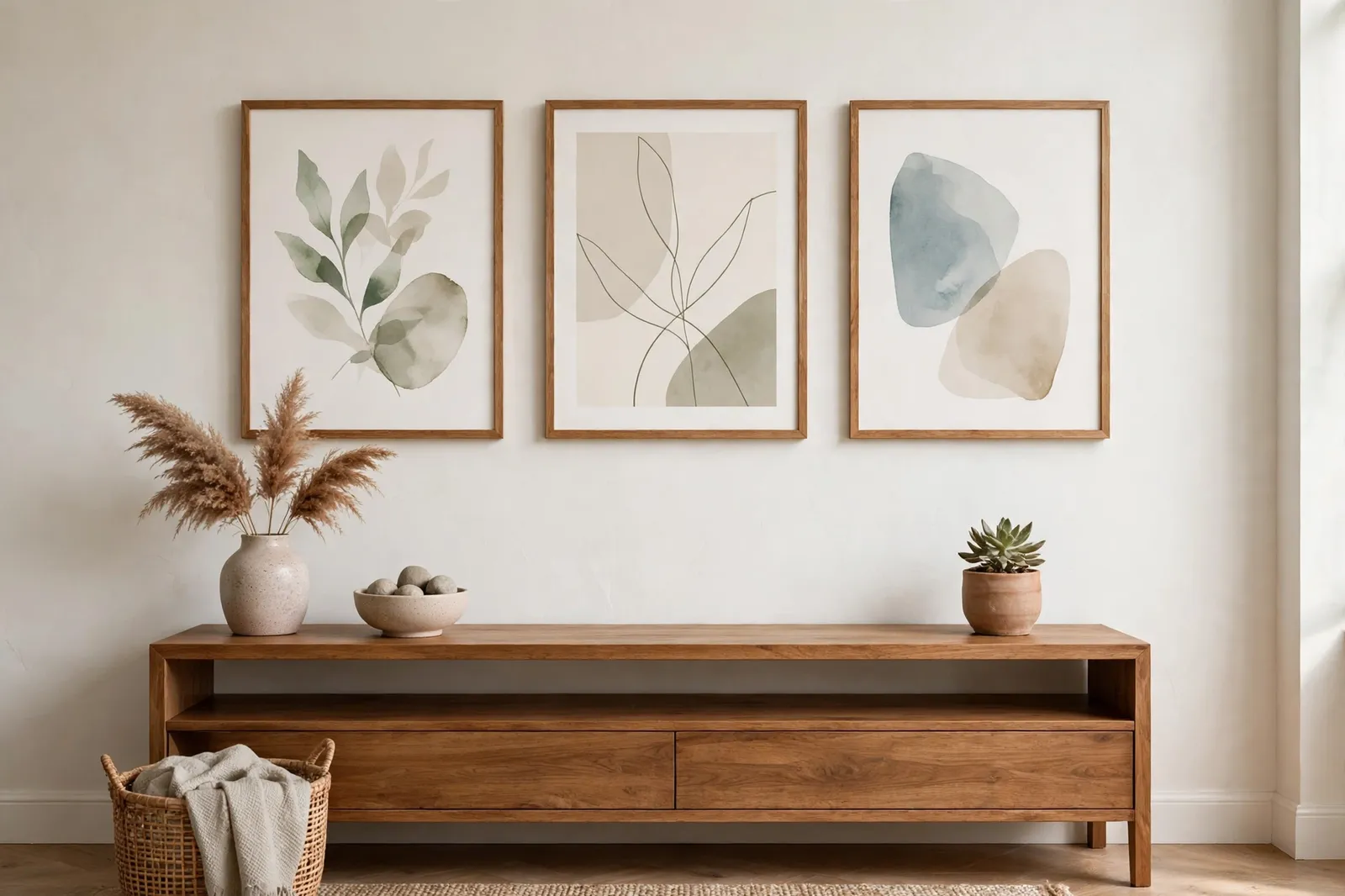
Pairs work best when the two pieces are the same size or close to it. Hang them at the same height, with their centers lined up, and treat the pair as one big piece — the center of the whole group should sit at 57 inches. If the frames are different sizes, line up their centers anyway and let the edges be uneven; it still looks planned.
For a group of three or more, start with the biggest piece in the middle and build out from there. Keep the gaps even, about two to three inches, and step back often to check how it looks. It helps to lay the pieces out on the floor first and shuffle them around until the shape feels right, then trace them onto paper templates and tape those to the wall.
5. Gallery Walls Without the Guesswork
A gallery wall looks effortless when it is done well, but it takes a bit of planning to get there. Start by picking one anchor piece — usually the largest frame — and hang it first, with its center around eye level. Every other piece goes around it, like tiles around a center stone.
Paper templates are the easiest way to plan a gallery wall without putting extra holes in your plaster. Cut out a piece of paper the size of each frame, tape them to the wall, and move them around until you like the layout. Leave two to three inches between each template, and keep the outer edges roughly even so the whole wall feels balanced. Then hammer the nails right through the paper and peel it off.
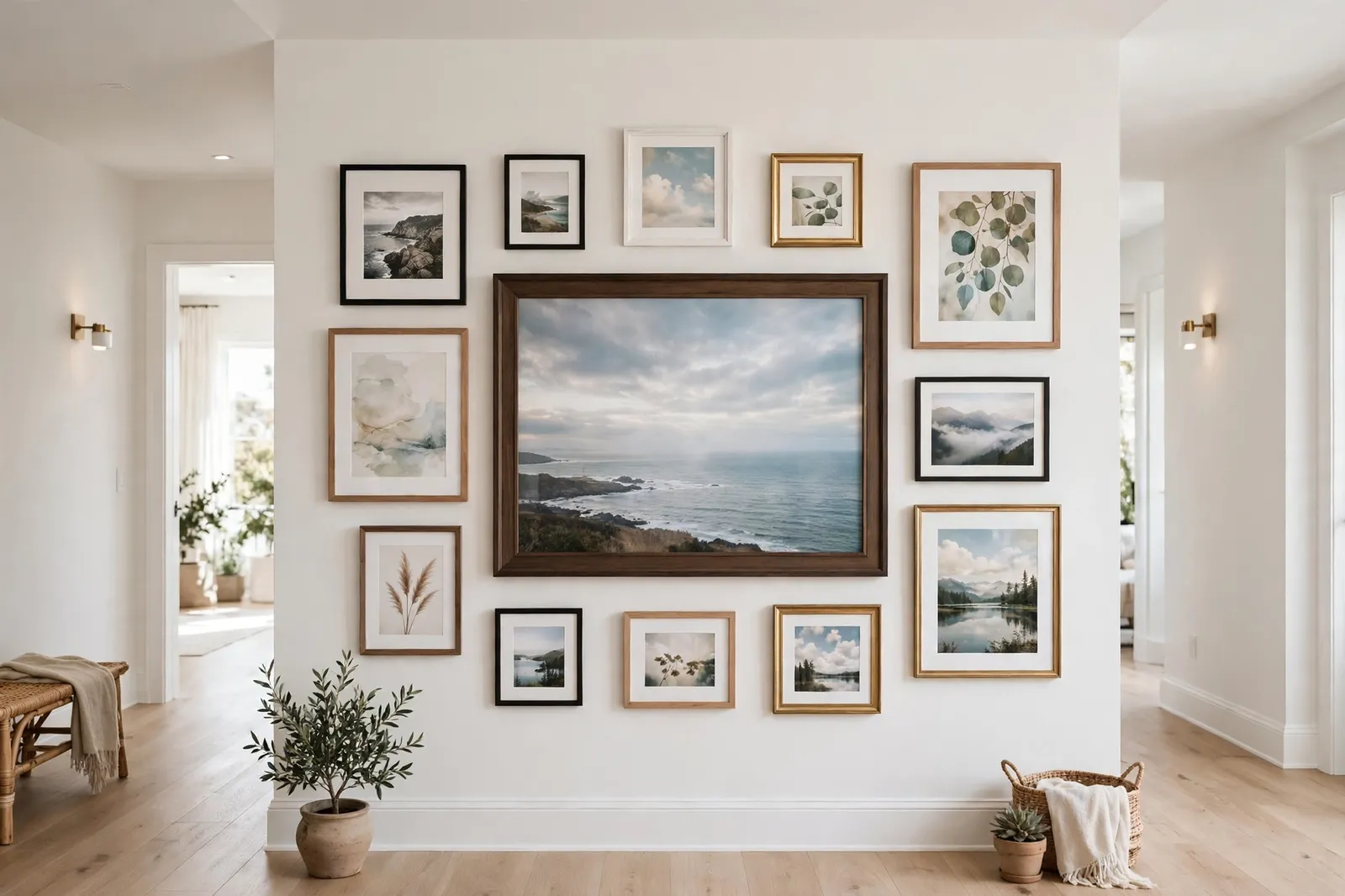
6. Small Rooms, Big Art, and Tricky Walls
Small rooms can still take big art — in fact, one large piece often looks better than a lot of small ones, because it makes the wall feel calm instead of busy. A single large print over a bed or a desk can anchor a small room and make it feel bigger, as long as you keep the center at eye level.
Tricky walls need a bit more thought. On a stairwell, hang each piece so its center is about 57 inches above the step it sits over, following the line of the stairs. In a hallway, keep the centers at the same height as you walk along. And above a fireplace, hang the art six to eight inches above the mantel, just like you would above a sofa.
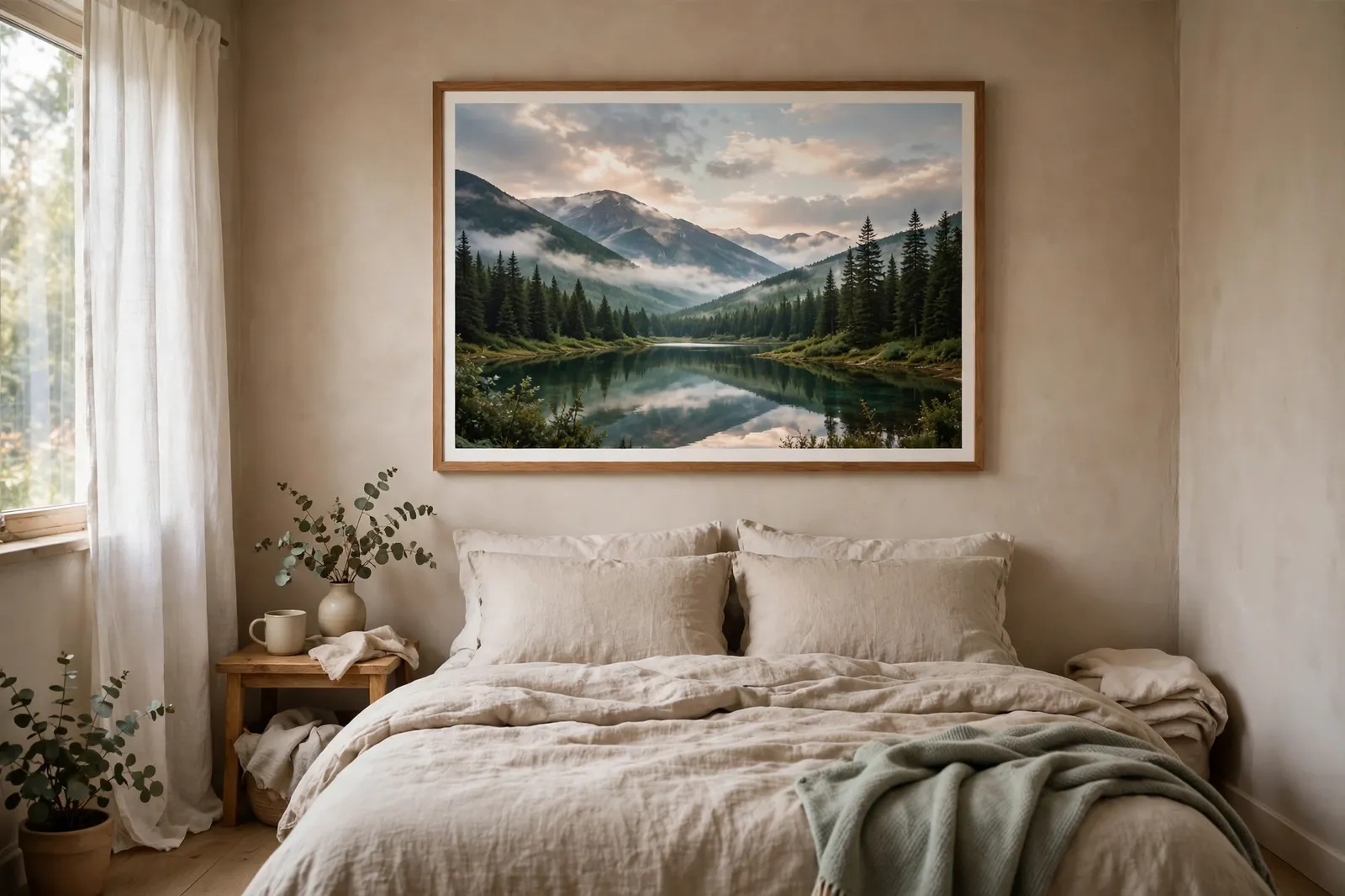
7. Picking the Right Size for the Wall
A frame that is too small for its wall is the second most common hanging mistake. As a rough guide, the art should fill about two-thirds of the wall space it sits over — two-thirds of the sofa width, two-thirds of the bed width, or two-thirds of the empty wall between two windows.
If the piece you love is too small, do not hang it alone in the middle of a big wall. Pair it with a second piece, add a small shelf underneath, or hang it in a tighter spot where it fits better, like a narrow hallway or above a small desk. The right size in the right spot always looks better than a big piece squeezed where it does not belong.
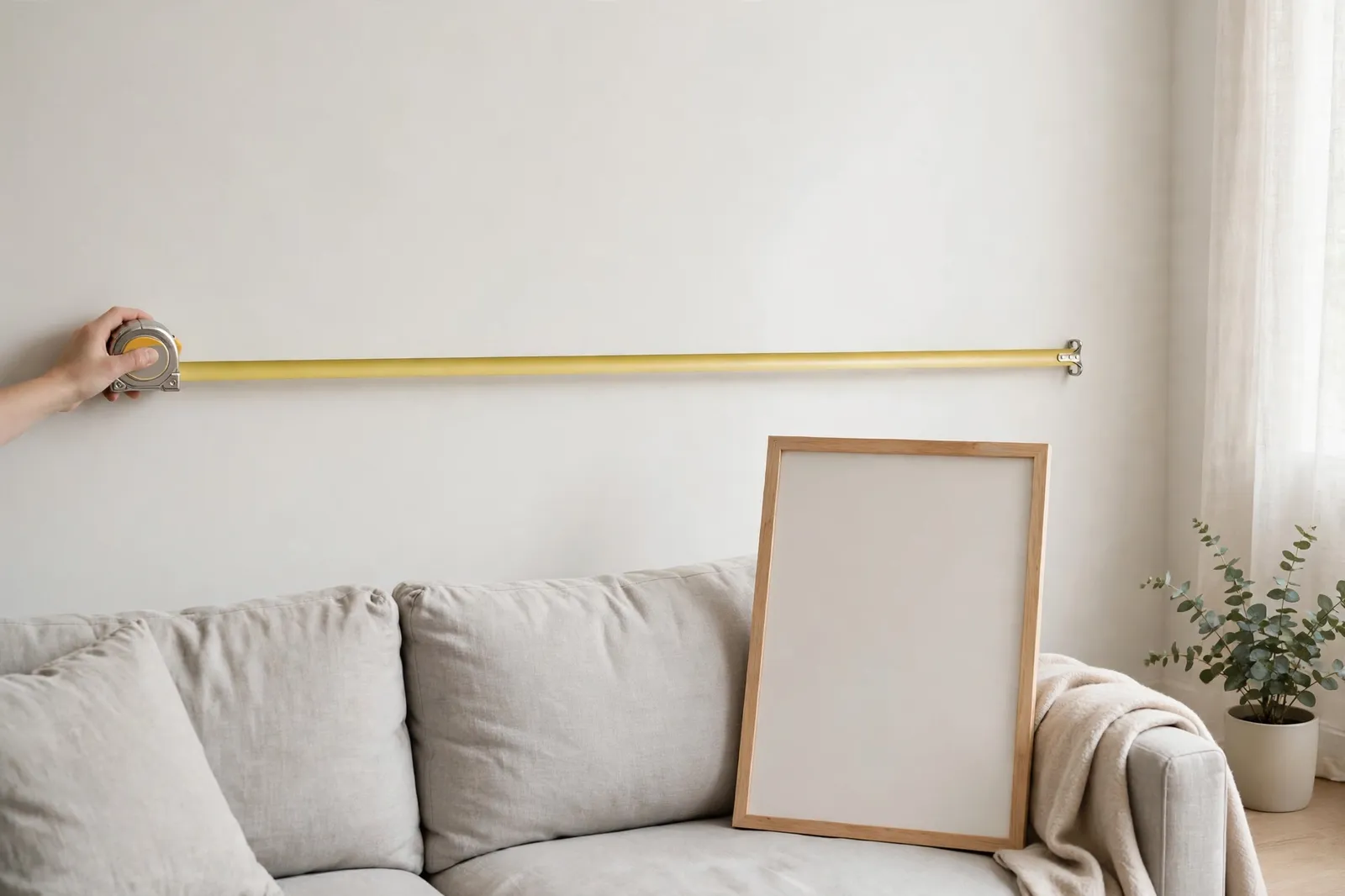
8. Tools and Tricks for a Straight, Level Hang
You do not need fancy tools to hang art well. A tape measure, a pencil, a small level, and the right hook for the weight of the frame will cover almost every job. Picture hooks rated for the weight are cheap and hold far better than a plain nail, especially for heavier frames.
Two hooks instead of one will keep a wide frame from tipping to one side. Measure the same distance in from each side of the frame, mark both spots on the wall, and check with a level before you hang it. If you are renting, adhesive picture strips work well for lighter frames and come off cleanly, but check the weight limit on the packet first — a frame that falls off the wall is worse than a small nail hole.
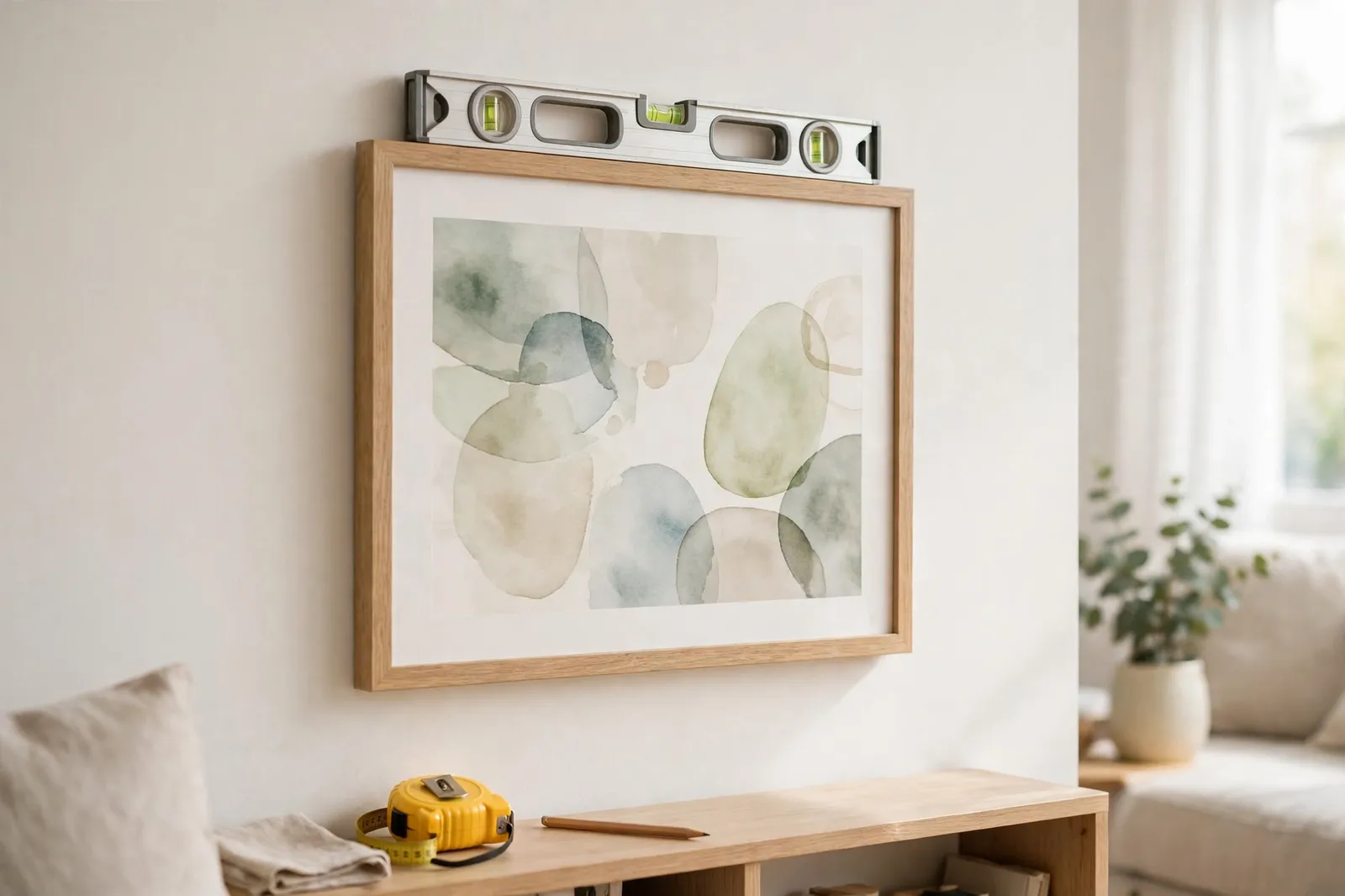
9. Step Back and Check It from Across the Room
The last step is the simplest, and most people skip it. Once the picture is on the wall, walk to the other side of the room and look at it from where you will actually see it — from the sofa, from the doorway, from the dining table. That is the view that matters, not the one from two feet away.
If it feels too high, it probably is. Lower it a few inches and check again. If it feels right from across the room and from your seat, leave it alone and enjoy it. A picture hung at the right height makes the whole room feel pulled together, and it is a small fix that costs nothing at all.
Frequently Asked Questions
What is the correct height to hang wall art?
The center of the artwork should sit about 57 inches from the floor, which is average eye level for a person standing up. Measure 57 inches up, mark the spot, and hang the picture so its center lands on that mark. Over furniture, the bottom of the frame should sit six to eight inches above the furniture instead.
How far above a sofa should you hang a picture?
Hang the picture so the bottom of the frame sits six to eight inches above the top of the sofa back. The art should be about two-thirds as wide as the sofa, and its center should still sit close to 57 inches from the floor. If the piece is small, hang two or three pieces together to fill the same width.
How much space should you leave between two pieces of art?
Leave two to three inches between frames when you hang pieces side by side or one above the other. That gap is small enough that the pieces read as one group, but wide enough that each frame still has breathing room. Keep the gaps even across the whole arrangement for the tidiest look.
Can you hang art higher than eye level?
You can, but only in a few spots. Art over a tall fireplace mantel or on a stairwell will naturally sit higher, and that is fine as long as it still relates to the furniture below it. In a normal living room or bedroom, art hung well above eye level looks like it is floating, so it is better to stick close to the 57-inch rule.
Related ideas
Gallery Wall Layout Ideas and How to Plan One is the perfect next read once you know the right height, since it walks you through planning a whole wall of frames step by step. Accent Wall Ideas for Living Rooms and Bedrooms shows how a painted wall can make your art stand out even more, and Neutral Paint Colors for a Warm and Timeless Home is a good pick if you want a calm wall color that lets your pictures do the talking. You might also like Gallery Wall Layout Ideas and How to Plan One and How to Mix Wood Tones in Home Decor.