Living Room TV Wall Ideas That Hide the Screen in Style
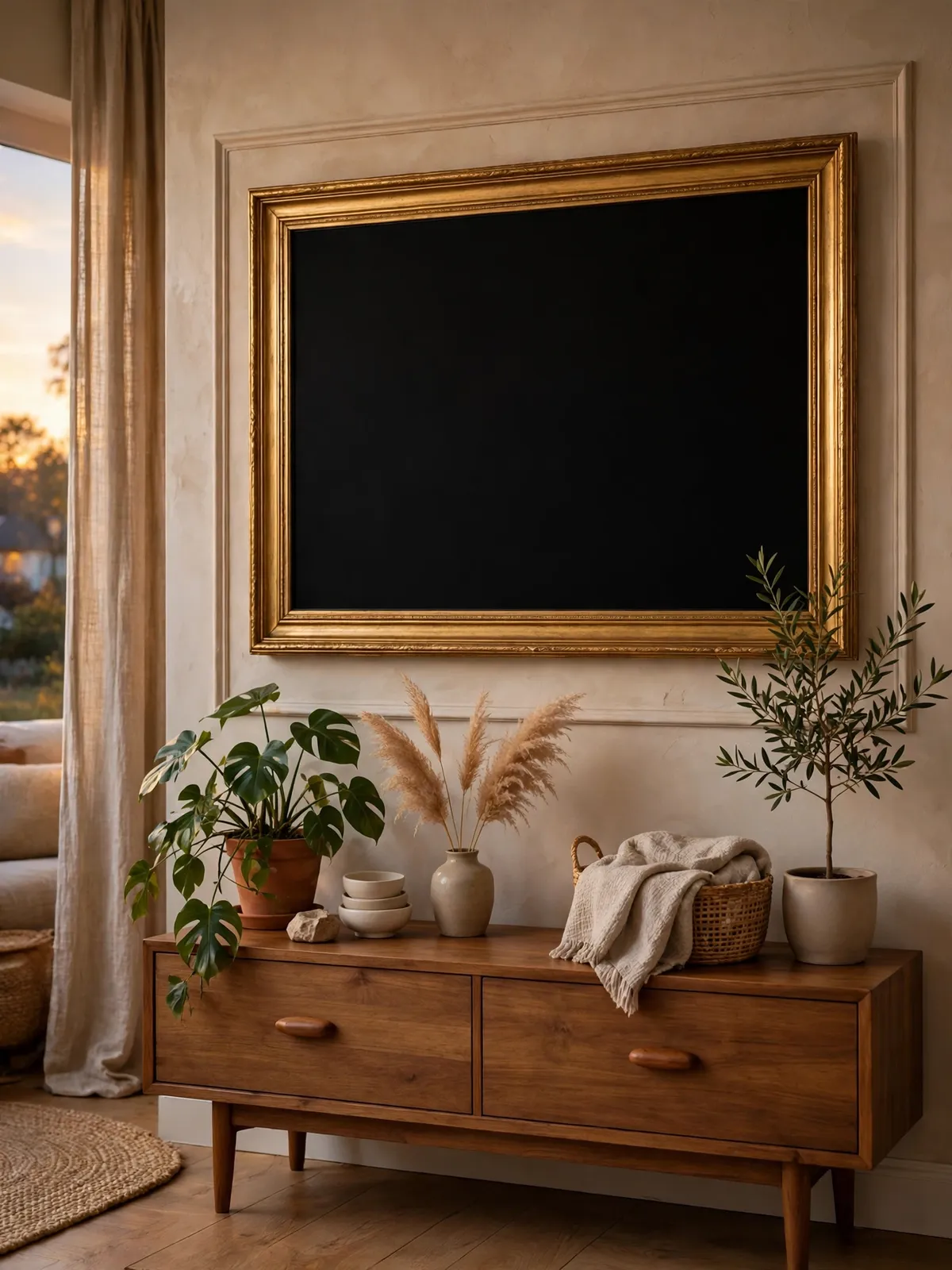
A big black TV can take over a whole living room. Even when it is off, that dark rectangle pulls your eye, and the wall around it ends up looking like an afterthought. The good news is that you do not have to live with a wall that looks like an electronics store — or get rid of the TV to fix it.
The trick is to treat the TV wall like the rest of the room instead of a separate problem. The layout of the seating, the art, the shelves, and the lighting all work together, and you can build the wall up in phases if you do not want to do it all at once. This guide walks through nine simple ways to hide the screen in style, from a TV that looks like art to cabinets, sliding panels, and dark paint — plus how to hide the cables for good.
1. Make the TV Look Like Art
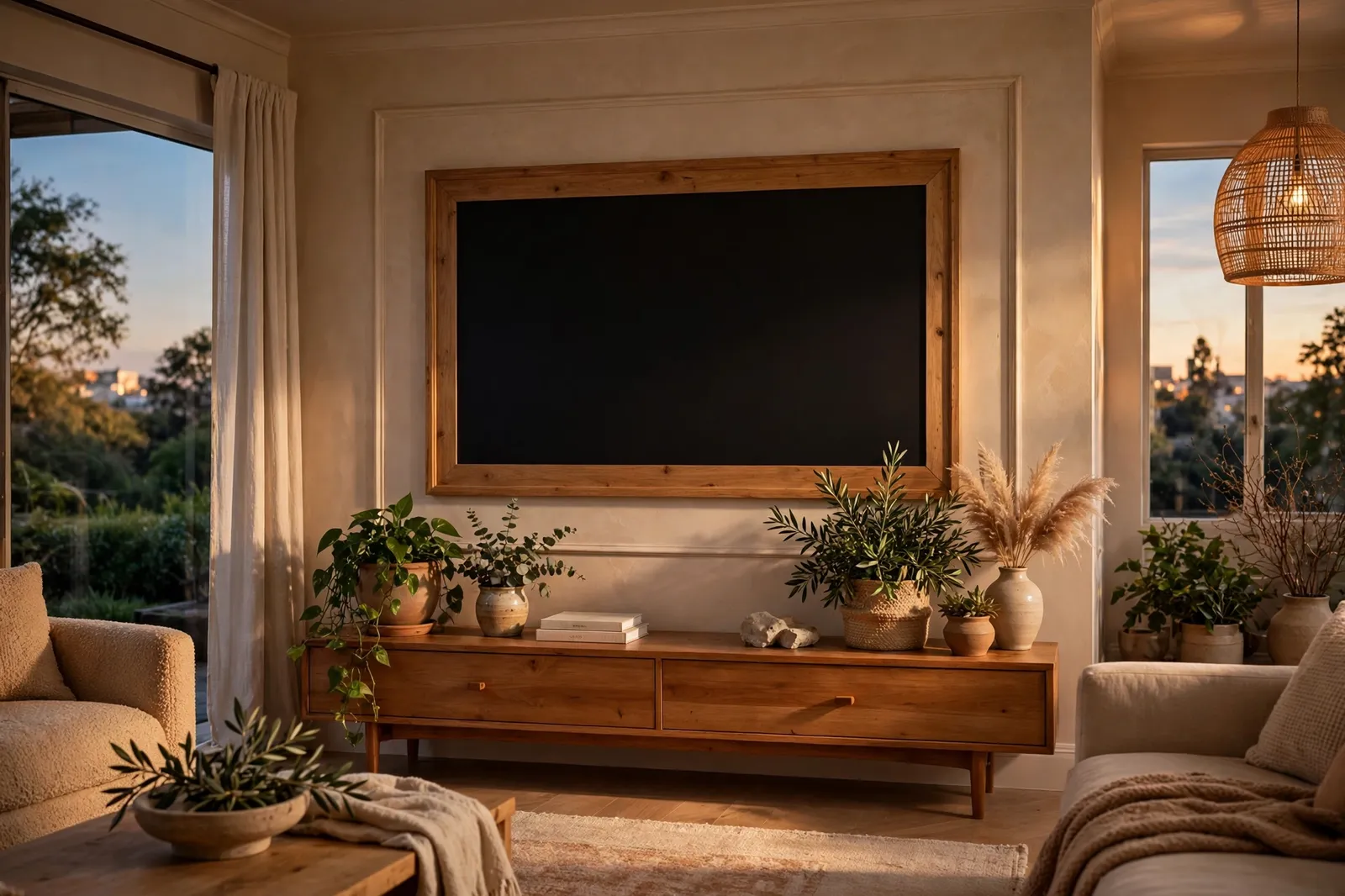
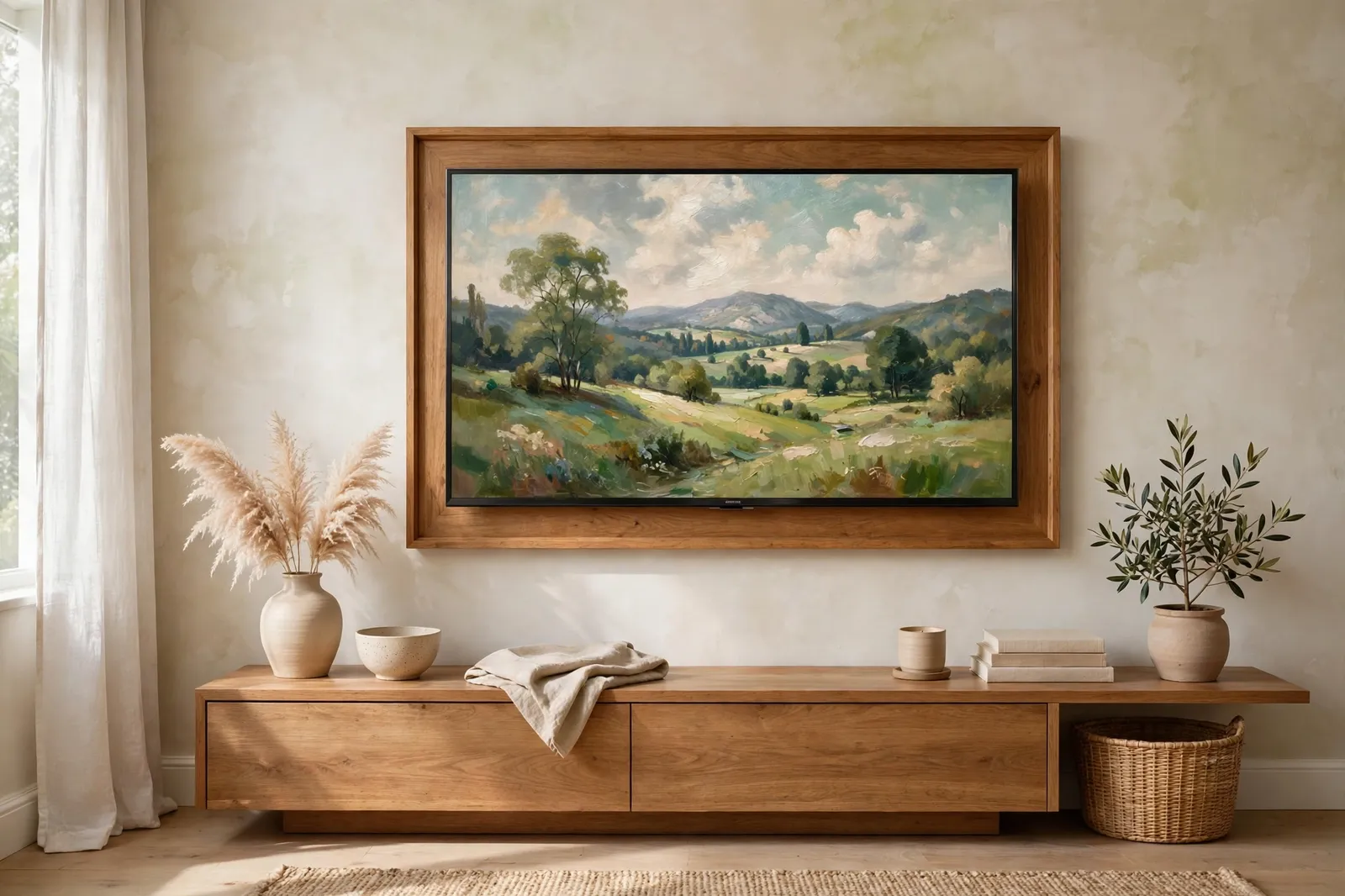
The easiest fix is a TV that pretends to be a picture. Frame-style TVs sit flat against the wall and show art or photos when they are off, and a simple wood or black frame around the screen finishes the trick. From the sofa, it reads as a framed print, not a screen, and it fits right in with the rest of the wall.
If a new TV is not in the budget, you can get a similar look with what you have. Hang a slim frame around your current TV, or set the screen to show a favorite photo as a screensaver when it is idle. Pair it with a low console and a couple of books underneath, and the wall starts to feel like it was planned, not just hung.
2. Build a Gallery Wall Around It
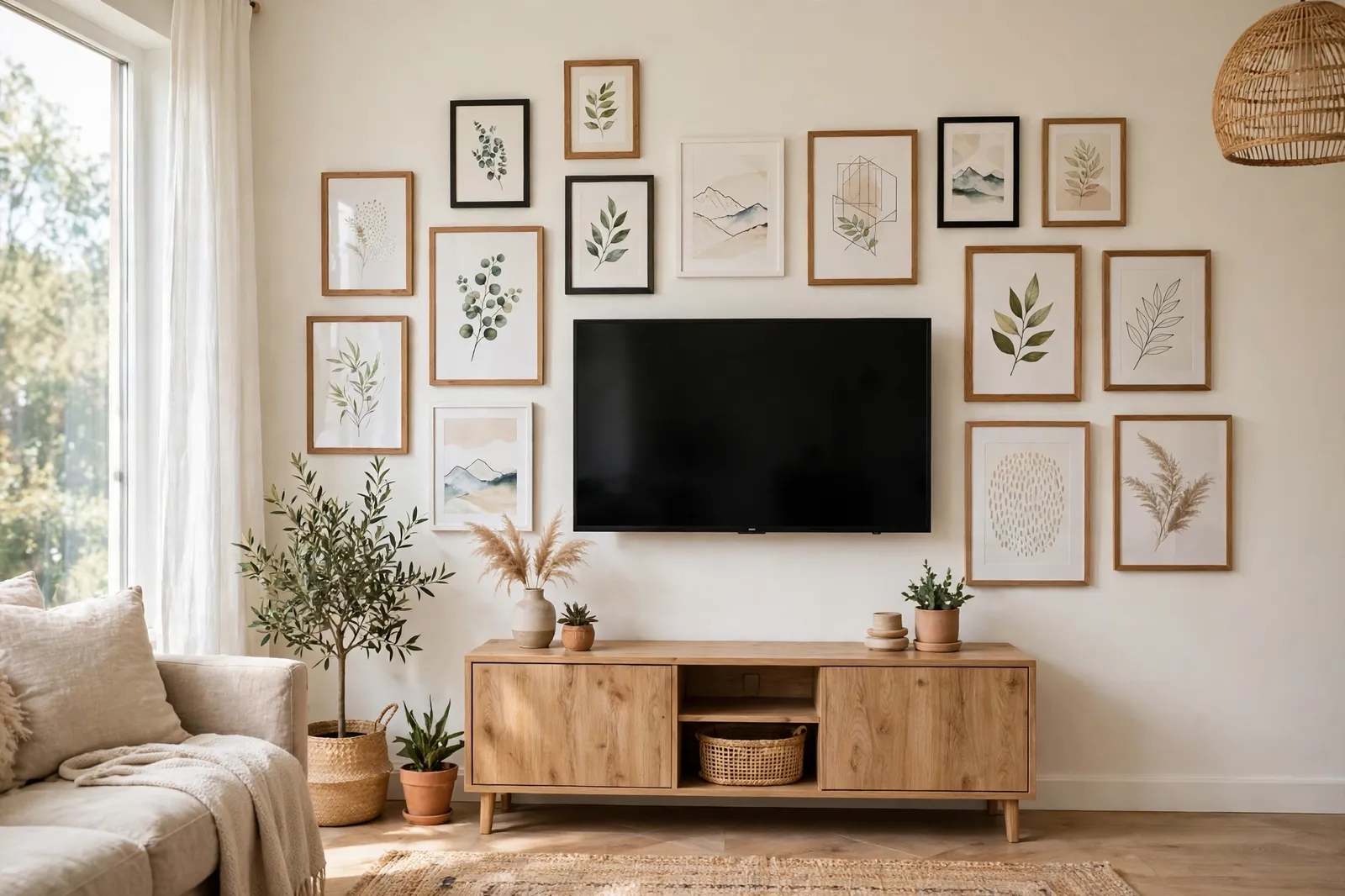
A gallery wall is one of the best ways to make a TV disappear in plain sight. When the screen is one rectangle among many framed prints, photos, and small mirrors, your eye moves across the whole wall instead of locking onto the TV. The screen just becomes part of the collection.
Start with the TV at the center, then build outward with frames in a few sizes. Keep the spacing even — about two inches between frames — and mix in one or two small pieces with color so the wall does not feel flat. A gallery wall like this also helps the living room layout feel finished, since the wall ties the seating area together instead of standing apart from it.
3. Hide It Behind Cabinet Doors
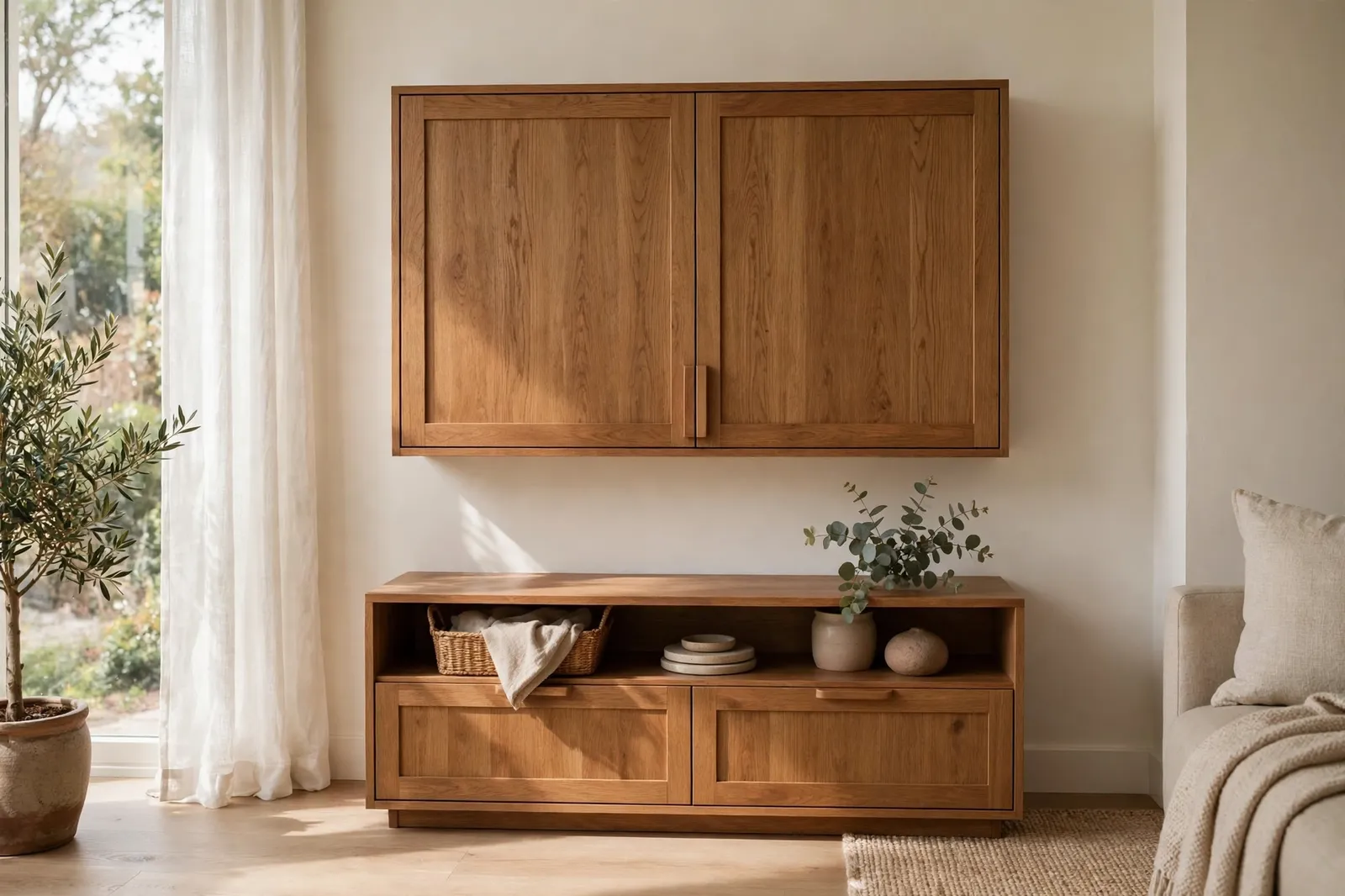
If you want the TV gone completely when it is not in use, cabinet doors are the classic answer. A pair of doors on a media cabinet, or a shallow wall cabinet built around the screen, closes over the TV and leaves you with a clean wood or painted front. Open the doors for movie night, close them when guests come over.
This is one of the pricier options, but you can keep the budget in check by using a ready-made cabinet instead of a custom build. Look for a media console with doors wide enough to cover the screen, or add two hinged doors to a simple shelf unit. Paint the doors the same color as the wall and the whole thing blends right in.
4. Use Sliding Panels or Barn Doors
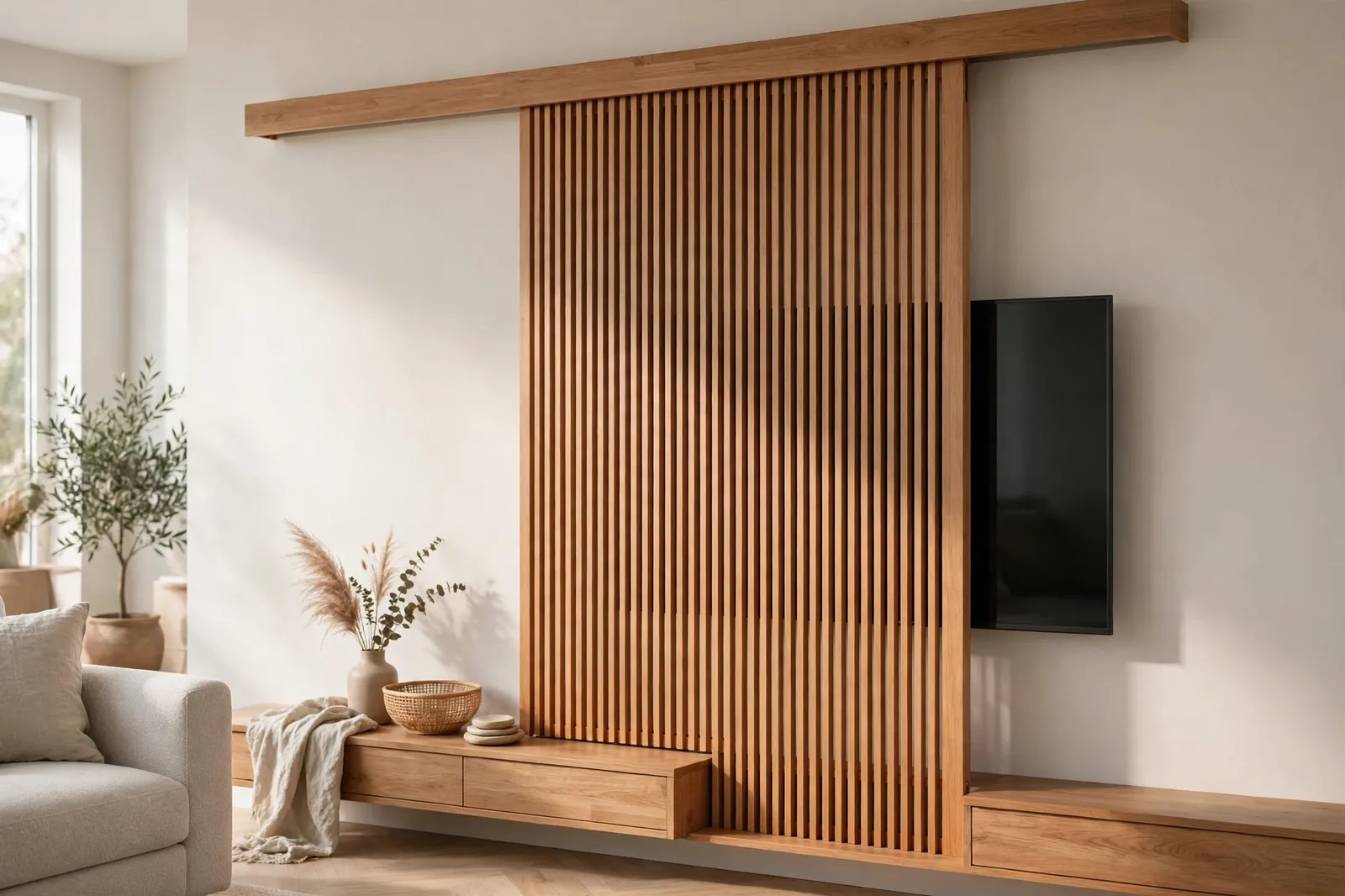
Sliding panels work like cabinet doors but with a lighter, more modern feel. A wood slat panel or a small barn door on a rail slides across the TV when you want it hidden, then slides back to the side when it is time to watch. It adds texture to the wall even when the TV is covered, which is a bonus most hiding tricks do not give you.
Measure the screen first, then pick a panel that covers it with a few inches to spare on each side. A rail kit from the hardware store and a plain wood panel are all you need, and you can stain or paint the panel to match the rest of the room. In an open-concept living room, a sliding panel also helps mark the TV area without putting up a wall.
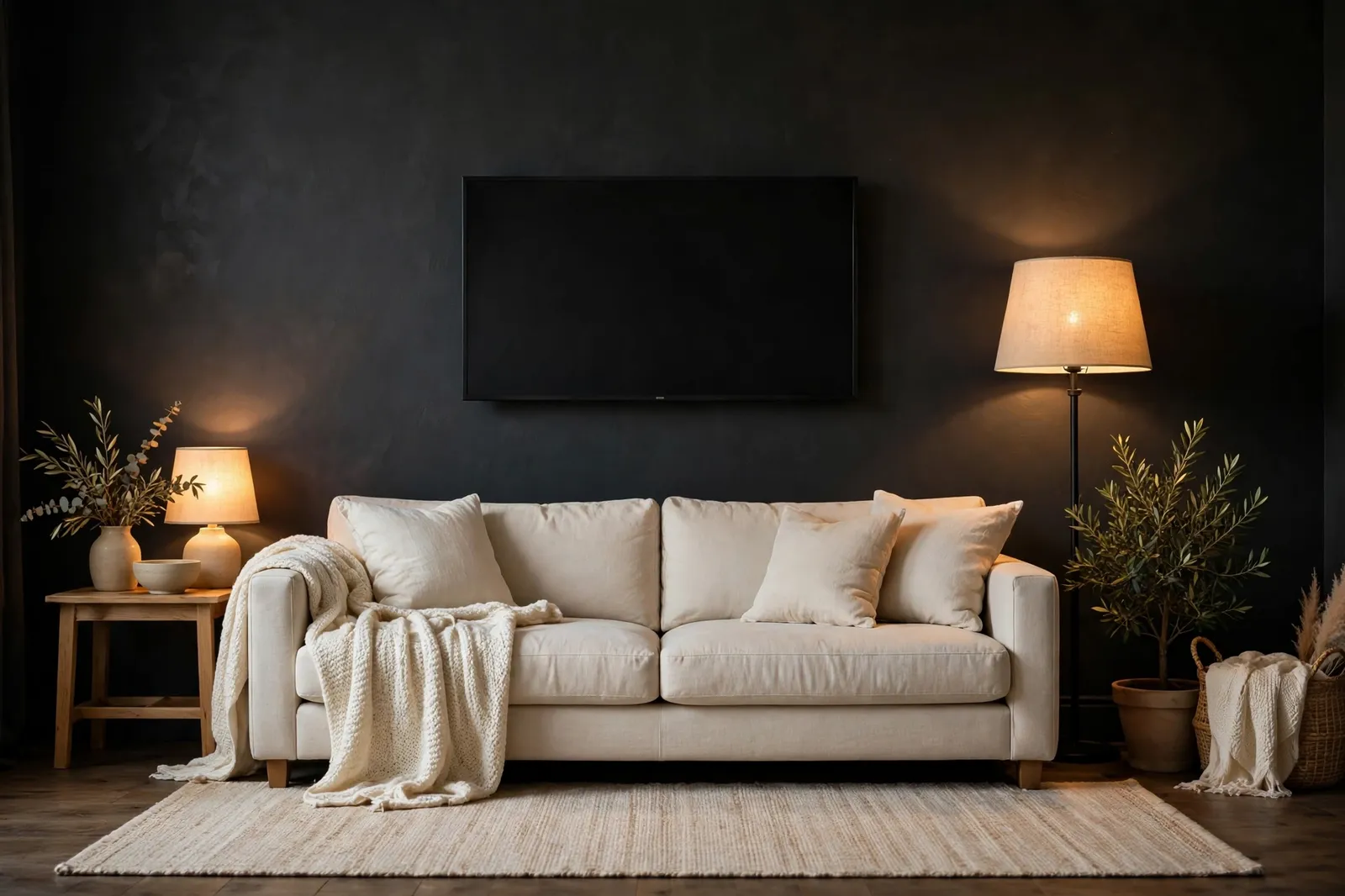
5. Blend It Into a Dark Wall
Sometimes the simplest trick is to stop fighting the black screen and match the wall to it. A deep charcoal, navy, or dark green wall makes the TV blend in instead of standing out, and the whole wall reads as one bold feature instead of a screen stuck on a light wall.
Paint is cheap and the change is big, so this is a good first step if you are working through the room in phases. Keep the rest of the room light — a pale sofa, a light rug, warm wood — so the dark wall feels cozy, not gloomy. Add a couple of lamps or a picture light above the TV and the wall looks deliberate, like a design choice rather than a cover-up.
6. Put It Inside a Built-In Media Wall
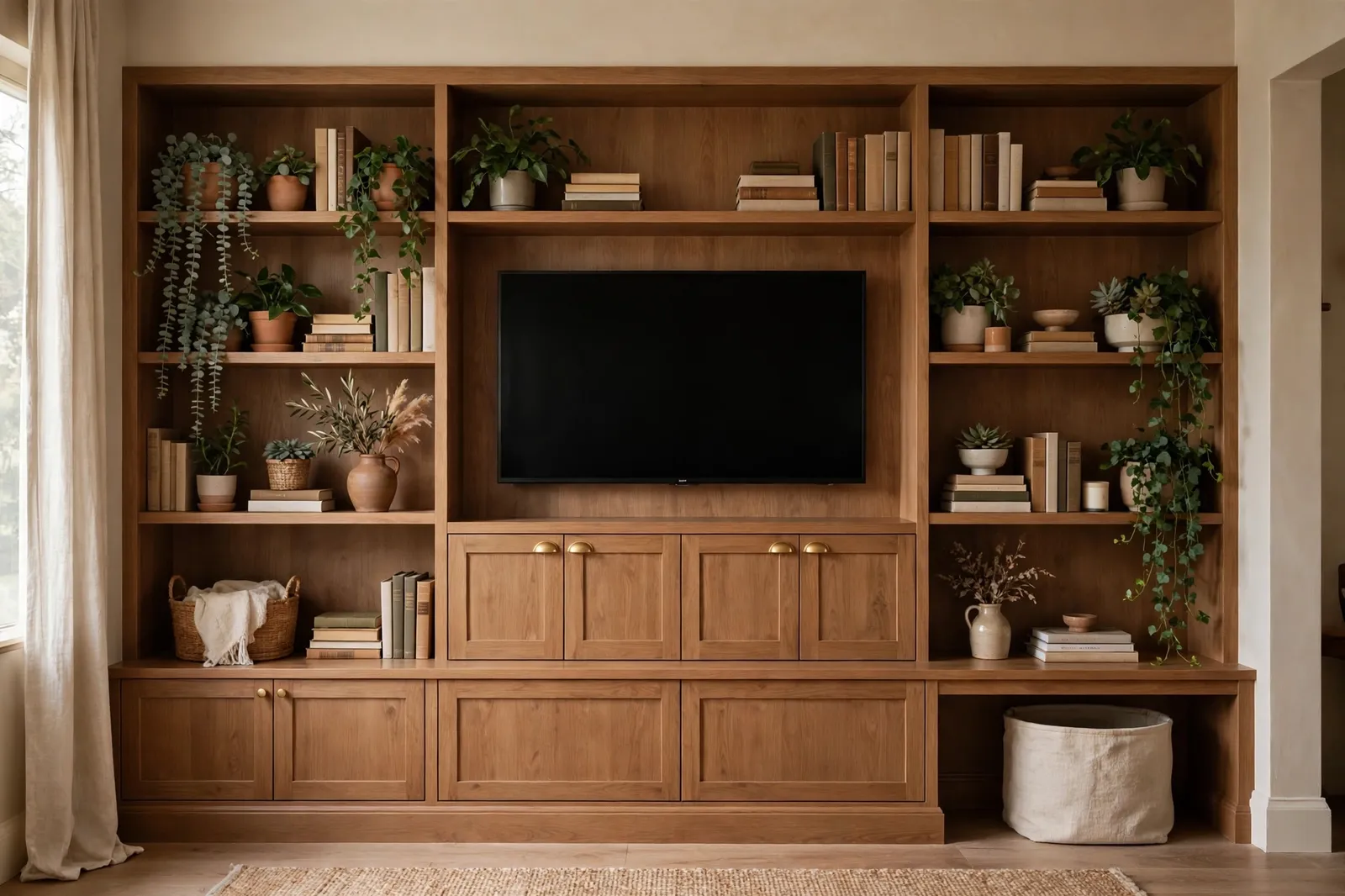
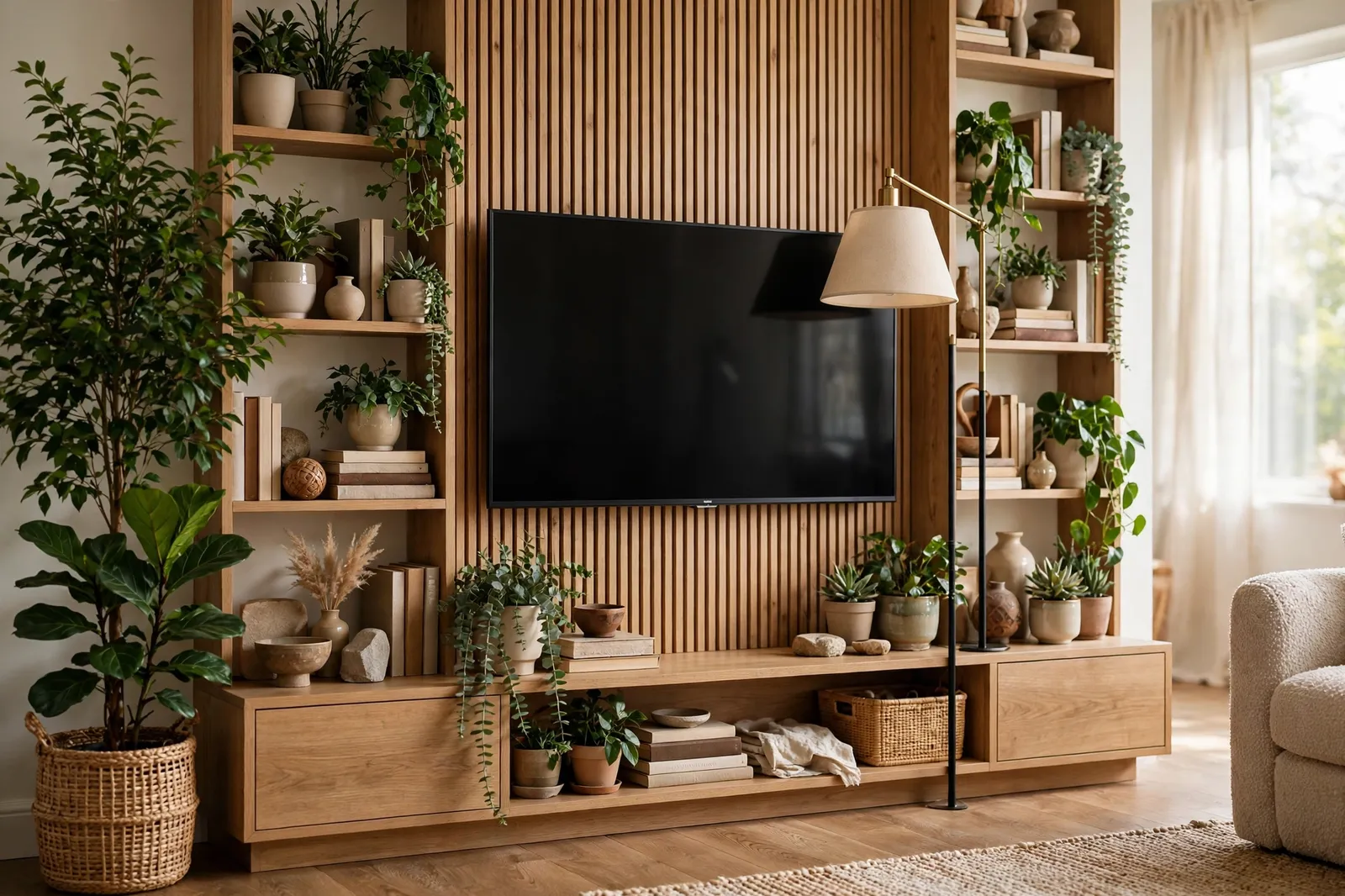
A built-in media wall turns the TV into one piece of a bigger, better-looking wall. Shelves, cabinets, and cubbies frame the screen on both sides, so the TV sits in the middle of a wall that has plenty of other things to look at — books, plants, baskets, and a few favorite objects.
You do not need a full carpenter build to get the look. Two tall bookshelves on either side of the TV, a low console underneath, and a shelf or two above it give you the same framed effect for far less money. Style the shelves loosely, with some empty space between objects, and the TV becomes just one part of a wall that actually looks finished.
7. Cover It With a Canvas or Tapestry
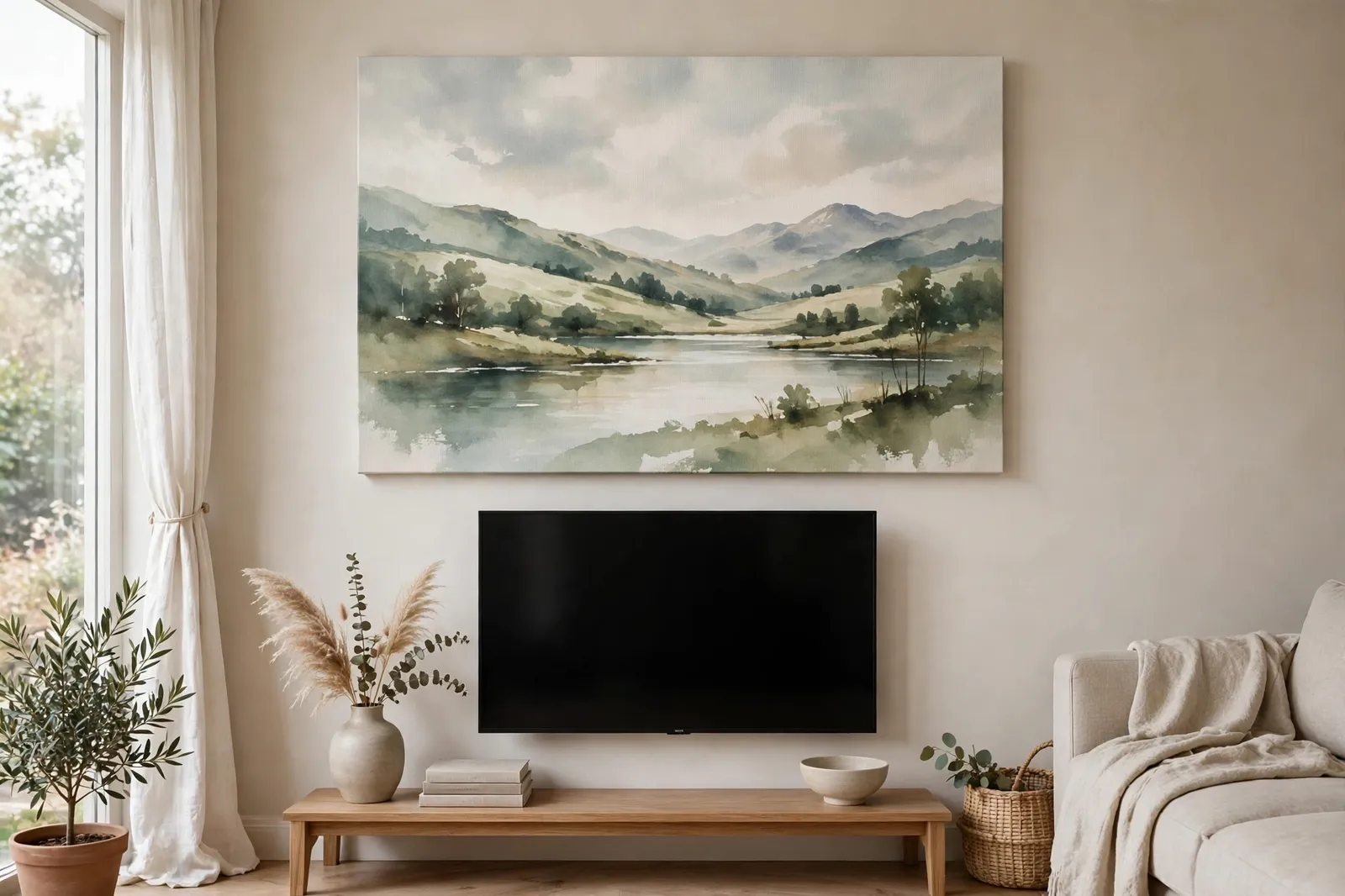
A large canvas print or a woven tapestry hung in front of the TV is the quickest cover of all. Hang it from a rod or a couple of small hooks, and let it drop down over the screen when the TV is off. Lift it up or roll it to the side when you want to watch, and the wall looks like art the rest of the time.
Pick a print that is bigger than the screen on all sides, so no black edge peeks out. A landscape scene, an abstract print, or a simple woven wall hanging all work well, and the whole project can cost less than a night out. It is also the easiest option to change with the seasons — swap the print when you want a new look for the entire room.
8. Hide the Cables and Boxes
Even the prettiest TV wall falls apart if cables are hanging down it. A cable cover channel painted the same color as the wall hides the cords in one straight line, and a cord kit that runs the cables behind the drywall hides them completely. Either way, the wall looks clean the moment the cords are gone.
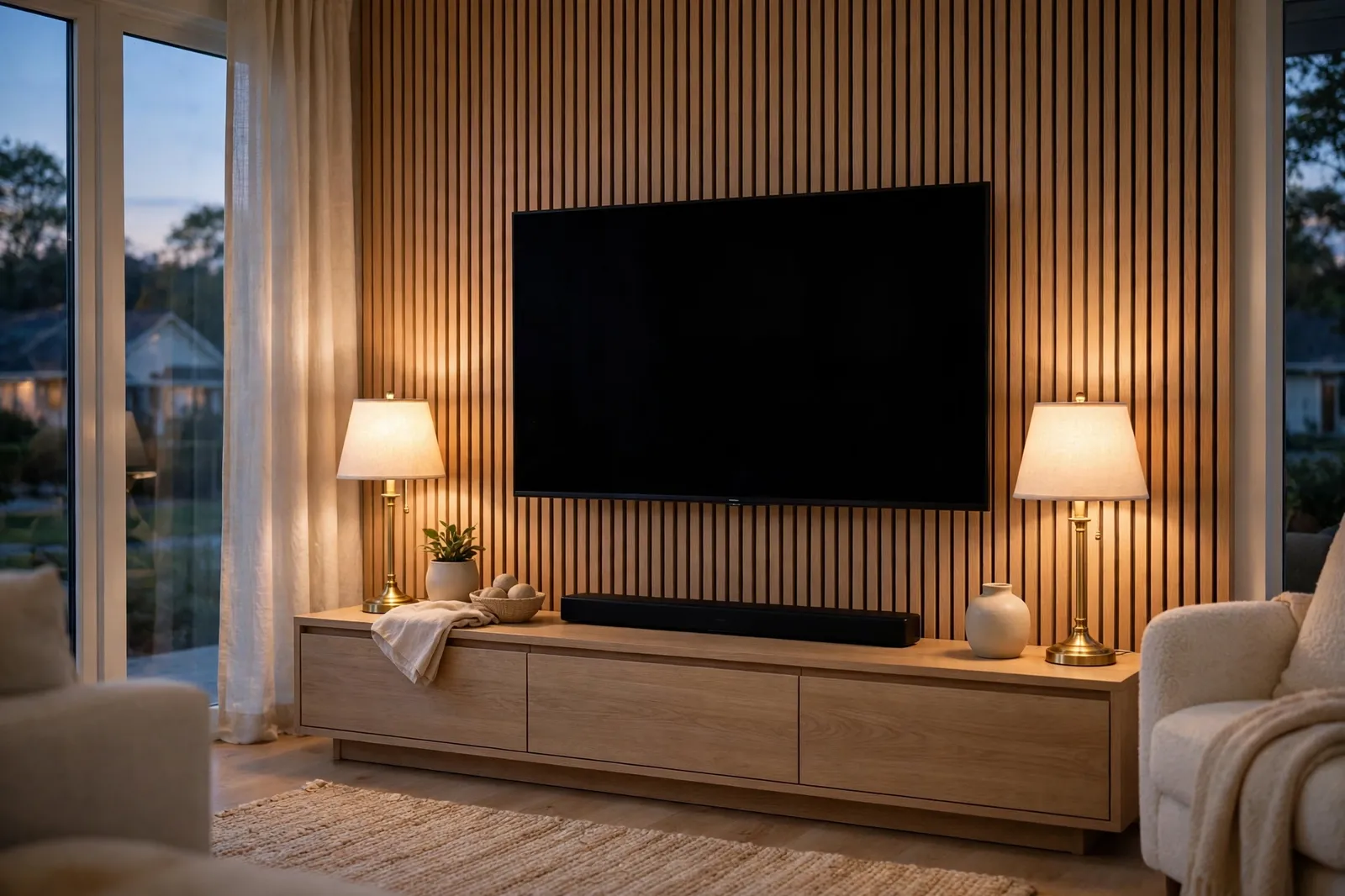
Do not forget the boxes. A cable box, a game console, and a router can all live inside the media console or on a low shelf, out of sight, with a small hole in the back for the cords. Add a soundbar under the TV and a pair of lamps on the console, and the whole setup looks neat from every angle. Good layered lighting helps here too — warm lamps on either side of the TV make the wall feel styled instead of wired.
9. Style the Wall So the TV Is Not the Star
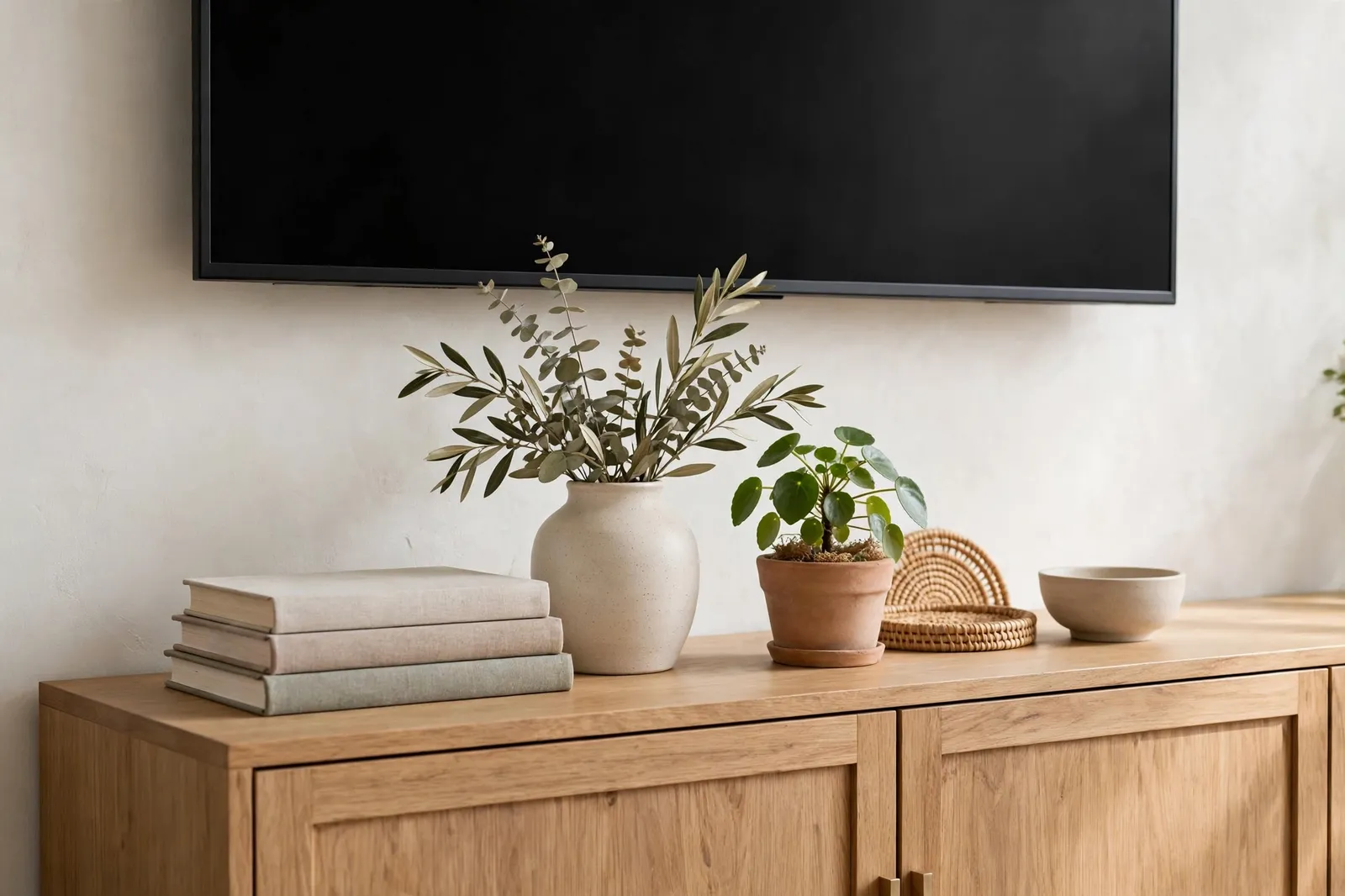
The last trick is not about hiding the TV at all — it is about giving your eye something better to look at. A low console with books and a vase, a tall plant on one side, a floor lamp on the other, and one good piece of art above the screen all pull attention away from the black rectangle. The TV is still there, but it is no longer the first thing you notice.
Take it step by step and see what the wall still needs after each change. Maybe the plant does the job on its own, or maybe you need the art above the TV too. Small changes add up, and a wall that is styled like the rest of the room will always look better than a bare screen on a bare wall — whatever your floor plan looks like.
Frequently Asked Questions
How can I hide my TV in the living room without removing it?
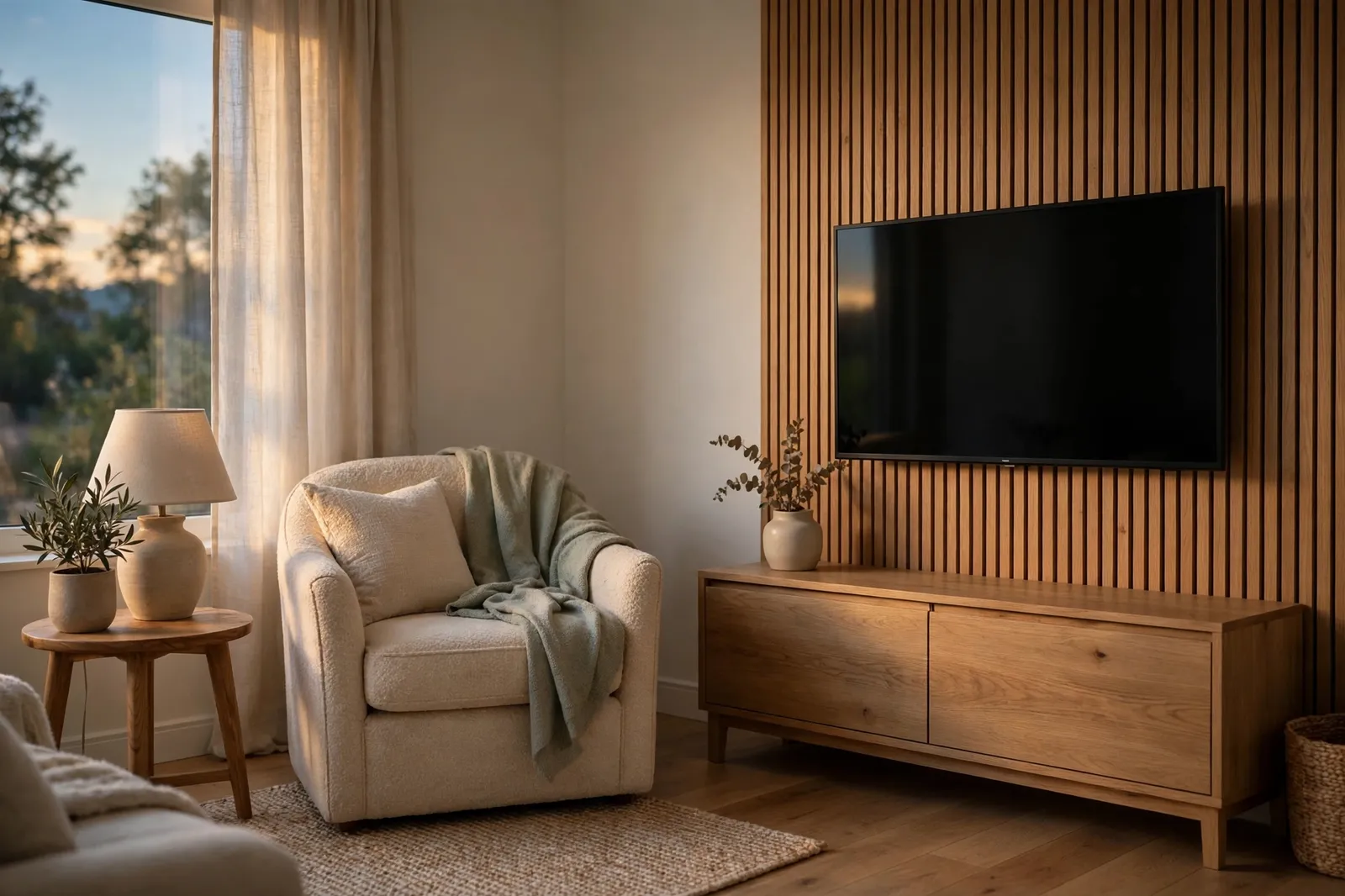
The simplest options are a frame-style TV that shows art when it is off, a gallery wall built around the screen, or a canvas hung over the TV. For a full cover, use cabinet doors or sliding panels that close over the screen. Any of these lets you keep the TV and still have a wall that looks good when it is not in use.
What is the cheapest way to hide a TV on the wall?
Painting the wall a dark color is the cheapest fix — one can of paint makes the black screen blend in. A large canvas print or tapestry hung over the TV is the next cheapest, and a simple cable cover channel costs just a few dollars and makes the wall look far neater. All three are easy weekend projects.
How do I hide TV cables on the wall?
Use a paintable cable cover channel for a quick fix, or a behind-the-wall cord kit if you want the cables fully hidden. Keep the cable box and game console inside the media console or on a low shelf, and run the cords through a small hole in the back of the furniture so nothing hangs down the wall.
Does a frame TV really look like art?
Yes, when it is set up right. A frame-style TV sits flat on the wall like a picture, shows art or photos when it is off, and looks best with a wood or black frame around it and a low console underneath. It will not fool anyone up close, but from the sofa it reads as art, not a screen.
Related ideas
If you want more ideas for the same room, Living Room Wall Decor Ideas for Every Style is a great place to start, since it covers the whole wall, not just the TV. Coffee Table Styling Ideas That Look Designer-Approved will help you finish the seating area in front of the screen, and How to Arrange Living Room Furniture for Better Flow shows you how to set up the sofa and chairs so the TV wall feels like part of the room, not the boss of it. You might also like How to Layer Lighting in a Living Room Without an Electrician and Leather Sofa Decorating Ideas for a Warm Living Room.