How to Layer Lighting in a Living Room Without an Electrician
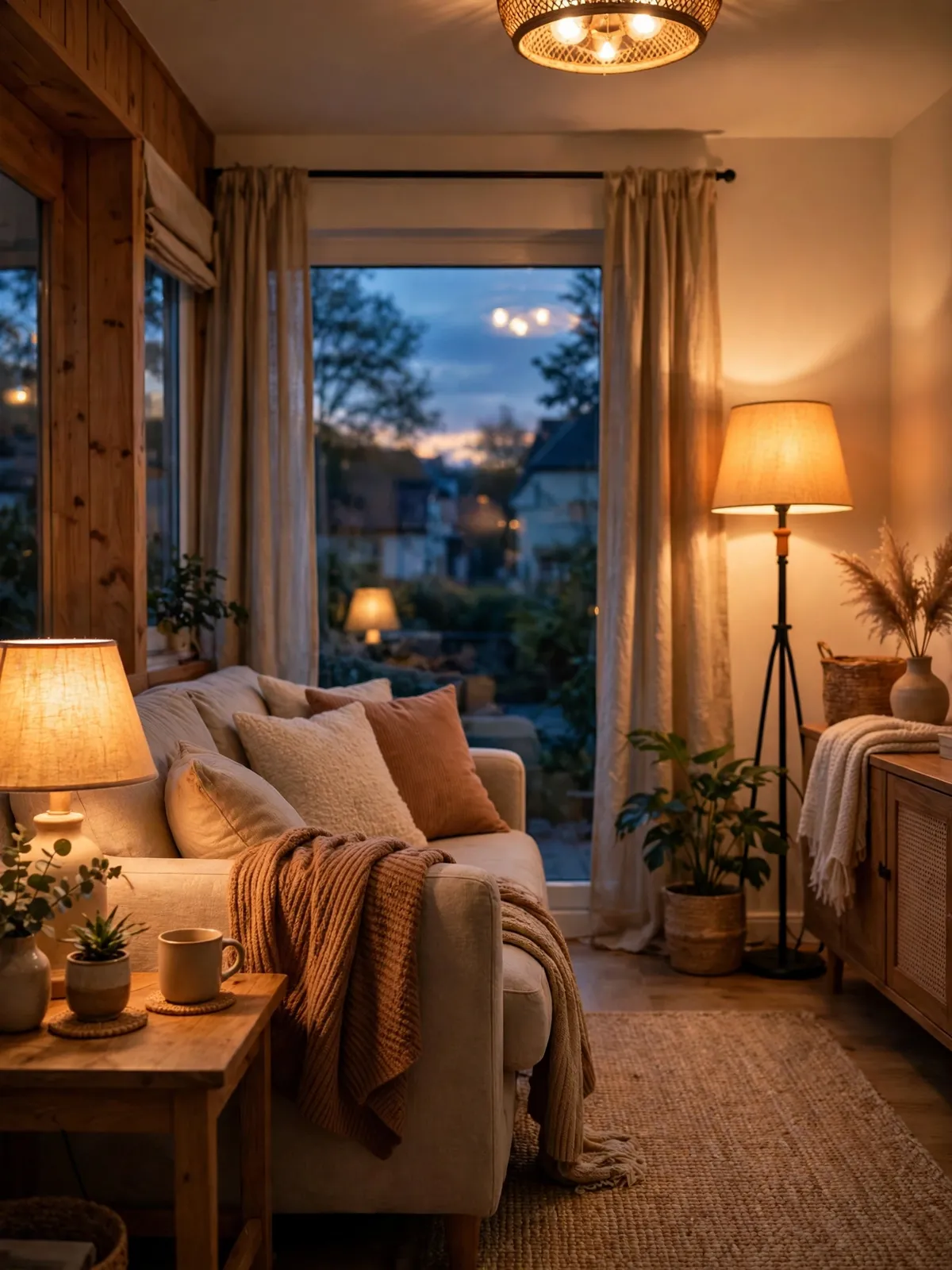
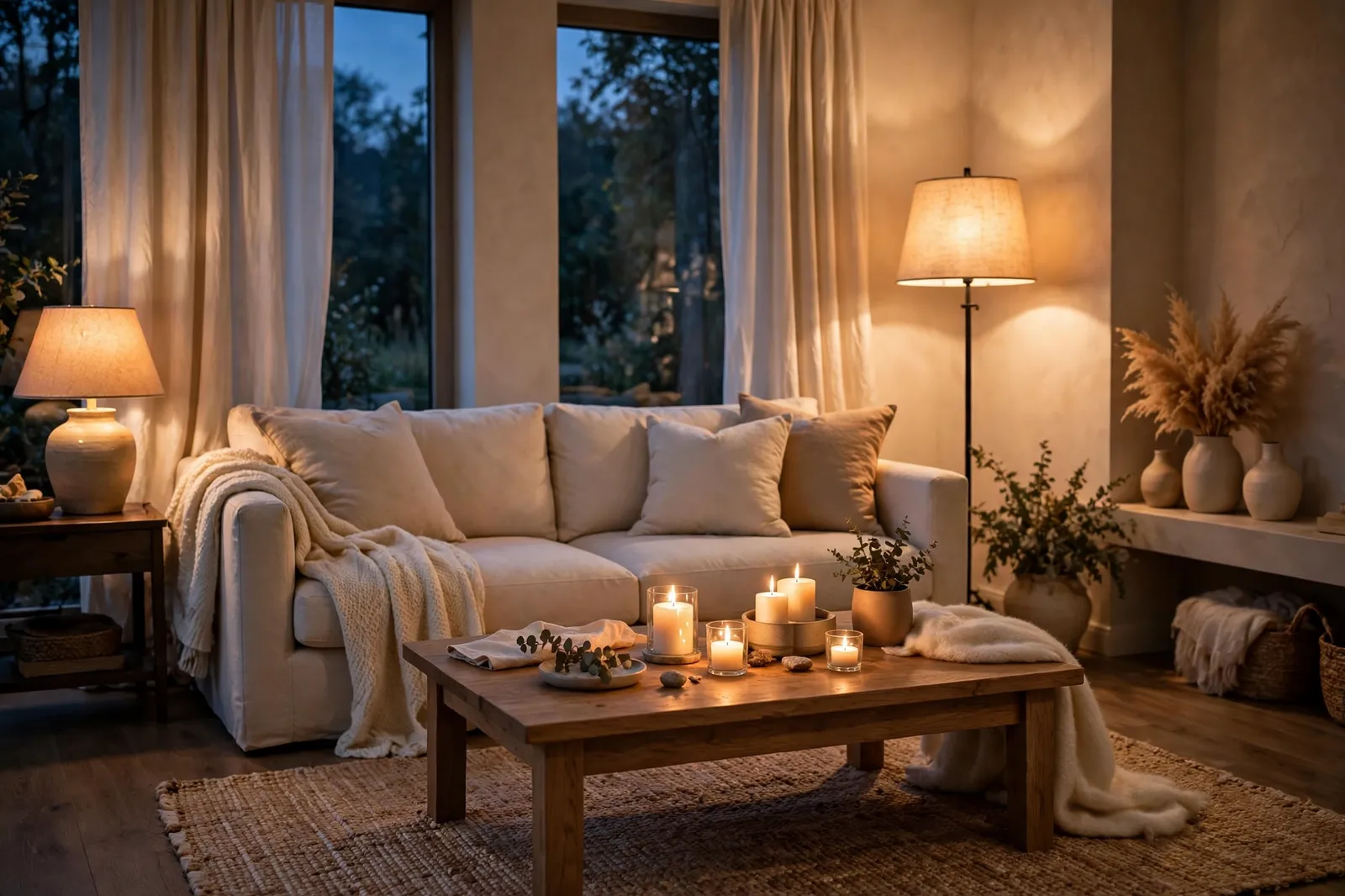
One ceiling light is not enough to make a living room feel good. It throws harsh light straight down, leaves the corners dark, and makes the whole room feel flat. Layered lighting fixes that — a mix of overhead light, lamps, and small accent lights that work together so the room feels warm and easy to be in.
The best part is you do not need an electrician for any of it. Everything in this guide uses plug-in lamps, plug-in sconces, and simple dimmers, so there is no rewiring and no holes in the walls. You can build the layers step by step, one lamp at a time, and light the entire room on a small budget.
1. Start With the Three Layers
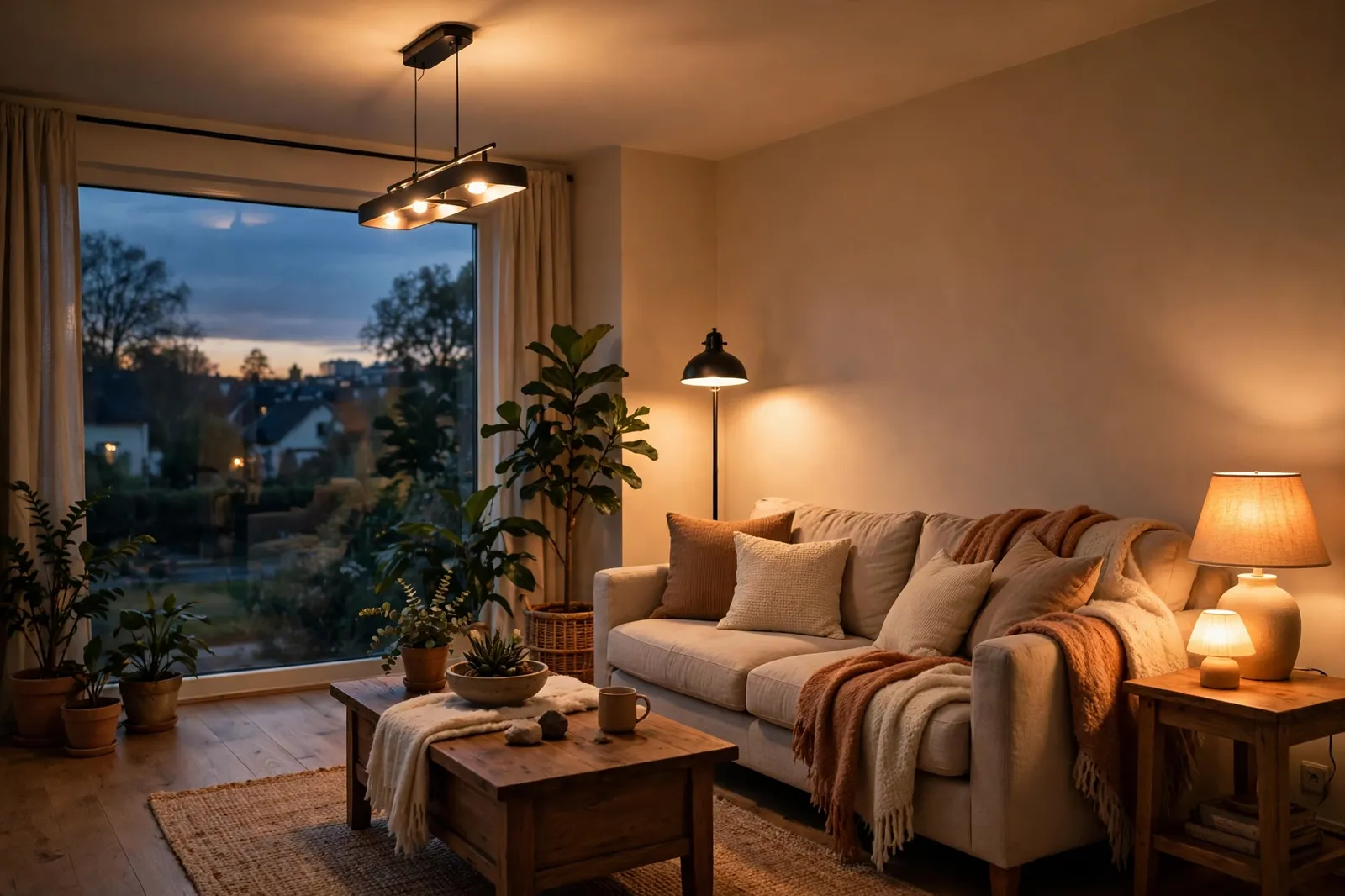
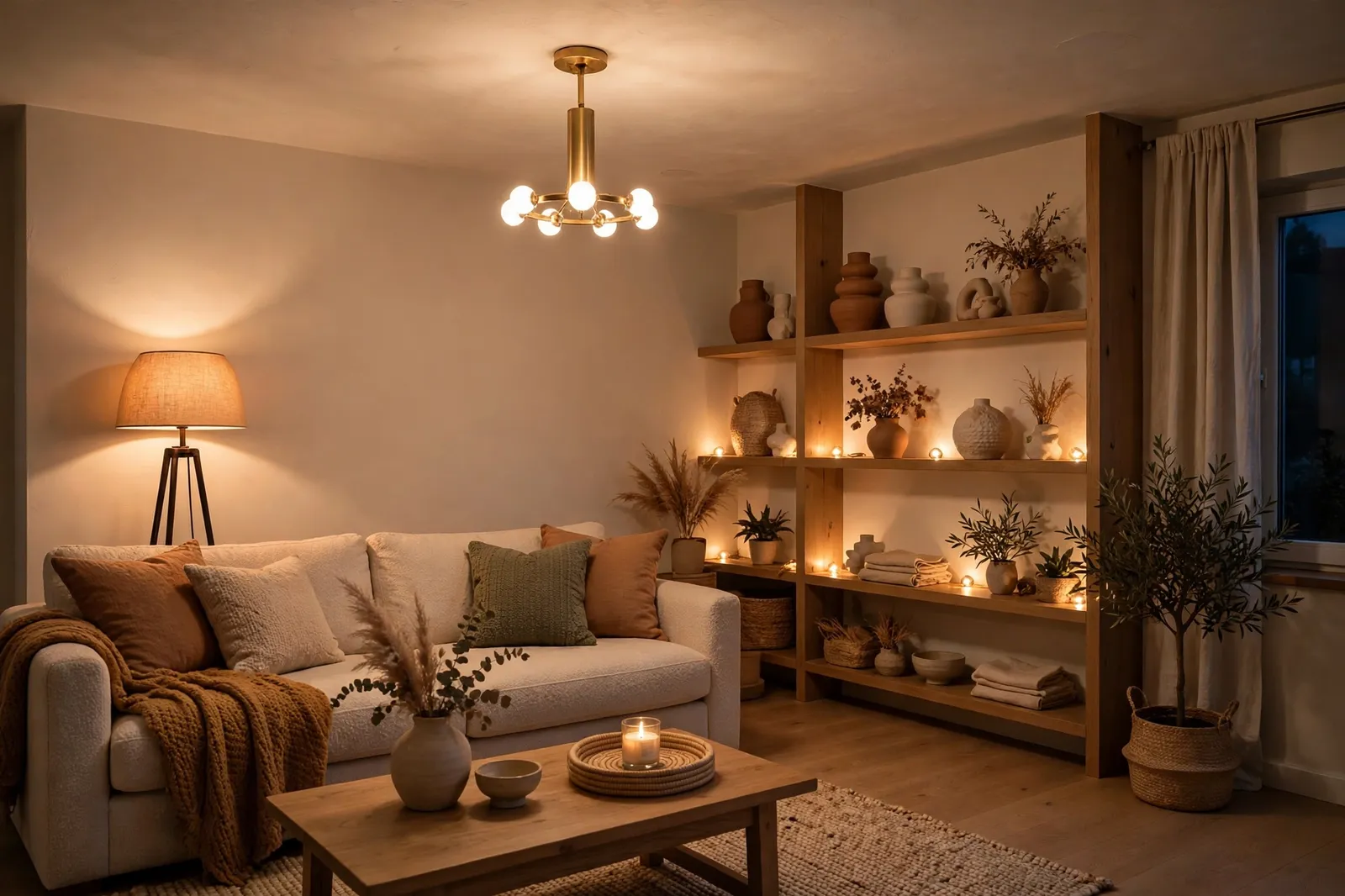
Good living room lighting has three layers, and each one does a different job. Ambient light is the general light that fills the room, usually from the ceiling fixture. Task light is the focused light you use for reading or working, like a floor lamp by your chair. Accent light is the small glow that shows off a shelf, a plant, or a piece of art.
Most rooms only have the first layer, which is why they feel harsh or gloomy. When you add the other two, the room suddenly feels deeper and more comfortable. You do not need a lot of fixtures — one good light per layer is enough to start, and you can add more later as you find the dark spots.
2. Map Your Room Before You Buy Anything
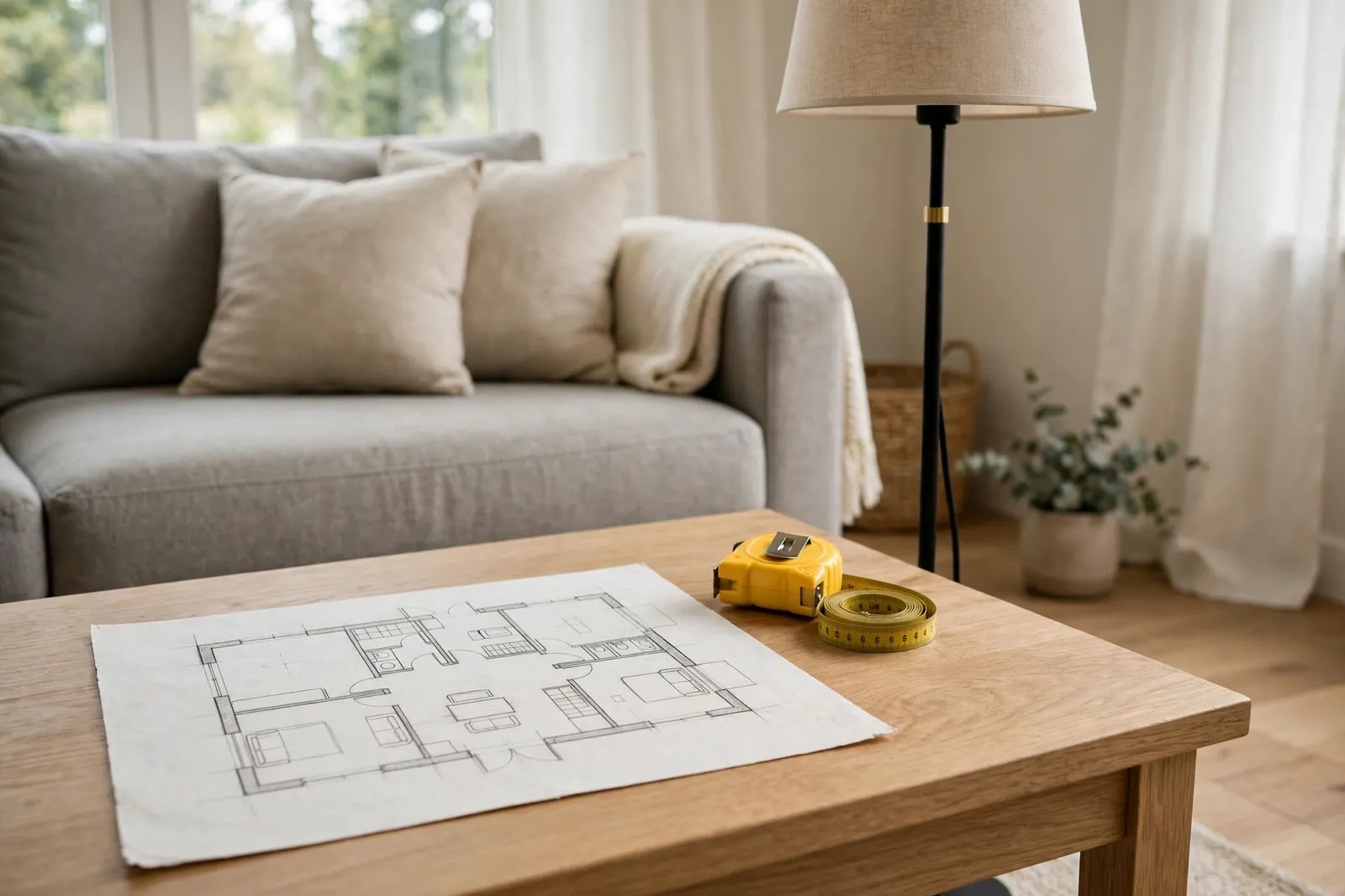
Before you buy a single lamp, walk around the room at night with the lights on and look for the dark corners. Sit in every seat and notice where you would want light for reading or just relaxing. A simple sketch of your floor plan helps — mark the sofa, the chairs, the TV, and the spots that stay dark, so you can see where each new light should go.
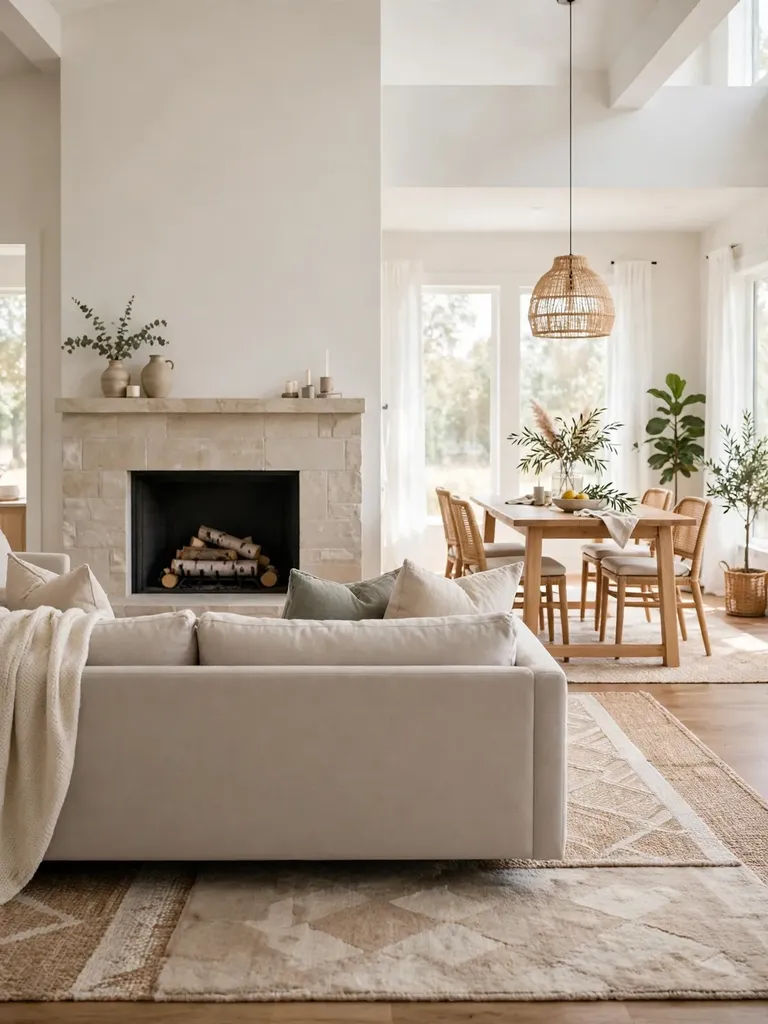
Think about how the room is used, too. A living room layout with a reading chair in one corner needs a lamp there, while a sofa that faces the TV needs soft light behind it so the screen is not the only glow in the room. In an open concept space, the lights also help mark where the living area ends and the dining area begins, so plan the layers with the whole room in mind.
3. Fix the Overhead Light First
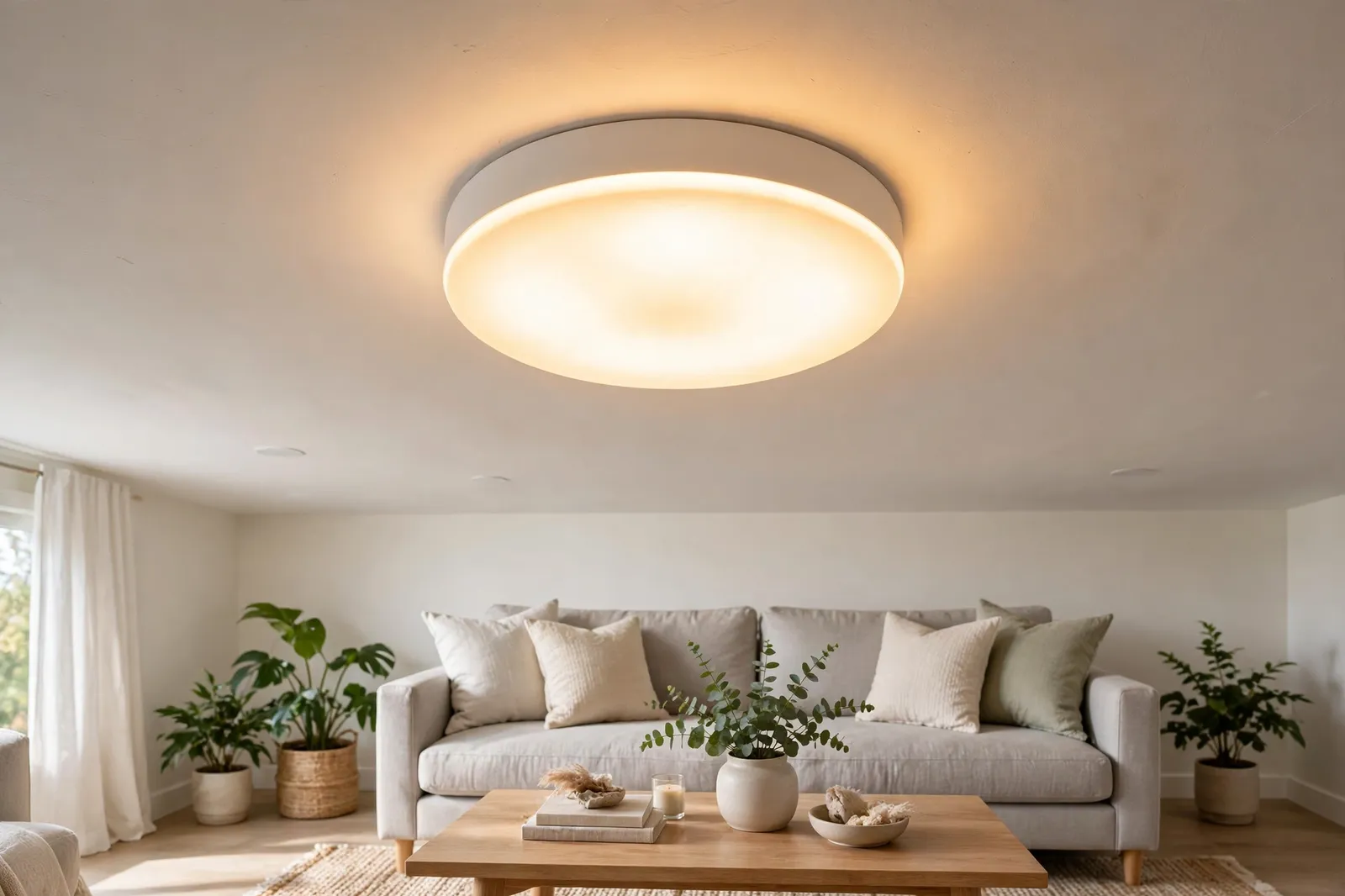
The ceiling fixture is your ambient layer, so start there. If the bulb is a harsh white one, swap it for a warm bulb — that one change alone can make the room feel softer. If the fixture has a bare bulb or a glass shade that glares, add a simple fabric shade or a frosted cover to spread the light out.
A plug-in dimmer is the cheapest upgrade you can make to an overhead light. If the fixture is on a switch, a screw-in dimmer bulb or a smart bulb lets you lower the brightness from your phone or a small remote. Being able to turn the ceiling light down is what makes the lamp layers shine, because the room stops being lit from above only.
4. Add Floor Lamps Where You Actually Sit
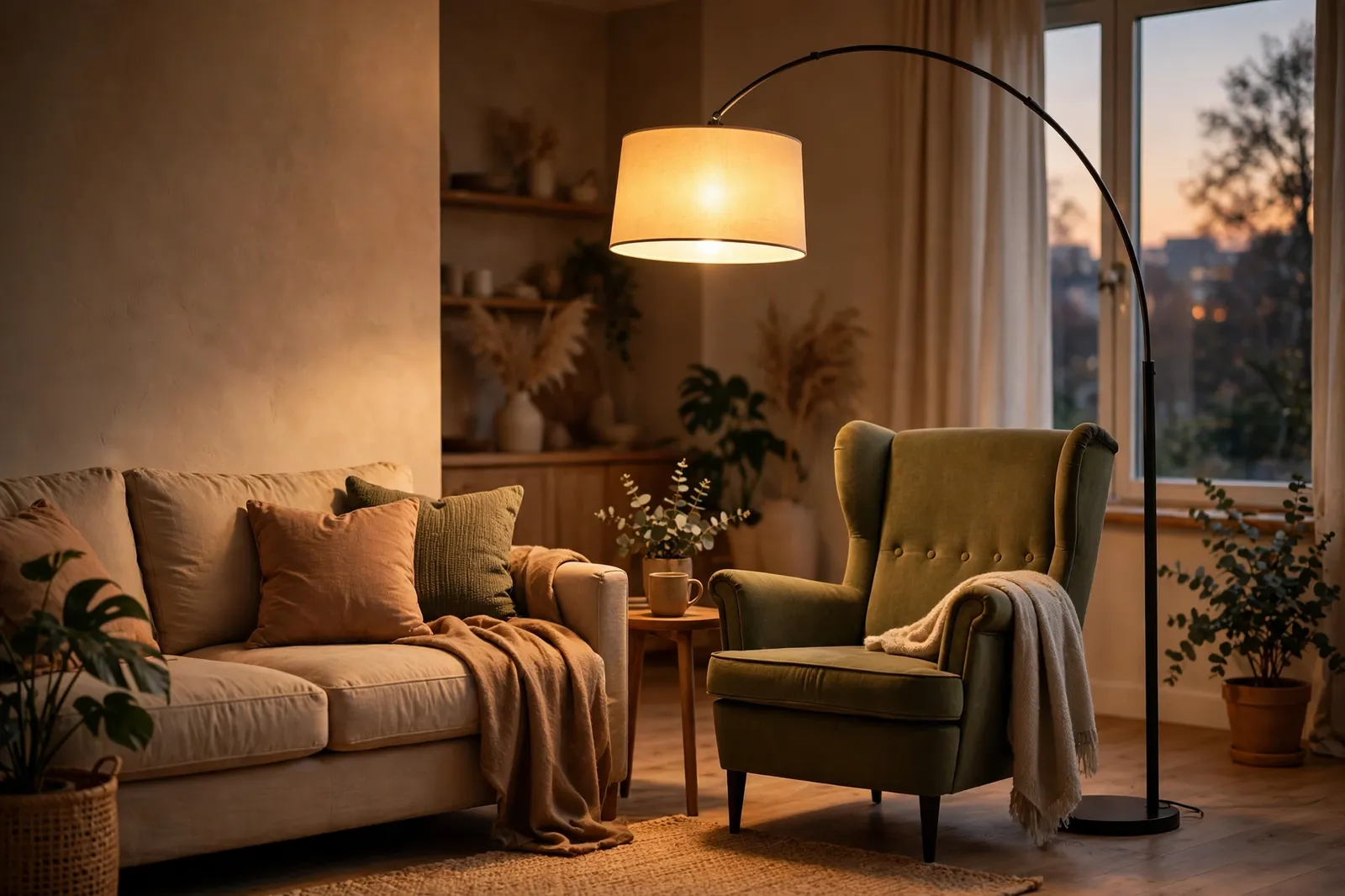
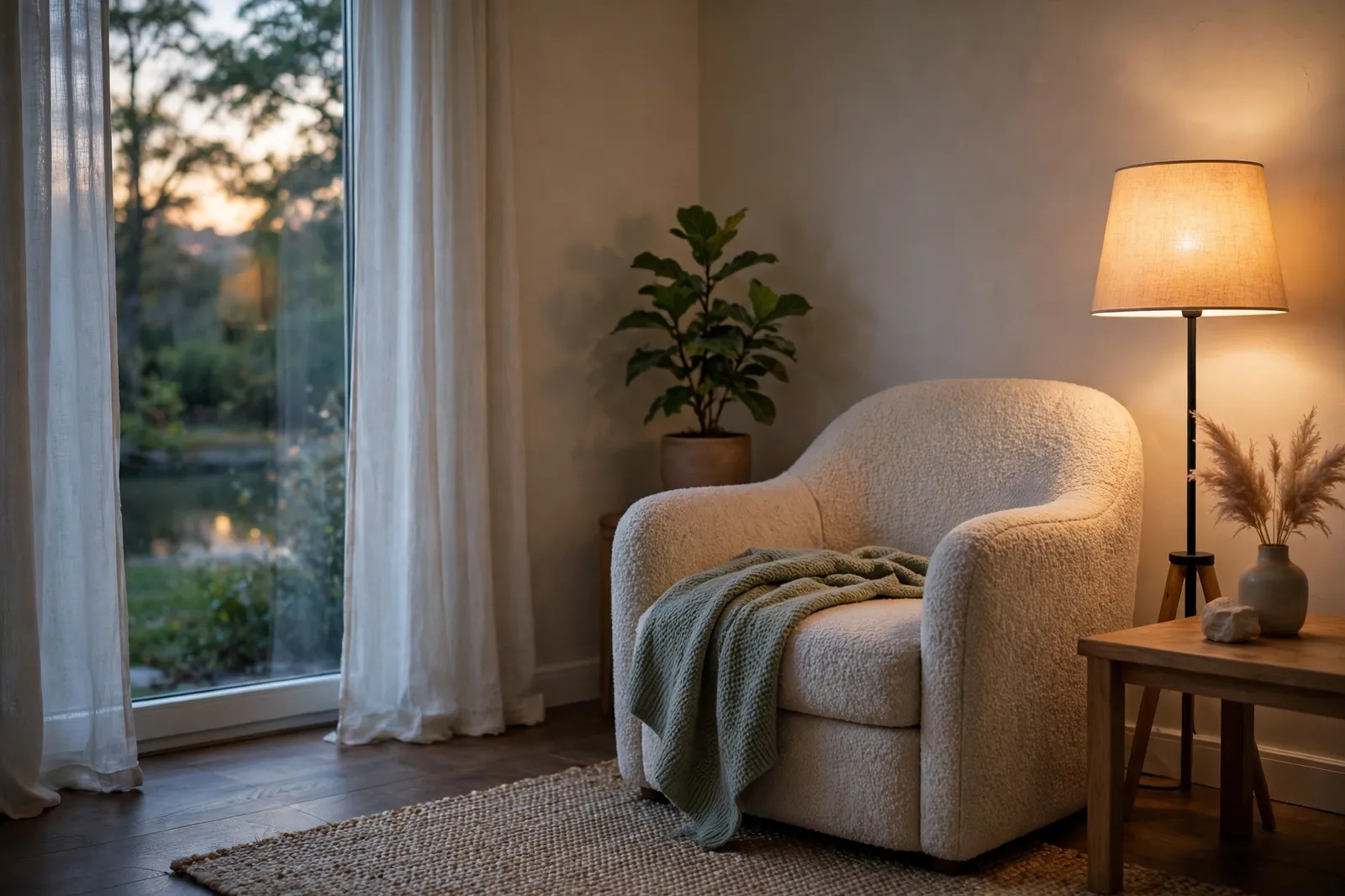
Floor lamps are the easiest way to add task light, and they need nothing more than an outlet. Put one next to the chair or sofa end where you read, so the light falls over your shoulder instead of into your eyes. An arched floor lamp works well over a sofa, while a slim straight lamp fits nicely beside a reading chair.
Place the lamp close enough to be useful but not so close that it crowds the seat. About a foot to the side of the chair and a foot behind it is a good starting point. If you are building the room in phases, the floor lamp is a smart first buy, because one good lamp can change how the whole seating area feels in the evening.
5. Table Lamps for the Corners and Side Tables
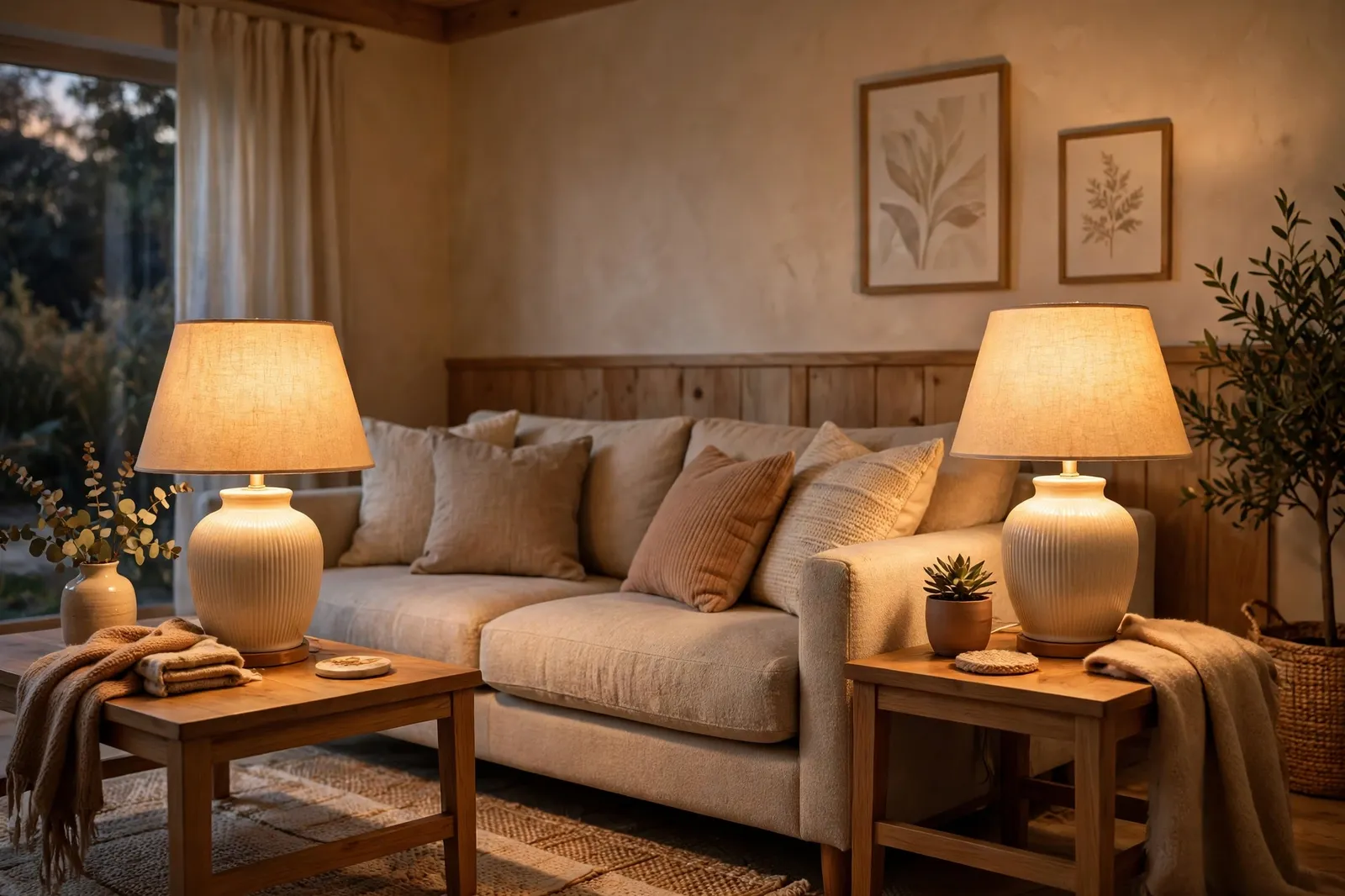
Table lamps fill the gaps that floor lamps miss. A lamp on each end table beside the sofa gives the seating area a balanced glow, and a small lamp on a console or bookshelf lights up a corner that would otherwise go dark. They are cheap, easy to move, and you can find good ones at thrift stores and discount shops.
Keep the lamps roughly the same height on both sides of the sofa so the light looks even. Matching lamps look tidy, but they do not have to be identical — the same height and a similar warm bulb are enough to tie them together. A table lamp with a fabric shade spreads the light softly, which is kinder on the eyes than a bare bulb.
6. Plug-In Wall Sconces (No Wiring Needed)
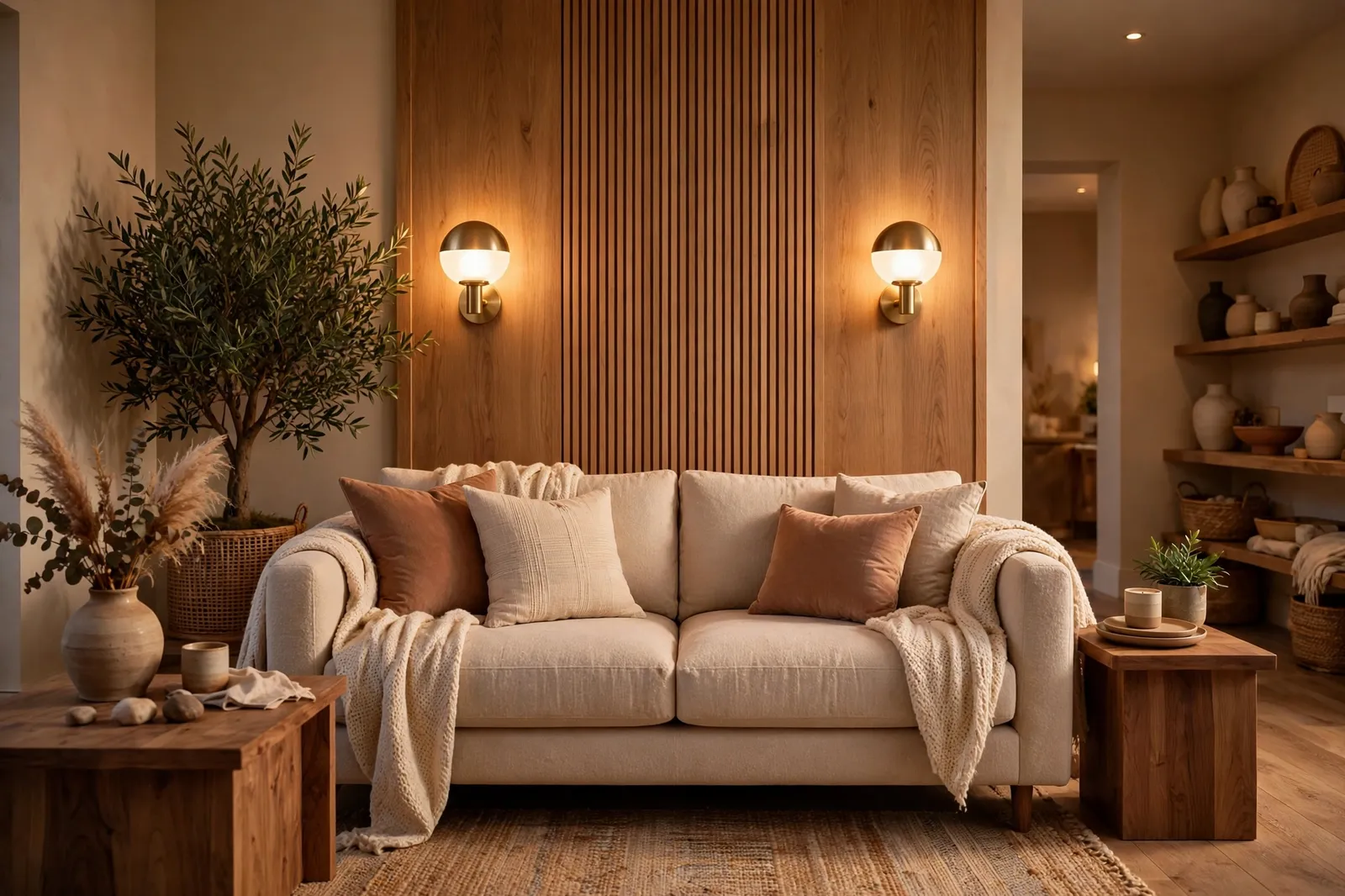
Wall sconces used to mean hiring an electrician, but plug-in sconces changed that. They mount on the wall with two screws and plug into a nearby outlet, with a cord you can hide behind the furniture or run through a slim cord cover that you paint to match the wall. Hang a pair on either side of the sofa, the TV, or a piece of art.
Sconces are great accent light because they wash the wall with a soft glow instead of shining straight into the room. They also free up table space, which helps in a small living room layout where every surface counts. Pick sconces with a shade or an upward-facing cup so the light bounces off the wall and ceiling, and the room feels taller and brighter.
7. Use Dimmers and Smart Bulbs for Control
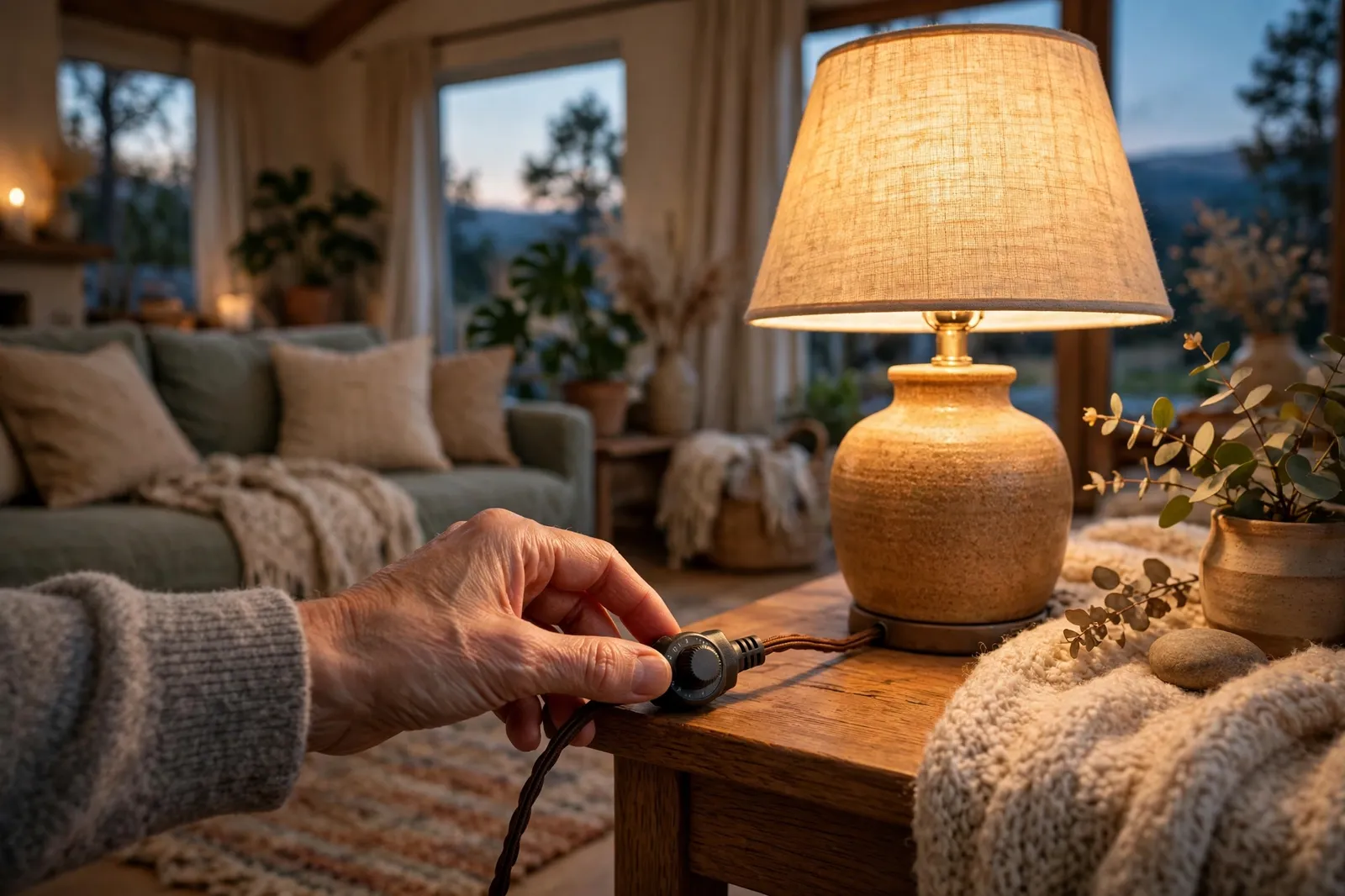
A room with one brightness setting never feels quite right. Plug-in dimmers let you turn any lamp down for a movie night or up for reading, and they cost just a few dollars. You plug the dimmer into the outlet, plug the lamp into the dimmer, and turn a small dial or tap a remote.
Smart bulbs do the same job with a phone app or a voice command, and you can set them to fade on slowly in the morning or warm up in the evening. If your living room layout changes with the seasons — a chair moves near the window in summer, the sofa shifts in winter — smart bulbs let you adjust the light without moving a single lamp. One dimmer per lamp is all you need to take control of the mood.
8. Pick the Right Bulb Color and Brightness
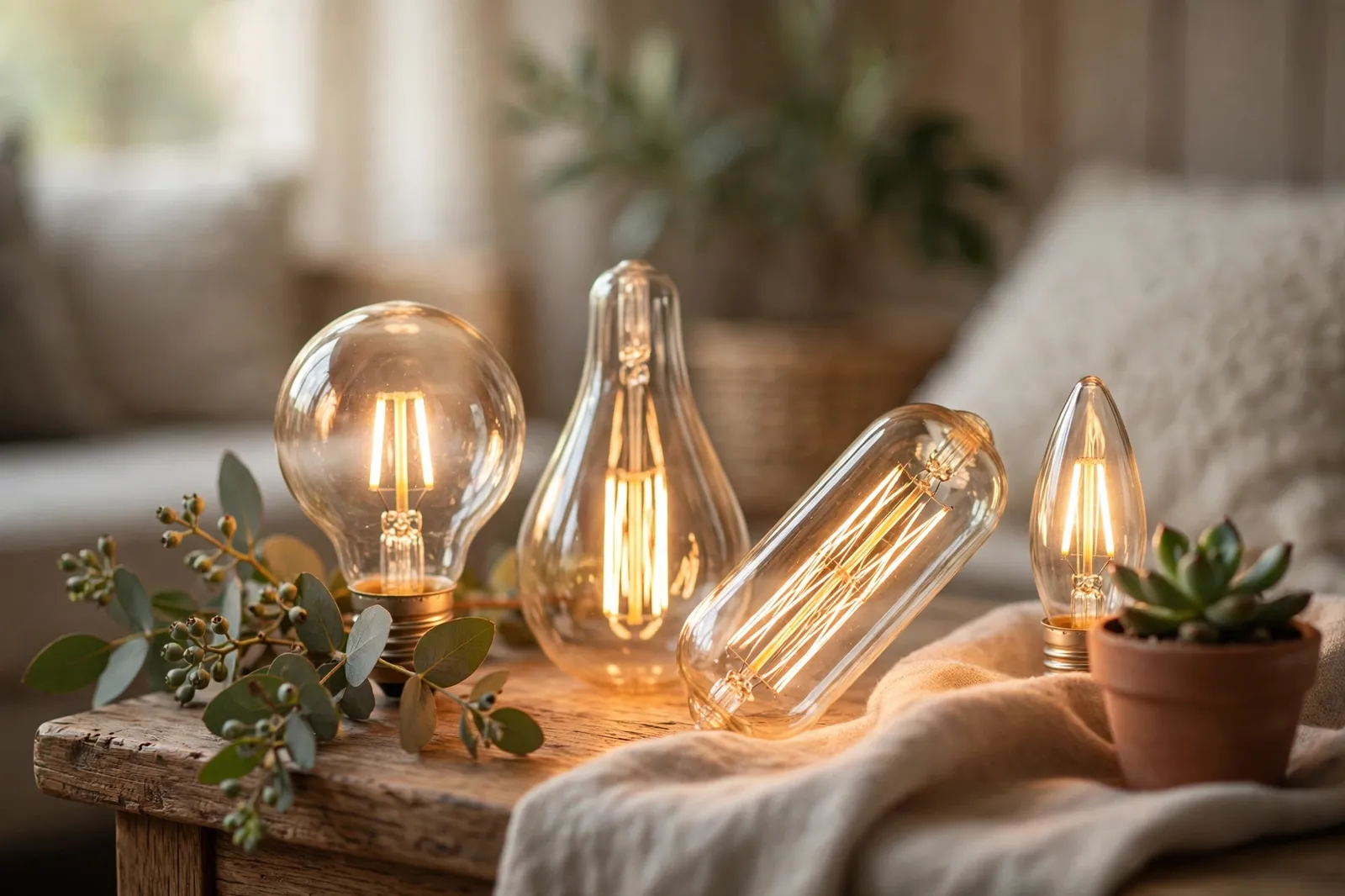
Bulb color matters more than most people think. For a living room, warm white bulbs around 2700K feel cozy and relaxed, while cool daylight bulbs around 5000K feel stark and more like an office. Stick with warm white for every lamp in the room so the layers blend instead of clashing.
Brightness matters too. A reading lamp needs a brighter bulb, around 800 lumens, while a small accent lamp can be much dimmer, around 400 lumens. LED bulbs are the best buy here — they use little power, last for years, and come in every warmth and brightness you need, which makes them the most affordable decor upgrade in the whole room.
9. Add the Finishing Touches
Once the lamps are in place, the small things make the room feel finished. A few candles on the coffee table add a flickering glow for quiet evenings. A string of warm fairy lights along a shelf or around a window gives the room a soft sparkle without adding another lamp. A mirror hung across from a lamp bounces the light around and makes the room feel brighter.
Stand back and look at the room at night with all the layers on. If one corner is still dark, move a lamp there instead of buying a new one. These finishing touches are the last step, and when they are in place, the room should feel warm, balanced, and done — a living room you actually want to sit in after dark.

Frequently Asked Questions
How many lights do I need in a living room?
A good rule is at least three light sources in a living room — the ceiling light plus two lamps — and more if the room is large. Each seating spot should have a light within reach, and each dark corner should have a small lamp or sconce. You can always add more later, so start with three and see how the room feels at night.
Can I add wall sconces without an electrician?
Yes, plug-in wall sconces are made for exactly this. They mount on the wall with a couple of screws and plug into a regular outlet, so there is no wiring to do. Hide the cord behind the furniture or cover it with a slim cord cover painted to match the wall, and it looks just like a hardwired sconce.
What color temperature is best for a living room?
Warm white, around 2700K, is the best choice for a living room. It feels cozy and relaxing, and it makes wood tones and fabric colors look richer. Cool white or daylight bulbs can make the room feel cold and stark, so save those for a home office or a workspace instead.
How much does it cost to layer lighting in a living room?
You can layer the lighting in a living room for about $100 to $300, depending on what you already own. A floor lamp and two table lamps from a discount store might run $60 to $150, plus a few dollars each for plug-in dimmers and warm LED bulbs. Plug-in sconces usually cost $30 to $60 each, so you can spread the spending over a few months if you need to.
Related ideas
Once your lighting is layered, a few more living room ideas will help the whole room come together. Living Room Wall Decor Ideas for Every Style shows you what to hang on the walls now that the light shows them off properly, How to Choose the Right Living Room Rug Size helps you ground the seating area under all that warm light, and Living Room Decorating Ideas for Every Home has plenty of simple ideas to pair with your new lighting. You might also like Living Room Layout Ideas for an Open-Concept Floor Plan and Living Room TV Wall Ideas That Hide the Screen in Style.