How to Arrange Living Room Furniture for Better Flow
A living room can have beautiful furniture and still feel awkward if it is hard to walk through or if the seating does not feel connected. Sometimes the sofa blocks a doorway, the coffee table sits too far away, or every piece is pushed against a wall. A few changes to the layout can make the room feel more comfortable without buying anything new.
The goal is to make your living room easy to use. People should be able to walk through it naturally, sit down without moving furniture, and talk to one another without shouting across the room. Whether you have a large family room, a narrow apartment living room, or an open-plan space, these practical tips can help you create a layout that feels right for everyday life. For more inspiration, browse our living room decorating ideas alongside these layout tips.
Start by Looking at How You Use the Room
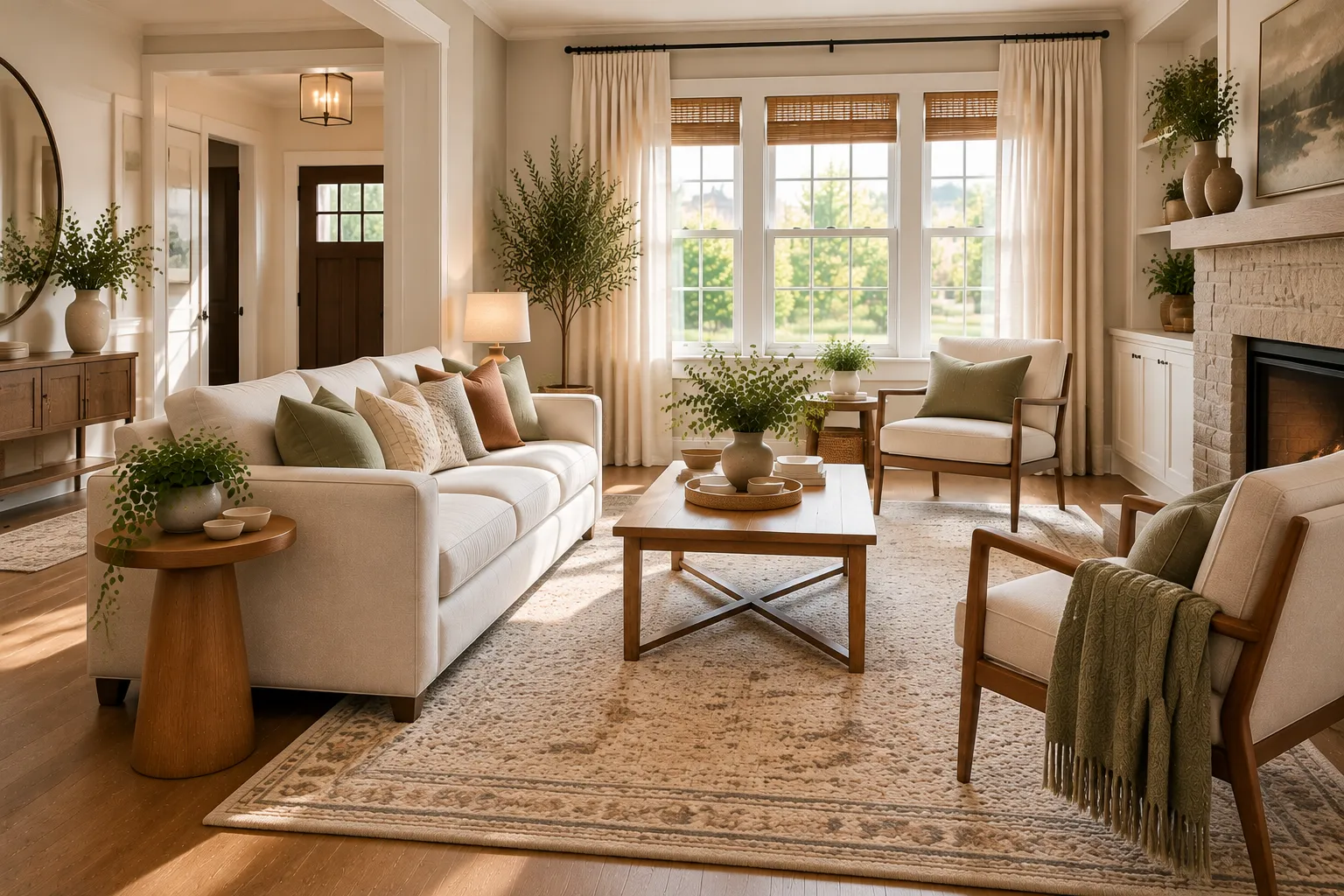
Before moving the sofa, think about what happens in your living room on a normal day. Is it mainly a place to watch TV, visit with friends, read, play games, or relax with family? Your daily routine should guide the furniture arrangement.
If you watch TV most evenings, make sure the main seats have a comfortable view of the screen. If conversation matters more, place the sofa and chairs so people can see one another easily. In a family room, you may need a clear play area or space to reach storage. A room that supports your real habits will feel better than one arranged only for a photo.
Also notice the paths people already take. You might walk from the entry to the kitchen, from the sofa to the hallway, or from a chair to the window. Keep these routes in mind as you plan the layout.
Choose a Focal Point
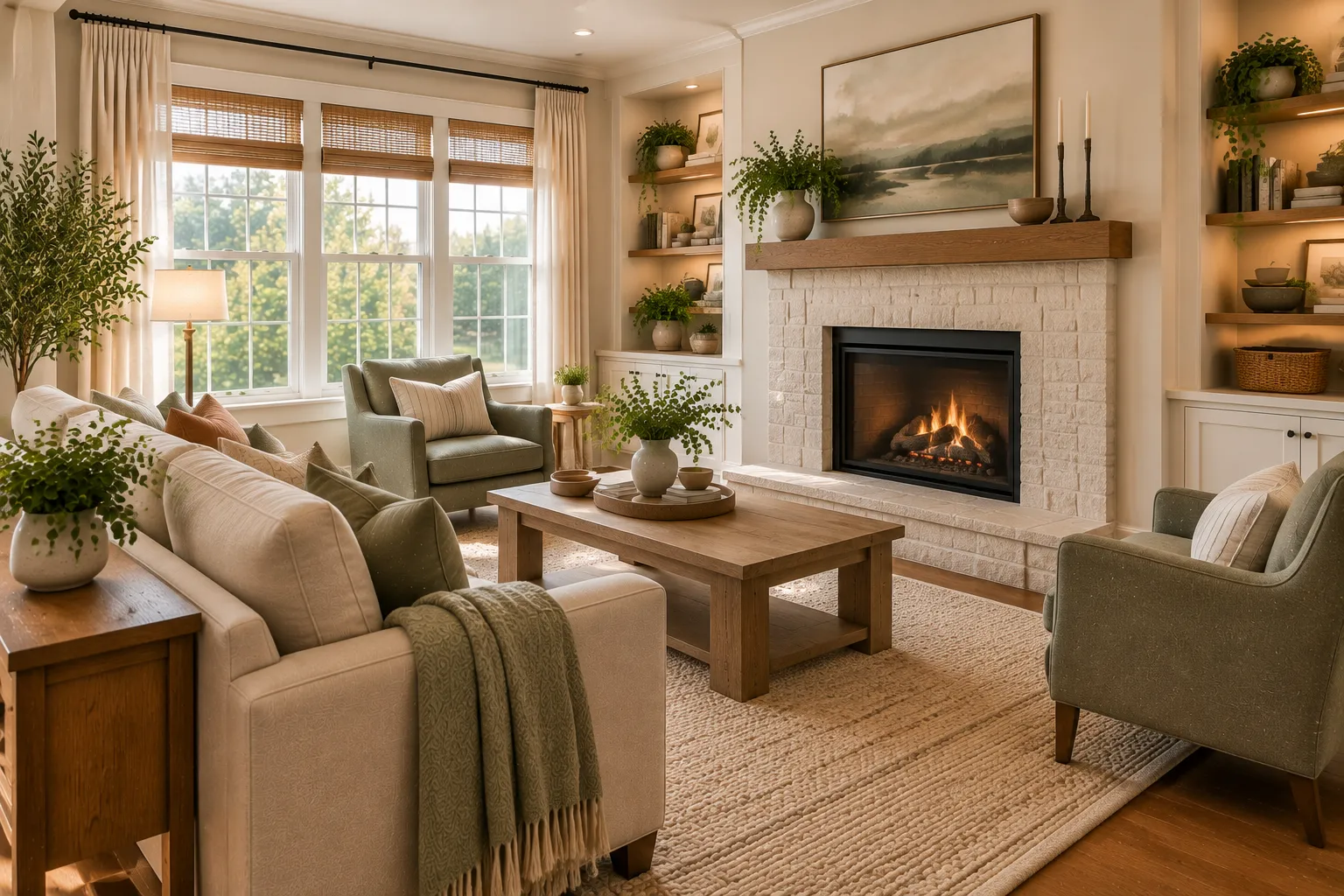
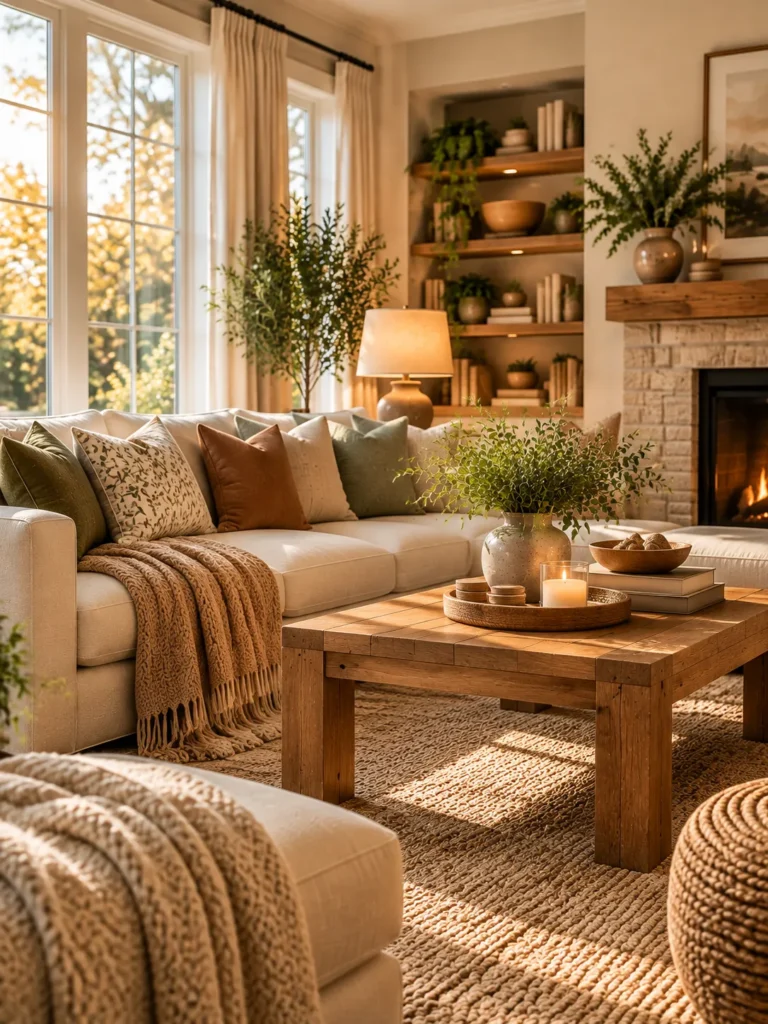
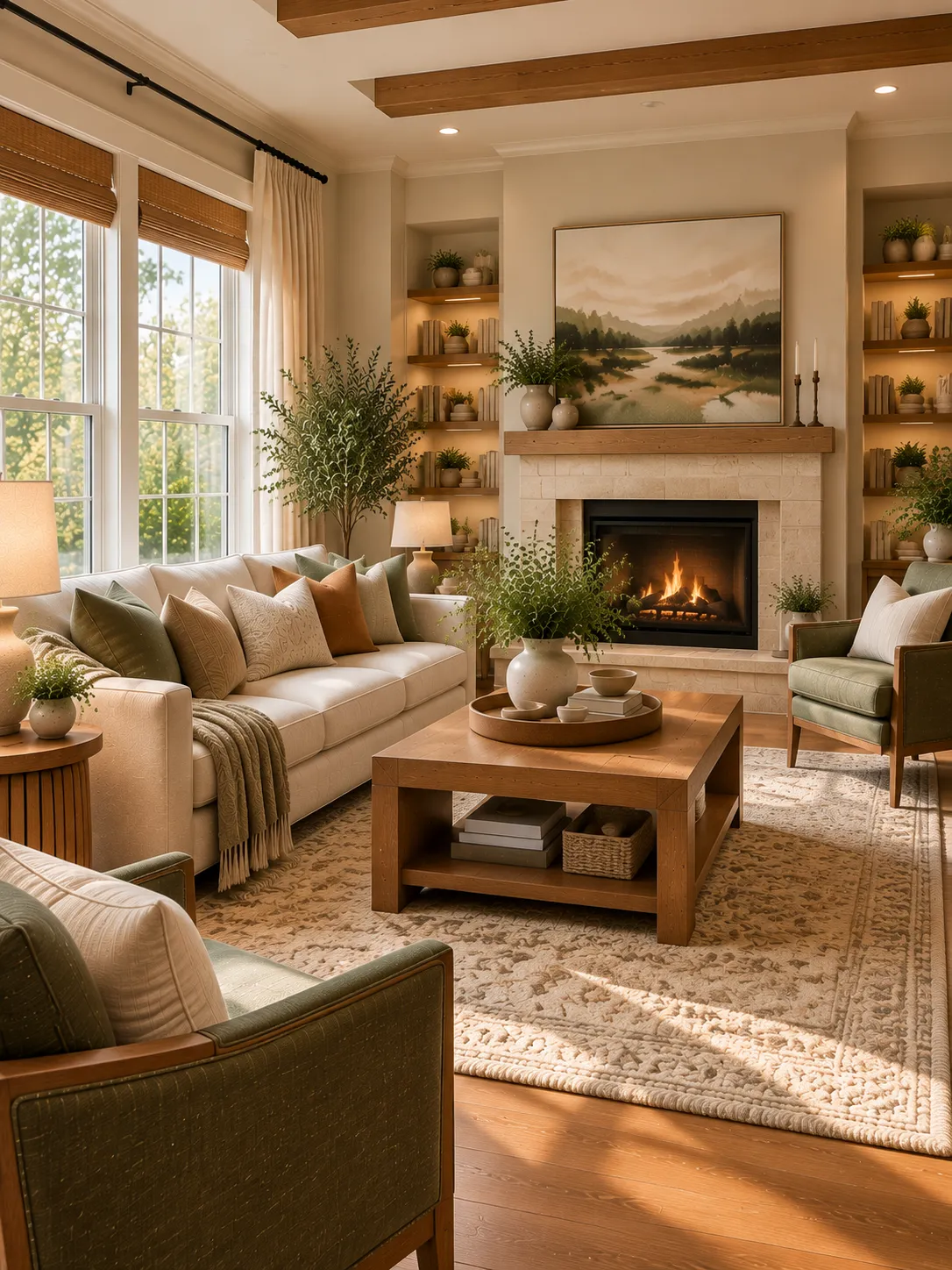
Most living rooms feel more settled when the furniture has a clear point of focus. This might be a fireplace, a large window, a TV, a built-in bookcase, or a favorite piece of art. A focal point gives you a starting place for the main seating area.
You do not have to point every piece of furniture in exactly the same direction. Instead, let the focal point help you decide where the sofa should go, then arrange chairs and tables around it. For example, if the fireplace is the main feature, angle a chair toward it while keeping the sofa close enough for conversation.
If your room has both a TV and a fireplace, decide which one matters most for your household. You can position the main sofa to work with both when possible, or use a movable chair that can turn toward either one.
Keep Walkways Open
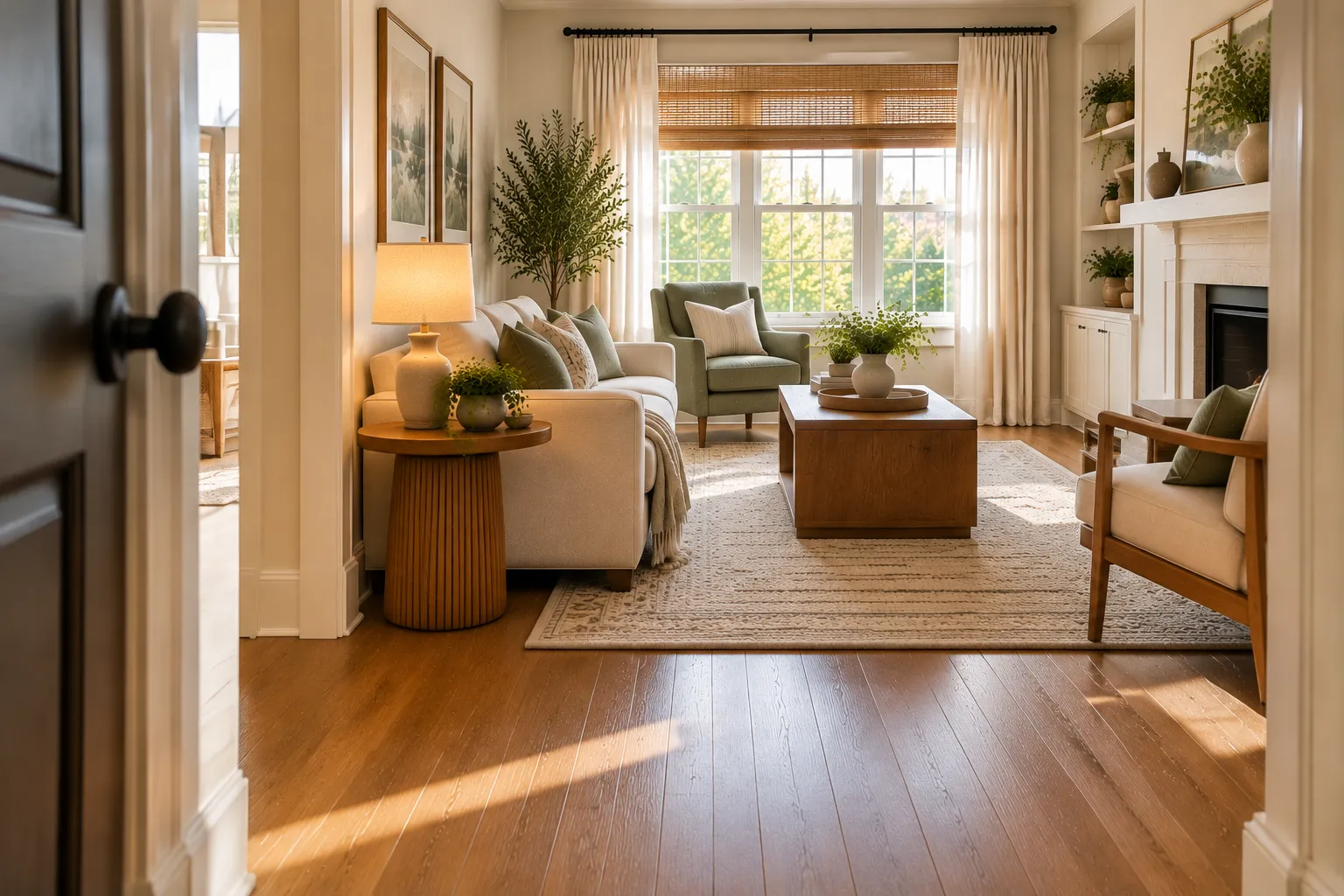
Good flow starts with an easy path through the room. Try not to make people squeeze between the coffee table and sofa or walk around the back of a chair just to reach a doorway. Leave a clear route between entrances, hallways, and other rooms.
As a general starting point, aim for about 30 to 36 inches of walking space on main routes when your room allows it. Smaller spaces may need tighter clearances, but the path should still feel safe and natural. Measure before you move heavy pieces, and remember to account for drawers, cabinet doors, and recliners that extend when opened.
If a walkway feels cramped, move a side table, shift a chair closer to the seating group, or try a narrower coffee table. You may not need to remove a large piece; sometimes moving it a few inches makes a real difference.
Give the Sofa and Chairs Room to Work Together
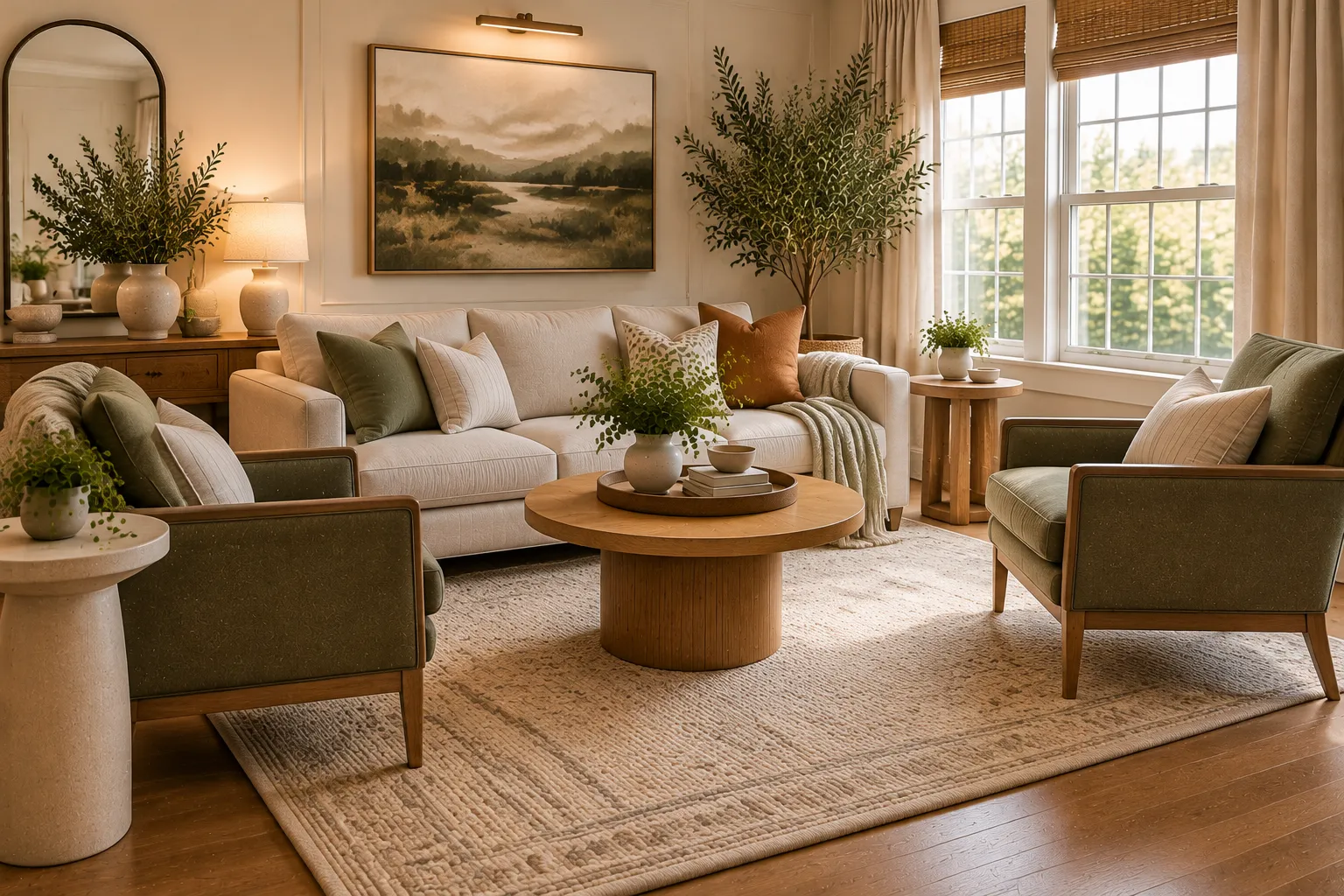
The sofa is often the largest piece in a living room, so it usually sets the direction for the rest of the layout. Place it where it supports the room’s main purpose, then bring chairs close enough to create a shared seating area. A chair that sits too far away can feel disconnected, even if it looks nice on its own.
For conversation, try to position seats so people can make eye contact without twisting their bodies. Chairs do not always need to face the sofa straight on. A slight angle can make the arrangement feel relaxed and leave more room to walk.
In a narrow room, one sofa and one compact chair may work better than several bulky seats. In a larger room, use a pair of chairs to balance the sofa or create a second spot for reading. Keep the scale of each piece in mind: oversized furniture can swallow a small room, while tiny furniture may look lost in a large one. Our cozy living room ideas can help you make the seating area feel even more inviting.
Place the Coffee Table at a Comfortable Distance
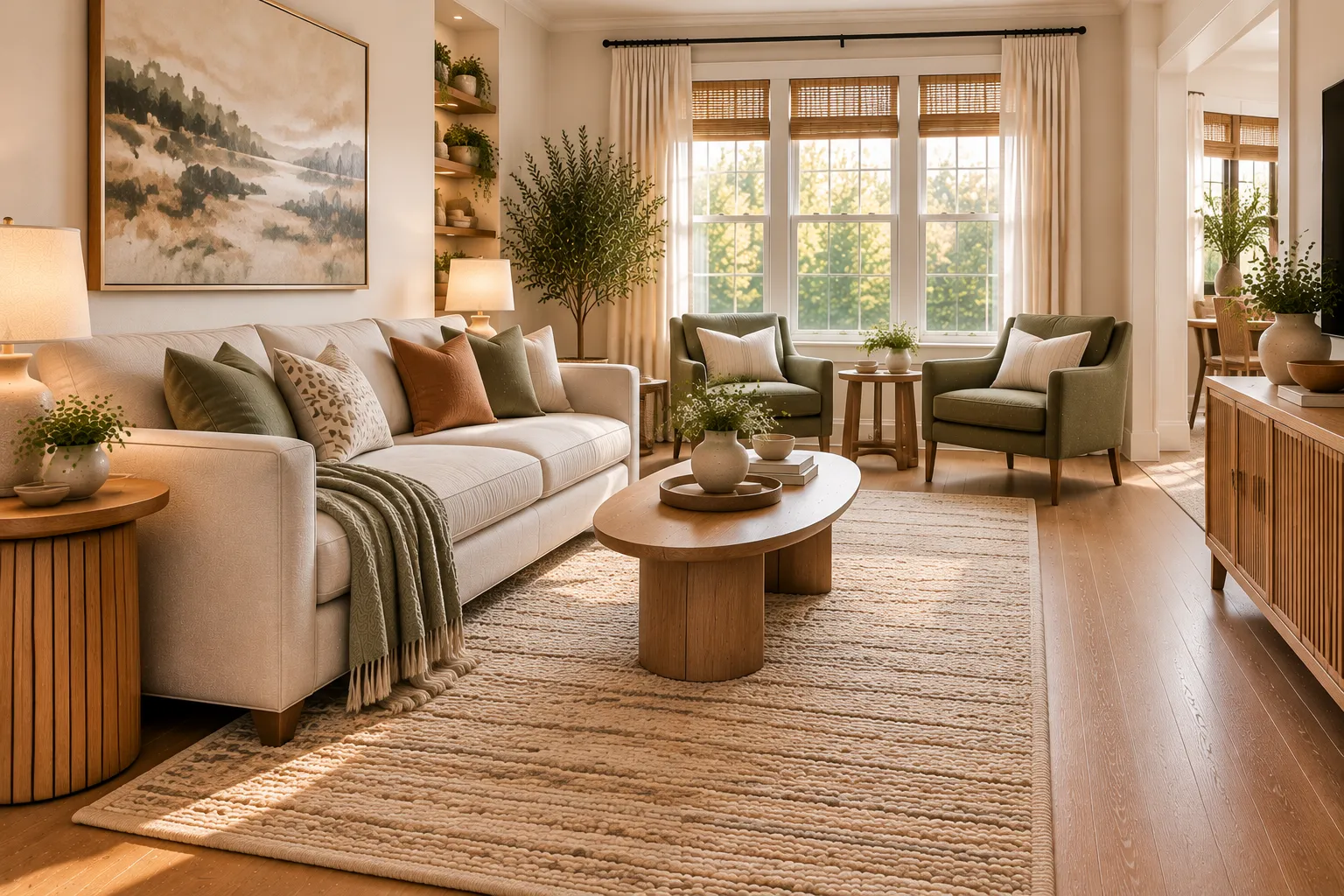
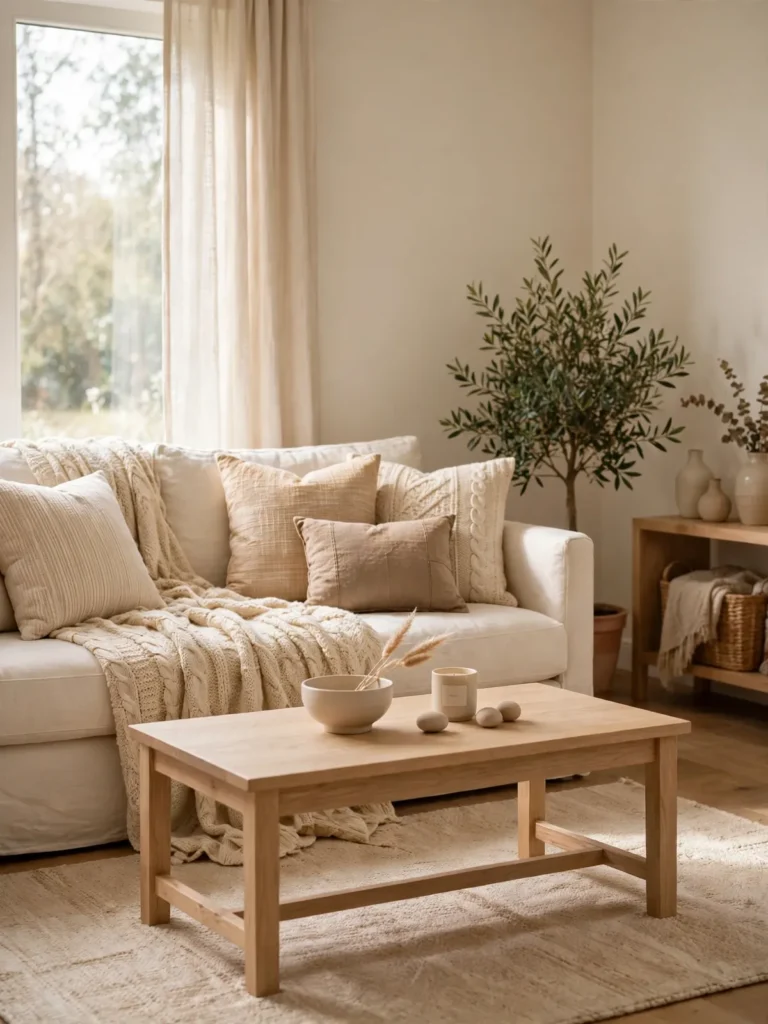
A coffee table should be easy to reach from the sofa without taking over the room. If it is too far away, people have to lean forward to set down a drink. If it is too close, it becomes an obstacle when someone stands up or walks through the space.
A useful starting point is around 14 to 18 inches between the sofa and coffee table, then adjust based on the size of the furniture and the people using it. You should be able to sit down and stand up comfortably, and the table should not block the natural route across the room.
Round or oval tables can be helpful in compact rooms because there are no sharp corners to navigate around. A nesting table, small ottoman, or lightweight side table may work better if you need flexible space. Choose a table that suits the seating rather than one that fills every open spot.
Use the Rug to Connect the Seating Area
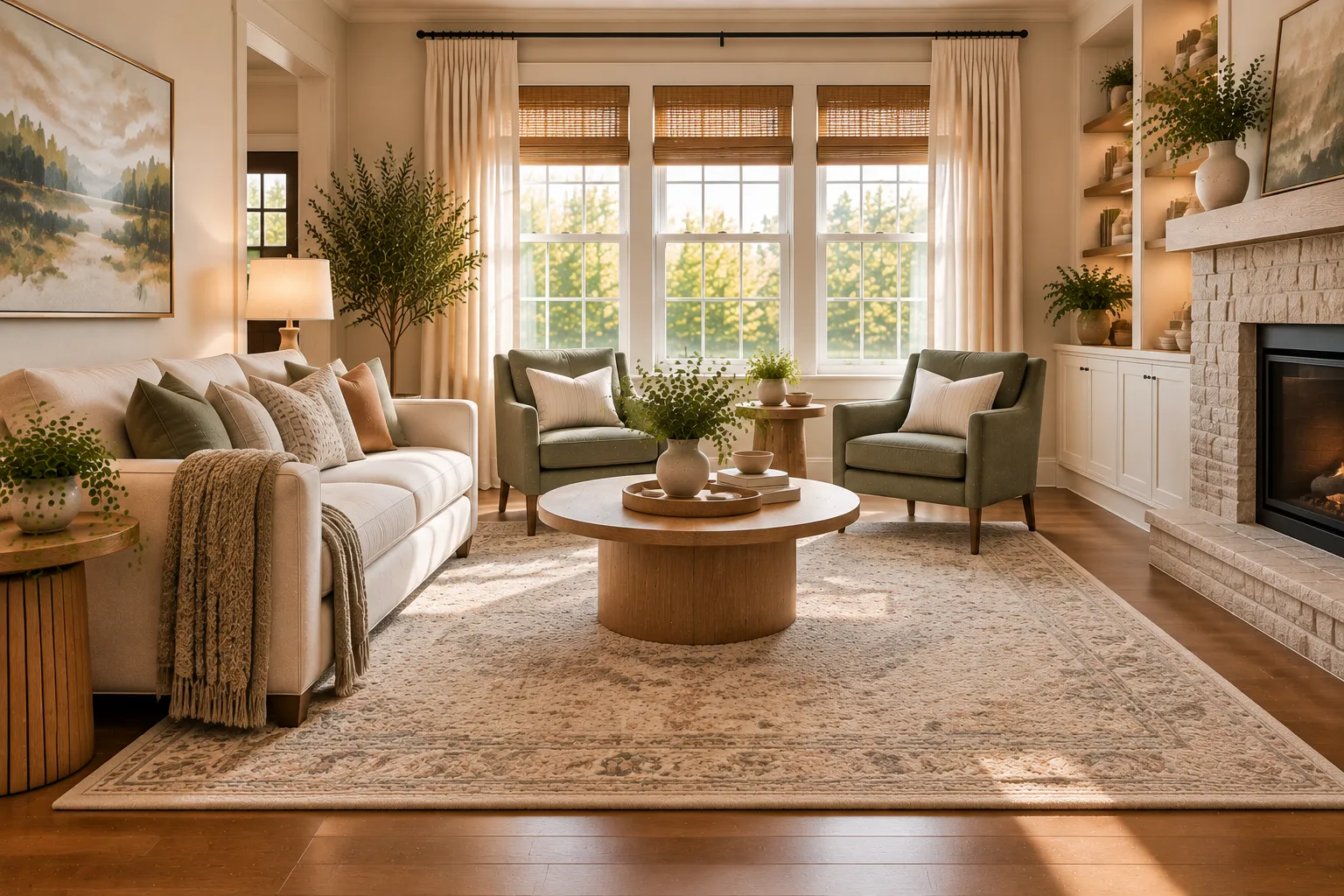
An area rug can make a furniture arrangement feel like one connected space instead of a group of separate pieces. In many living rooms, a rug works well when at least the front legs of the sofa and chairs sit on it. This helps the seating feel anchored while leaving some floor visible around the edges.
A rug that is too small can make the room feel chopped up, while one that is too large may hide the floor and overwhelm the layout. Measure the seating area before shopping, and use painter’s tape to mark the rug size on the floor if you are unsure.
The rug should also support the traffic flow. Make sure its edges lie flat and do not create a trip hazard along a main walkway. If your current rug is slightly small, you may be able to layer it over a larger, simple natural-fiber rug for a more connected look.
Make Small or Narrow Rooms Easier to Move Through
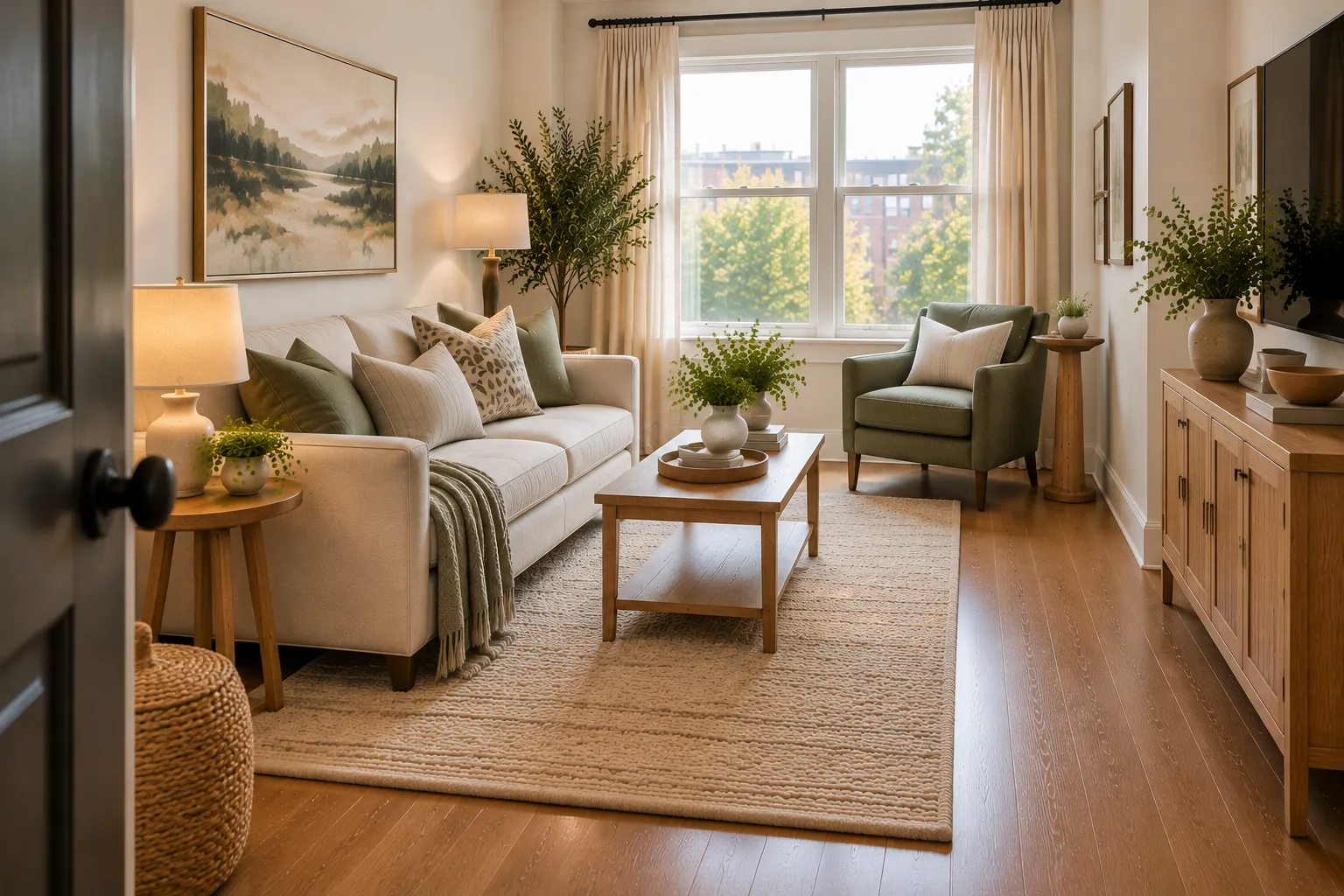
In a small living room, every piece should earn its place. Choose furniture with a suitable footprint, such as a loveseat, a slim-arm sofa, a narrow console, or a coffee table with open space underneath. Furniture with visible legs can also help more floor show, which may make the room feel lighter.
Avoid placing every piece against the walls just because the room is small. In some layouts, pulling the sofa a few inches away from the wall or floating it slightly can improve the path around the seating area. The right choice depends on the room’s shape, doors, windows, and outlets.
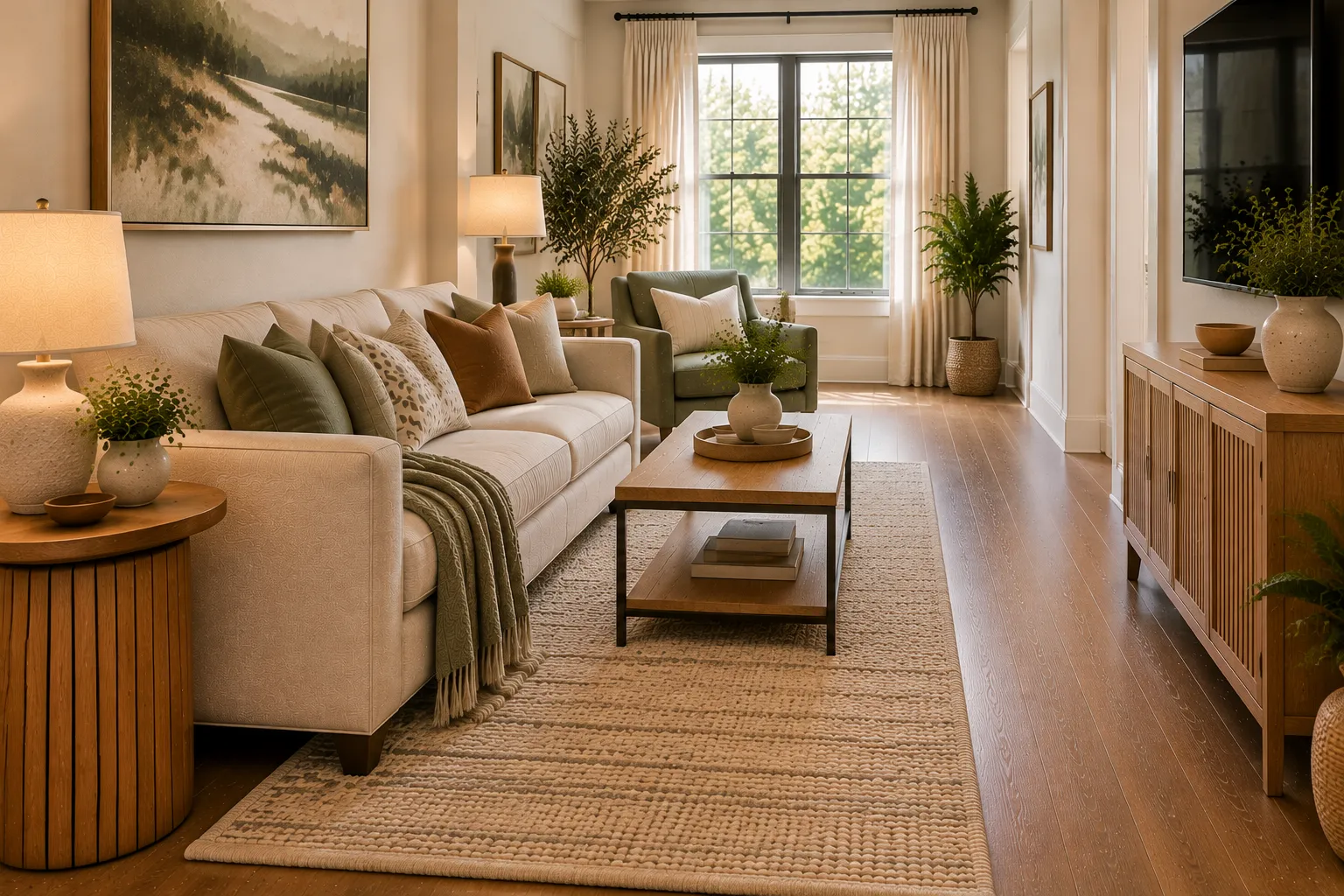
For a long, narrow room, arrange furniture in zones rather than creating one long line of pieces. A compact seating group at one end and a reading chair or small desk at the other can make the room feel useful without blocking the route through it. Mirrors and light colors may help brighten the space, but a clear layout matters most. You can find more room-specific tips in our small living room decorating ideas.
Work With Open-Plan Rooms and Awkward Corners
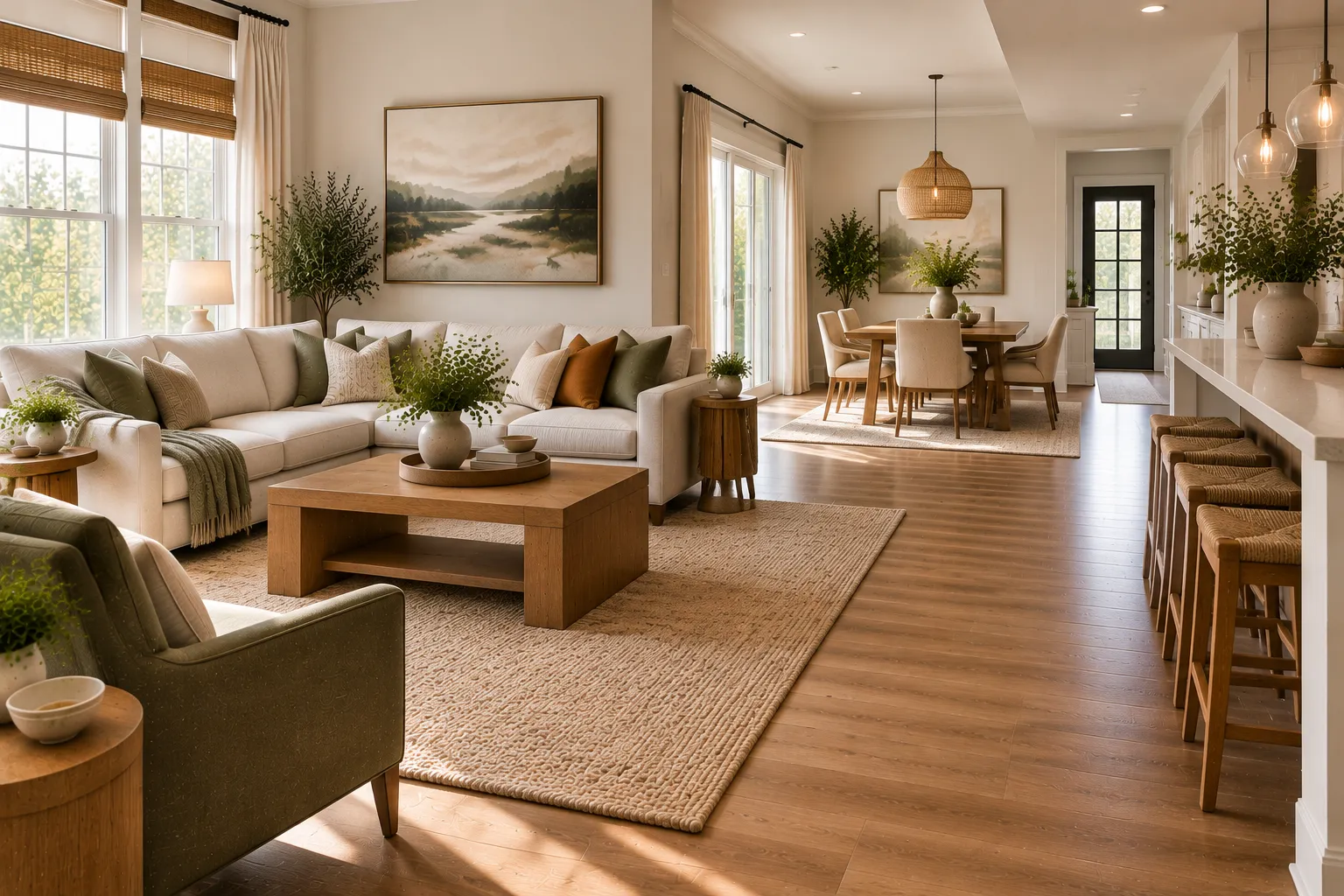
In an open-plan home, the living room may share space with a dining area or kitchen. Use the sofa, rug, or a pair of chairs to show where the living zone begins and ends. You do not always need a divider; a clear furniture arrangement can create a sense of purpose while keeping the room open.
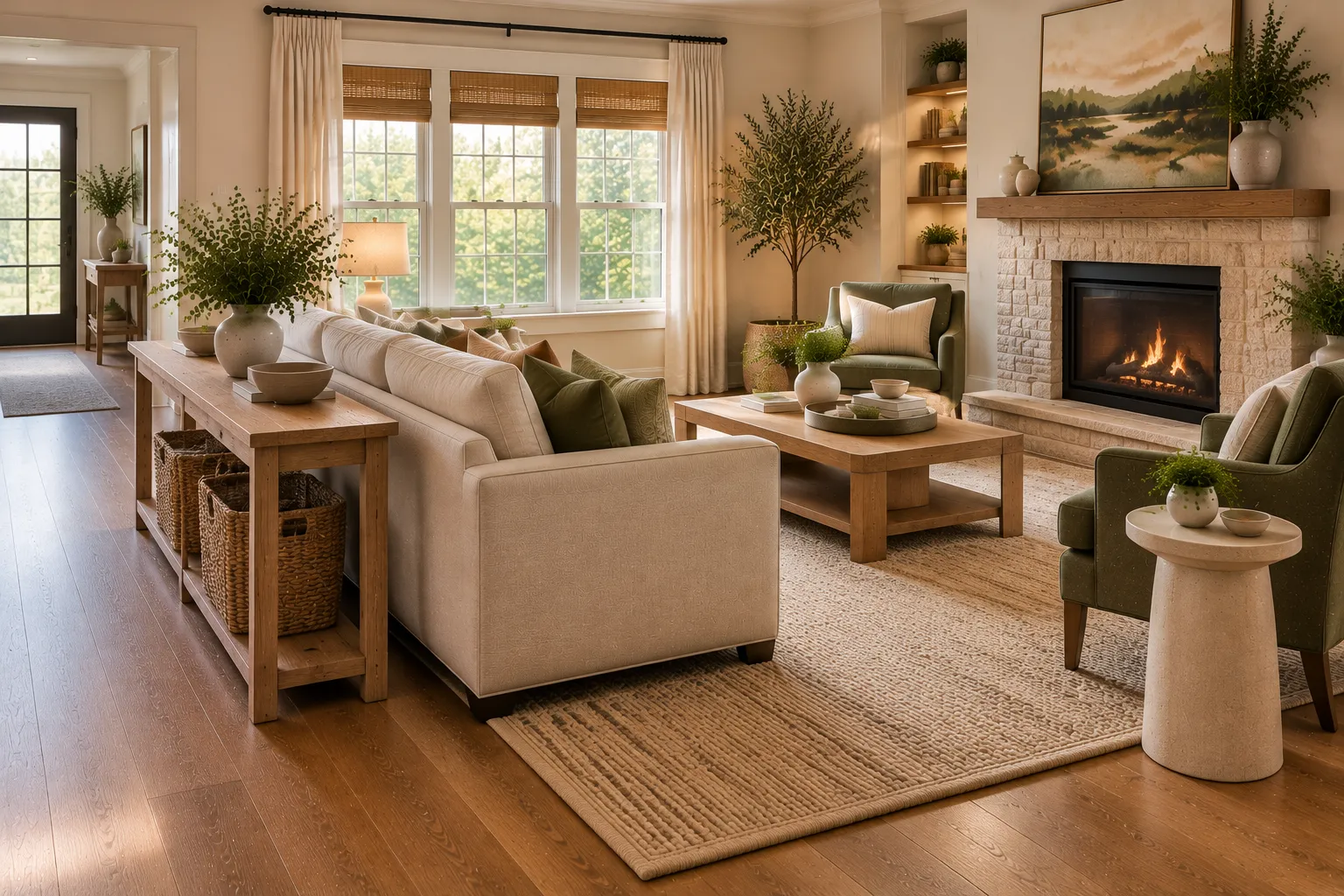
Try to leave a natural route between the kitchen, dining table, and living room. Avoid making people cut through the middle of the seating group to get to another area. If the sofa floats in the room, keep its back tidy with a slim console or a plant only if there is still enough space to pass behind it.
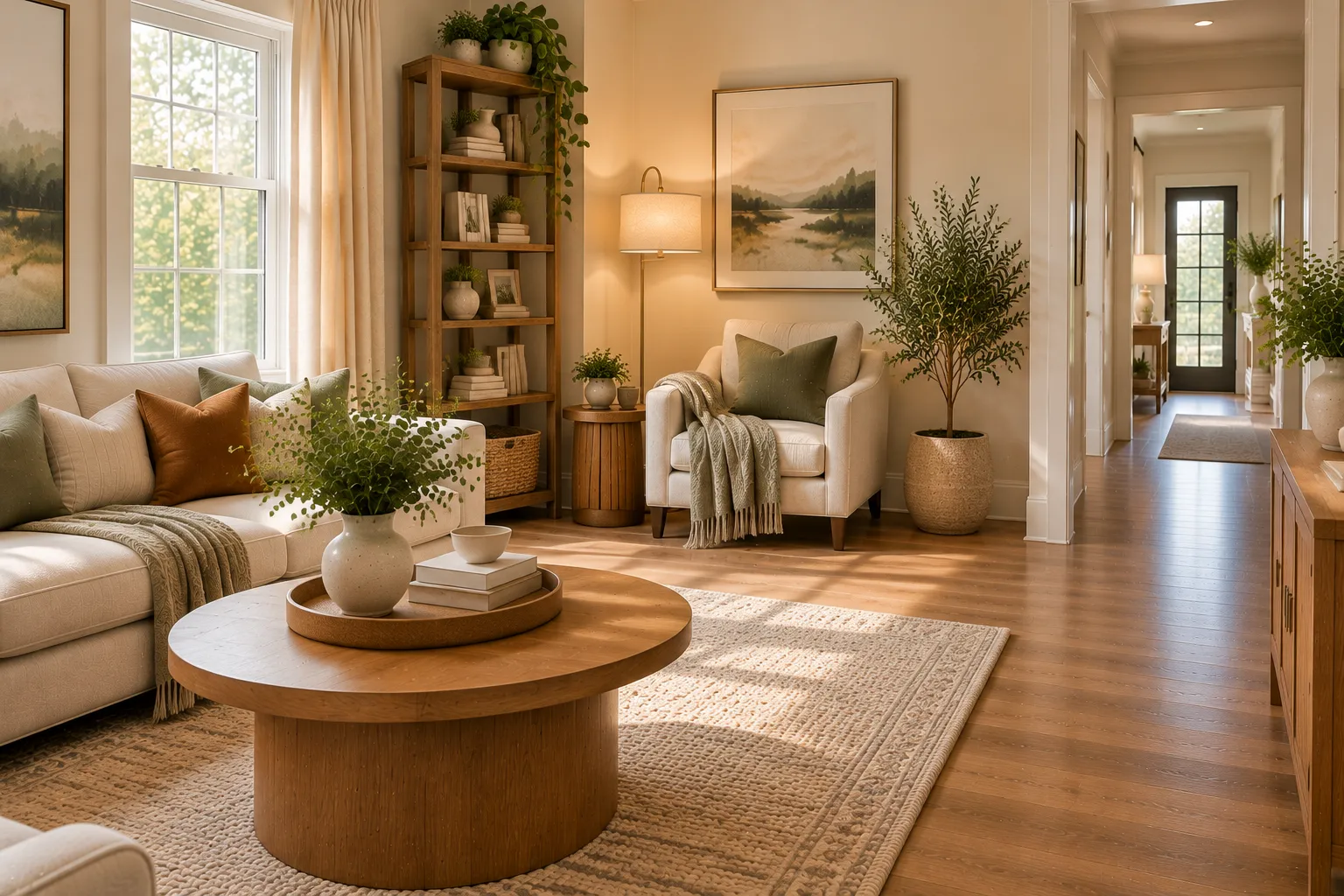
Awkward corners can become useful with a small reading chair, a floor lamp, a narrow bookcase, or a plant. Do not fill every corner just to use it. A little open space helps the whole room feel calmer and makes the main route easier to follow.
Test the Layout Before You Commit
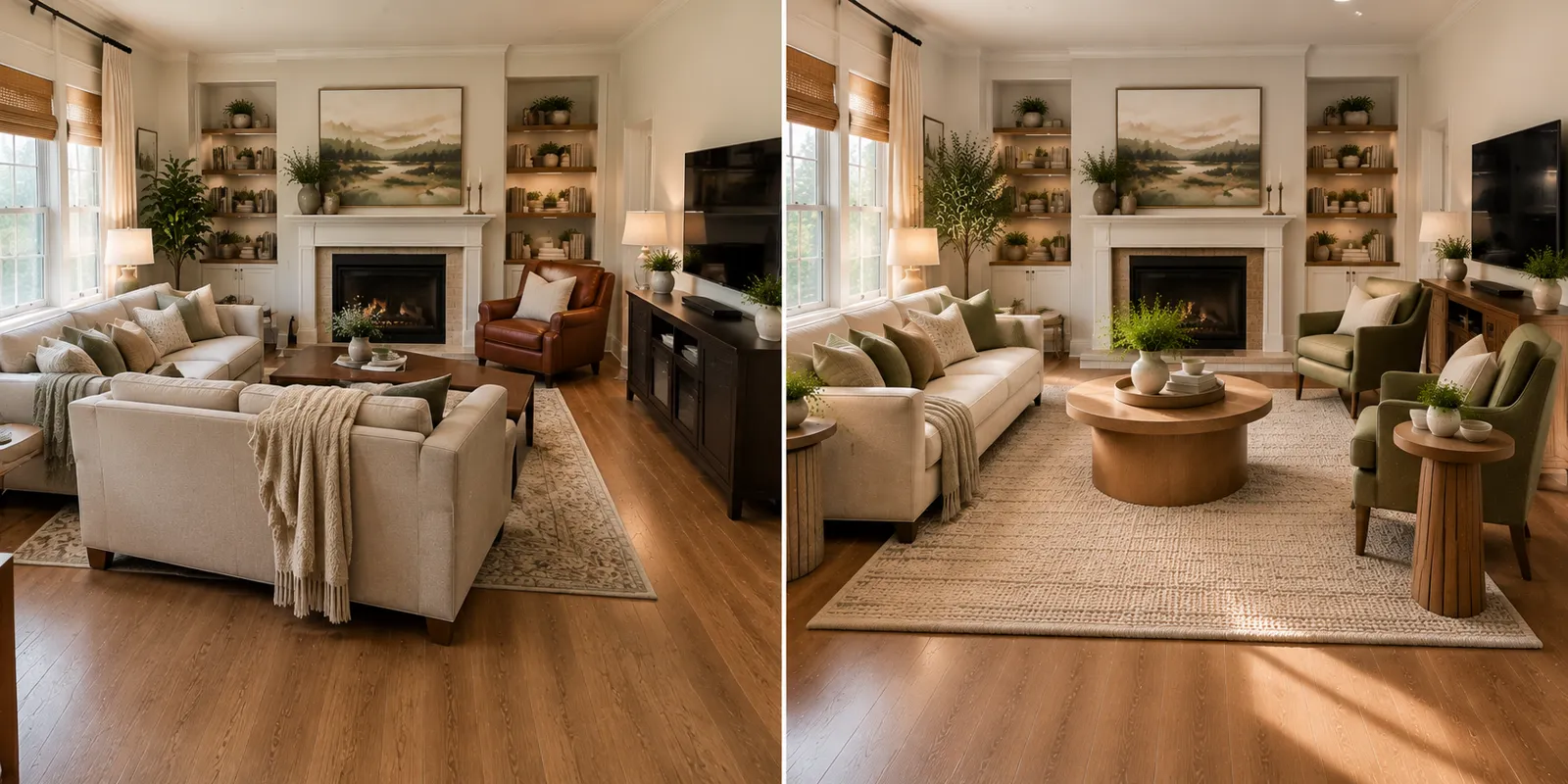
You do not need to get the arrangement perfect on the first try. Move lightweight pieces first, then walk through the room as you normally would. Sit on the sofa and chairs, reach for the coffee table, open cabinets, and check whether doors and drawers have enough room.
Painter’s tape can help you test the footprint of a new rug, sofa, or table before buying it. You can also sketch the room on paper and note the location of doors, windows, outlets, radiators, and vents. These details may affect where furniture can safely go.
Take a photo from the doorway after each change. A picture can make crowded areas or awkward gaps easier to spot. Keep the arrangement that feels comfortable in real life, not just the one that looks most symmetrical. A good living room layout should support everyday movement and feel natural to use.
Frequently Asked Questions
How much space should I leave between a sofa and coffee table?
Around 14 to 18 inches is a useful starting point for many living rooms. Adjust it to your furniture size and make sure people can sit down, stand up, and walk past without bumping into the table.
Should living room furniture be pushed against the walls?
Not always. In some rooms, placing furniture against the walls leaves an empty center and makes conversation harder. Try a small gap behind the sofa or bring chairs closer to create a connected seating area, as long as walkways remain clear.
How do I arrange furniture in a long, narrow living room?
Keep the main route open from one end to the other, use appropriately scaled furniture, and create a defined seating group. A narrow coffee table, compact chair, and rug that fits the seating can help the layout feel balanced.
What is the best living room layout for conversation?
Arrange the sofa and chairs so people can see each other comfortably, usually within a few feet of one another. A slight angle often works well, and a coffee table or side table gives everyone a convenient place to set down a drink.
Related ideas: For more inspiration, explore our living room decorating ideas, cozy living room ideas, and small living room decorating ideas. Also explore living room wall decor ideas and coffee table styling ideas.