How to Decorate a Living Room With High Ceilings
High ceilings are one of those features everyone wants until they have to decorate around them. All that empty wall above the sofa can make a room feel cold and unfinished, and one of the most common decor mistakes is treating a tall room like a normal one — the same small art, the same short curtains, the same low furniture — and then wondering why it still feels off. The height is not the problem; the scale of everything in the room is.
The fix is not to fill every inch. It is to work with the height instead of fighting it: hang things higher, choose a few large pieces instead of lots of small ones, and keep the seating area cozy. The same rules that stop a small room from feeling cramped work in reverse here — scale matters, and every piece should earn its size. A leather sofa, a big rug, and warm light at eye level can turn a tall, echoey space into a warm living room that still shows off the height. This guide walks through nine simple steps, and none of them need a big budget or a contractor — just a few smart choices that make a tall room feel like home.

1. Start With the Height, Not the Furniture
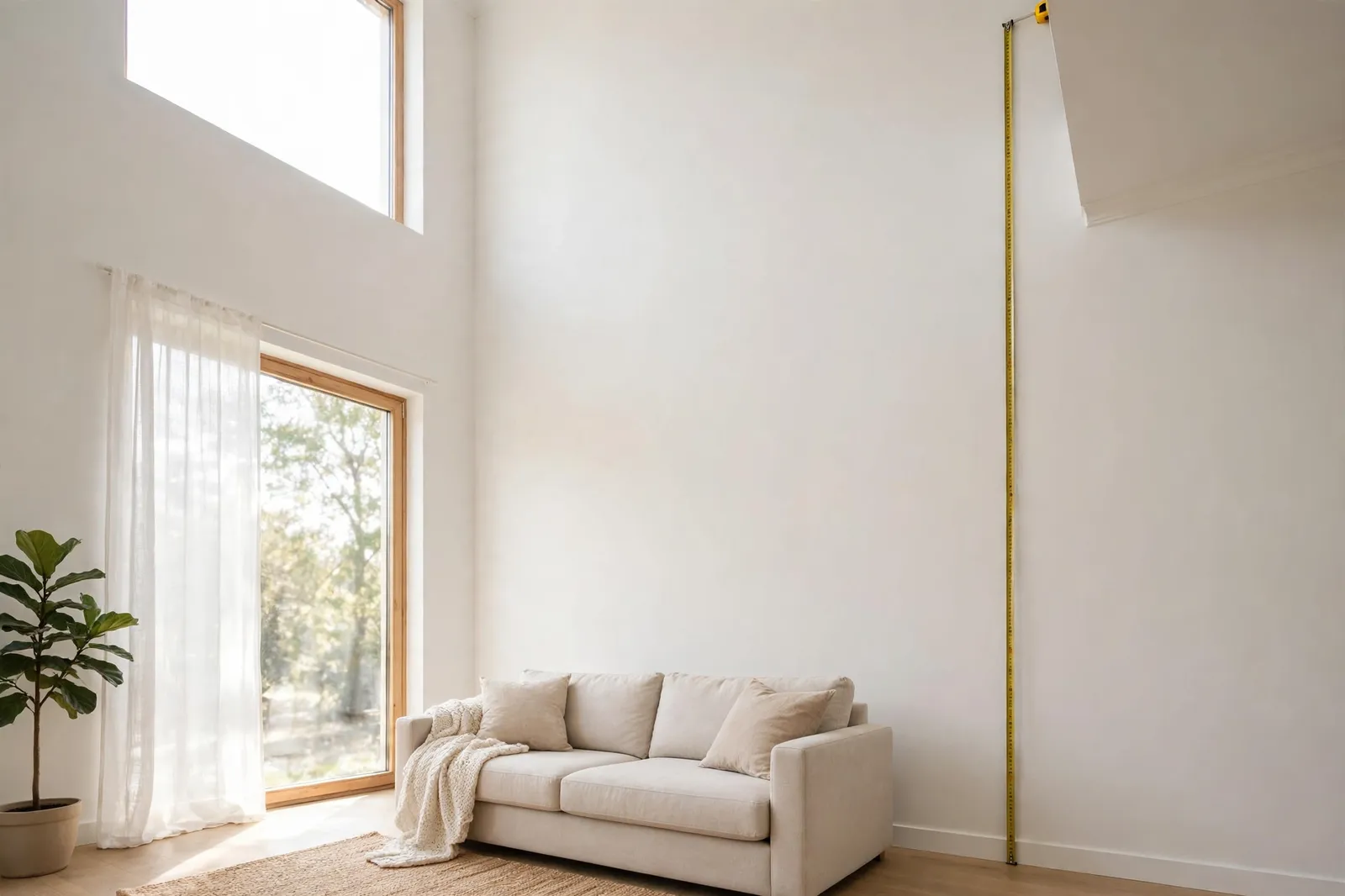
Before you buy anything, measure the walls. Most living room walls are eight or nine feet tall, but a high-ceiling room can run twelve, fourteen, or even sixteen feet, and that changes everything about what fits. Write the numbers down and keep them on your phone when you shop, so you can check whether a piece of art or a curtain panel is actually tall enough before you bring it home.
Look at the room in three parts: the seating level where you sit and talk, the middle band at eye level and just above it, and the top of the wall near the ceiling. Each part needs something, but not the same thing. The bottom gets furniture and a rug, the middle gets art and lighting, and the top gets one strong feature — a beam, a tall plant, or a piece of art hung high. When you plan by height instead of by shopping list, the room starts to make sense.
2. Go Big With Art and Mirrors
Small art is the fastest way to make a tall wall look worse. A little frame floating in the middle of a twelve-foot wall just points out how much empty space is around it, and it is one of those decorating mistakes that is easy to miss until someone points it out. In a high-ceiling room, art needs to be big — think one large canvas, a set of three tall frames hung in a row, or a gallery wall that runs from sofa height up toward the ceiling.
Mirrors work the same way and do double duty. A tall mirror leaning against the wall or hung above a console bounces light around the room and makes the space feel brighter, which matters when the ceiling is so far above the lamps. Hang the center of the art or mirror at eye level, around 57 to 60 inches from the floor, and let the size of the piece do the work of filling the wall above it.

3. Hang Long Curtains All the Way Up
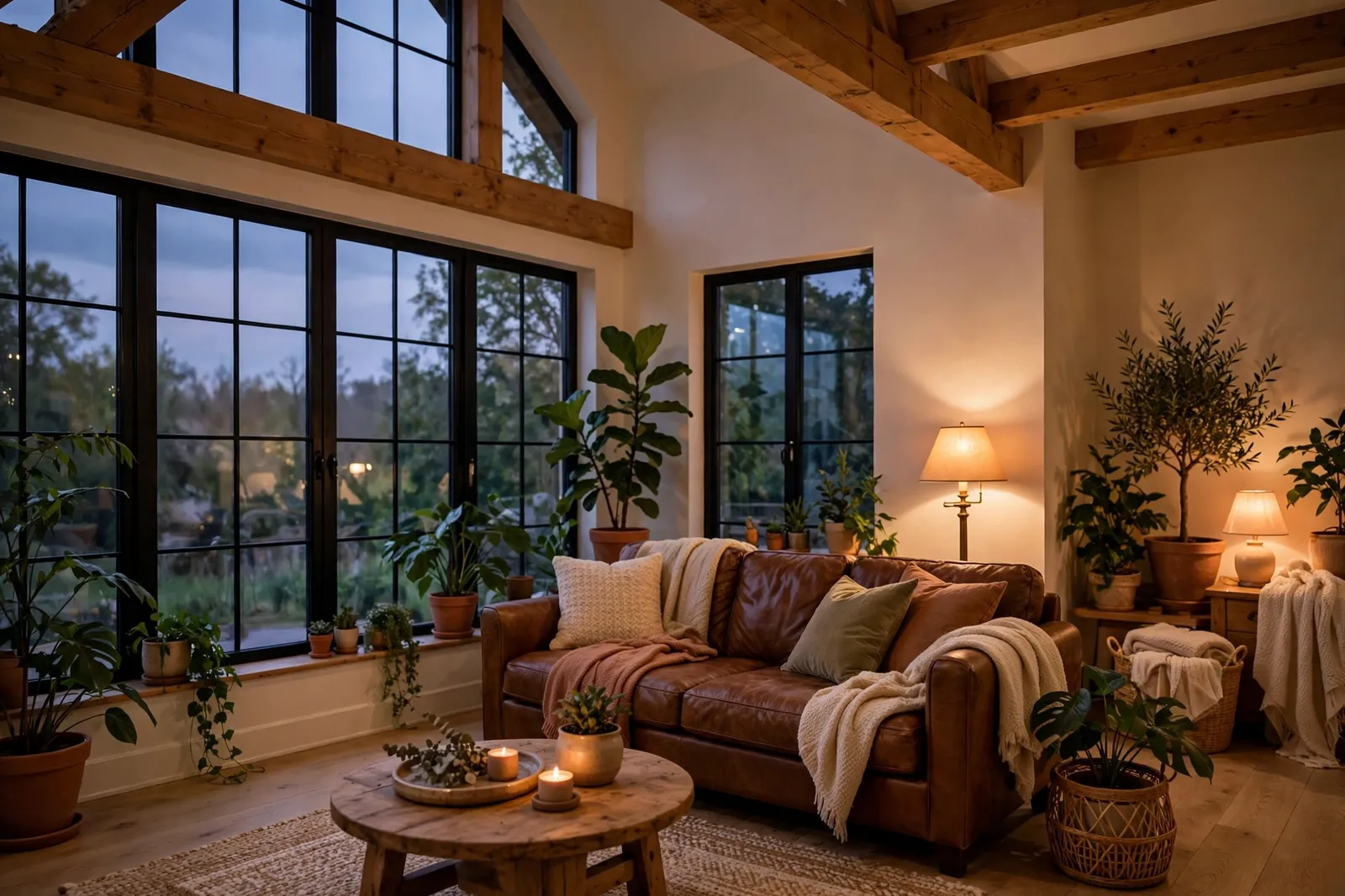
Short curtains are a dead giveaway in a tall room. When the rod sits just above the window frame, it chops the wall in half and makes the ceiling look even higher by comparison. Instead, mount the curtain rod as close to the ceiling as you can — or at least a foot above the top of the window — and let the panels run all the way to the floor.
Long curtains do two things at once: they draw the eye up the full height of the wall, which makes the room feel grand instead of empty, and they soften all that hard vertical surface. Pick a fabric with a little weight to it, like linen or a cotton blend, and let the panels puddle just slightly on the floor or skim it. If the windows are very tall, you can even use two panels per side so the curtains look full instead of stretched thin.

4. Pick a Statement Light Fixture
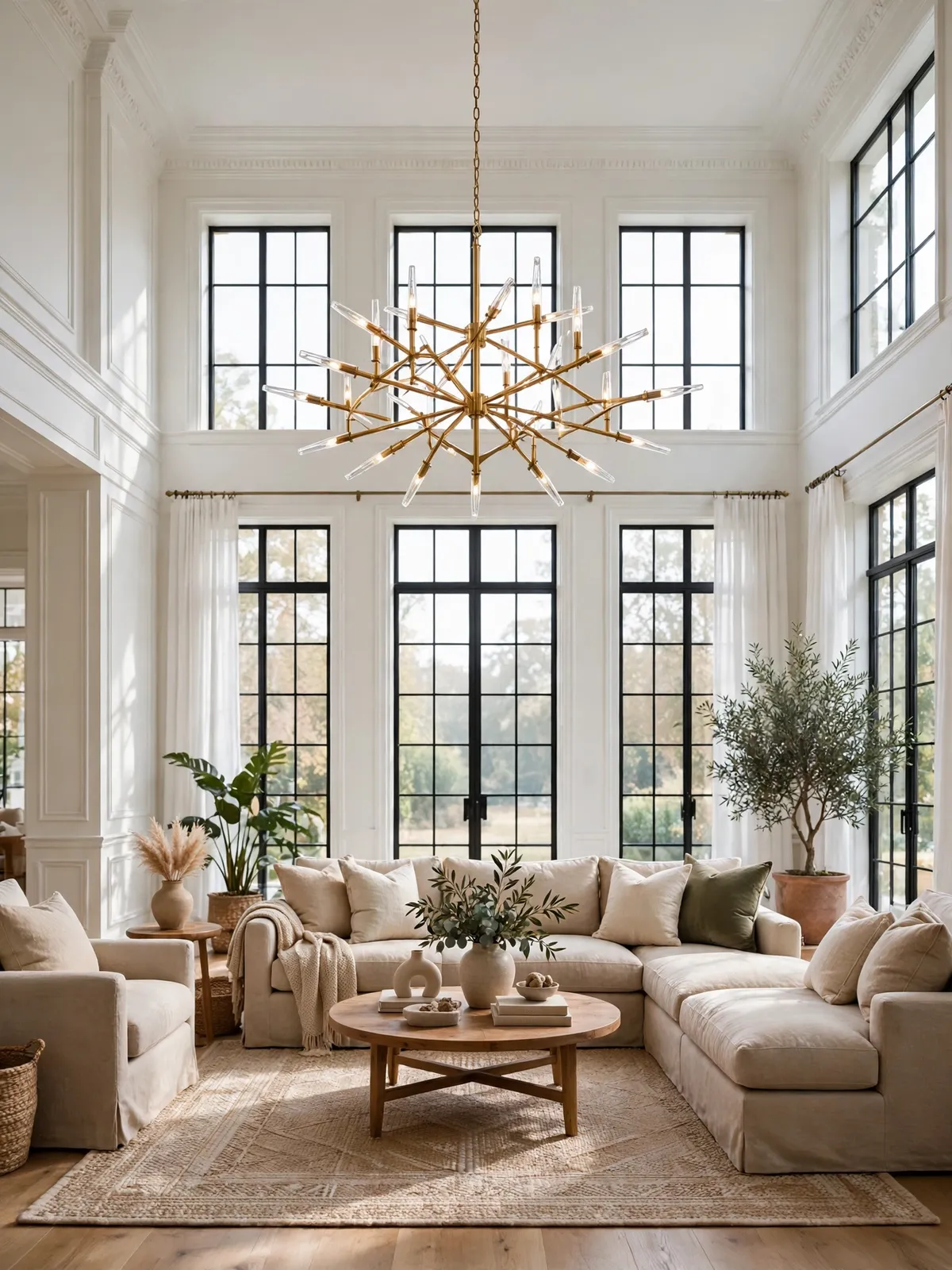
A high ceiling is wasted on a small flush-mount light. This is the one place where going big pays off fast: a large chandelier, a cluster of pendant lights, or a bold drum shade hung low enough to be seen fills the empty air in the middle of the room and gives the eye something to land on. As a rough guide, add the length and width of the room in feet, and use that number in inches as the width of the fixture — a 14 by 18 foot room calls for about a 32-inch chandelier.
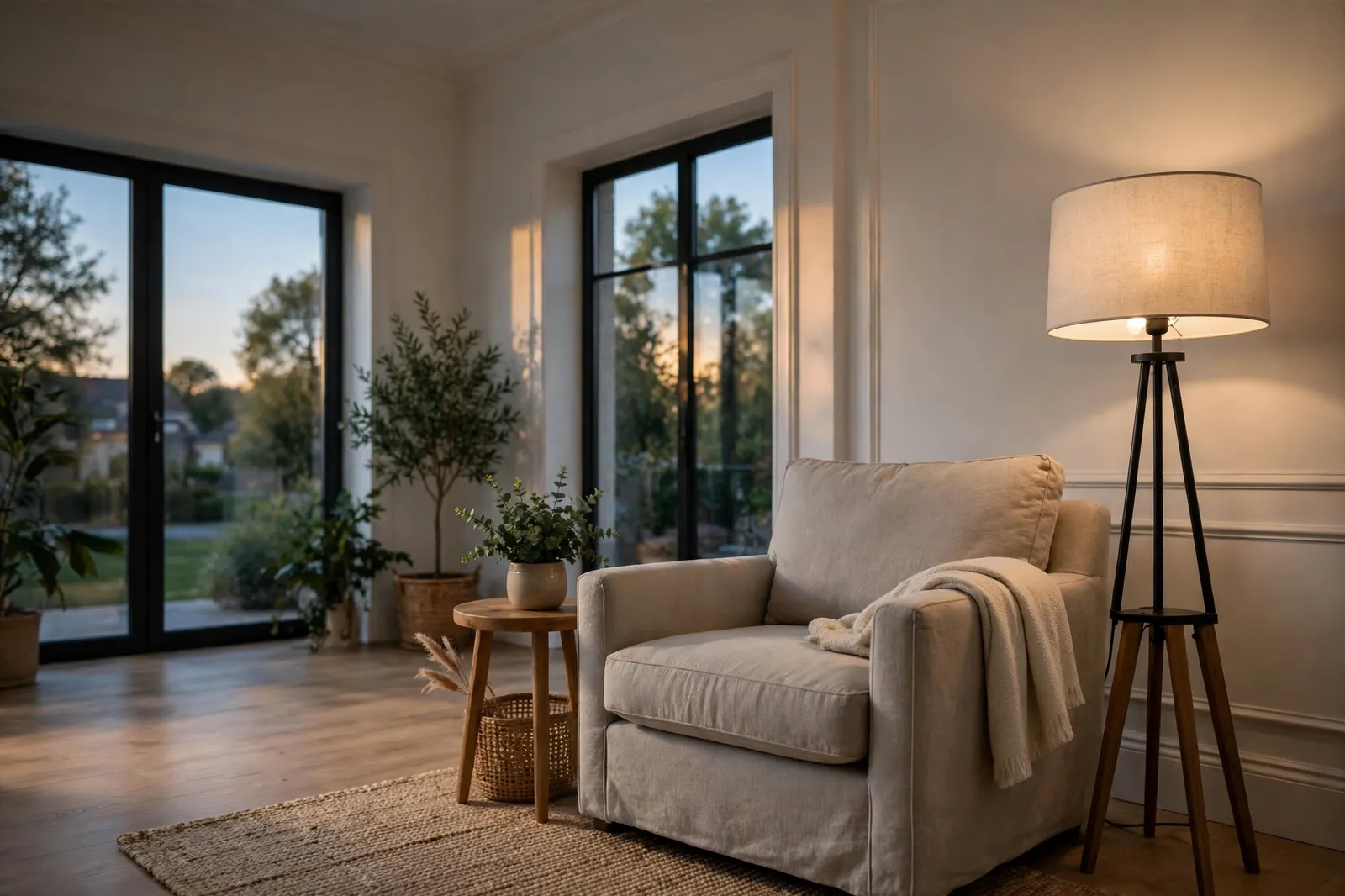
Hang it so the bottom of the fixture sits about seven feet off the floor, or about 30 to 36 inches above the coffee table if it hangs over one. That puts the light where people actually are, instead of lost near the ceiling. If a chandelier is out of budget, a large pendant or even a tall floor lamp with a big shade can pull the light down to seating level and warm up the whole room.

5. Layer Tall and Low Furniture
A room full of low furniture under a high ceiling feels like a dollhouse in a warehouse. Too much low furniture makes the seating area look smaller and lost under all that wall, so you need at least one or two tall pieces to meet the ceiling halfway. A tall bookshelf, an armoire, a floor lamp with a long stem, or a big plant in a tall pot all help bridge the gap between the sofa and the ceiling.
Mix the heights on purpose. Pair the low sofa with a tall shelf on one side and a floor lamp on the other, so the eye moves up and down instead of hitting one flat line. Keep the pieces in the same color family so the mix looks planned rather than random. One tall piece per wall is usually enough — you want the room to feel layered, not crowded.

6. Use the Walls: Shelves, Paneling, and Texture
Bare drywall is what makes tall rooms feel cold. You do not have to cover every inch, but giving one wall some texture changes the whole feel of the room. Wood paneling or shiplap on the lower half of a wall, a brick or stone accent wall, or even a bold paint color on one tall wall breaks up the flat surface and adds warmth that paint alone cannot.
Floating shelves are a cheaper way to do the same thing. Run two or three long shelves up a tall wall and style them with books, vases, and a few plants, leaving some breathing room between objects. The shelves give the wall a job and pull the eye upward in steps instead of one big blank jump. Whatever you choose, keep it to one or two feature walls — too many textured walls in one room start to fight each other.

7. Bring in a Large Rug to Ground the Room
A rug that is too small is a classic mistake in any room, and in a high-ceiling room it looks even worse, because the floor is the one surface that can anchor all that height. The rug should be big enough to sit under the front legs of the sofa and the chairs, with at least six inches of rug showing on each side. In most living rooms that means an 8 by 10 or a 9 by 12 foot rug.
The rug also sets the tone for the seating area. A warm pattern or a soft solid in a color you love pulls the sofa, the chairs, and the coffee table into one group, so the eye reads them as a cozy corner instead of furniture floating in a big empty box. If a large rug is out of budget right now, layer a smaller rug over a big, cheap jute base — you get the size without the price tag.

8. Style the TV Wall Without Losing the Height
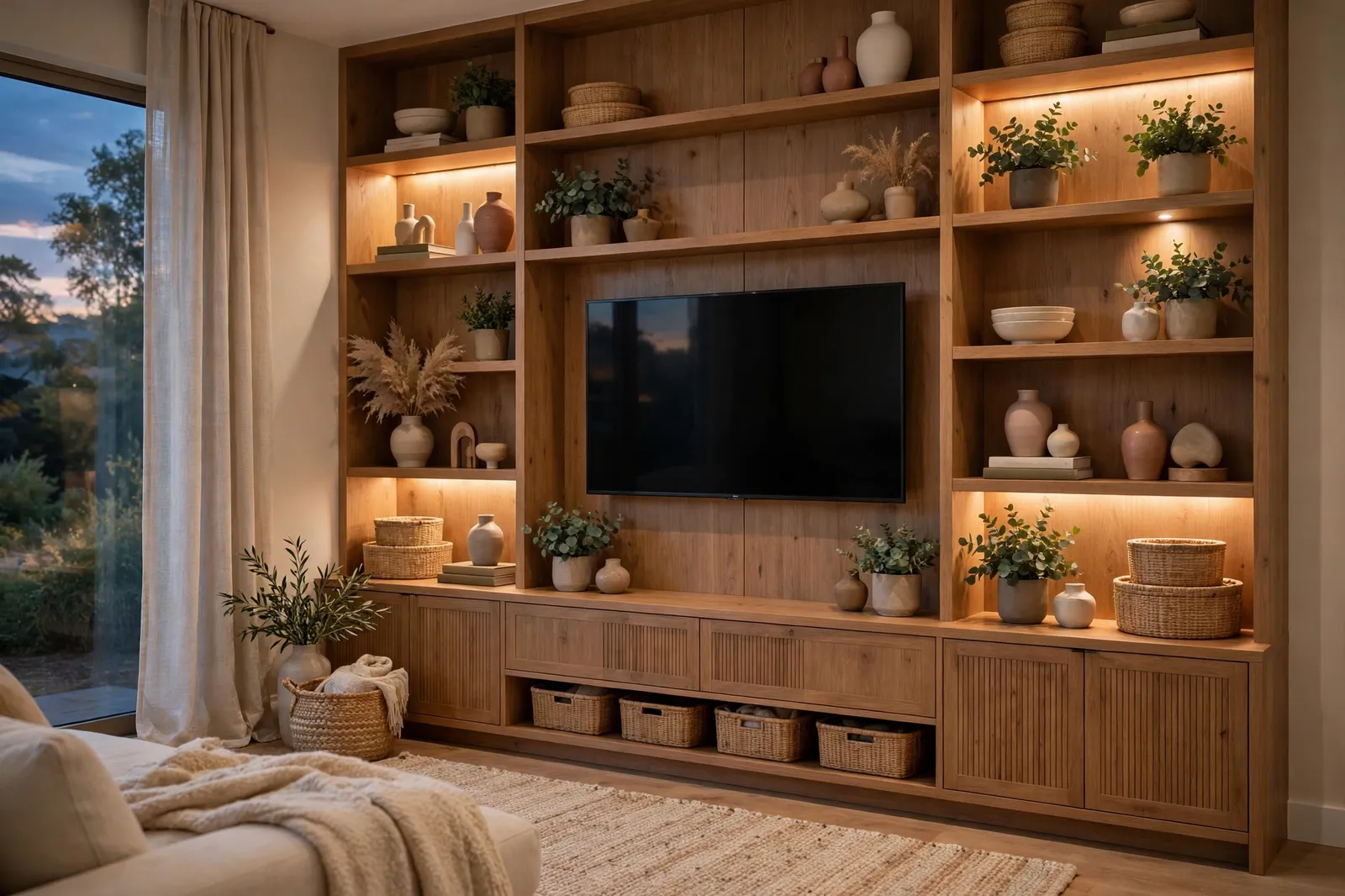
The tv wall is where most high-ceiling rooms go wrong. The screen ends up mounted way too high, or it floats alone on a giant wall with nothing around it, and everyone ends up craning their necks. Mount the television at eye level from the sofa — the center of the screen should sit around 42 to 48 inches off the floor — and treat the wall around it like the rest of the room.
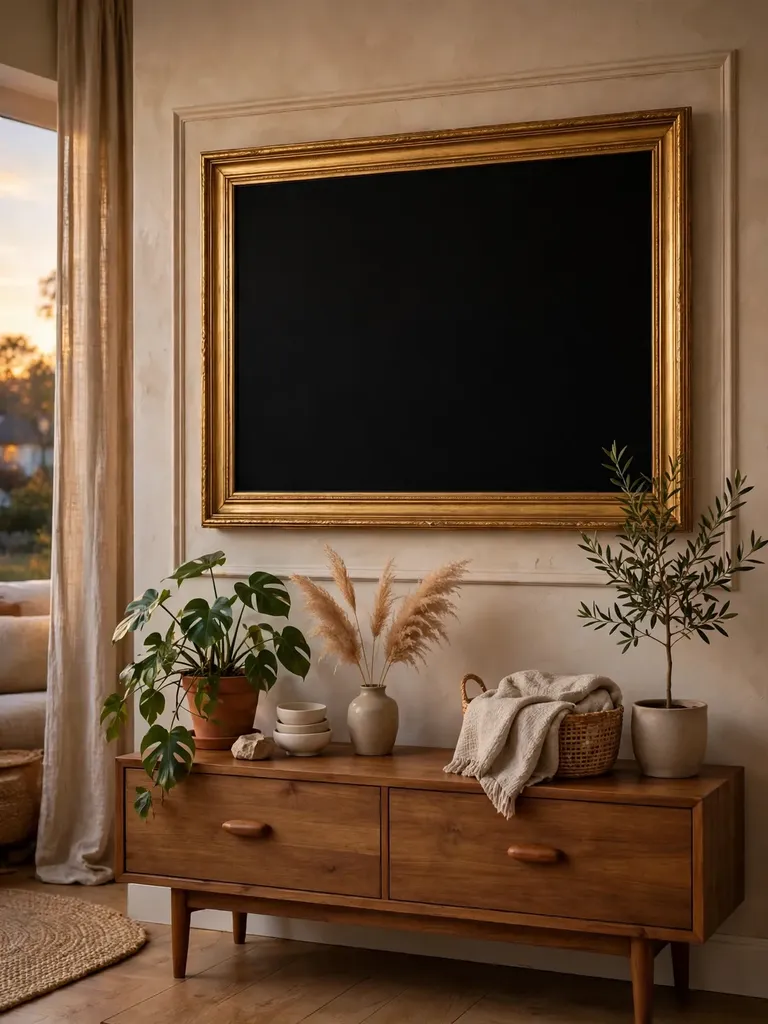
Build the media wall out from the screen instead of up from it. A low, wide console under the TV, shelves or art on either side, and a tall plant in one corner frame the television and hide the tv cables and boxes, so the wall looks finished instead of bare. If you really want to hide the tv when it is off, a sliding panel, a frame-style TV that shows art, or cabinet doors all work, but even a well-styled open setup beats a bare screen on a blank wall.
9. Add Warmth So It Does Not Feel Like a Hall
Height can feel grand, but it can also feel like a hotel lobby if everything in the room is hard and bare. The last step is warmth, and it comes from the soft stuff: throw blankets over the sofa arms, pillows in a few different textures, a warm wood coffee table, and lamps that glow at sitting height instead of only overhead. A leather sofa helps here too — the rich color and texture of leather warms up a tall room in a way a pale fabric sofa never will.
Plants are the other easy win. One large tree in a corner — a fiddle leaf fig, an olive tree, or a tall snake plant — fills vertical space with something alive and softens the hard lines of the walls. Put the big plant where the wall feels emptiest, usually a corner or beside the TV, and let it do the work. When the room has soft light, warm textures, and something green, the height stops feeling cold and starts feeling like the best part of the house.

Frequently Asked Questions
How do you decorate a living room with high ceilings on a budget?
Start with the cheap wins: hang the curtains high, move the art up and group it bigger, and add a large plant and a few throw blankets. A big rug from a discount store and one statement light fixture make the largest difference for the money, and you can add shelves or paneling one wall at a time as the budget allows.
What size art should I hang on a tall living room wall?
Go big — a single piece should be at least two-thirds as wide as the sofa below it, and a gallery wall should run from just above the sofa up toward the ceiling. Hang the center of the piece at eye level, around 57 to 60 inches from the floor, and let the size of the art fill the wall above it.
How long should curtains be in a living room with high ceilings?
Mount the rod close to the ceiling and let the panels run all the way to the floor, so they cover the full height of the wall. Measure from the rod to the floor before you buy, and look for panels at least 108 inches long — standard 84-inch panels are almost always too short for a high-ceiling room.
How do I make a living room with high ceilings feel cozy?
Keep the seating area tight and warm: a large rug under the furniture, soft lighting at sitting height, throw blankets and pillows, and warm textures like wood and leather. One large plant and a few tall pieces of furniture fill the vertical space so the room feels grand and cozy at the same time.
Related ideas
If you are working on the rest of the room too, Living Room Wall Decor Ideas for Every Style will help you fill those tall walls, Living Room Curtain Ideas for Different Window Types covers long panels and tricky tall windows, and How to Decorate a Living Room With a Sectional Sofa shows how to anchor a big seating piece under a high ceiling. You might also like Living Room Decor Mistakes That Make the Room Look Smaller and Living Room Throw Pillow Ideas That Actually Look Good Together.