How to Create a Calm Bedroom That Helps You Sleep Better

A bedroom should be the calmest room in the house, but for a lot of people it is not. Bright lights, a pile of laundry on the chair, a phone glowing on the nightstand, and walls painted in a loud color can all make it harder to wind down at night. You lie in bed wide awake, even though you are tired, and the room itself is part of the reason why.
The good news is that you do not need a full makeover or a big budget to fix it. Small changes — softer colors, warmer light, less clutter, better bedding — add up fast, and most of them cost very little. This guide walks you through nine simple steps that turn an ordinary bedroom into a calm space where sleep comes easier.
1. Start With a Calming Color Palette
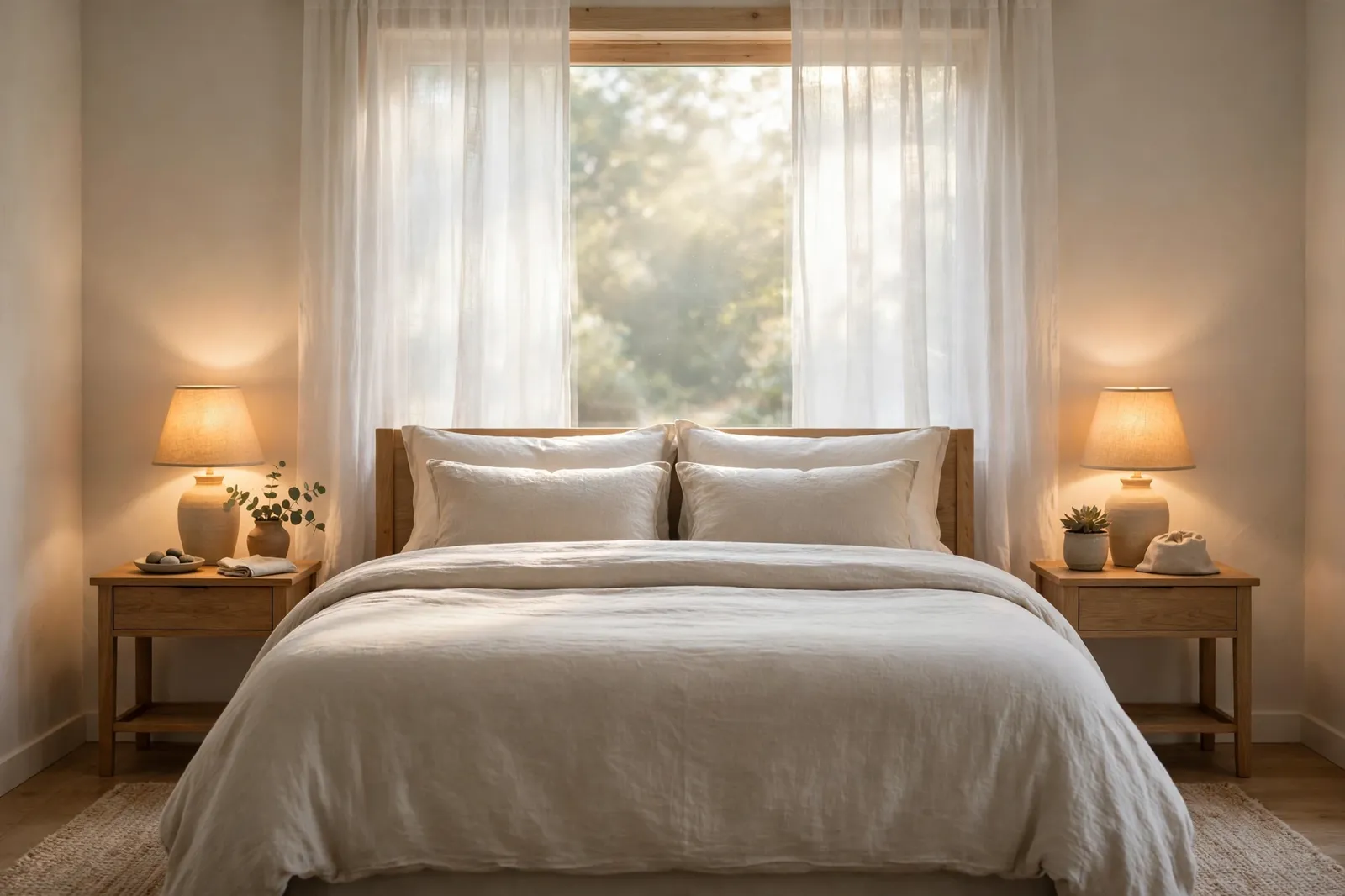
Color sets the mood of a bedroom before anything else does. Loud reds, bright oranges, and neon shades wake your brain up, which is the opposite of what you want at bedtime. Soft, muted colors do the reverse — they tell your brain it is safe to slow down. Think warm whites, soft grays, pale blues, gentle greens, and dusty sage.
You do not have to repaint the whole room to get the effect. If your walls are already a bold color, try painting just the wall behind the bed, or soften the room with bedding and curtains in calm tones instead. Pick two or three colors that sit well together and repeat them through the room — the bedding, a throw, the curtains — so the whole space feels settled instead of busy.

2. Keep the Bed the Focus
In a calm bedroom, the bed is the star of the show, and everything else plays a supporting role. When the bed looks inviting, the whole room feels restful. Start by making it every morning — it takes two minutes, and a made bed changes how the entire room feels the moment you walk in.
Dress the bed in layers you actually like to touch: a soft fitted sheet, a light duvet or quilt, and one or two pillows that feel right, not a mountain of cushions you have to clear away every night. A simple throw folded across the foot of the bed adds warmth without clutter. When the bed looks calm and comfortable, the rest of the room tends to follow.

3. Layer Soft, Warm Lighting
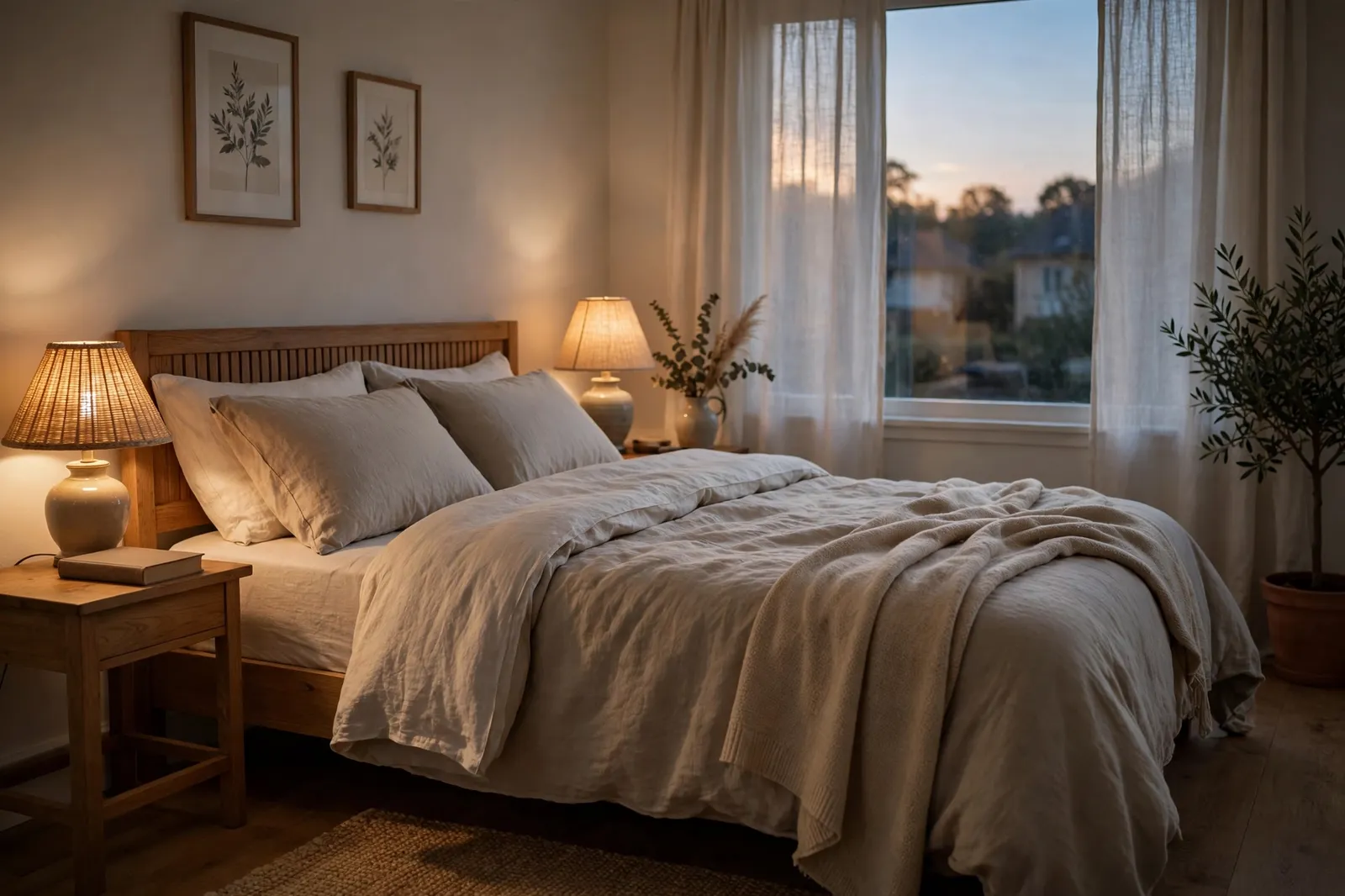
Bright white ceiling lights are the enemy of a calm bedroom. They make the room feel like an office, and they keep your brain alert when it should be winding down. Warm, low light is what you want in the evening — the kind of glow that makes you feel sleepy just looking at it.
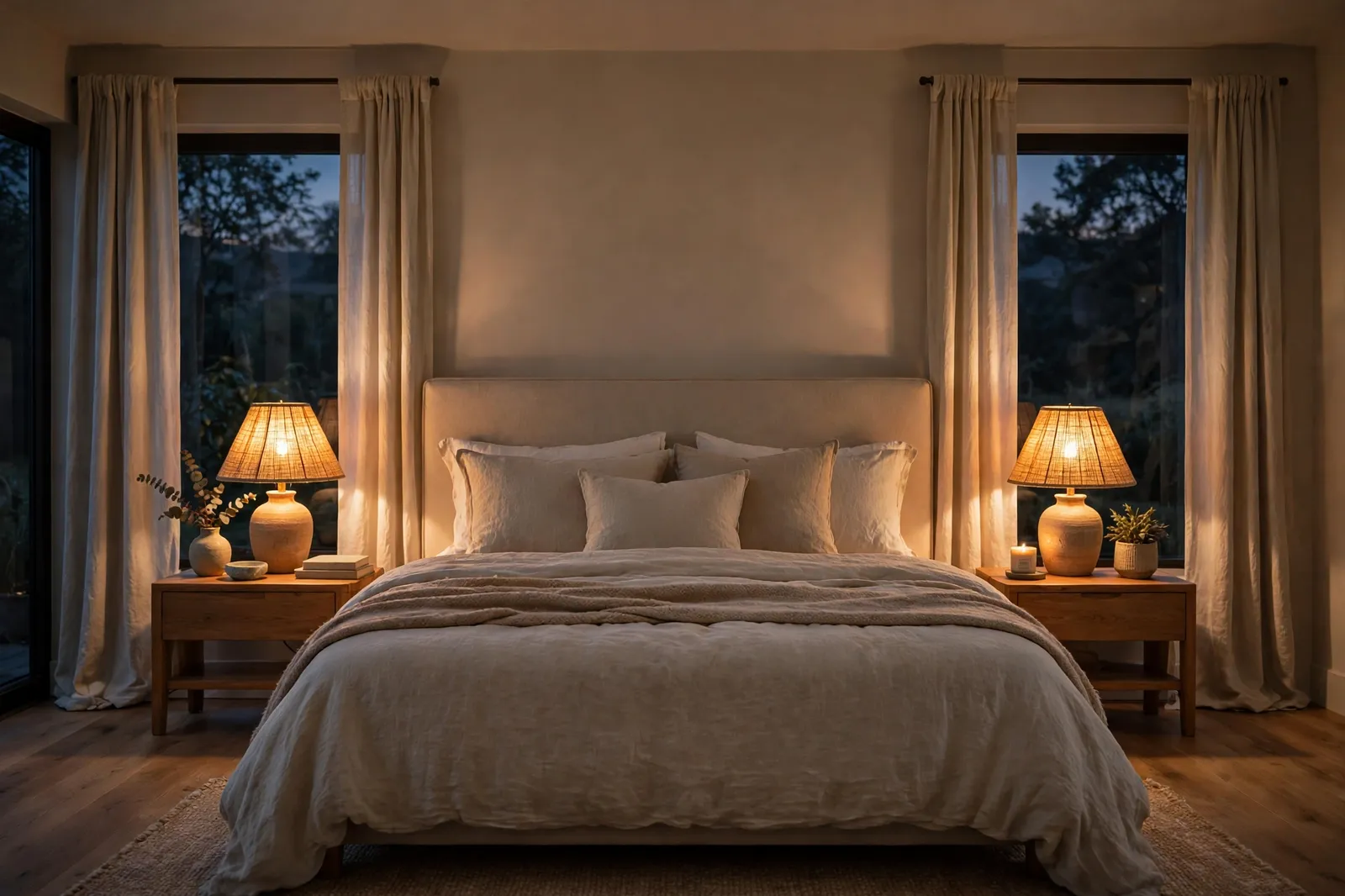
Swap bright bulbs for warm ones, and add a lamp on each nightstand so you can turn the big light off early. A small lamp with a fabric shade gives off a much softer glow than a bare bulb. If you read in bed, a clip-on reading light or a bedside lamp with a dimmer lets you keep the light low and close. Keep the overhead light for cleaning and getting dressed, and use the lamps for the last hour before sleep.
4. Choose Bedding That Feels Good
You spend a third of your life in bed, so the bedding matters more than almost anything else in the room. Scratchy sheets and a heavy, hot duvet can keep you tossing and turning all night, no matter how pretty they look. Pick sheets that feel soft against your skin — cotton or linen are safe bets — and wash them often so they stay fresh.
Think about temperature, too. If you run hot at night, a lighter duvet and a breathable cotton cover will help you stay comfortable. If you run cold, a soft throw at the foot of the bed is easier to adjust than a thick blanket you cannot kick off. The goal is bedding you do not have to think about once you are under it, so your body can relax and drift off.

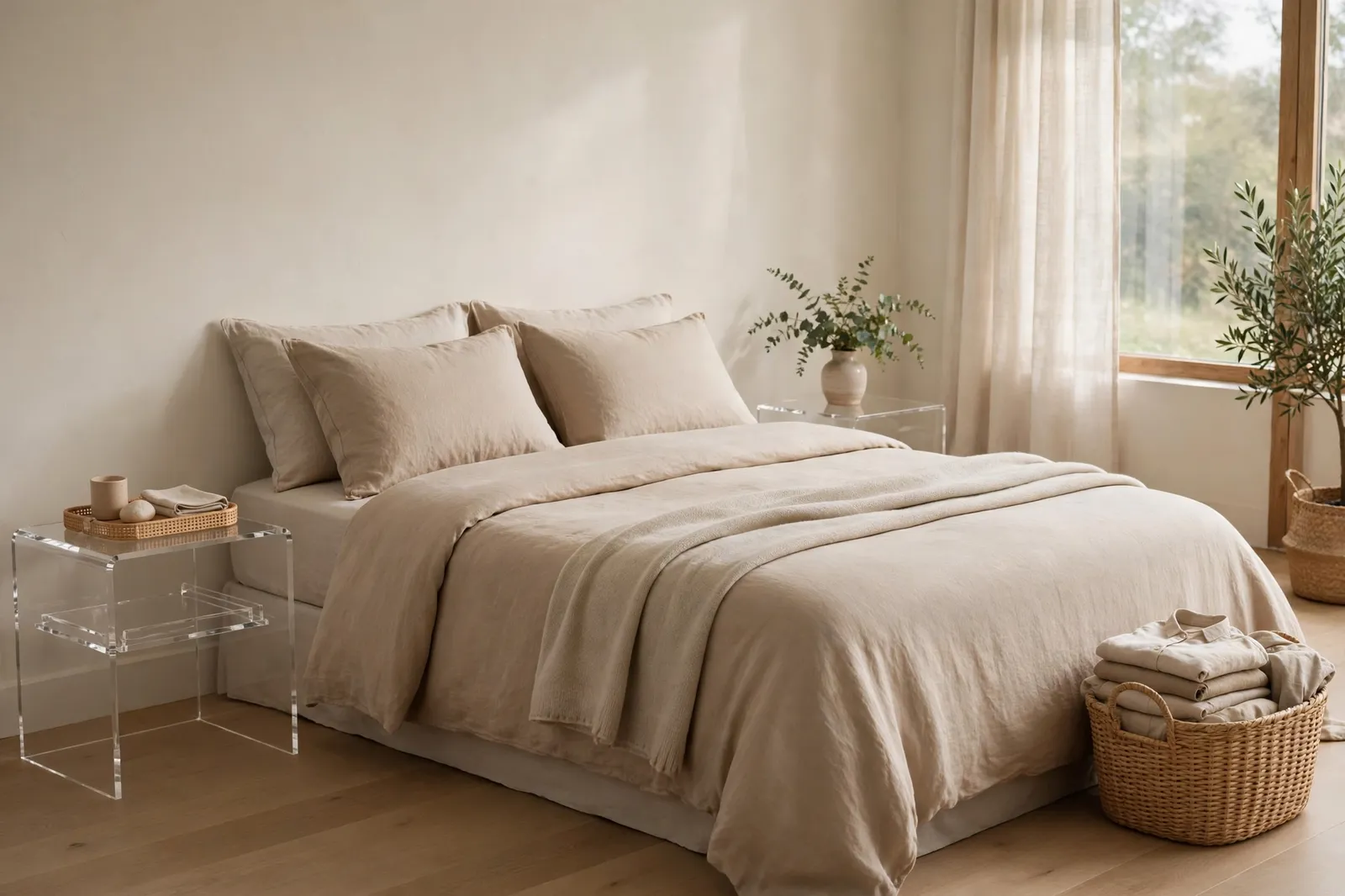
5. Clear the Clutter
A messy bedroom makes a busy mind. When you can see piles of clothes, stacks of books, and random things on every surface, your brain keeps noticing them, even when you are trying to fall asleep. Clearing the clutter is one of the fastest ways to make a bedroom feel calmer, and it costs nothing.
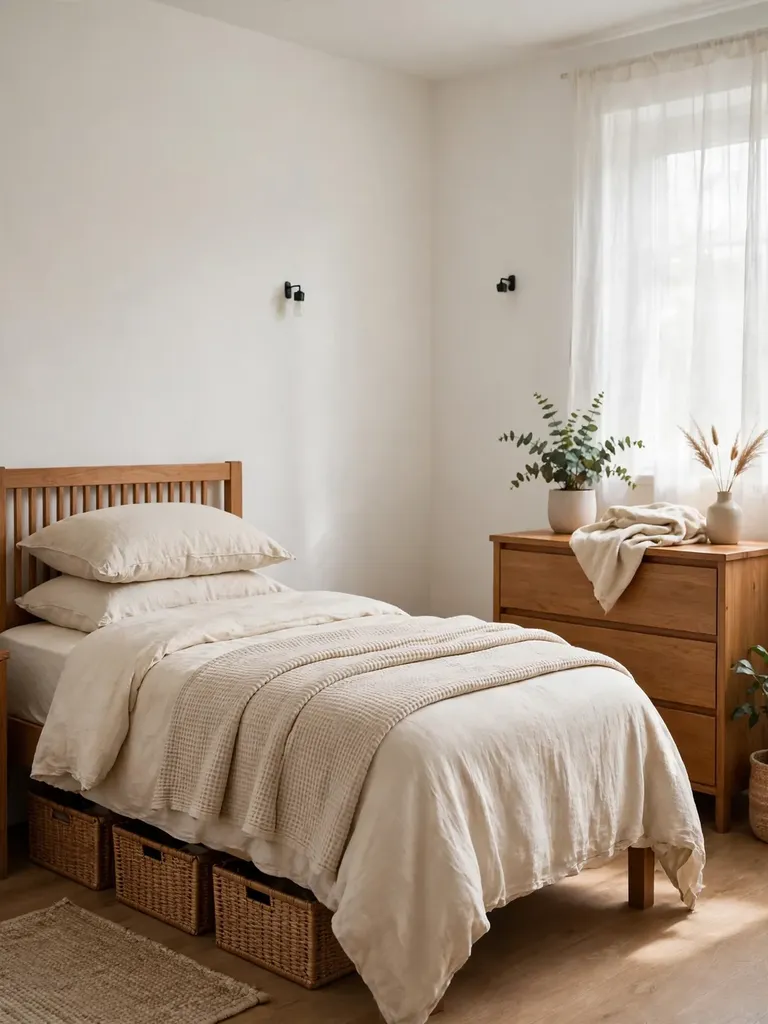
Start with the surfaces you see from the bed — the nightstand, the dresser top, the chair in the corner. Give everything a home: a small tray on the nightstand for your phone and a glass of water, a basket for the clothes you wore today, a drawer for the odds and ends. You do not need a perfect, empty room. You just need the surfaces clear enough that your eyes can rest when you lie down.
6. Block Out Light and Noise
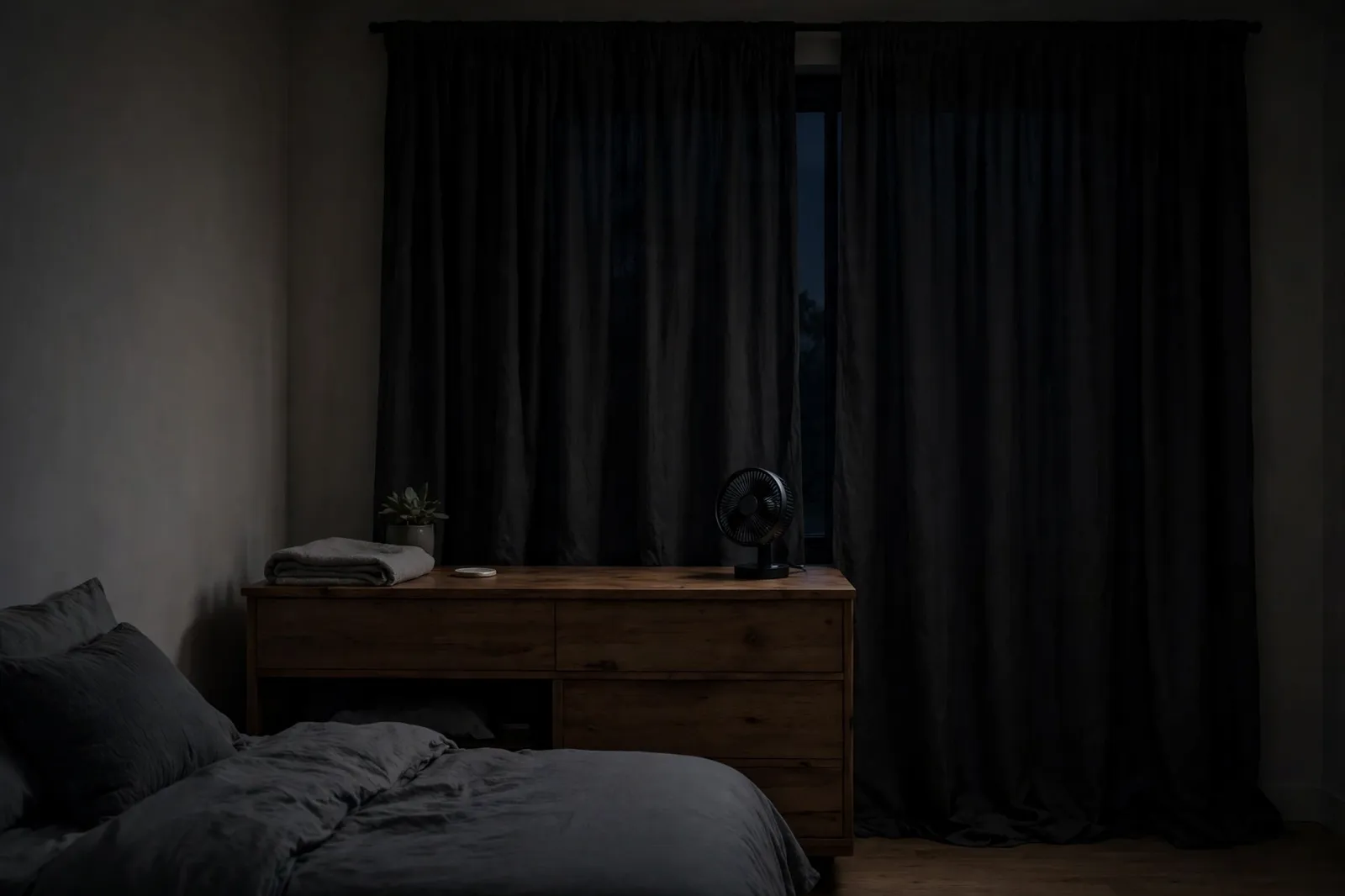
Even a little light or noise can break your sleep without you realizing it. Streetlights shining through thin curtains, a hallway light under the door, or traffic noise outside can all pull you out of deep sleep. Blocking them out is a simple fix that pays off every single night.
Blackout curtains or a good sleep mask take care of the light, and they are cheaper than you might think. For noise, a white noise machine or a small fan covers up the sounds that wake you — traffic, a neighbor's TV, pipes in the walls. A draft stopper under the door blocks both light and hallway noise at once. Try one change at a time and see which one helps you sleep deeper.
7. Keep Screens Out of the Bedroom
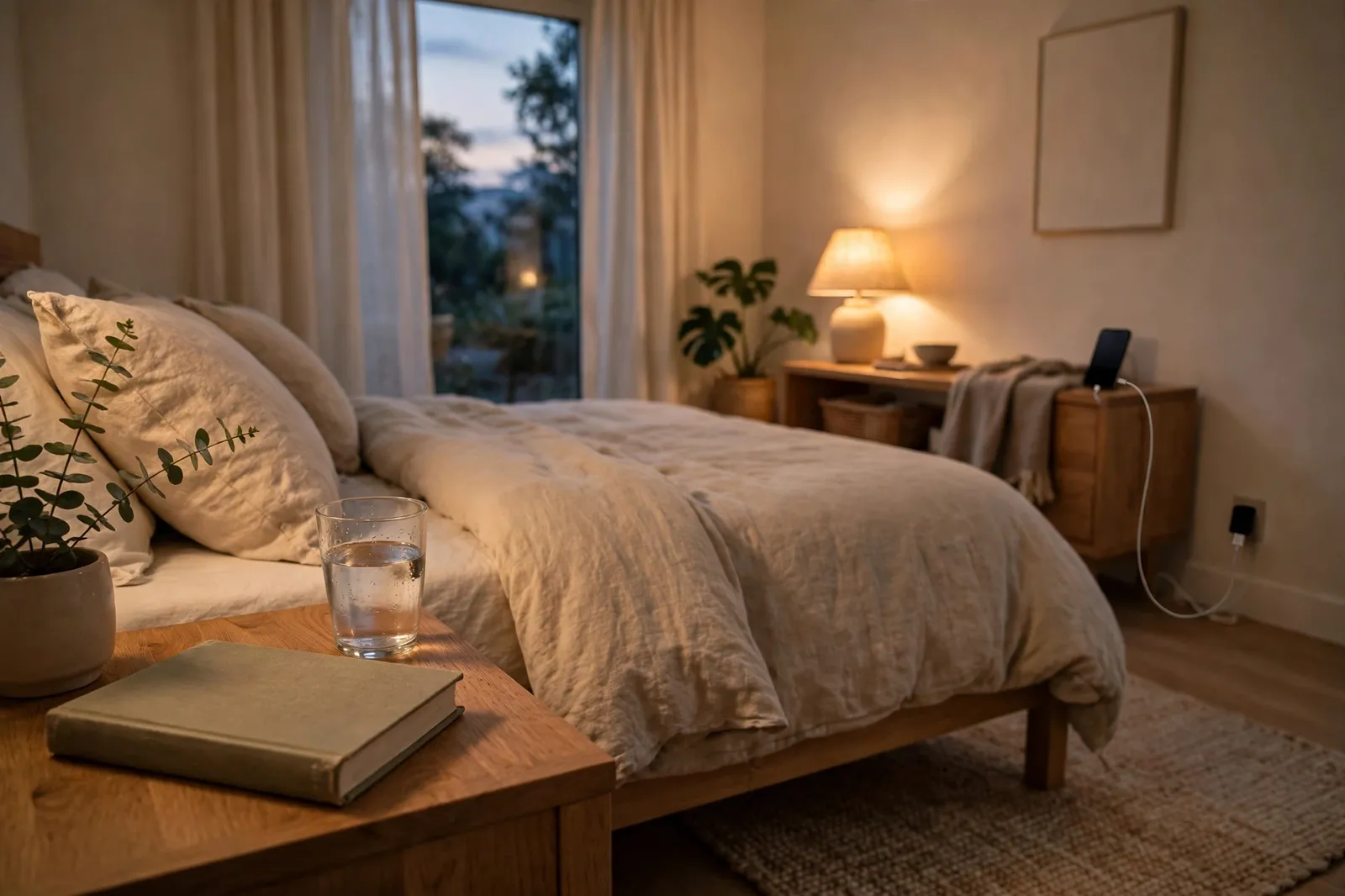
Phones, tablets, and TVs are the hardest habit to break, but they are also one of the biggest reasons people struggle to fall asleep. The bright screen keeps your brain alert, and one quick check of your messages can turn into half an hour of scrolling. The bedroom works better as a screen-free zone.
Charge your phone outside the bedroom if you can, or at least across the room so you have to get up to reach it. Use a simple alarm clock instead of your phone alarm. If you watch TV in bed, try switching to a book or a podcast for the last thirty minutes before sleep instead. It feels strange for the first few nights, then it starts to feel like a relief.
8. Add Calming Scents and Textures
A calm bedroom is not just about what you see — it is about what you feel and smell, too. Soft textures invite you to relax: a plush rug under your feet when you get out of bed, a smooth cotton sheet, a knitted throw you can pull over your shoulders. Rough, cold surfaces do the opposite, so swap them out where you can.
Scent works the same way. A little lavender on your pillow, a candle you light for ten minutes before bed (and blow out before you sleep), or fresh sheets straight from the wash all signal to your brain that it is time to rest. Keep it light — one scent is enough. The goal is a room that feels soft and smells fresh the moment you walk in.

9. Set a Simple Nighttime Routine
A calm bedroom works best with a calm routine to go with it. Your brain loves a pattern, and when the same small steps happen every night, it learns that sleep is coming. The routine does not need to be long or fancy — ten or fifteen minutes is plenty.
Pick three or four steps and do them in the same order each night: dim the lamps, change into sleep clothes, brush your teeth, read a few pages, then lights out. Keep the room cool, the lights low, and the phone away. After a week or two of the same routine, you will start to feel sleepy as soon as you begin it, and that is exactly the point.

Frequently Asked Questions

What colors are best for a calm bedroom?
Soft, muted colors work best — warm whites, pale blues, gentle greens, soft grays, and dusty sage. These shades feel restful and help your brain slow down at night. Avoid bright reds, oranges, and neon colors in the bedroom, since they feel stimulating rather than relaxing.
How can I make my bedroom darker for sleep?
Blackout curtains are the simplest fix, and they work well even over regular curtains. A sleep mask is a cheap option that works anywhere. Also check for light leaking under the door and the glow from chargers and electronics — cover small lights with tape or move the devices out of sight.
What kind of lighting helps you sleep better?
Warm, dim light in the evening helps your body get ready for sleep. Use bedside lamps with warm bulbs instead of bright ceiling lights, and dim the lights during the last hour before bed. Keep screens off or use a low-brightness setting, since bright white light keeps your brain alert.
How do I make my bedroom feel more relaxing on a budget?
Start with the free fixes: make the bed every morning, clear the clutter off your nightstand and dresser, and move your phone charger out of reach. Then add one or two low-cost changes, like warm light bulbs, a soft throw, or blackout curtains. Small changes add up fast in a bedroom.
Related ideas
If you want more ideas for the same room, Bedroom Color Schemes for a Relaxing Atmosphere is a good place to start, since the right colors set the whole mood for sleep. Bedroom Decorating Ideas for a Cozy and Stylish Space will help you pull the whole room together with soft textures and simple touches, and Cozy Bedroom Lighting Ideas for a Relaxing Retreat goes deeper into warm, layered lighting, which matters even more in the evening. You might also like Bedroom Ideas for Couples With Different Styles and Bedroom Reading Nook Ideas for a Quiet Corner.