How to Make a Simple Centerpiece for Your Dining Table
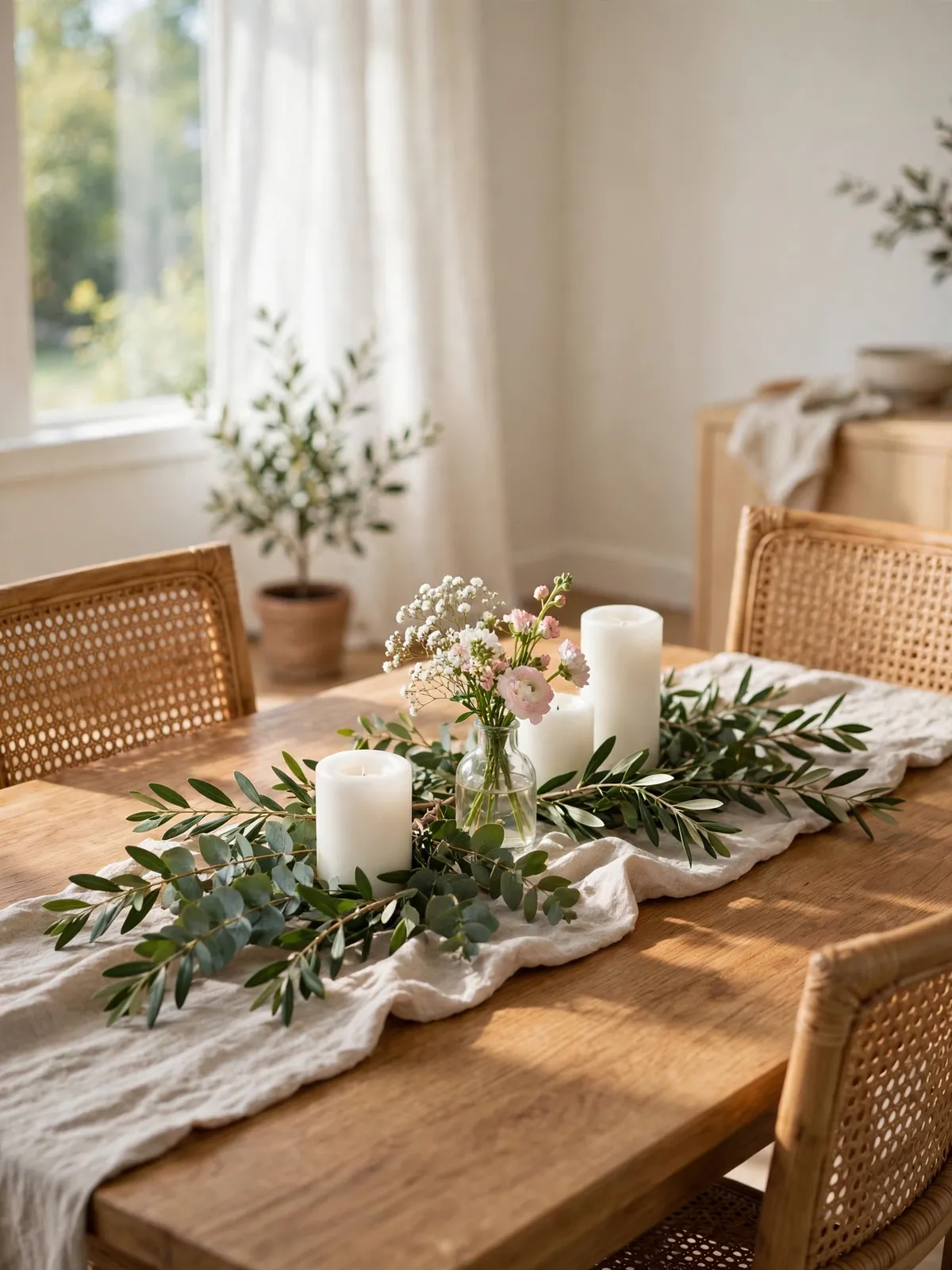
A bare dining table can make a whole room feel unfinished, even when everything else looks nice. A simple centerpiece fixes that fast — it gives the table a finished look without costing much or taking all afternoon.
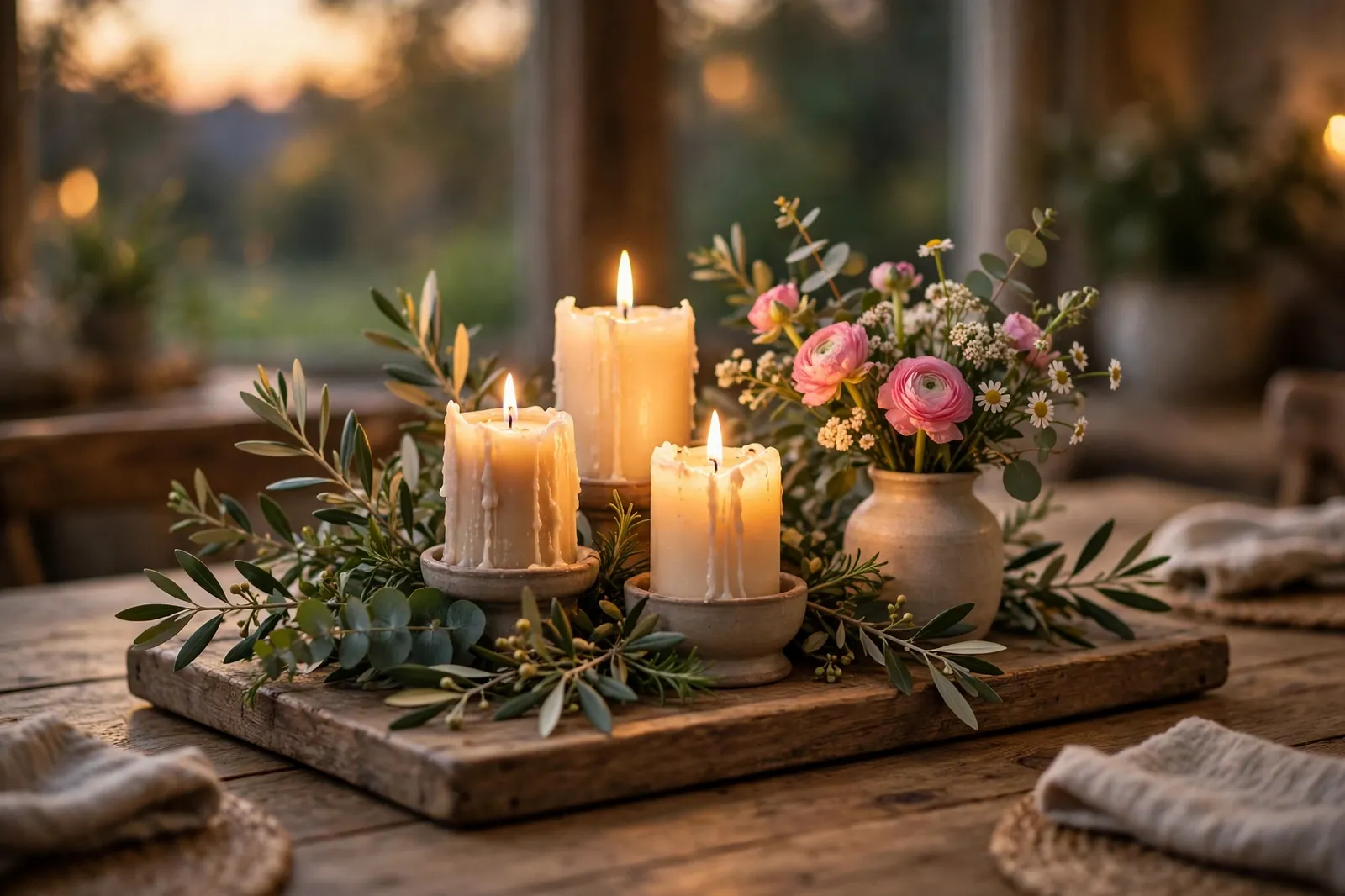
The good news is that you do not need fancy supplies or a florist's skills to pull it off. With a tray, some greenery, and a few candles, you can put together a centerpiece that looks good for everyday dinners and still feels special when guests come over.
1. Start With What You Already Have
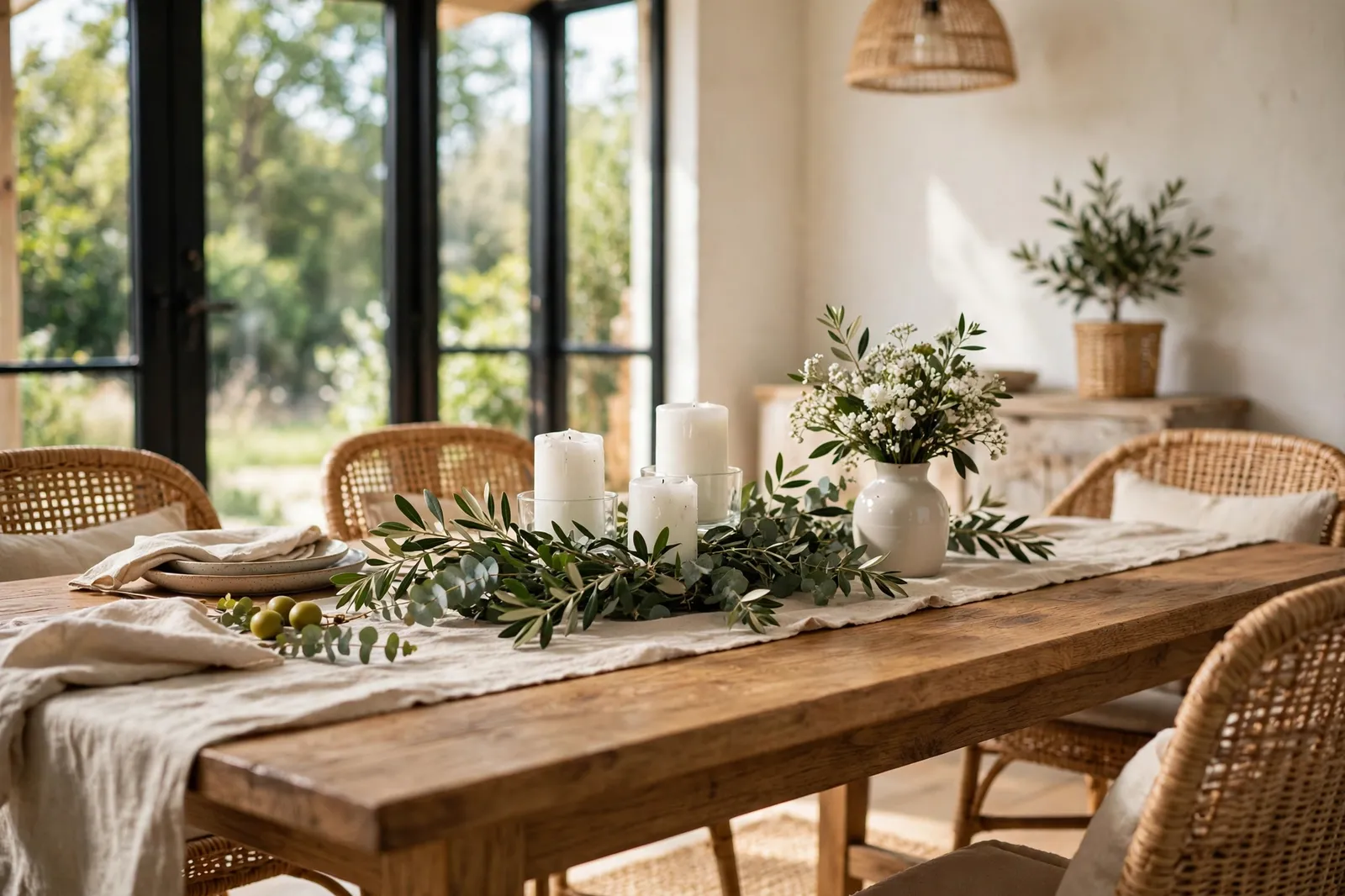
Before you buy anything, look around your house. Most homes already have what a centerpiece needs — a wooden tray, a cutting board, a few jars, some candles, or a vase sitting in a cabinet. Pull out anything that could work and set it on the table so you can see it together.
This step saves money and keeps things simple. You will often find that a bowl you forgot about or a candle you already own is all you need to get started. If you do need to buy something, you will know exactly what is missing instead of guessing at the store.
2. Pick a Base: A Tray, Board, or Runner
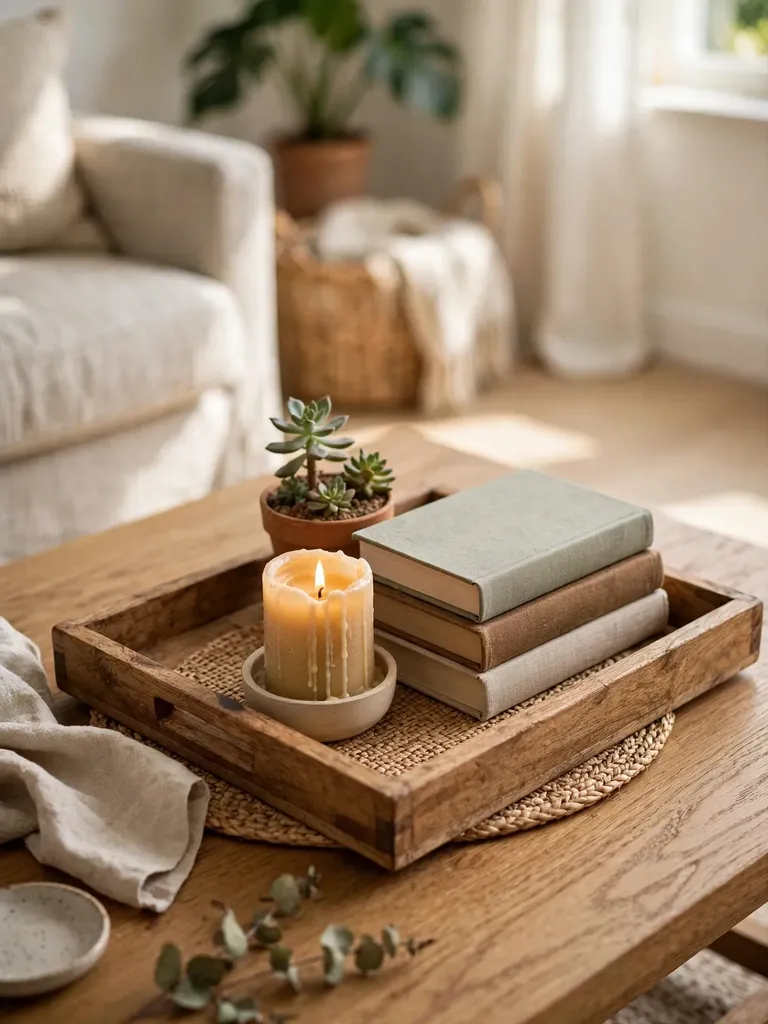
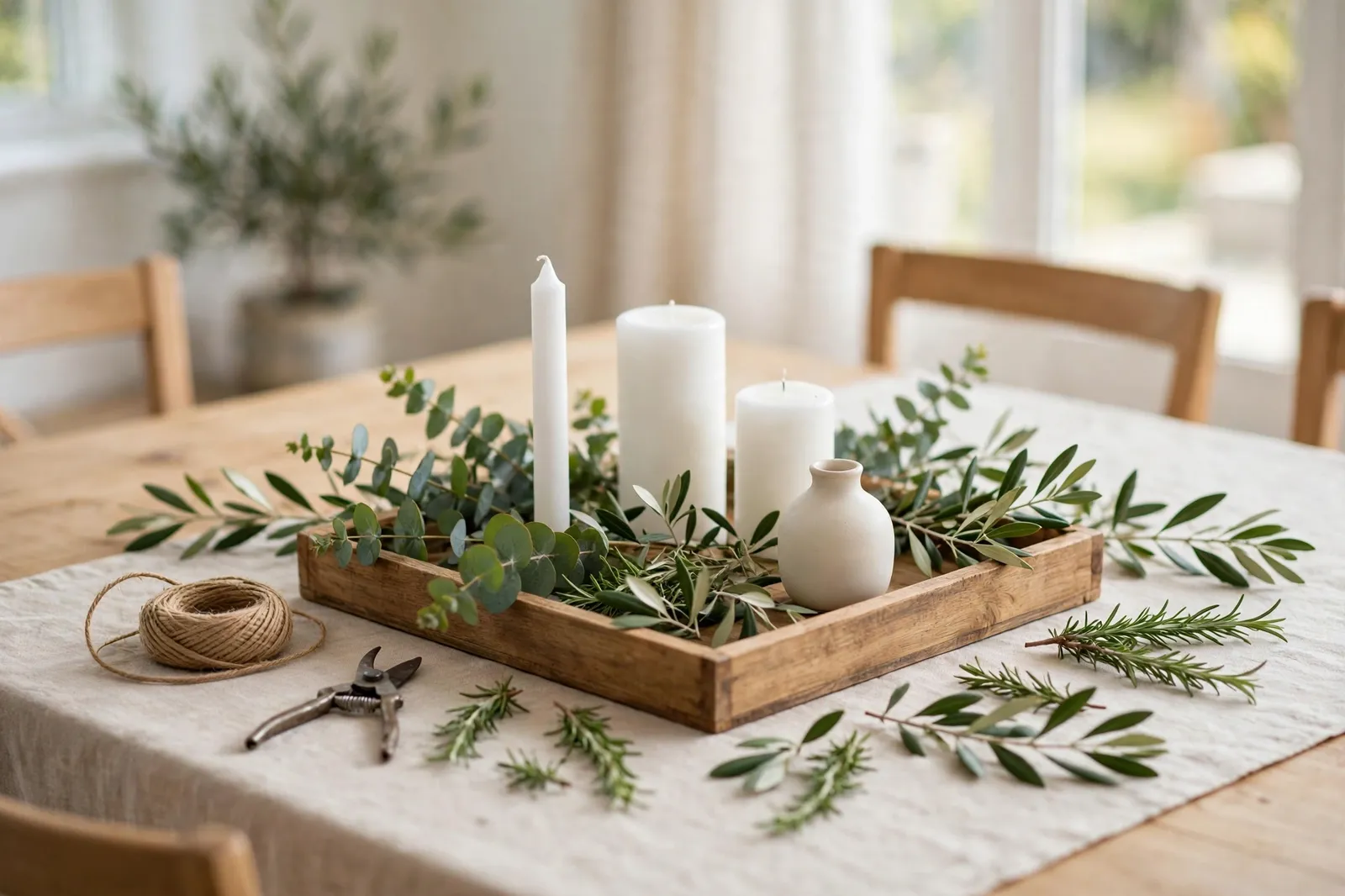
Every good centerpiece starts with a base — something that holds the whole thing together. A wooden tray works well, and so does a long cutting board, a folded table runner, or even a simple piece of fabric down the middle of the table. The base keeps your pieces in one tidy group instead of scattered all over.
Pick a base that fits your table. A long, narrow tray suits a long dining table, while a round tray or a small board works better on a round or square table. Leave room on each side for plates and glasses — the centerpiece should sit in the middle, not take over the whole table.
3. Add Greenery First
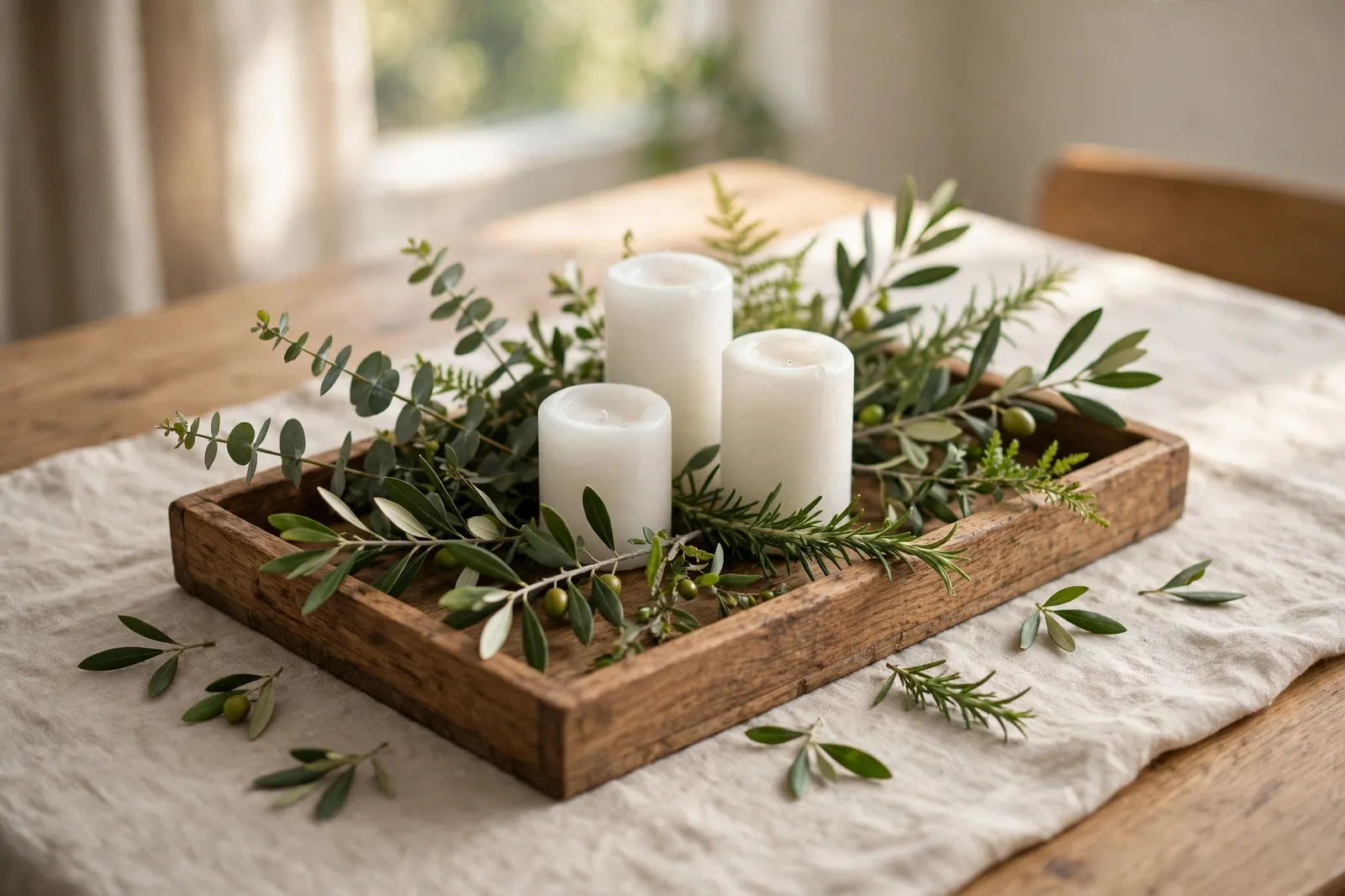
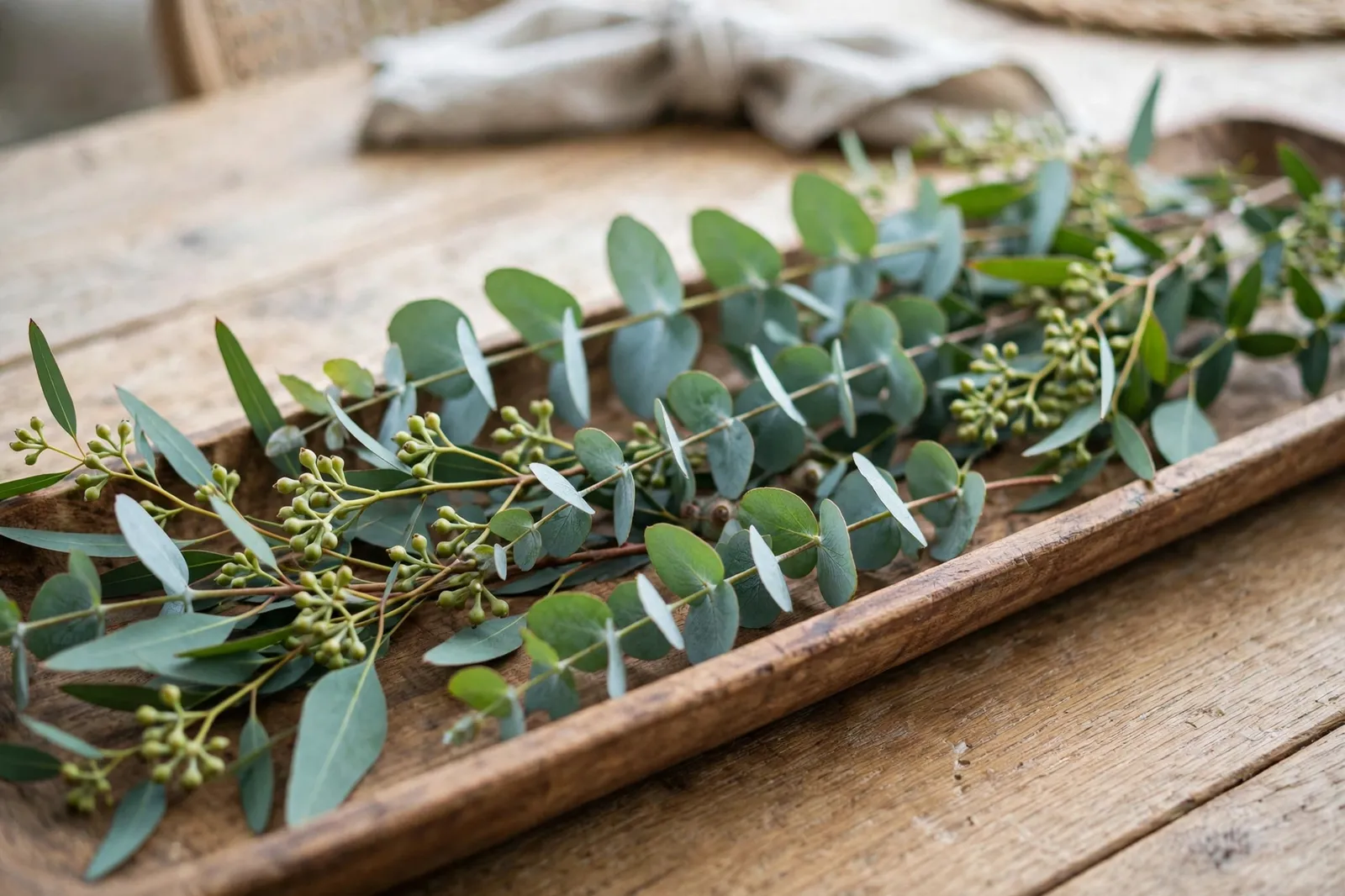
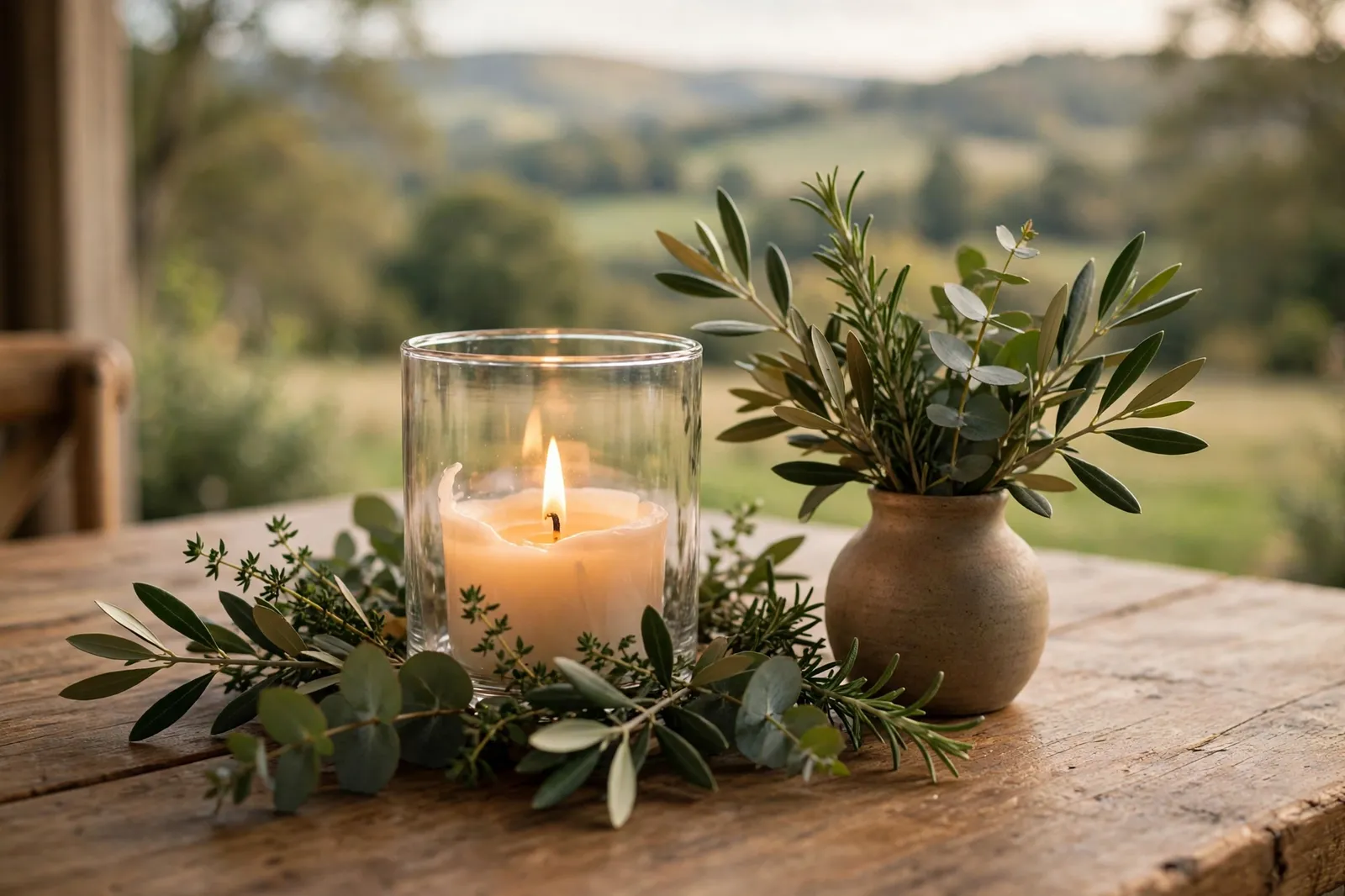
Greenery is the easiest way to make a centerpiece look full without spending much. A few sprigs of eucalyptus, some olive branches, or even clippings from your yard can fill a tray nicely. Lay the greenery along the base first, before you add anything else, so it forms a soft bed for the rest.
Faux greenery works just as well if you do not want to replace fresh stems every week. Mix a couple of types if you like — a long branch with a few shorter sprigs gives more texture than one kind alone. Keep it low and loose; it should look relaxed, not stiff and perfect.
4. Bring in Candles for Warmth
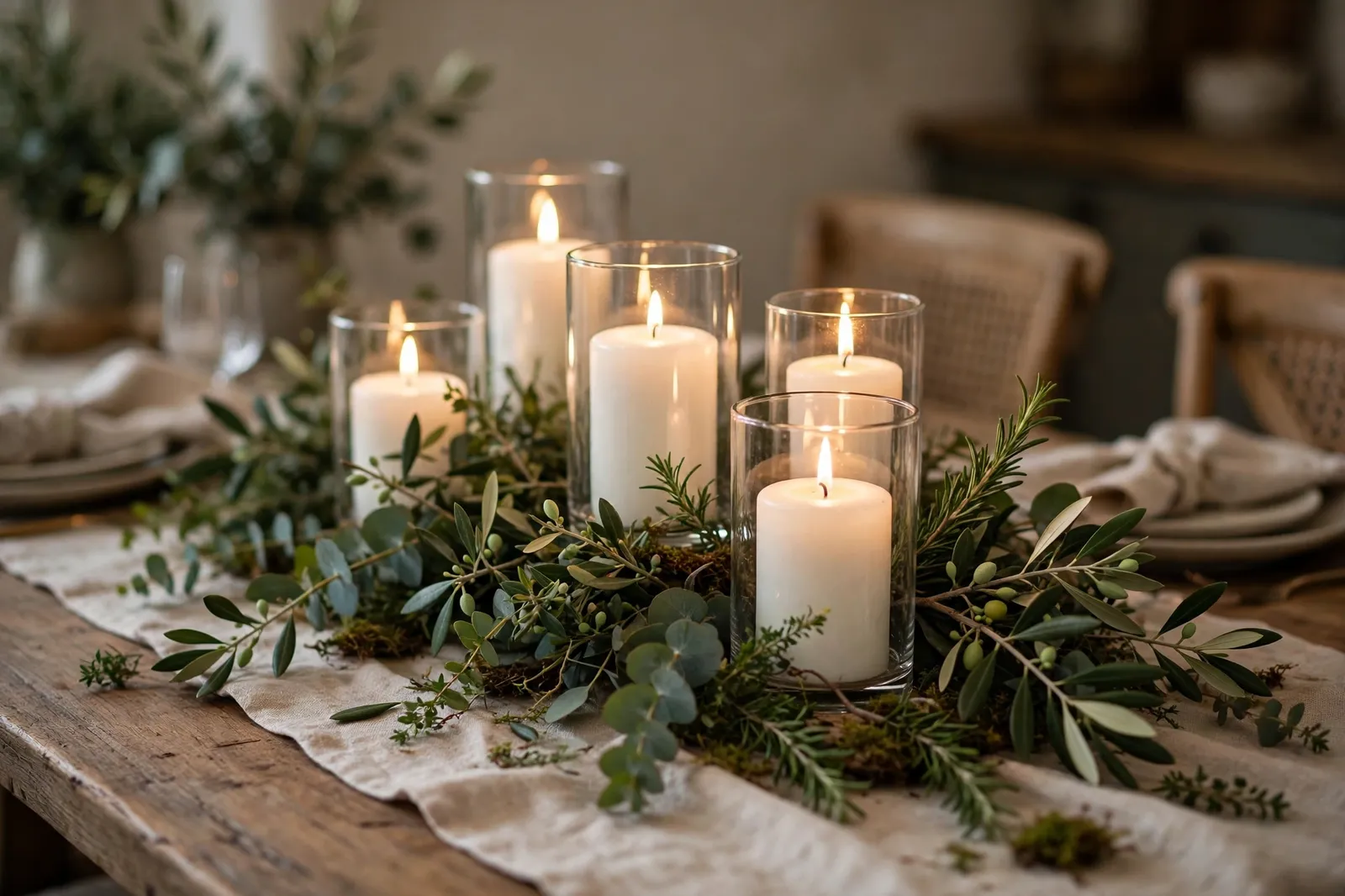
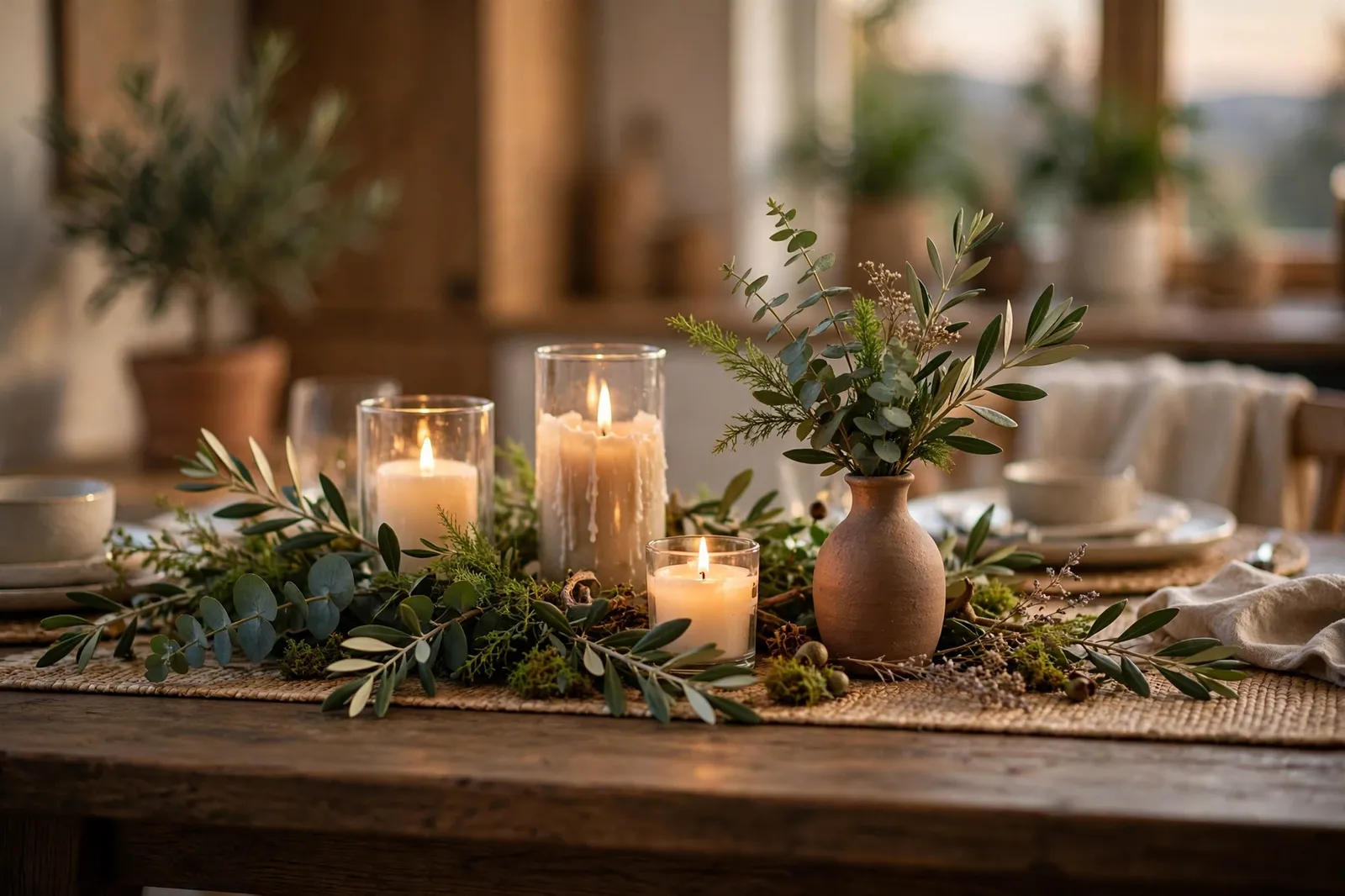
Candles are what make a simple centerpiece feel warm and finished. Two or three candles in different heights look better than one, and they give the table a soft glow at dinner. Pillar candles in glass holders are a safe choice, and small tea lights tucked between the greenery work well too.
Stick with plain, unscented candles if you are eating at the table — strong scents can fight with the food. Always put candles in a holder or on a heat-safe plate, and keep them away from the greenery. If you have kids or pets, battery candles give you the same glow with no worry.
5. Layer in Something Seasonal
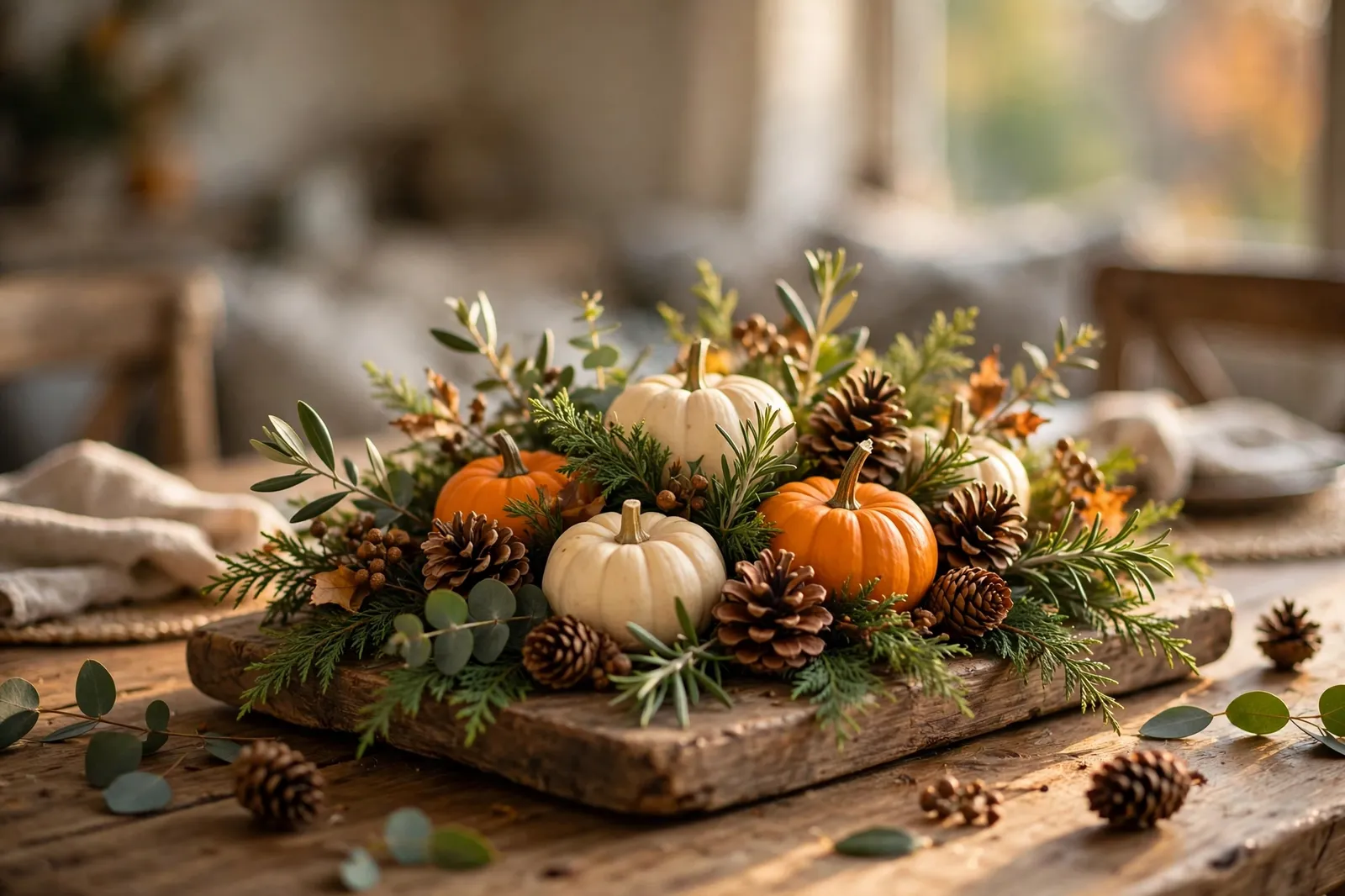
A centerpiece gets more interesting when one piece changes with the season. In the fall, add a few small pumpkins or pinecones; in the spring, swap in a bowl of lemons or some fresh buds. One seasonal touch is enough — you do not need to redo the whole thing.
The trick is to keep your base the same and only change the small extras. Your tray, candles, and greenery stay put all year, and the seasonal piece is the one thing you swap out. That way the table always feels fresh, and the change takes about five minutes.
6. Add Fresh or Faux Flowers
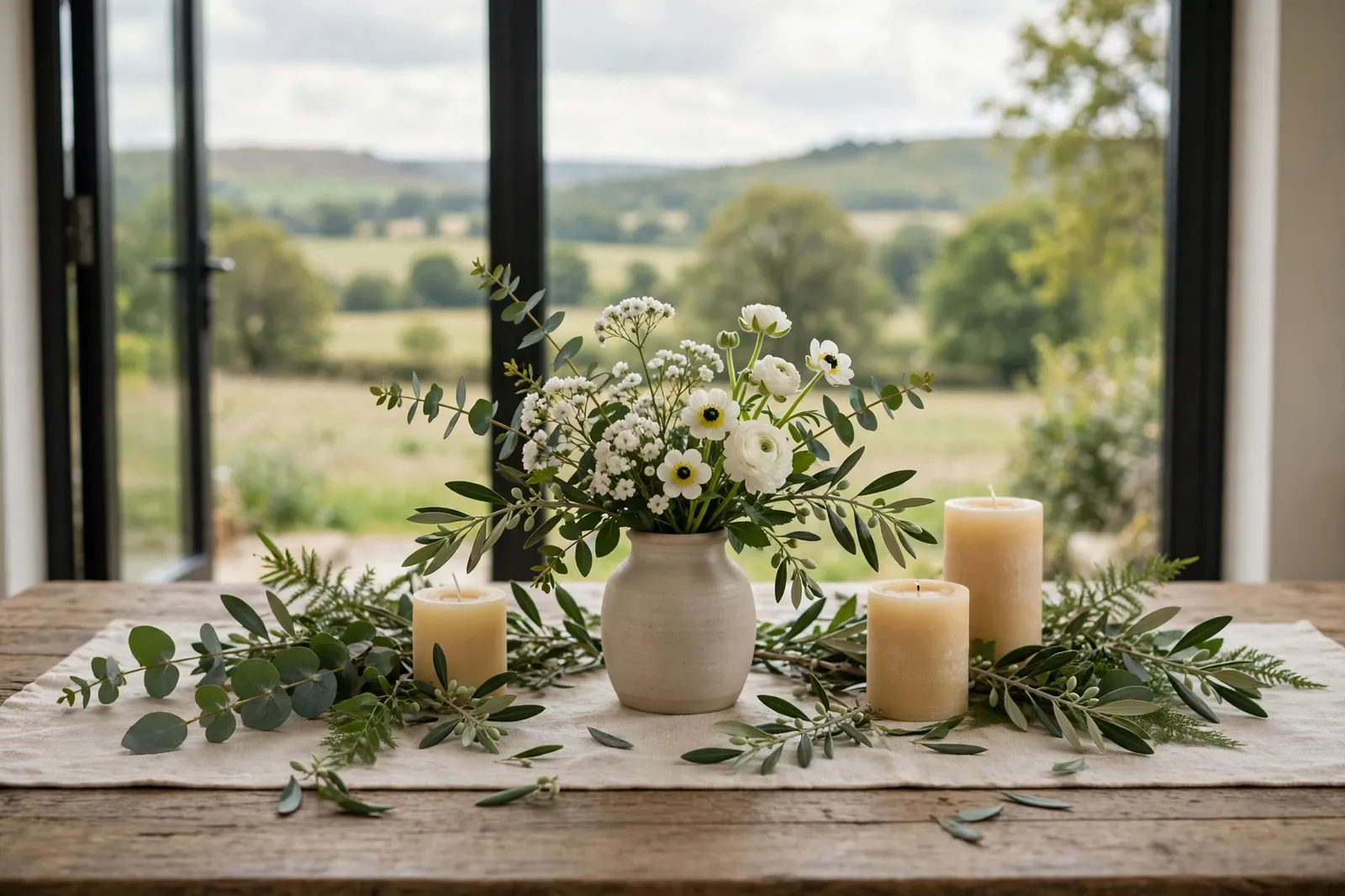
If you want a little color, a few flowers go a long way. Three or four stems in a small jar or vase are plenty for a simple centerpiece — you do not need a big bouquet. Grocery store flowers work fine, and a single kind of flower often looks neater than a mixed bunch.
Faux flowers are a good backup when fresh ones are not in season or you do not want to buy new ones every week. Pick ones that look soft and natural, and mix them into the greenery so they do not stand out as fake. Either way, keep the stems short so the flowers sit low and do not block anyone's view.
7. Keep It Low So People Can Talk
The biggest mistake with a centerpiece is making it too tall. If people have to lean around it to see each other, it gets in the way of dinner. Keep everything low — about the height of a water glass or shorter — so everyone can talk across the table without a wall of flowers in the middle.
A quick test helps: sit down in your usual chair and look across the table. If you can see the person opposite you clearly, the height is right. Tall candles are fine if they are slim, but a big, tall vase or a tall arrangement belongs on a sideboard, not the middle of the table.
8. Match the Style of Your Table
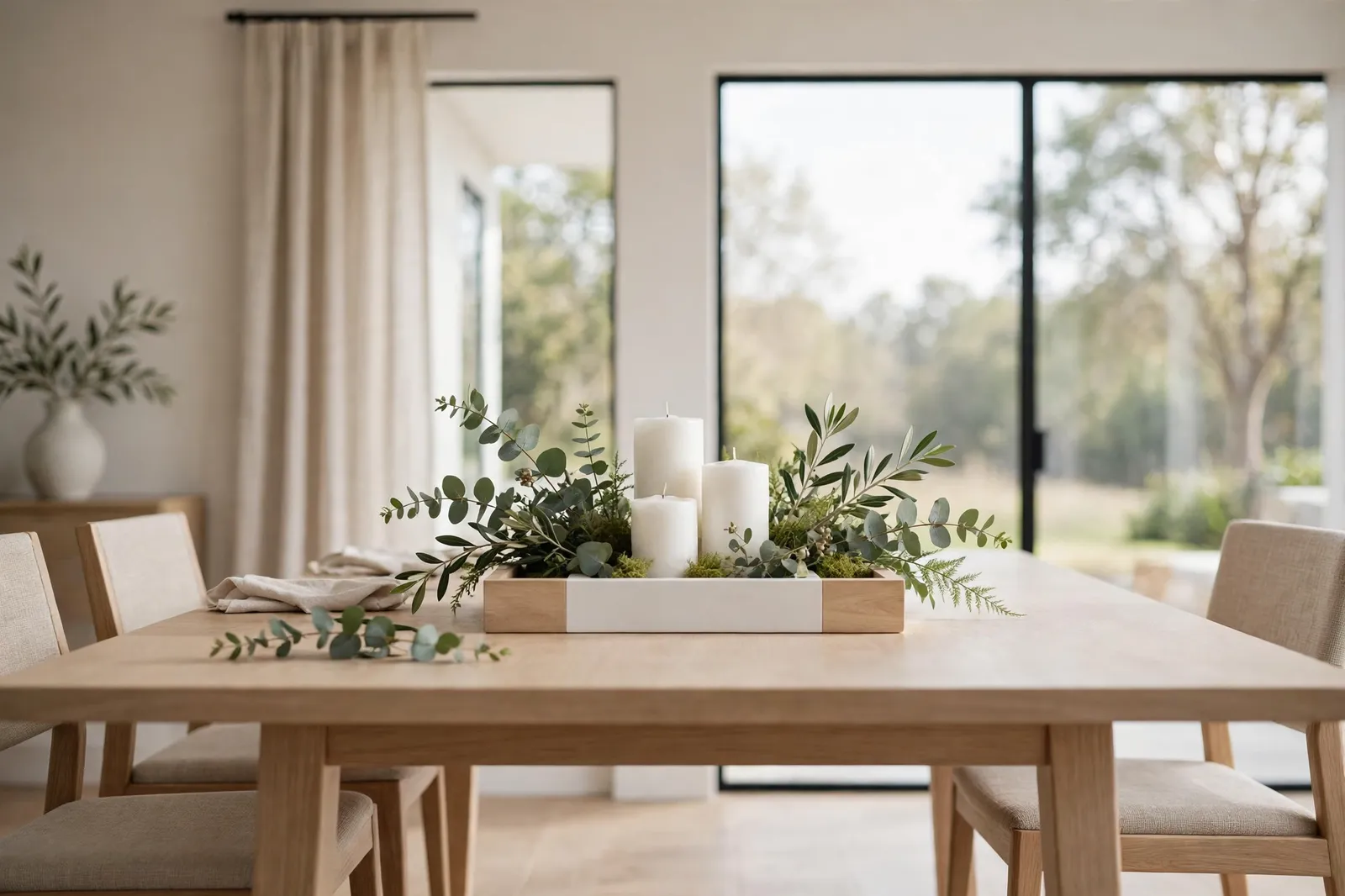
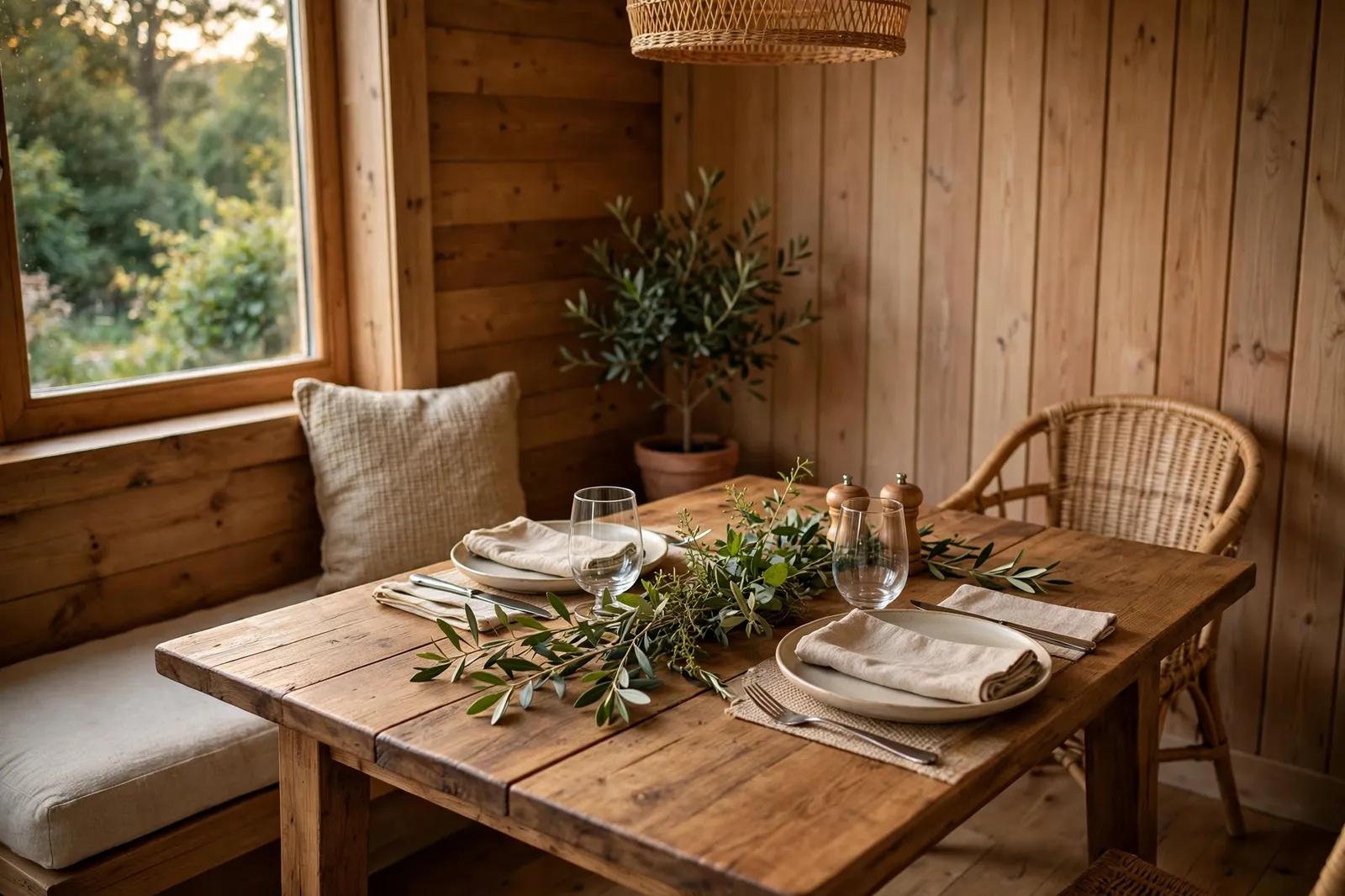
Your centerpiece should feel like it belongs with the rest of the room. A farmhouse table looks best with wood, linen, and simple greenery, while a modern table suits clean lines, white candles, and a plain tray. Look at the colors and materials already in your dining room and pick pieces that fit.
You do not have to match everything exactly — just stay in the same mood. A rustic tray with a few modern candle holders can still work if the colors are calm and the pieces are simple. When in doubt, fewer pieces in matching colors always look better than a lot of pieces that clash.
9. Finish It and Keep It Fresh
Once everything is in place, step back and look at the table from a few steps away. Move anything that looks crowded, and add a small detail if one side feels empty — a couple of stones, a pinecone, or a sprig of greenery can fill a gap. The whole thing should look full but not busy.
A simple centerpiece is easy to keep looking good. Swap out tired greenery every week or two, wipe the tray when it gets dusty, and change the seasonal piece when the season changes. Five minutes now and then is all it takes to keep your table looking like you just made it.
Frequently Asked Questions
What is the easiest simple centerpiece for a dining table?
A tray with some greenery and two or three candles is the easiest centerpiece you can make. Lay the greenery in the tray, set the candles on top, and you are done in about ten minutes. It looks good every day and costs very little.
How do I make a centerpiece that does not block conversation?
Keep everything low, about the height of a water glass or shorter, and keep the arrangement narrow. Avoid tall vases and big, wide bouquets in the middle of the table. Sit down and check that you can see the person across from you clearly.
What can I use as a base for a DIY centerpiece?
A wooden tray, a long cutting board, a table runner, or a folded piece of fabric all work as a base. Pick one that fits the length of your table and leaves room for plates and glasses on each side.
How often should I change or refresh my table centerpiece?
Swap fresh greenery or flowers every one to two weeks, and change the seasonal piece when the season changes. Wipe the tray and candle holders now and then. The base can stay the same all year.
Related ideas
DIY Decorative Shelves for Small Spaces has more easy projects for rooms that need a little extra style, and Budget-Friendly DIY Home Decor Using Thrifted Finds shows how to decorate well without spending much. For another way to fill a blank wall, DIY Gallery Wall Ideas for a Personal Touch is a good next read. You might also like DIY Decorative Shelves for Small Spaces and DIY Decorative Trays for Coffee Tables and Dressers.