Small Entryway Ideas With Hooks, Benches, and Storage
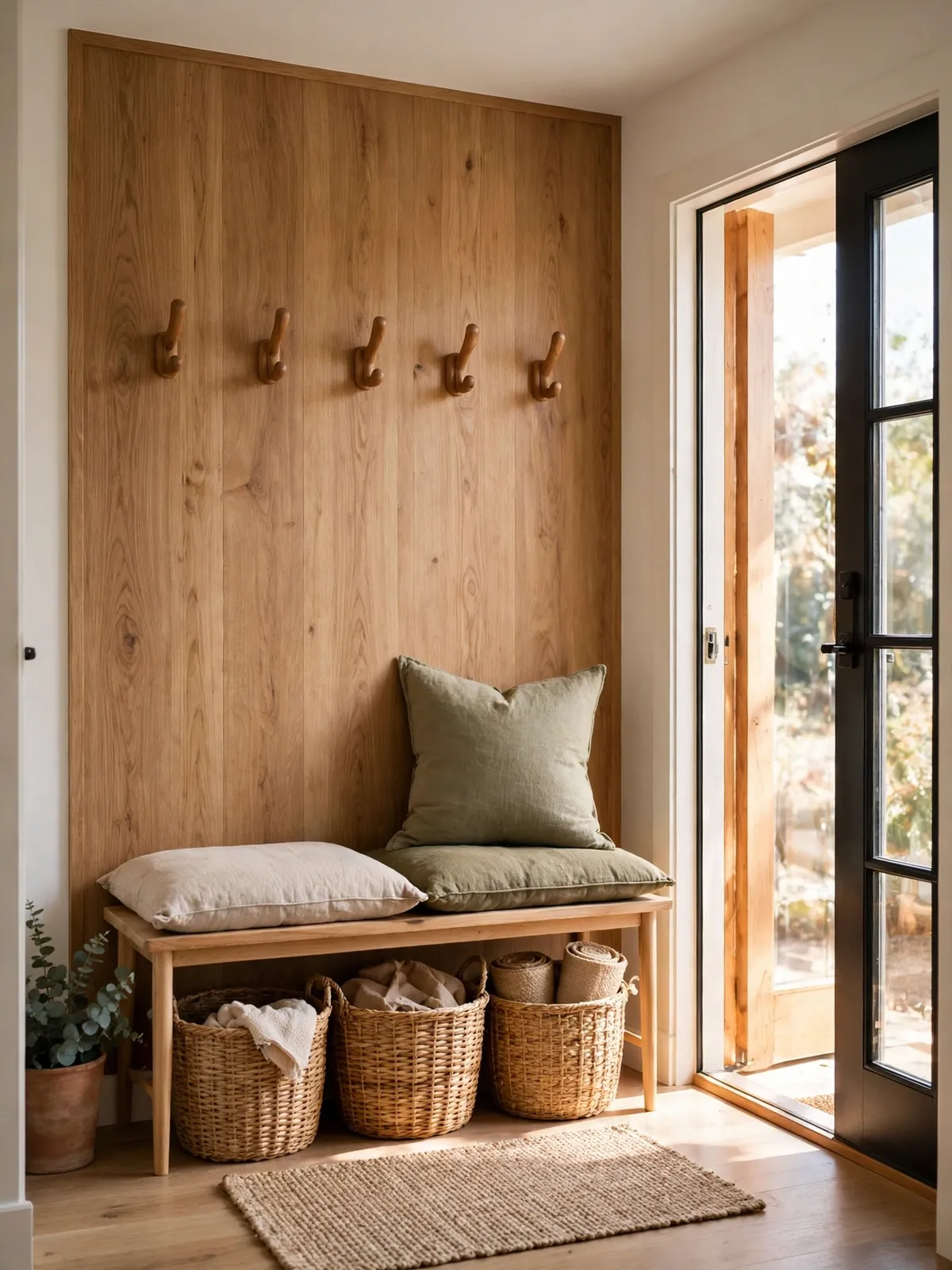
A small entryway does not have to be a dumping ground for shoes, coats, and mail. With the right hooks, a bench, and a little smart storage, even the tiniest space by the door can stay neat and welcoming. You do not need a big mudroom or a full remodel — just a few pieces that work hard and fit the space you actually have.
The trick is to give everything a home. Coats go on hooks, shoes go in one spot, and bags and keys have a place of their own. This guide walks you through small entryway ideas that are simple, cheap, and easy to try this weekend, so your entryway finally works for you instead of against you.
1. Small Entryway Ideas Start With Measuring First
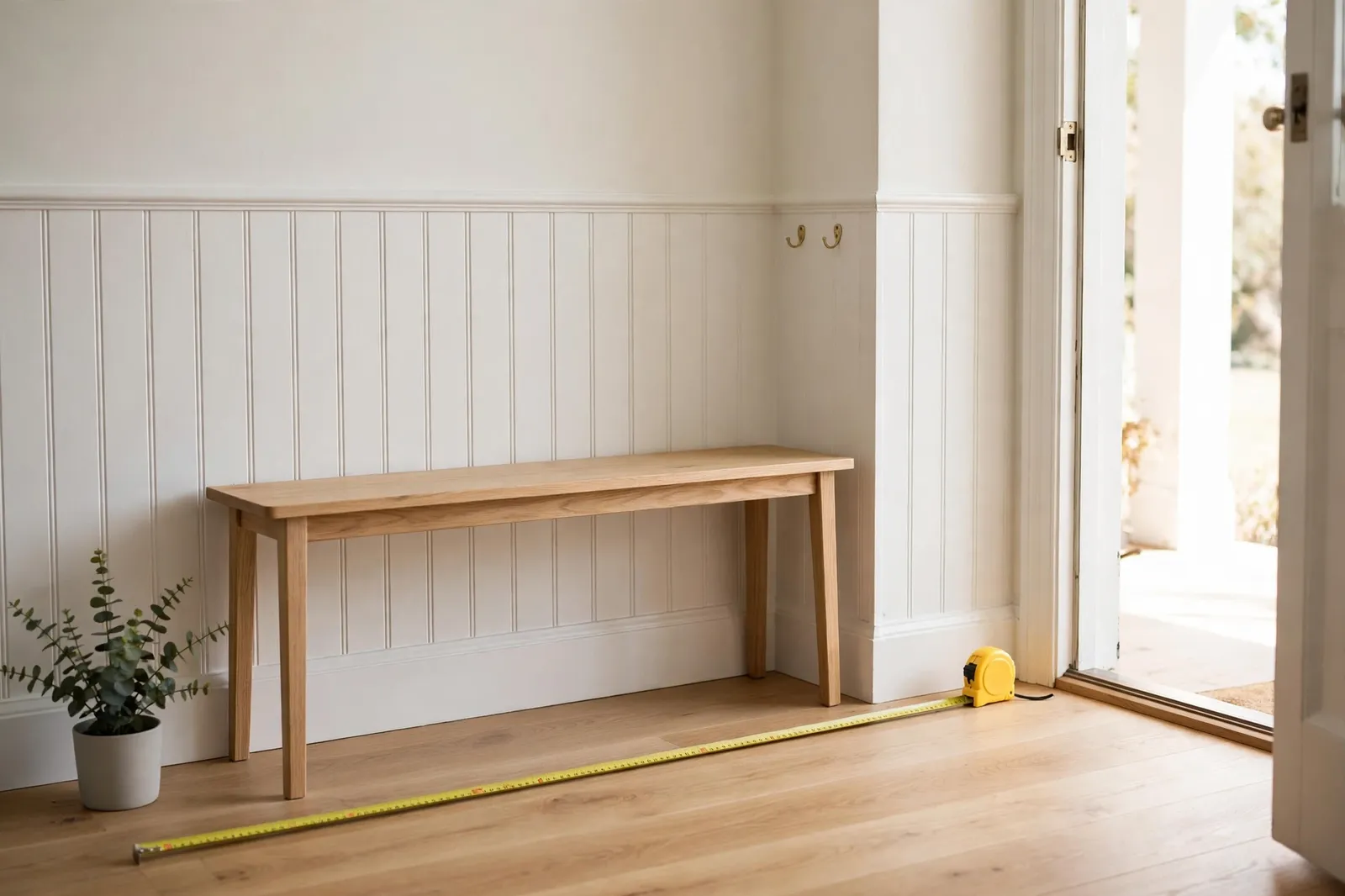
Before you buy anything, measure your entryway. Grab a tape measure and check the width of the wall, the depth you can spare, and how much room the front door needs to swing open. A bench that looks slim online can still block the door if you guess the size. Five minutes of measuring saves you a return trip and a piece of furniture that does not fit.
Write the numbers down and keep them on your phone when you shop. Look for pieces made for small spaces — a bench that is 30 to 36 inches wide, hooks that sit on a single rail, and baskets that slide under a bench instead of beside it. When every inch counts, the right measurements are what make small entryway ideas actually work in real life.
2. Put Hooks at the Right Height
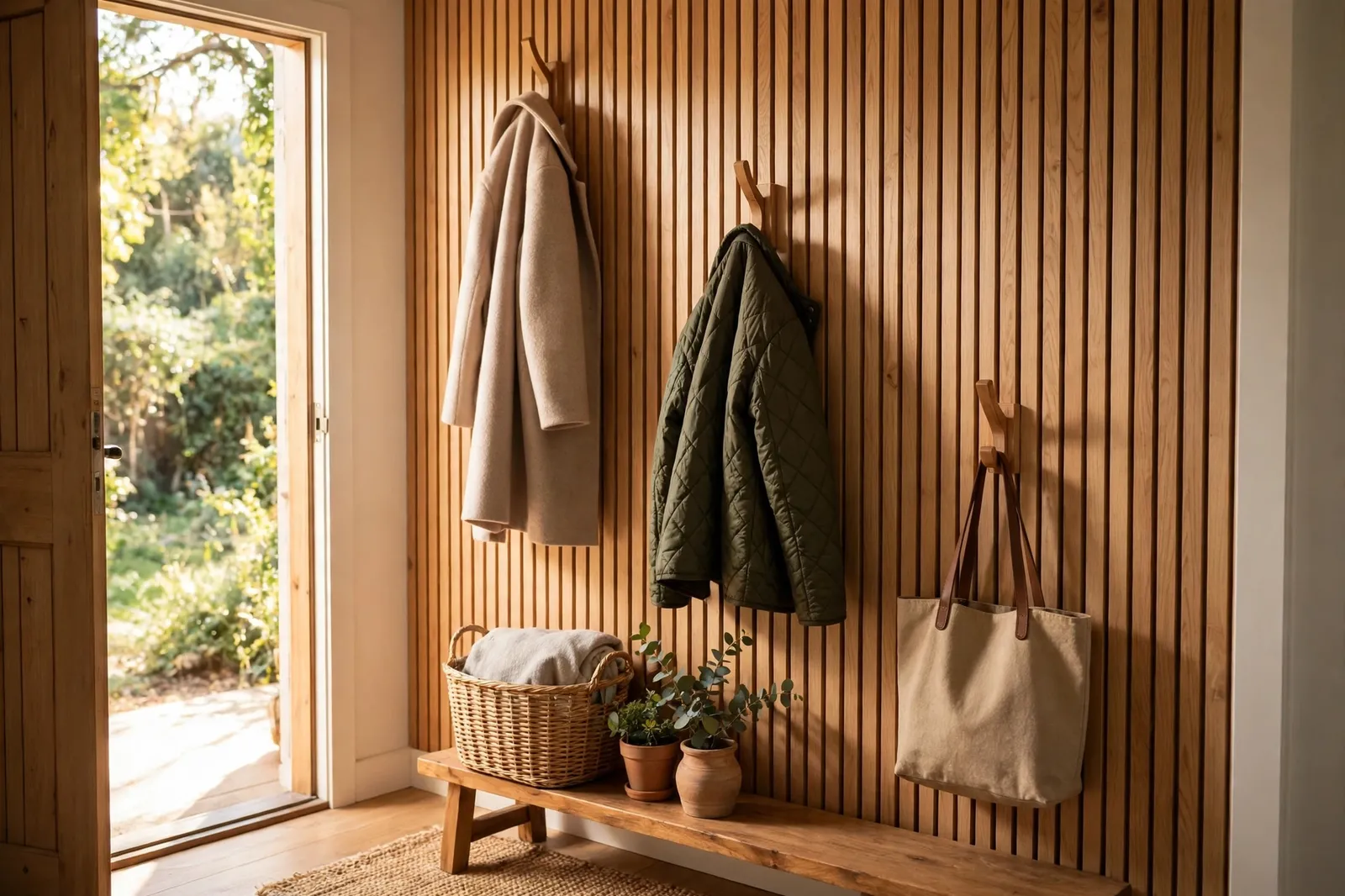
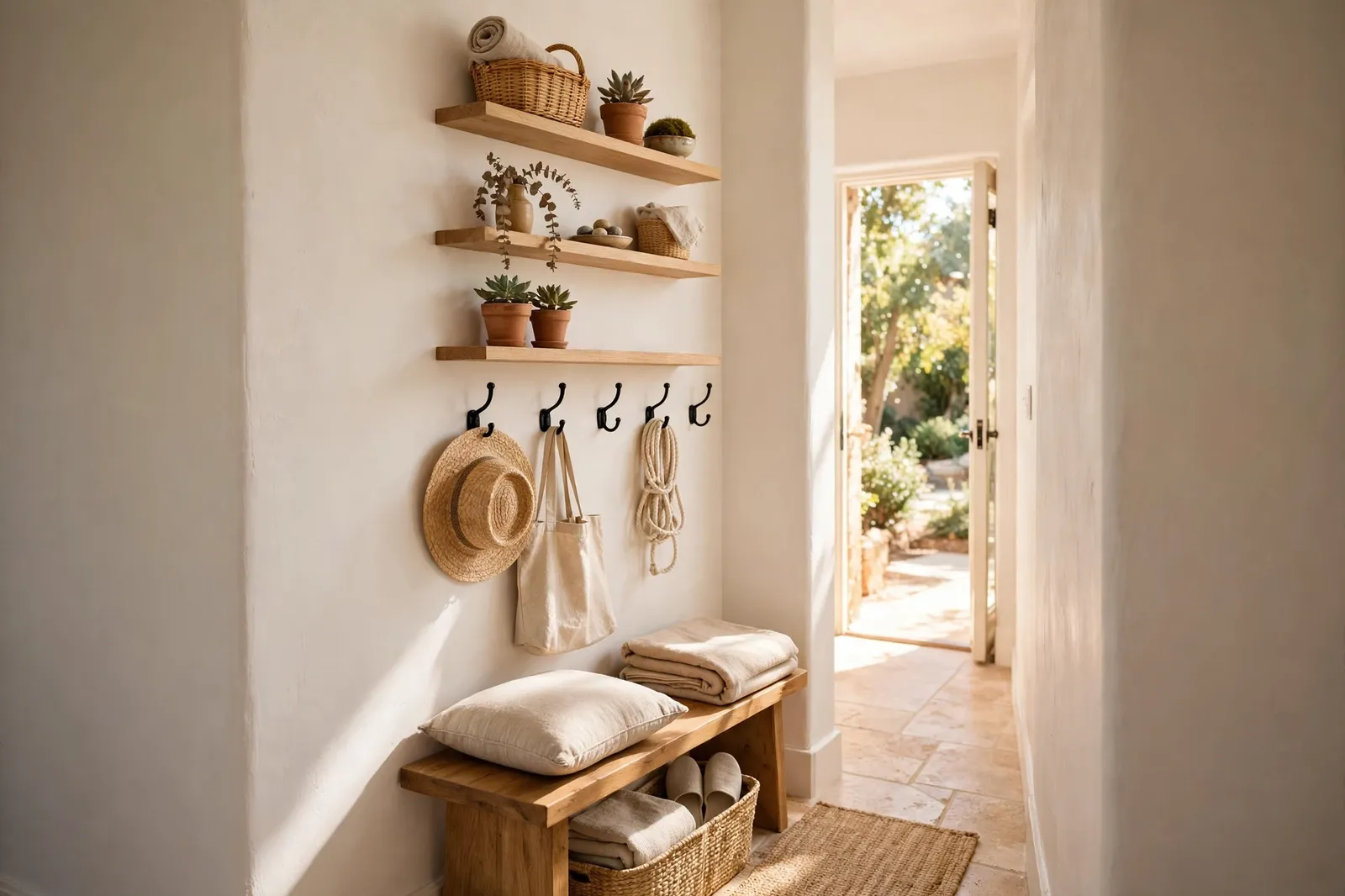
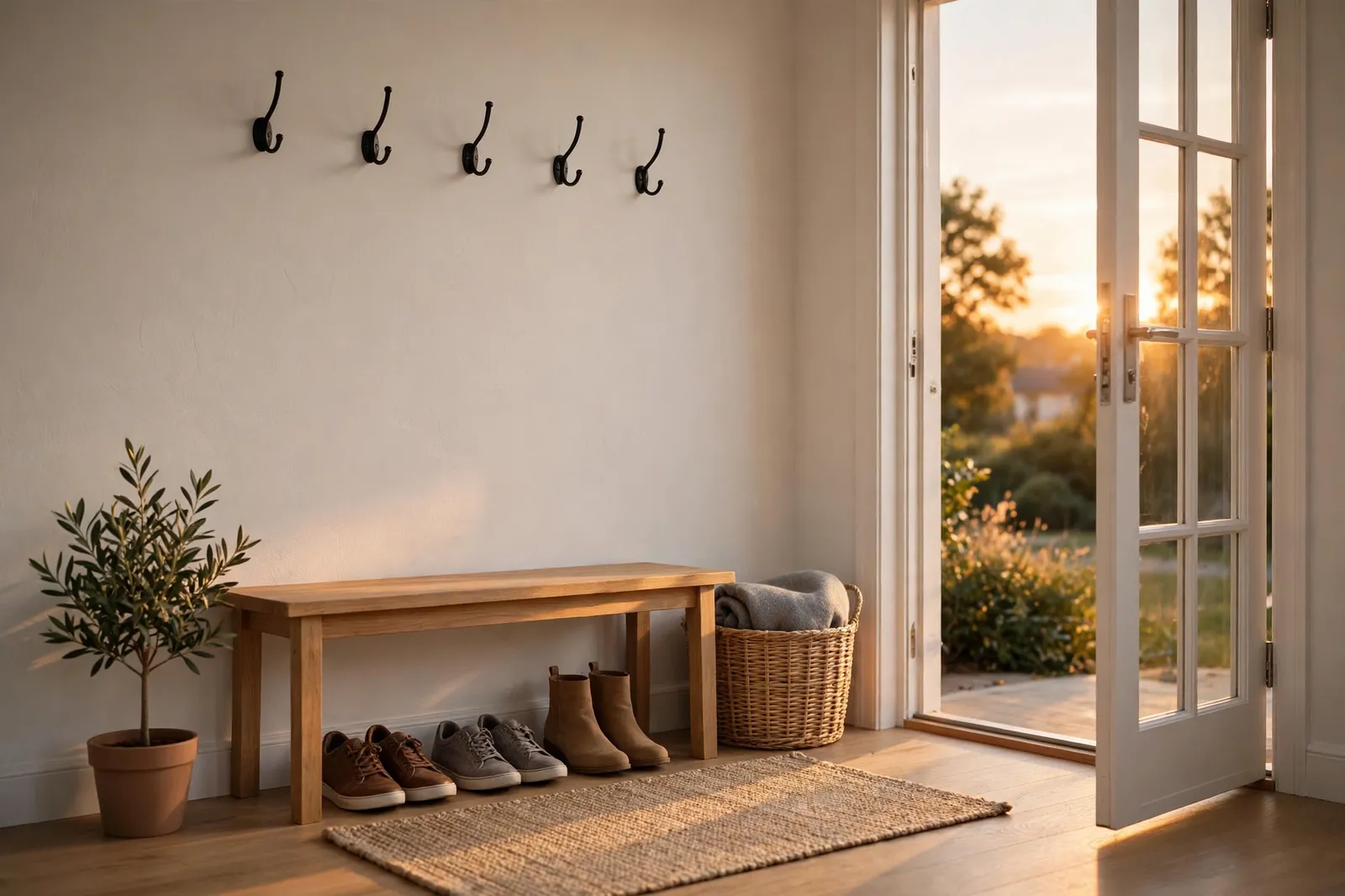
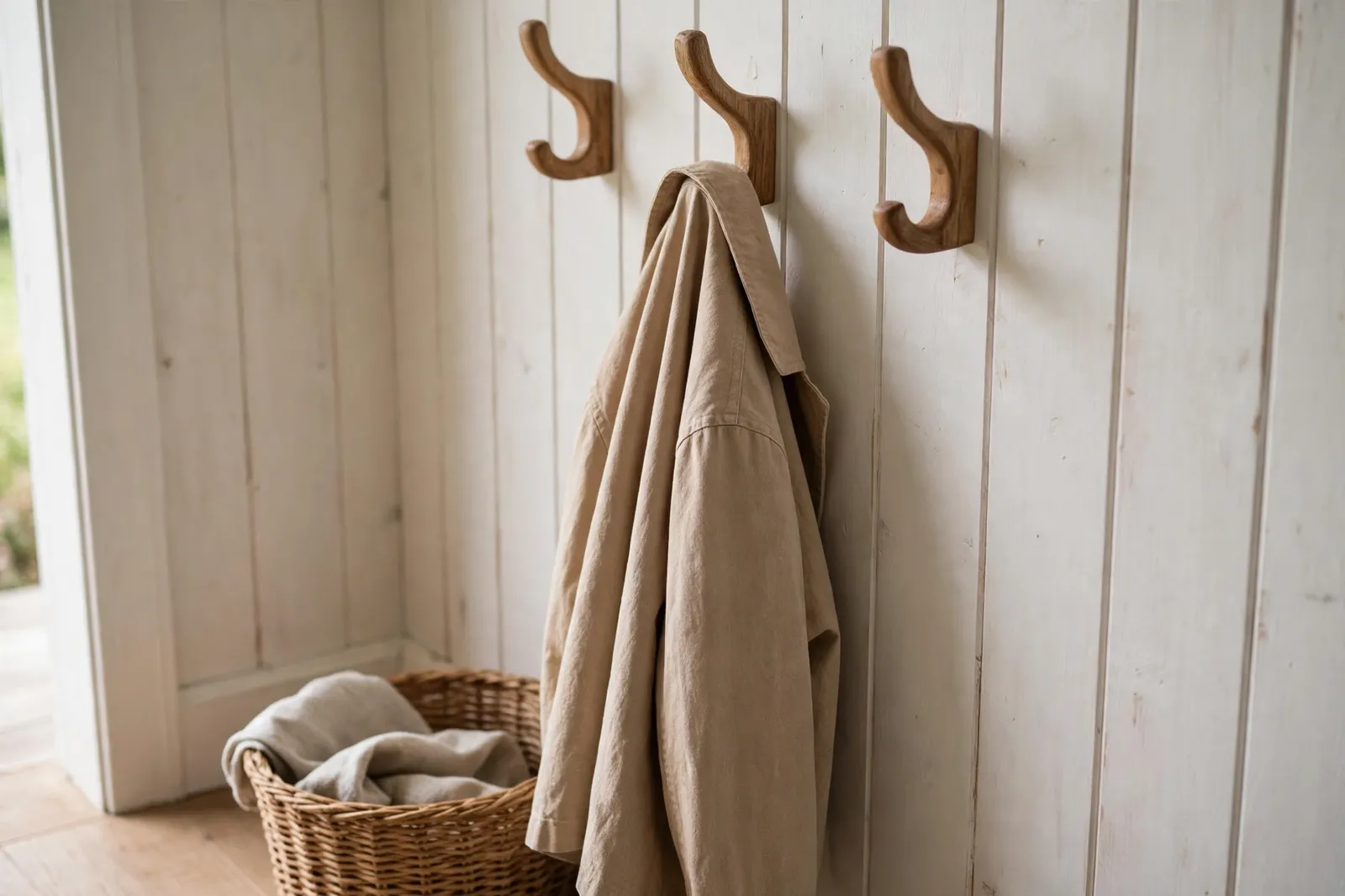
Wall hooks are the easiest win in a small entryway. They hold coats, bags, and dog leashes without taking up any floor space at all. A row of three to five hooks on a wooden rail is enough for a family, and it costs far less than a coat closet. Pick sturdy hooks that can hold a heavy winter coat without pulling out of the wall.
Hang the rail at about 60 to 65 inches high for adults, and add one or two lower hooks if you have kids. Lower hooks let little ones hang their own coats and backpacks, which means fewer piles on the floor. Leave a little space between hooks so coats do not bunch up, and keep one hook free for guests — it makes a small entryway feel thoughtful instead of crowded.
3. Choose a Bench That Does Double Duty
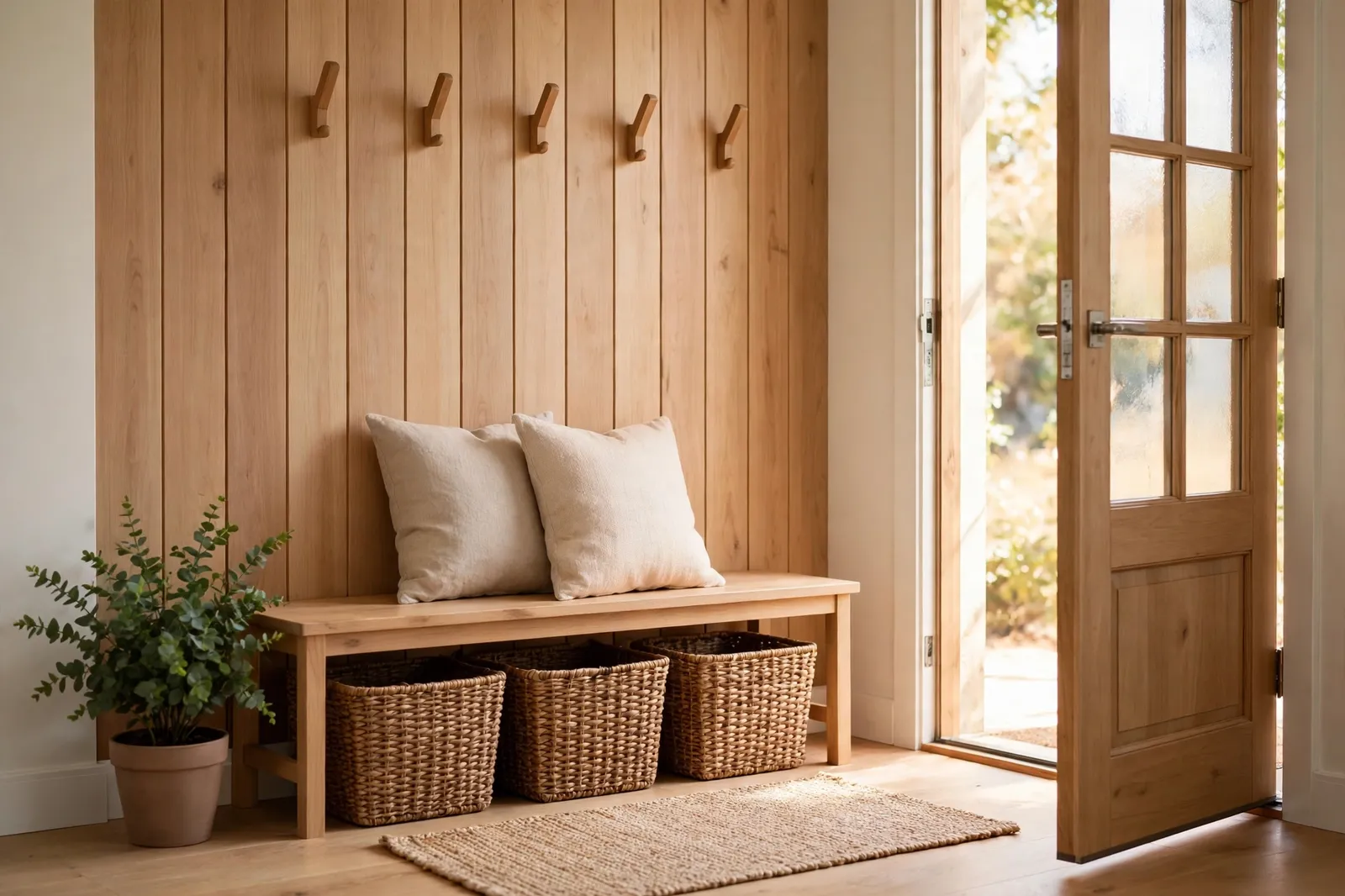
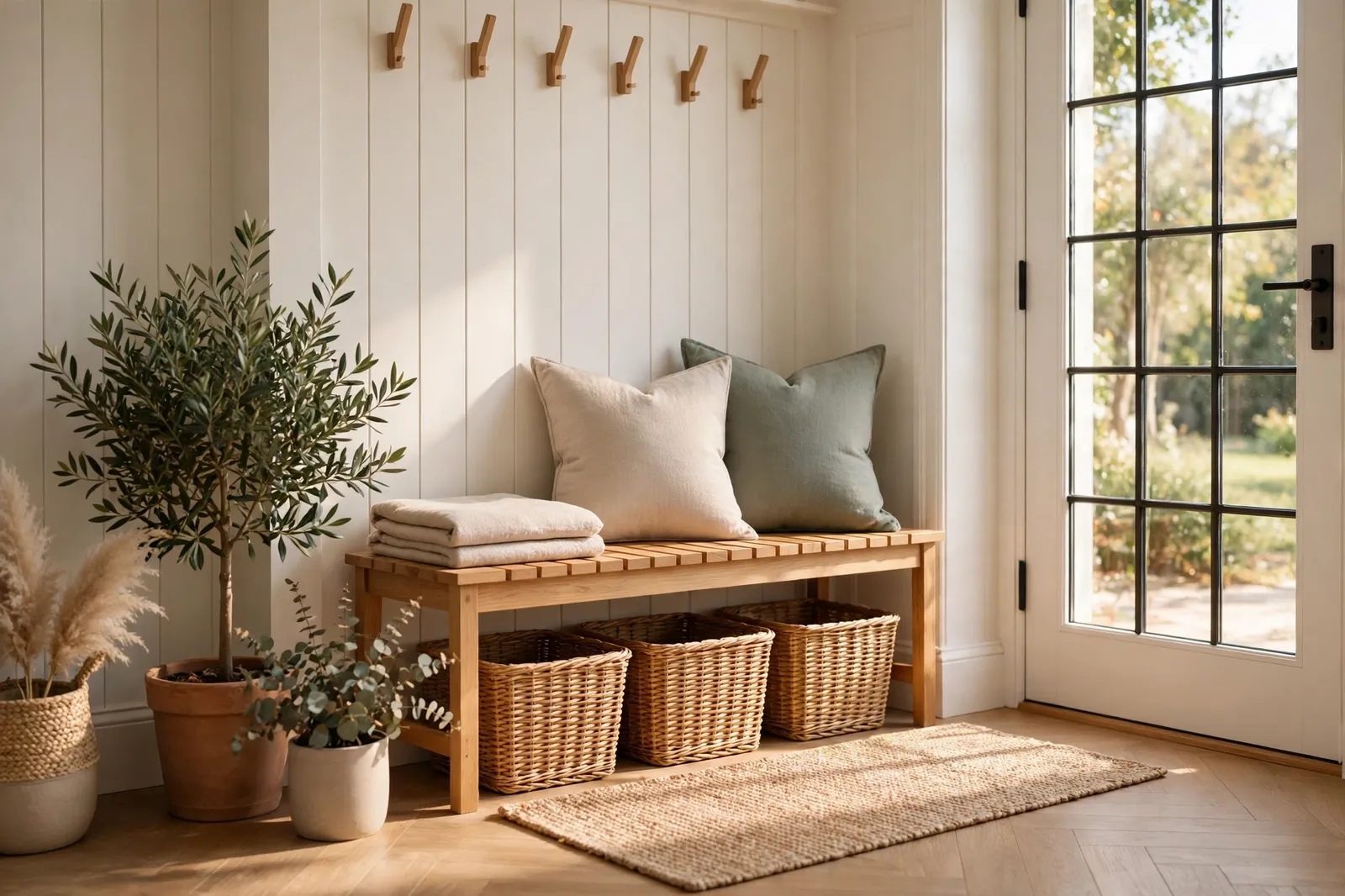
A bench is the one piece of furniture almost every small entryway needs. It gives you a place to sit and put on shoes, and it can hide a lot of stuff underneath. Look for a bench with a lift-up seat or an open shelf below for baskets. That way the bench is not just a seat — it is storage too.
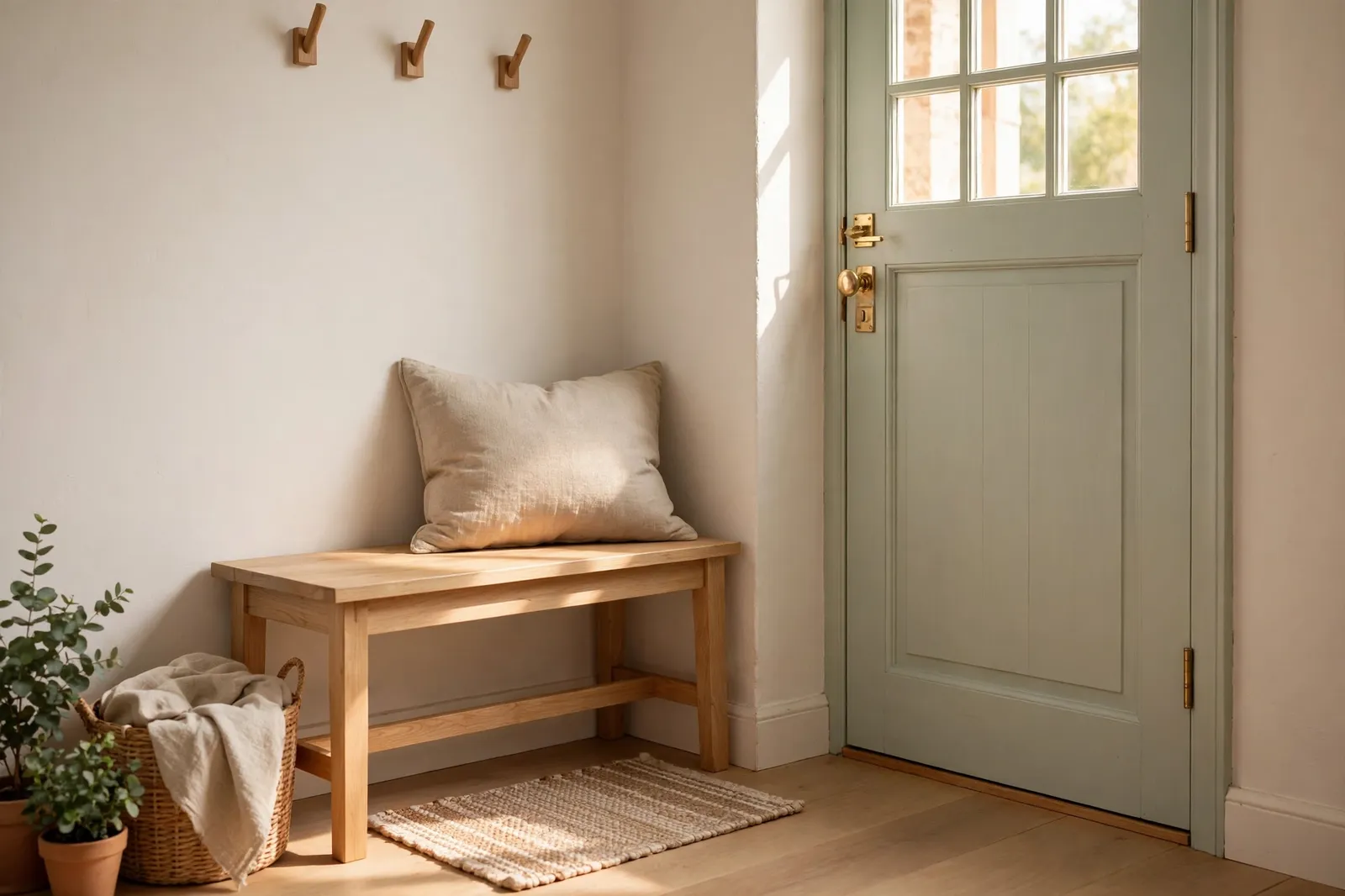
Keep the bench slim, about 12 to 14 inches deep, so it does not eat into your walking path. Add one or two thin cushions on top for comfort, and slide a pair of baskets underneath for shoes or winter gear. A bench with a light wood finish keeps a narrow entryway feeling open, while a dark, bulky bench can make the same space feel smaller than it is.
4. Give Shoes a Home of Their Own
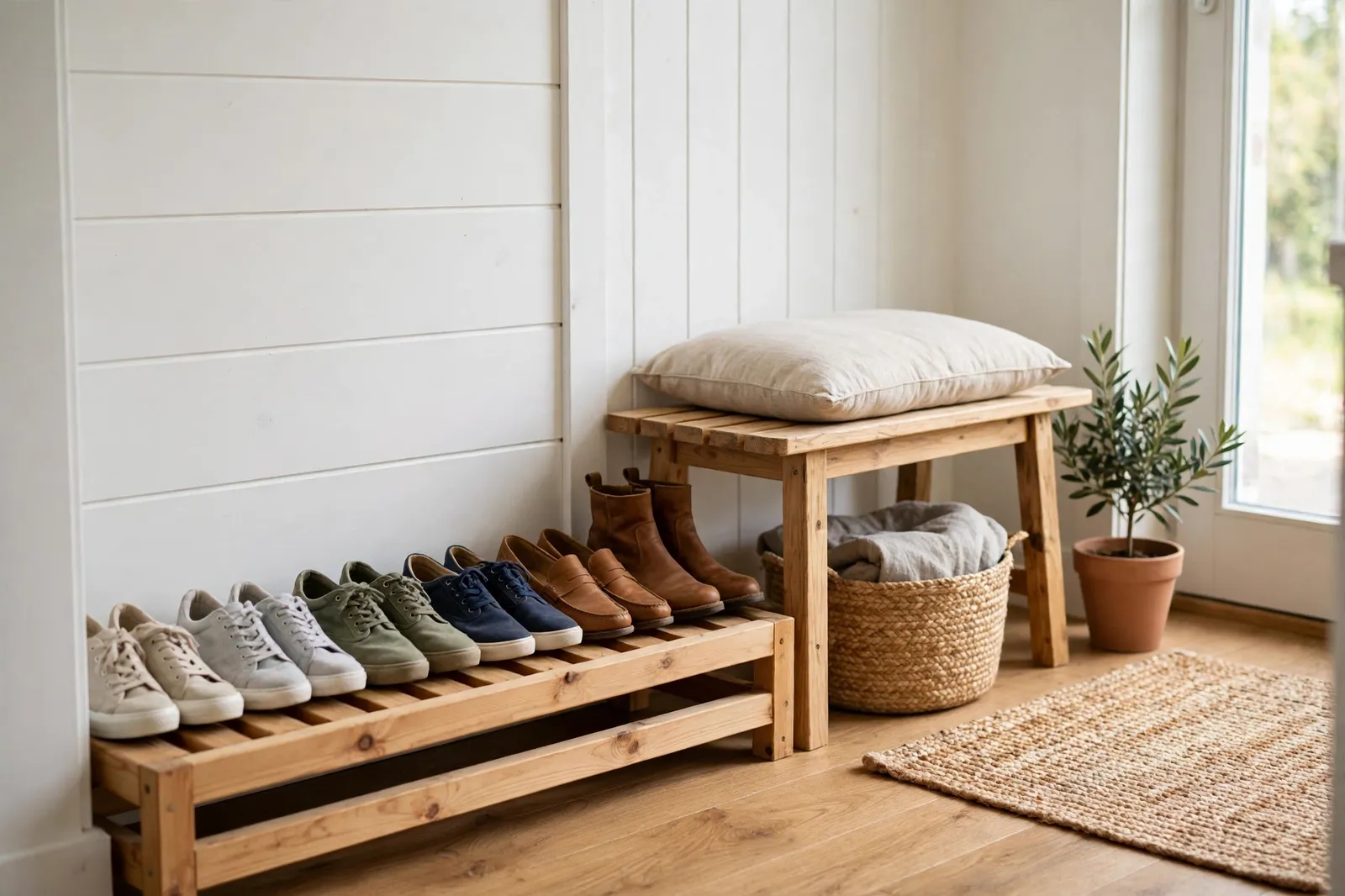
Shoes are what make a small entryway look messy fastest. A pair by the door turns into four pairs by the end of the week if there is no plan for them. The fix is simple: one spot for shoes, and a clear rule that shoes live there and nowhere else. A low shoe rack, a tray, or a couple of baskets under the bench all work fine.
If floor space is really tight, a slim shoe cabinet that hugs the wall can hold six to eight pairs in just a few inches of depth. A boot tray by the front door catches wet shoes in winter and keeps dirt off the floor. Whatever you choose, keep it to one shoe spot — when shoes have a home, the entryway stays tidy on its own.
5. Use the Wall, Not the Floor
In a small entryway, the walls are your best friend. Floor space is limited, but wall space is usually sitting empty. A shelf above the hooks holds hats, gloves, and sunglasses. A small wall-mounted mail holder keeps letters from piling up on the bench. Even a row of pegs can hold hats and tote bags that would otherwise end up on the floor.
Think up, not out. A tall, narrow shelf unit uses a corner that would otherwise be wasted, and a mirror on the wall above the bench makes the whole space feel bigger. Every item you move off the floor and onto the wall gives you back walking room — and in a narrow entryway, a few extra inches of clear floor make a real difference.
6. Add a Slim Surface for Keys and Mail
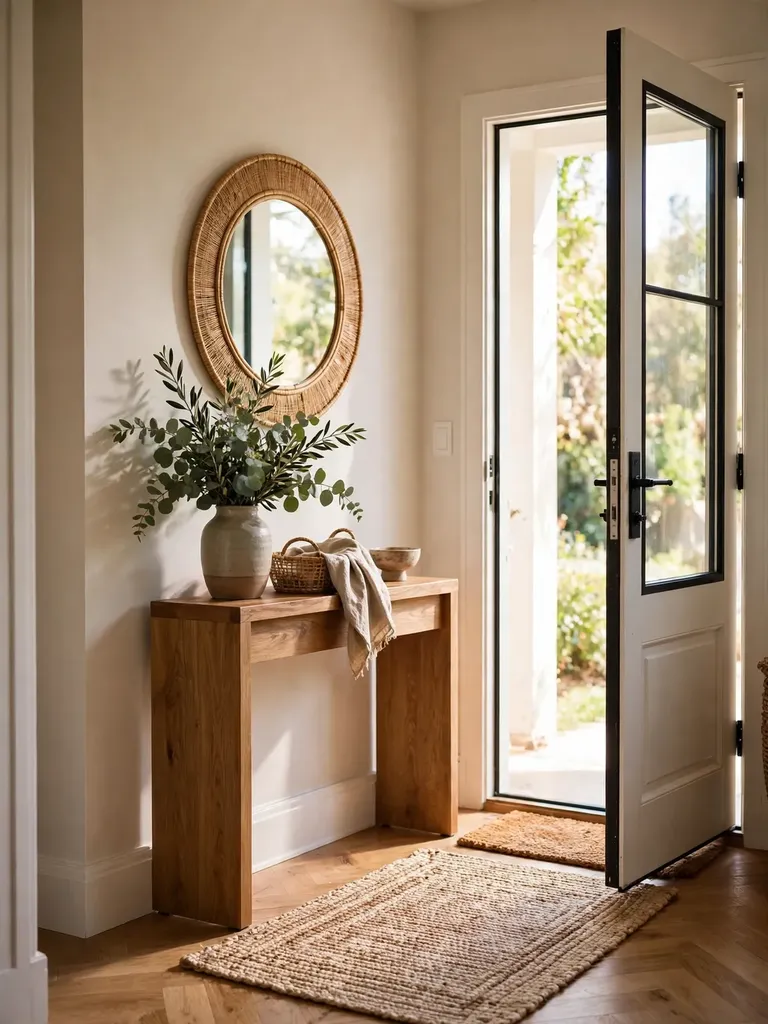
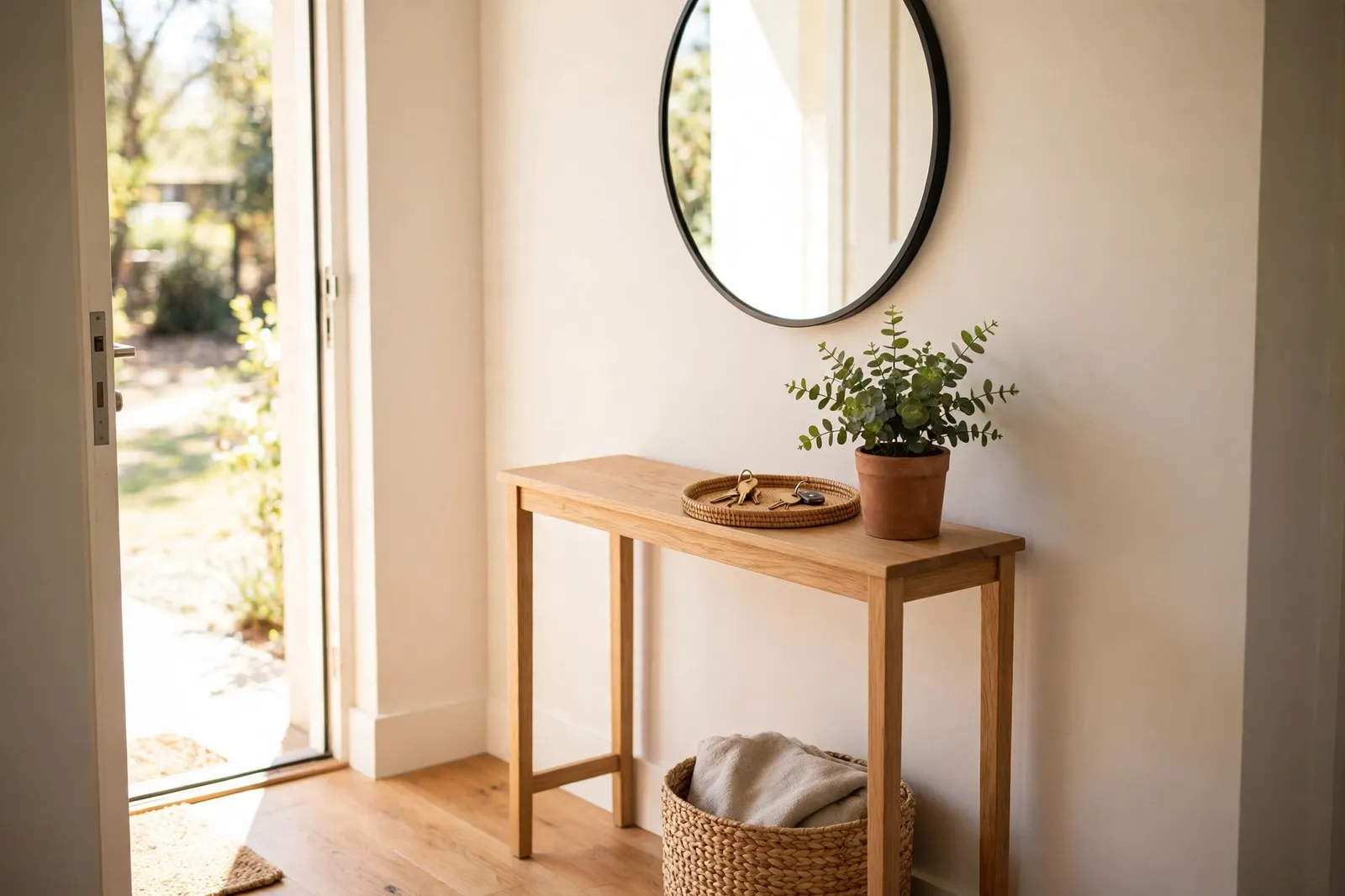
Every entryway needs one small spot for the things you grab on the way out: keys, sunglasses, and the mail. Without it, those things end up scattered on the bench or lost in a bag. A slim console table, a floating shelf, or even a small tray on top of a shoe cabinet gives those little things a home.
Keep it simple. A small tray or a shallow bowl catches keys, and a tiny hook or two on the wall below the shelf can hold a spare set. Do not let this surface become a dumping spot — if it fills up, clear it out once a week. One tidy little surface by the door saves you from hunting for your keys every morning.
7. Hide the Mess in Baskets and Bins
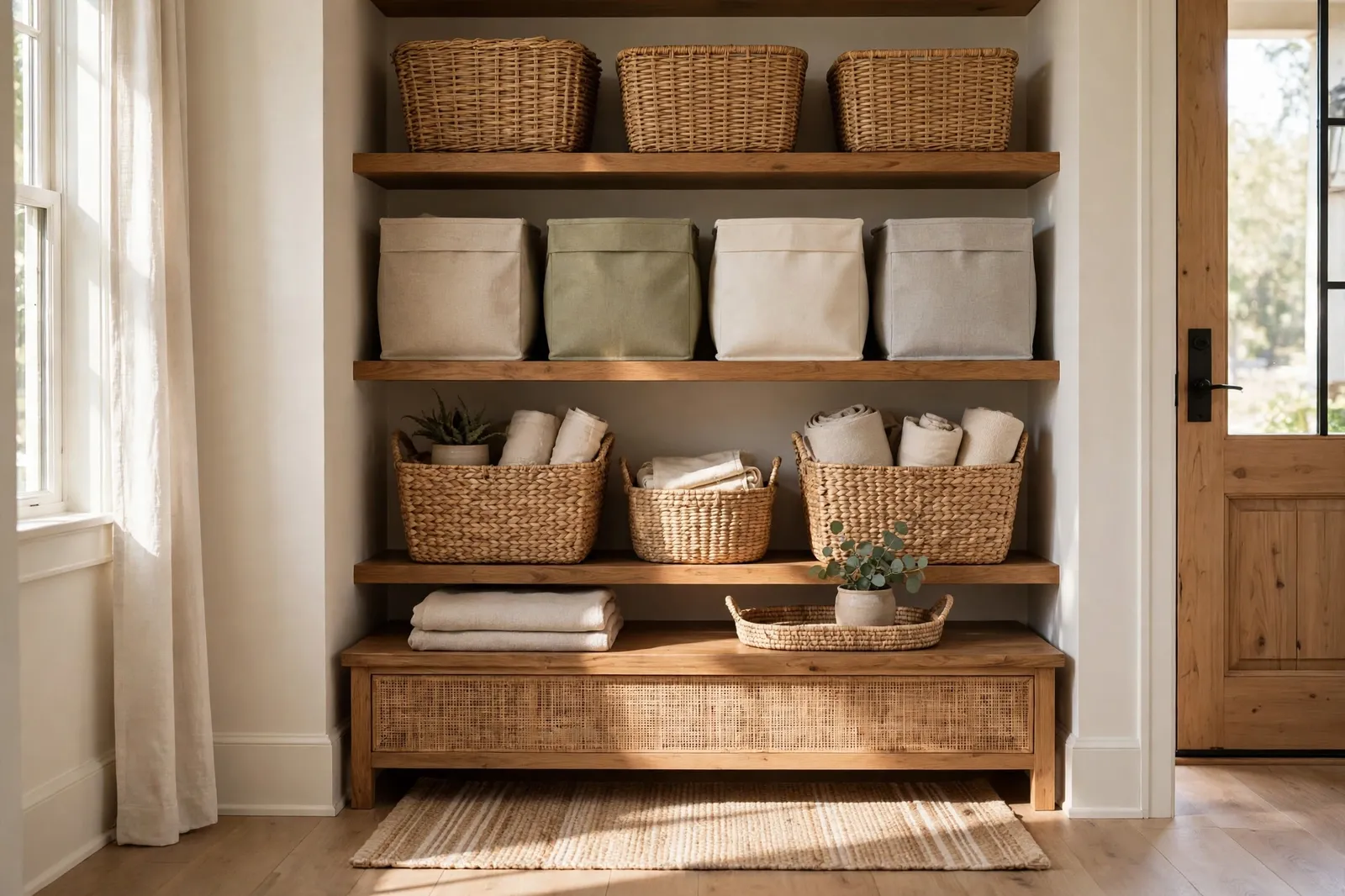
Baskets are the secret weapon of a tidy entryway. They hide the stuff that is hard to make look neat — gloves, scarves, dog toys, reusable bags — behind a texture that actually looks good. One basket per person works well: each family member gets their own spot for the small things they use every day.
Pick baskets that fit the space you have, not the space you wish you had. Flat woven baskets slide under a bench, tall narrow bins fit on a shelf, and a lidded box keeps clutter out of sight on a console table. Woven baskets also soften a space full of hard surfaces like wood and tile. When everything messy is tucked away in a basket, the entryway looks calm even on a busy morning.
8. Let Light and a Mirror Do the Heavy Lifting
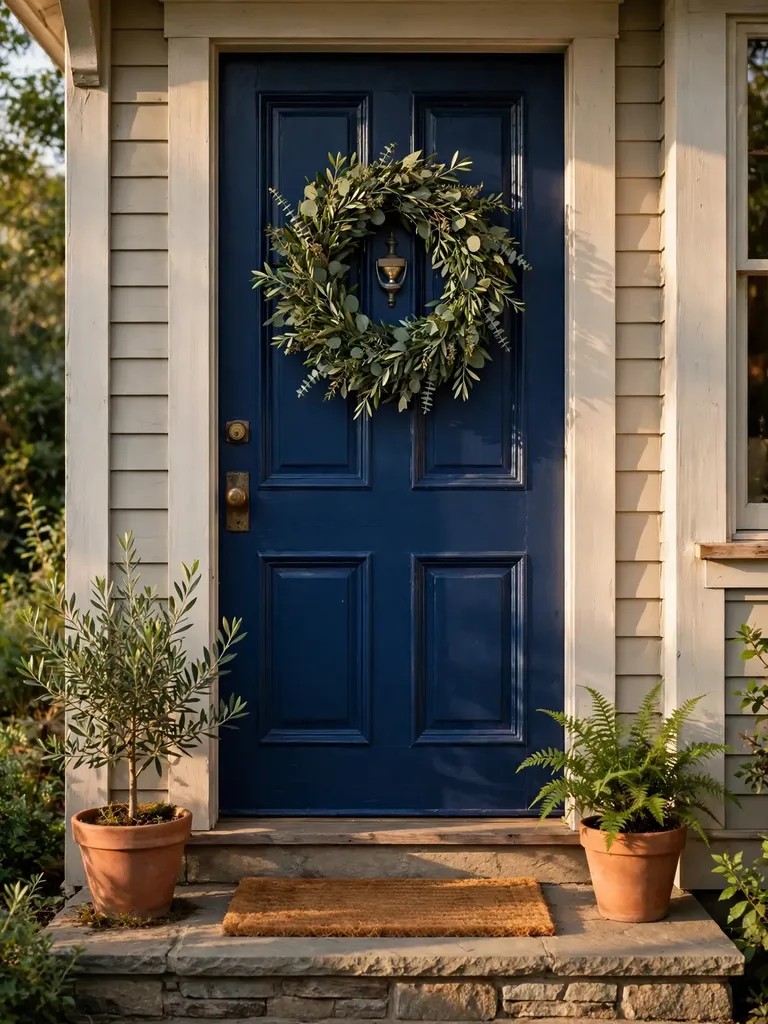
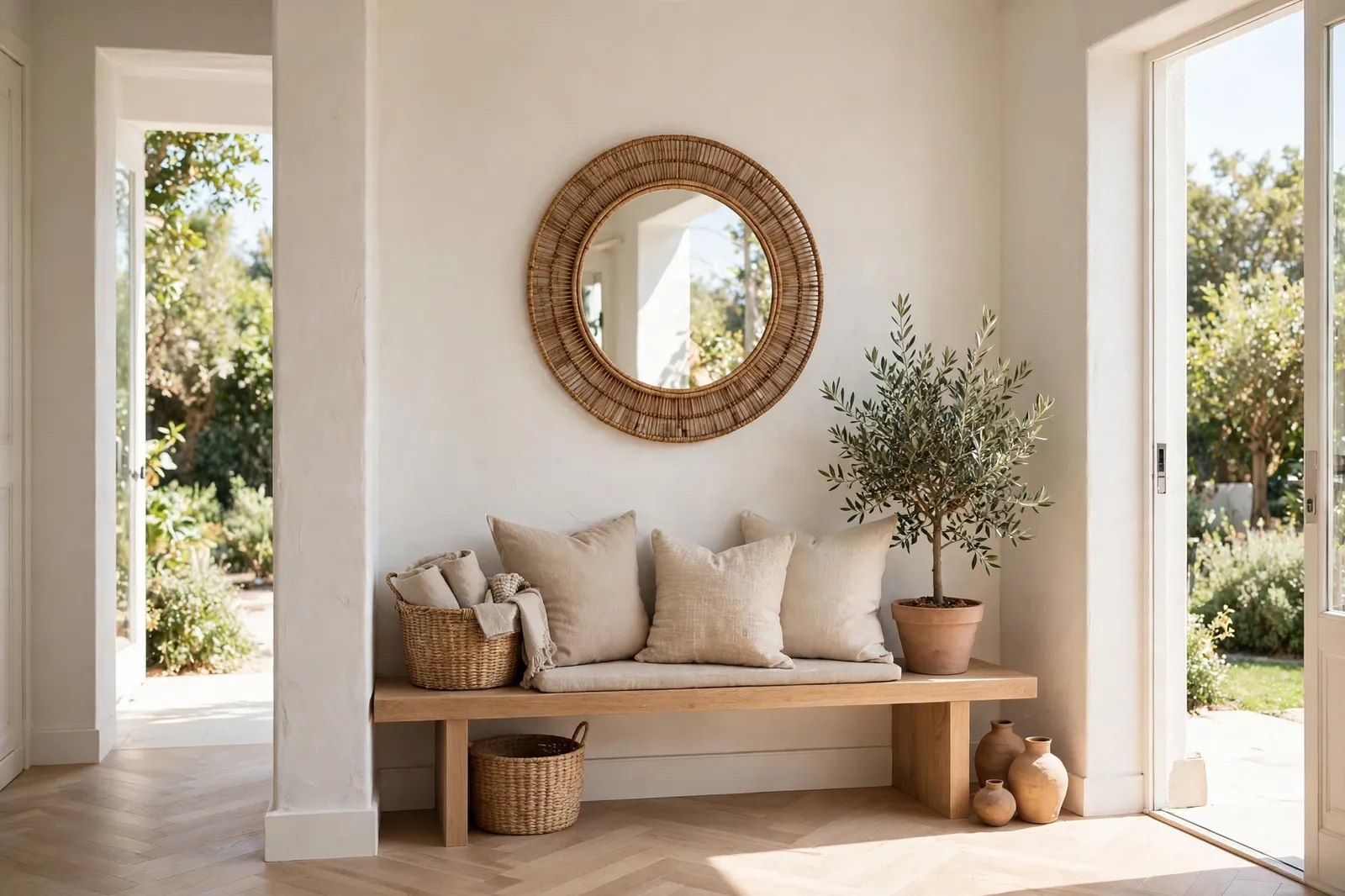
A small entryway often feels dark and cramped, but light and a mirror can fix that without any building work. A mirror above the bench or across from a window bounces light around and makes the space feel twice as big. It is also handy for a last check before you head out the door — much like the front door itself, which sets the tone for the whole home.
If your entryway has no window, add a small wall light or a battery-powered sconce above the mirror. Warm light makes the space feel welcoming instead of gloomy. A light-colored rug and pale walls help too. These are small changes, but together they make a tight entryway feel open and bright instead of like a dark hallway.
9. Keep It Tidy With a Five-Minute Habit
The best small entryway ideas only work if the space stays tidy, and that comes down to a tiny daily habit. Spend five minutes each evening putting shoes back in their spot, hanging up coats, and clearing the mail. It sounds small, but it stops the mess from building up all week.
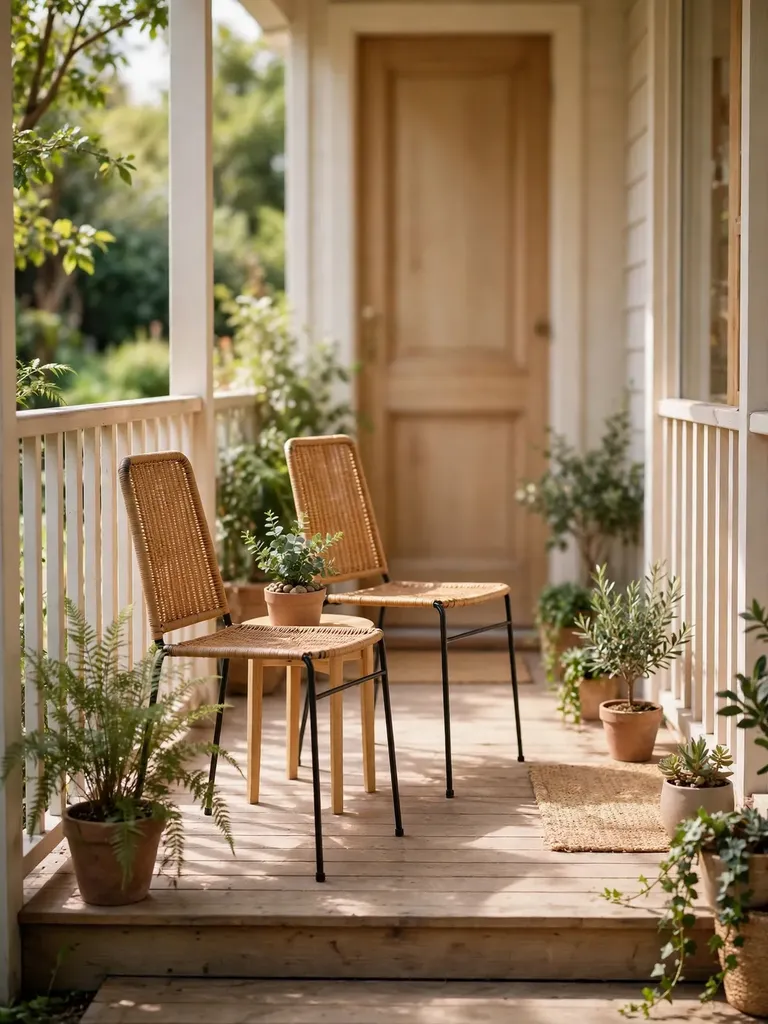
Make it easy on yourself. Keep a small basket by the door for things that need to go out — library books, returns, or the mail — so they do not pile up on the bench. And do a quick reset once a week: wipe the bench, shake out the rug, and toss anything that does not belong. A small front porch might be the first thing guests see outside, but the entryway is the first thing they see inside, and five minutes a day keeps it looking its best.
Frequently Asked Questions
How do I organize a very small entryway?
Start with the basics: a row of wall hooks, a slim bench, and one spot for shoes. Measure first so everything fits, then give every item a home. Keep only what you use every day in the entryway and move seasonal gear like heavy coats and boots somewhere else.
What is the best height for entryway hooks?
Hang hooks for adults at about 60 to 65 inches from the floor. If you have kids, add a second row or a few hooks at about 48 inches so they can reach their own coats and bags. Leave enough space between hooks so coats do not bunch up.
Do I need a bench in a small entryway?
A bench is not required, but it helps a lot. It gives you a place to sit while you put on shoes, and a bench with storage underneath hides shoes and gear. If space is very tight, a slim bench about 12 inches deep or a small stool can do the job without blocking the walkway.
How can I add storage without making it feel crowded?
Use the walls and hide clutter in baskets. Wall hooks, floating shelves, and a mirror keep things off the floor, and closed baskets or a slim shoe cabinet keep the mess out of sight. Light colors and a tidy daily reset also help a small entryway feel open instead of packed.
Related ideas
If you are working on your entryway, Entryway Decorating Ideas for a Stylish First Impression is a great place to start, since it covers the whole look from the door in. Front Door Decor Ideas to Improve Curb Appeal will help the outside match the inside, and Small Front Porch Ideas That Maximize Space shows how to make the most of the porch just beyond your front door. You might also like Entryway Decorating Ideas for a Stylish First Impression and Mirror Decorating Ideas to Brighten Dark Spaces.