Entryway Decorating Ideas for a Stylish First Impression
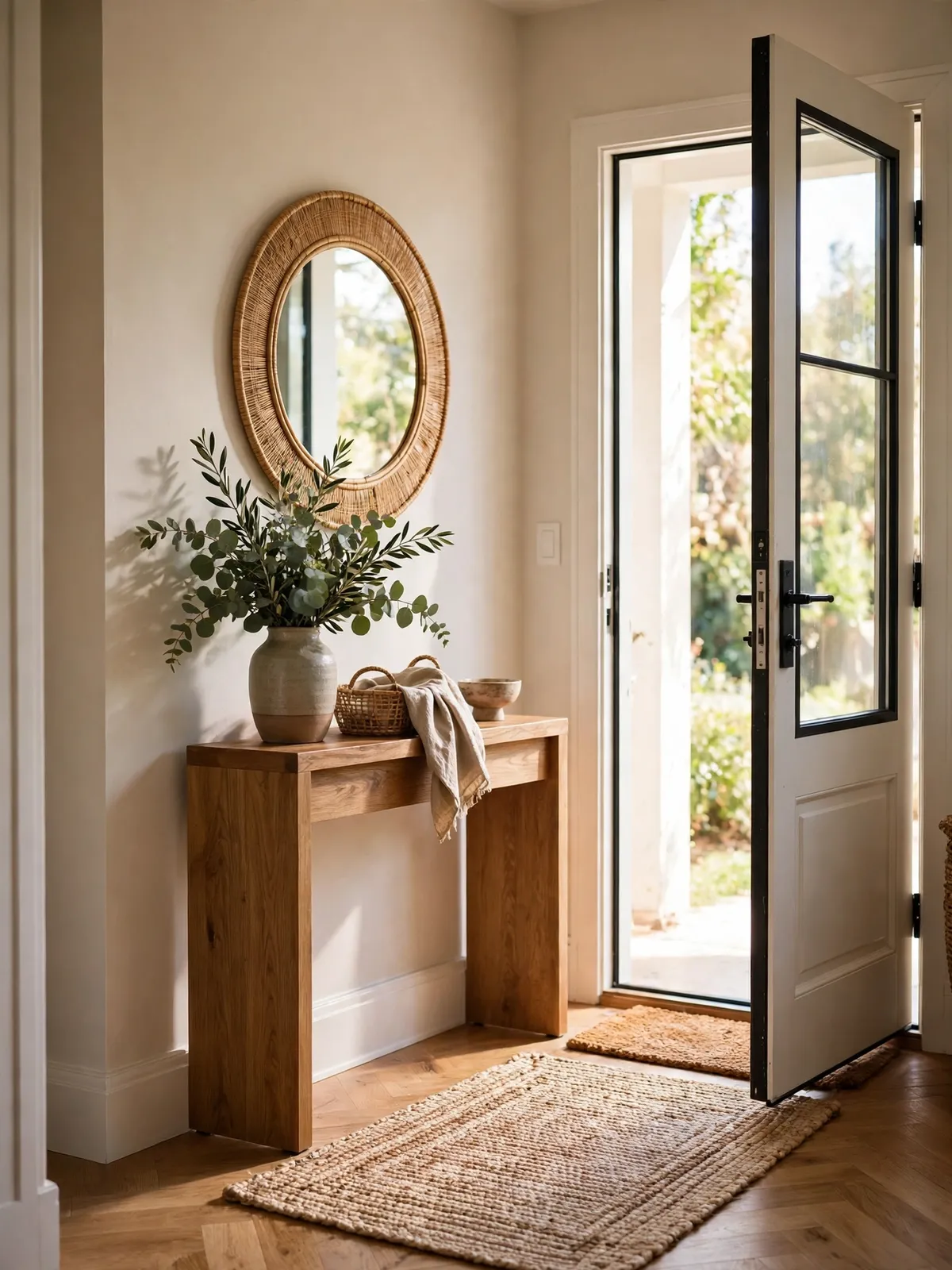
Your entryway is the first thing people see when they walk into your home, and it sets the tone for everything else. It does not need to be big or fancy to make a good impression. A few thoughtful choices — a place to drop keys, something nice on the wall, a rug underfoot — can turn a plain hallway into a space that feels warm and welcoming.
The best entryways are simple and practical. They look good, but they also work hard for everyday life. This guide shares easy entryway decorating ideas you can try in any home, big or small, without spending a fortune or starting a big project.
1. Entryway Decorating Ideas Start with a Clear Plan
Before you buy anything, take a good look at your entryway and think about how you actually use it. Do shoes pile up by the door? Do keys always go missing? Is there a bare wall that could use something? When you know what the space needs to do, the decorating part gets much easier, and you will not waste money on things that just get in the way.
Start with the basics and build from there. Most entryways need three things: a spot for keys and small bits, somewhere to sit or set down a bag, and a bit of light. Once those are covered, you can add the pretty touches — a picture, a plant, a nice basket. A clear plan keeps the space from turning into a dumping ground, and it helps the whole entry feel calm the moment you walk in.
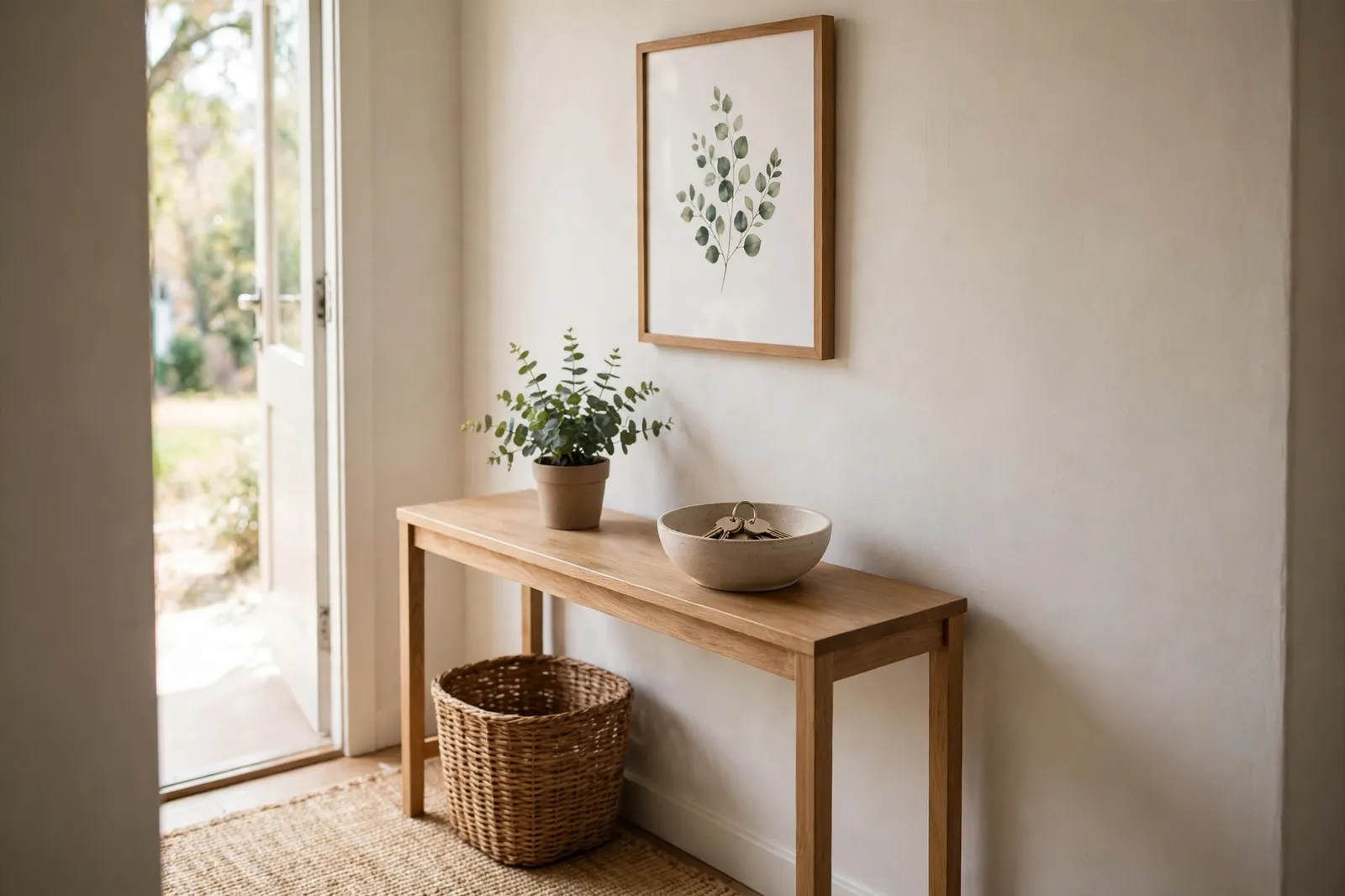
2. Pick a Console Table That Fits the Space
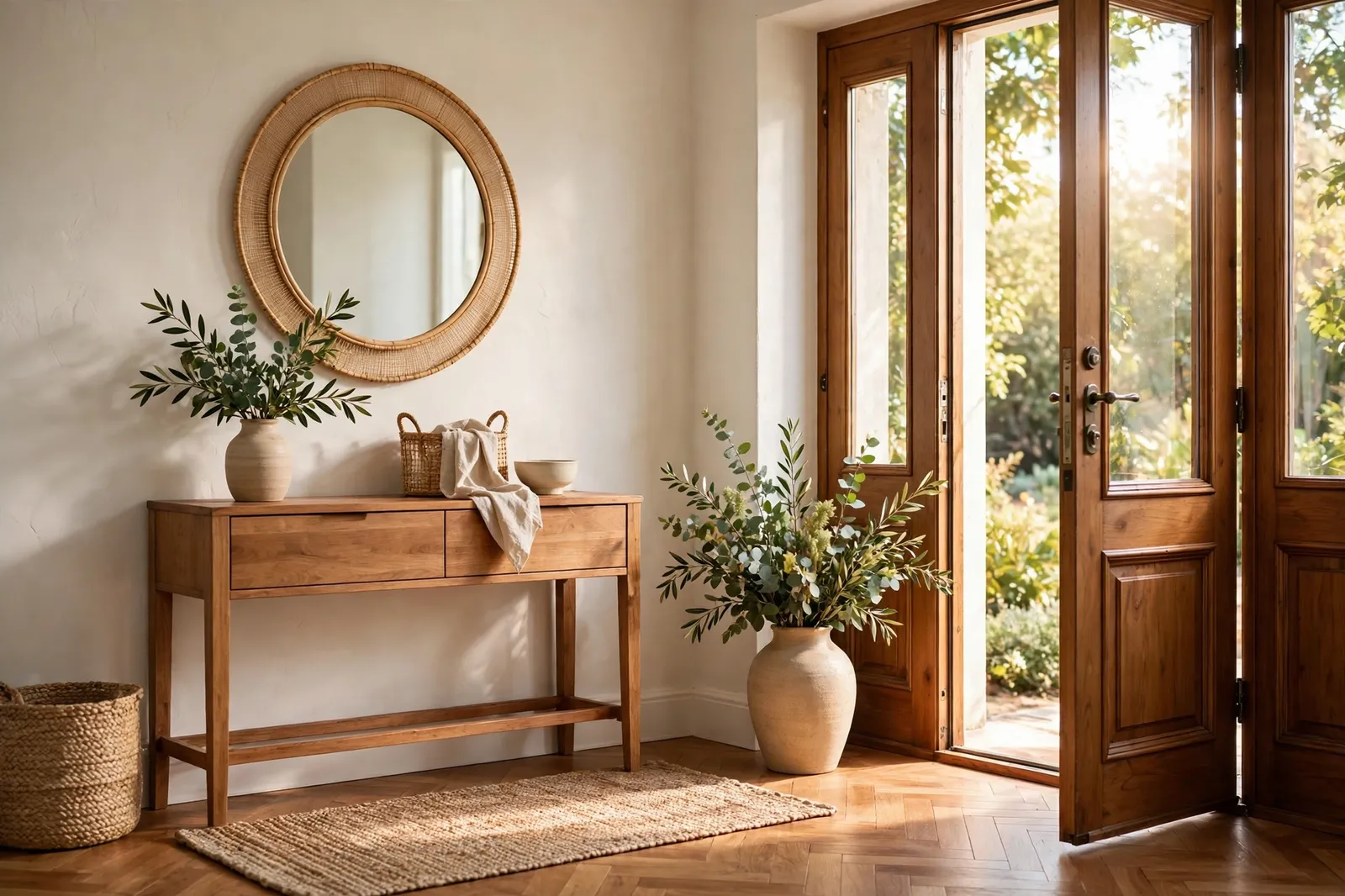
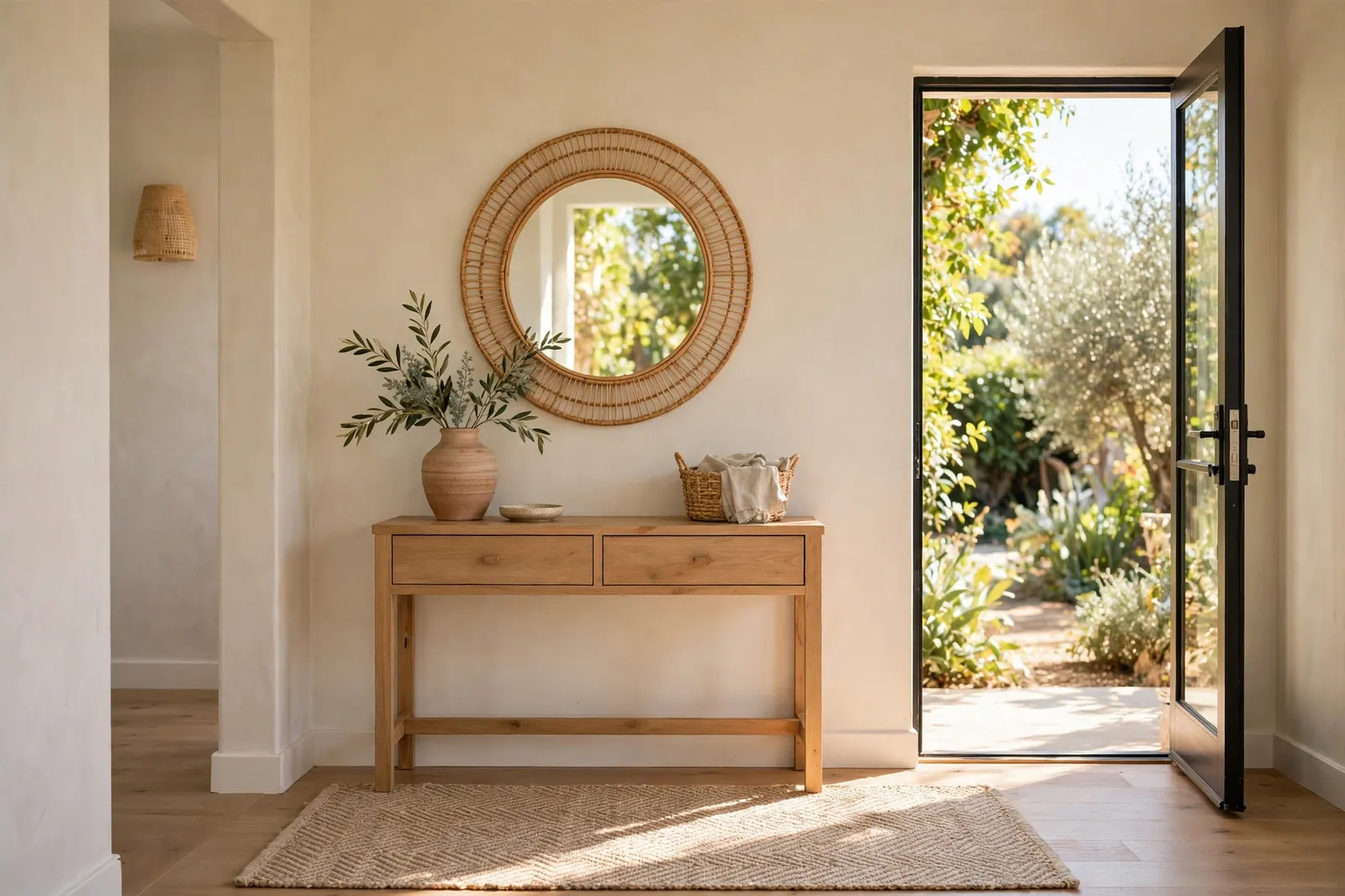
A console table is the workhorse of most entryways. It gives you a surface for keys, mail, and a lamp, and the space underneath is perfect for baskets or shoes. The trick is picking one that fits — too deep and it blocks the walkway, too small and it looks lost. Measure your wall first, and leave at least enough room to walk past without turning sideways.
If your entryway is narrow, look for a slim table or even a floating shelf. A light wood or painted finish keeps a small space feeling open, while a darker table can anchor a bigger hallway. Style the top with just a few things: a small lamp, a vase, and a tray for keys. Leave some empty space too — a crowded table looks messy no matter how nice the pieces are. And remember, the front door is right there, so choose a table that can handle a bit of wear and the odd bump from a bag or coat.
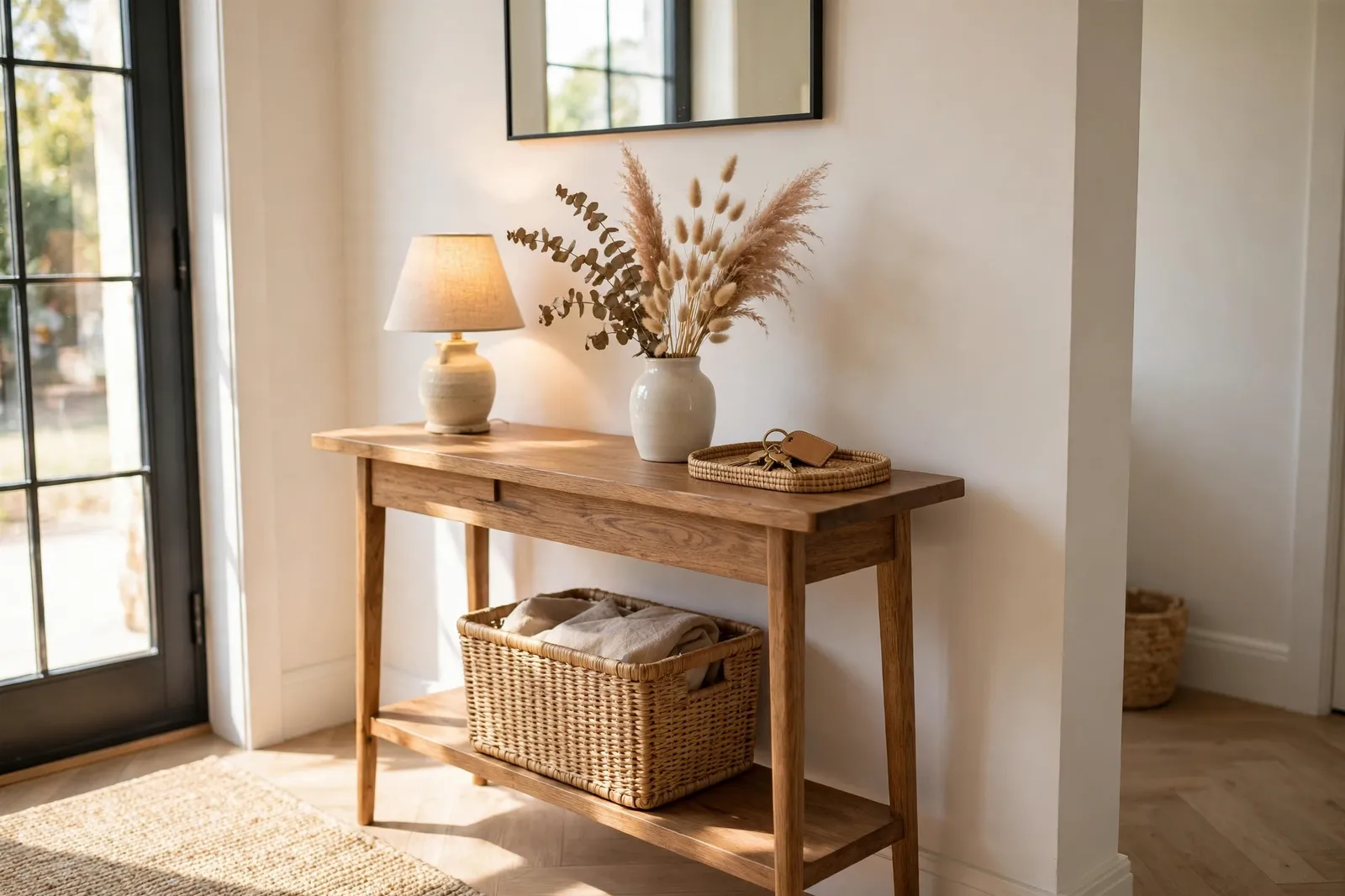
3. Hang a Mirror to Open Up the Entry
A mirror is one of the easiest wins in an entryway. It bounces light around, makes a small space feel bigger, and gives you a last quick check before you head out. A round mirror softens a hallway full of straight lines, while a tall rectangular one works well over a console table. Hang it at eye level so it is useful, not just pretty.
Keep the frame simple and in keeping with the rest of your home. A thin black frame feels modern, a wooden frame feels warm, and a gold frame adds a little shine. If your entryway is dark, hang the mirror across from a window or a light source so it catches as much light as possible. It is a small change, but it can make the whole space feel brighter and more open the second you walk in.
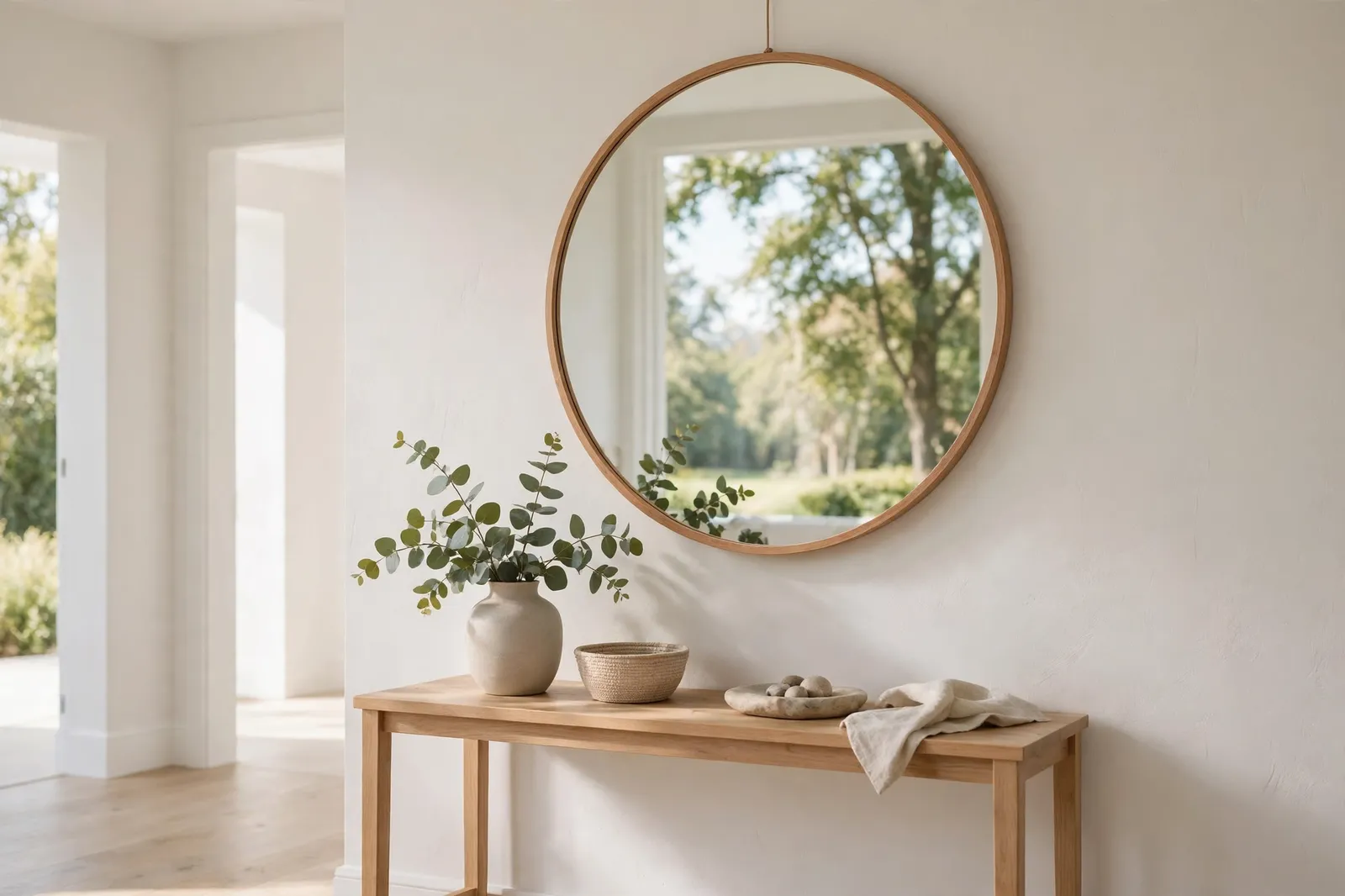
4. Lay Down a Rug That Can Take Foot Traffic
A rug does a lot of work in an entryway. It warms up hard floors, adds color and pattern, and catches dirt before it spreads through the house. Pick one that is tough enough for daily use — a flat-weave or indoor-outdoor rug is a good bet, and a darker pattern hides marks much better than a pale solid.
Size matters here. The rug should be wide enough for the door to open over it and long enough to cover the main walking path. A runner works well in a long hallway, while a small round or rectangular rug suits a square entry. If you love a light-colored rug, choose one you can wash or shake out easily. A good rug makes the entry feel finished, like a real room instead of just a passage to the rest of the house.
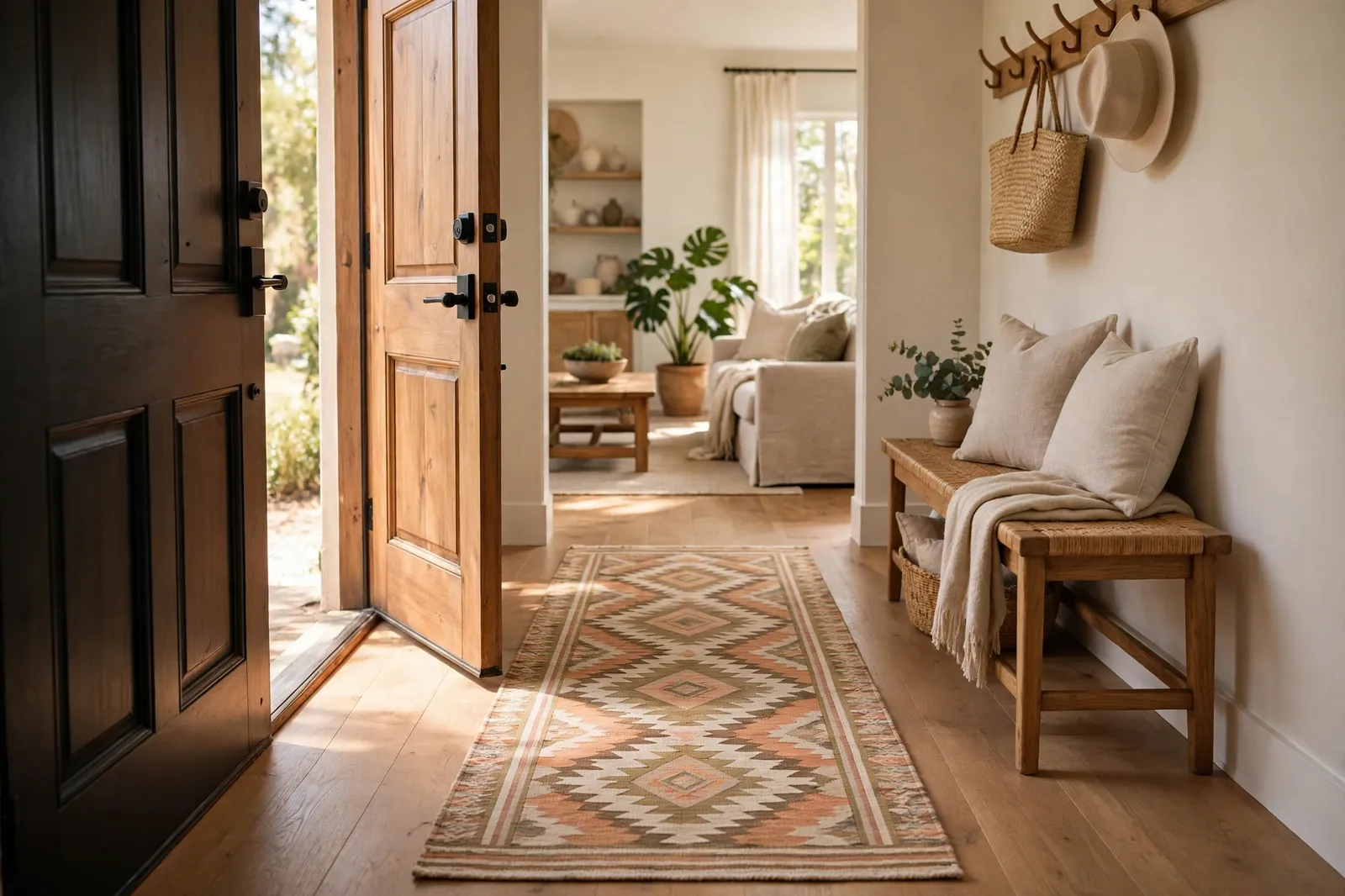
5. Add Hooks and Storage for Everyday Stuff
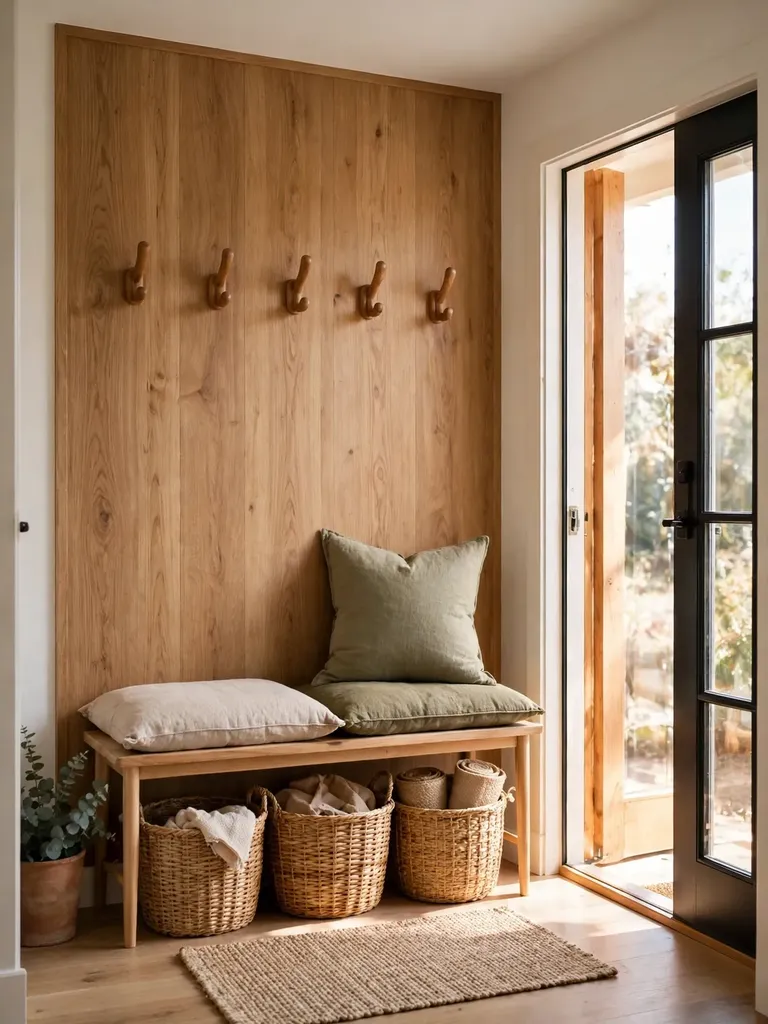
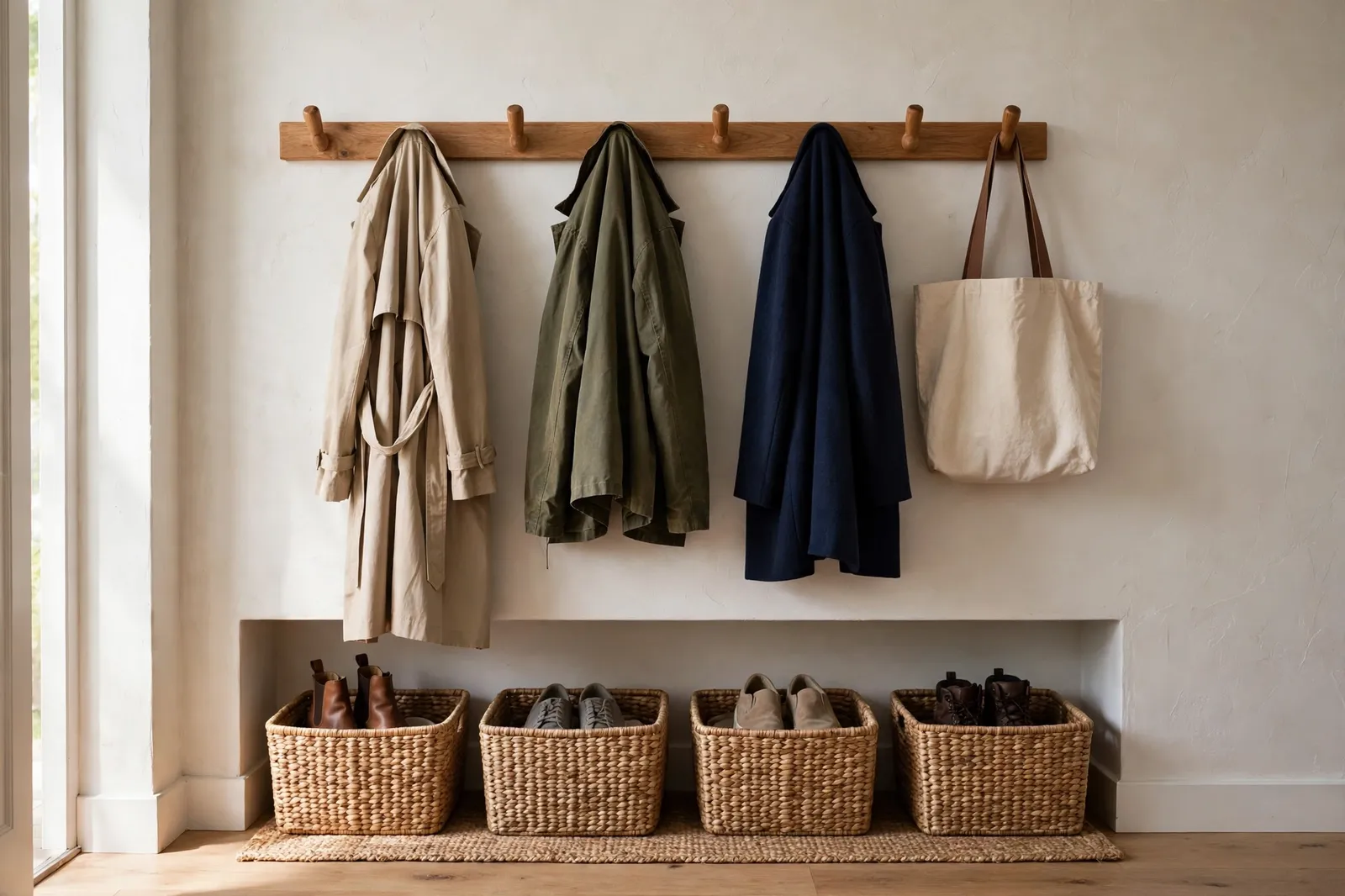
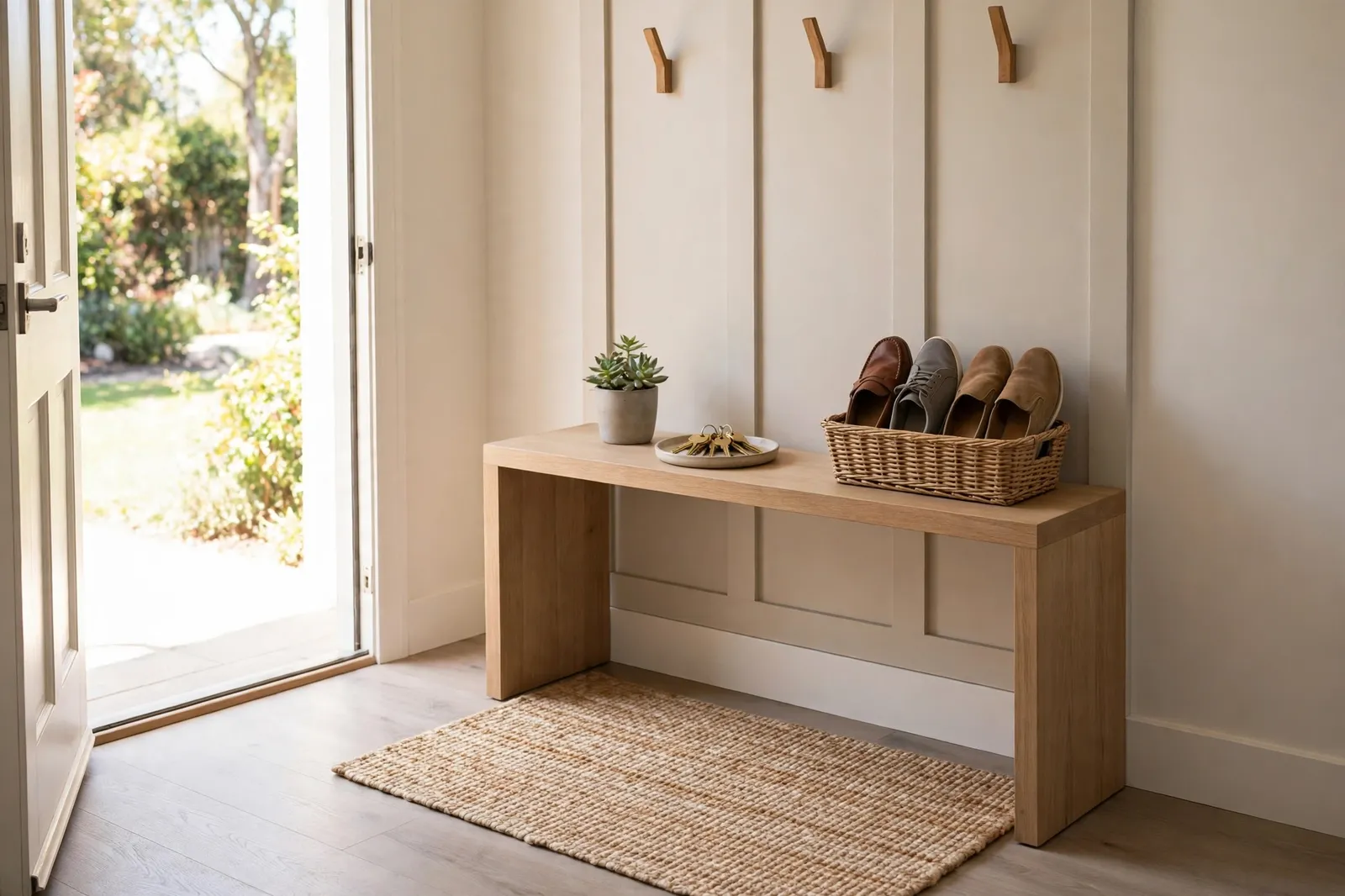
Coats, bags, and dog leads need a home, or they end up on the floor. A row of wall hooks is a simple fix that keeps everything off the ground and easy to grab. Put them at a height everyone in the house can reach, and leave one or two spare — guests will thank you for it.
Baskets and boxes are your best friends here. A basket under the console table holds shoes, a lidded box on the table hides chargers and bits and bobs, and a small bench with storage inside does double duty. The goal is not to hide everything, just to give the everyday stuff a proper place. When coats and shoes have a home, the entryway stays tidy with almost no effort, and that tidy feeling is half of a stylish first impression.
6. Layer in Warm Light
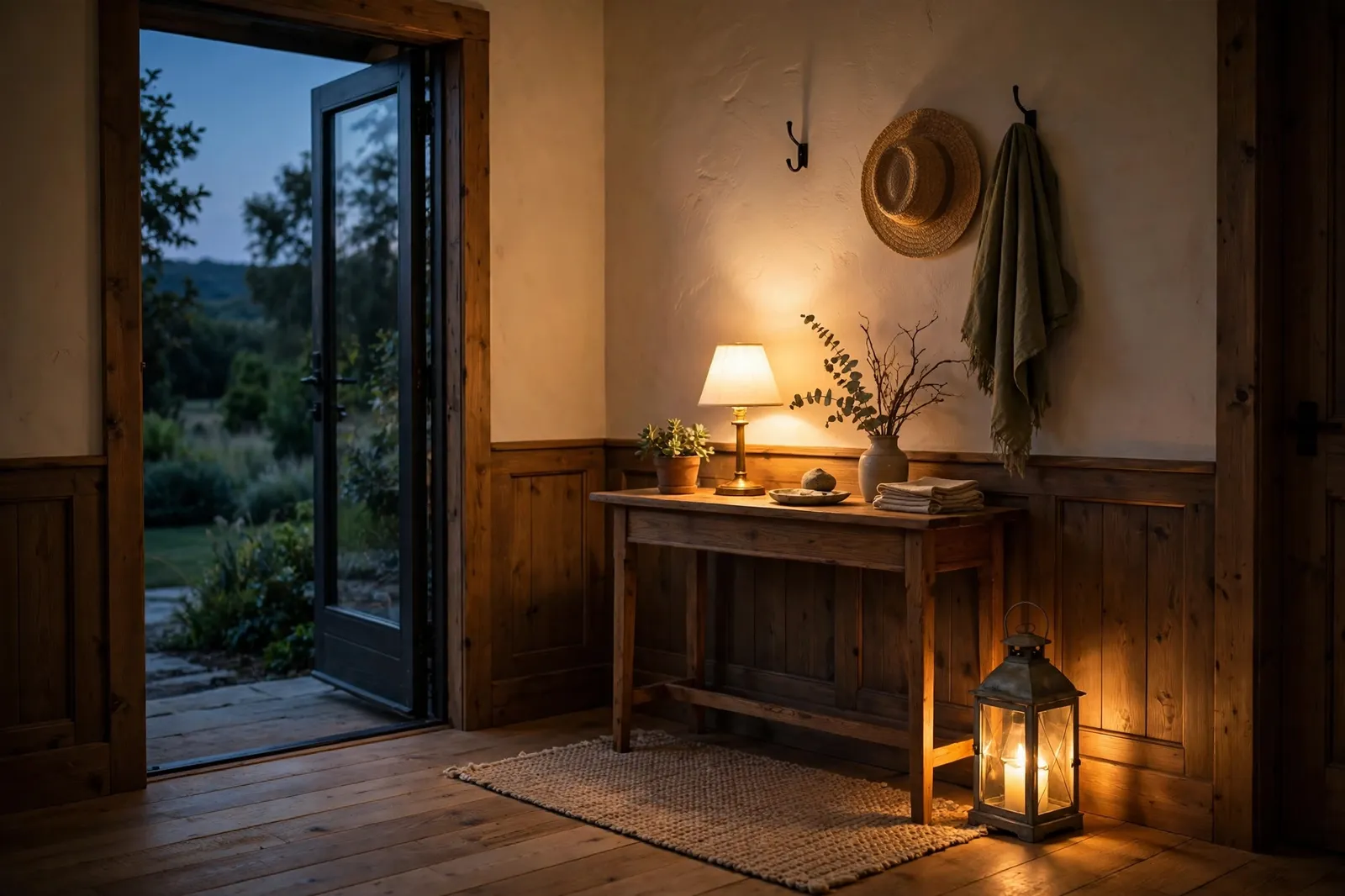
Good light makes an entryway feel welcoming, especially in the evening. If you have a ceiling light, swap a harsh white bulb for a warm one — it is a tiny change that makes a big difference. A small table lamp on the console adds a soft glow, and it looks lovely from the hallway when you come home at night.
If your entryway has no overhead light, a wall sconce or a battery-powered lamp can do the job. Candles in a lantern work too, as long as they sit somewhere safe and out of the way. The idea is to layer the light: one main source plus one smaller, warmer one. That soft mix is what makes an entry feel cozy rather than stark, and it flatters everything else you have styled in the space.
7. Bring in Greenery and Natural Texture
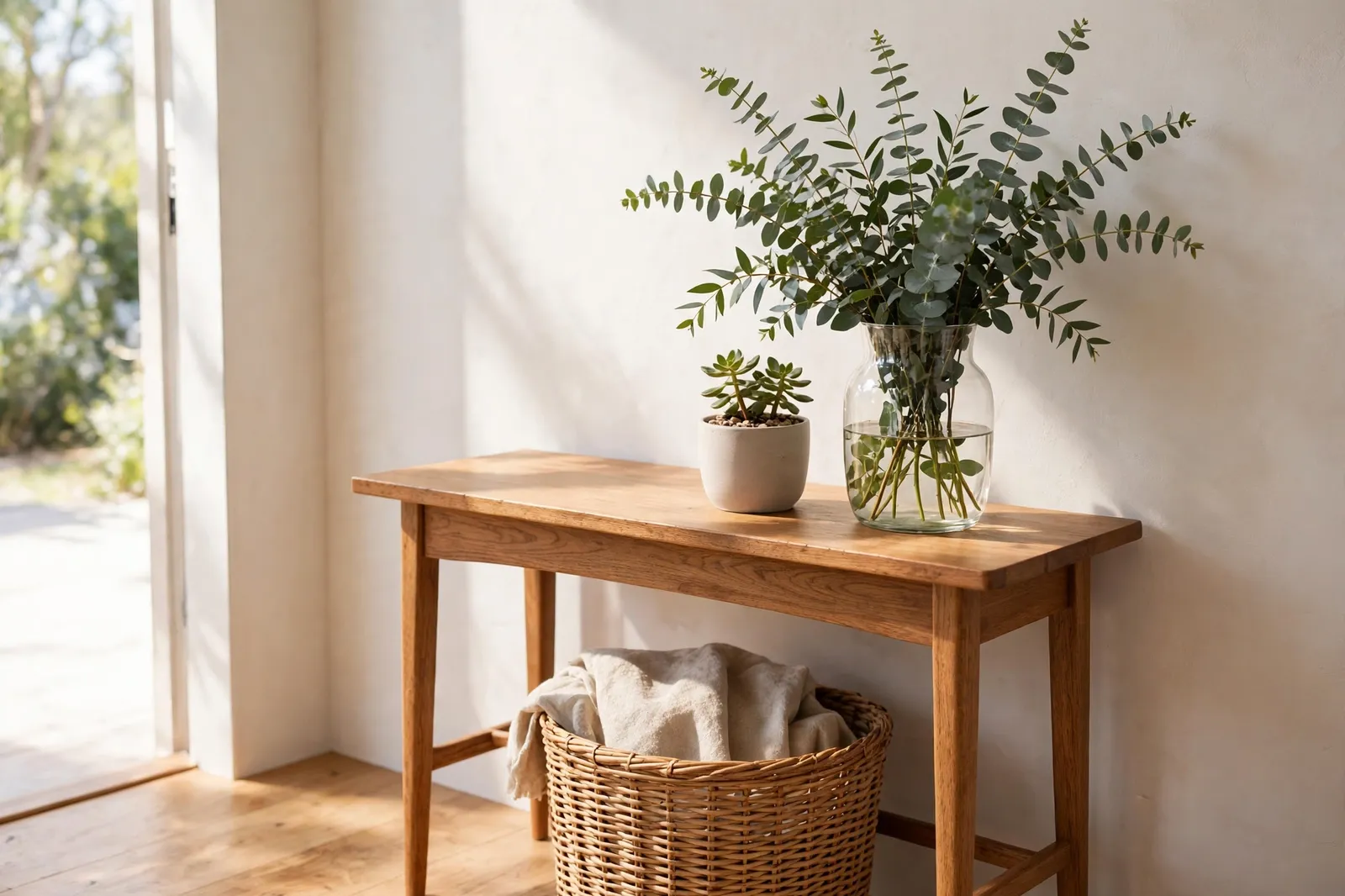
A plant or a vase of stems instantly makes an entryway feel alive. You do not need a big plant — a small potted plant on the console, a tall stem in a floor vase, or even a bunch of dried grasses can do the trick. If your entryway gets little light, go for a hardy plant or good-quality faux greenery that still looks fresh.
Natural textures work the same way. A woven basket, a jute rug, a wooden tray, or a linen runner adds warmth that smooth, shiny surfaces cannot. Mix two or three textures and the space will feel layered without trying too hard. Greenery and natural materials soften the hard edges of a hallway and make the first impression feel relaxed and lived-in, not staged.
8. Make It Personal Without the Clutter
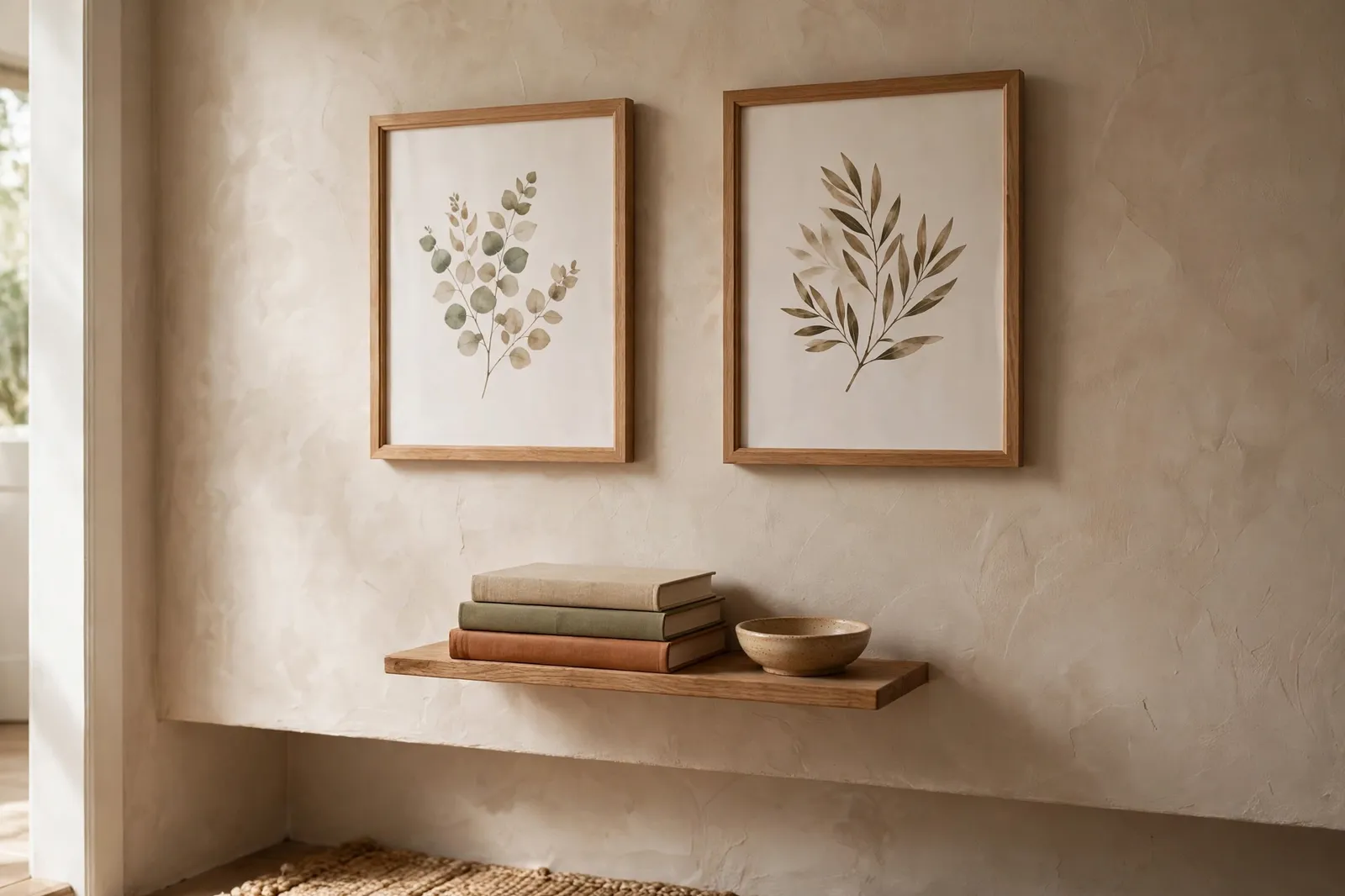
The best entryways say something about the people who live there. A framed family photo, a piece of art you love, a souvenir from a trip — one or two personal touches make the space feel like yours. The trick is to pick just a few and give them room, rather than covering every surface.
Try a small gallery of two or three frames on one wall, or a single bold print above the console. A stack of books, a pretty dish from a market, or a handmade item all work well. What you want to avoid is a jumble of little things with no breathing room. Step back and look: if your eye does not know where to rest, take one thing away. Personal does not mean crowded — it means the things on show are the ones that actually mean something to you.
9. Keep It Tidy So the First Impression Lasts
A stylish entryway only stays stylish if it stays tidy. That does not mean it has to be perfect — it means having a quick routine. Shoes go in the basket, keys go in the tray, mail gets dealt with instead of piling up on the table. A five-minute tidy at the end of the day is usually enough to keep the space looking good.
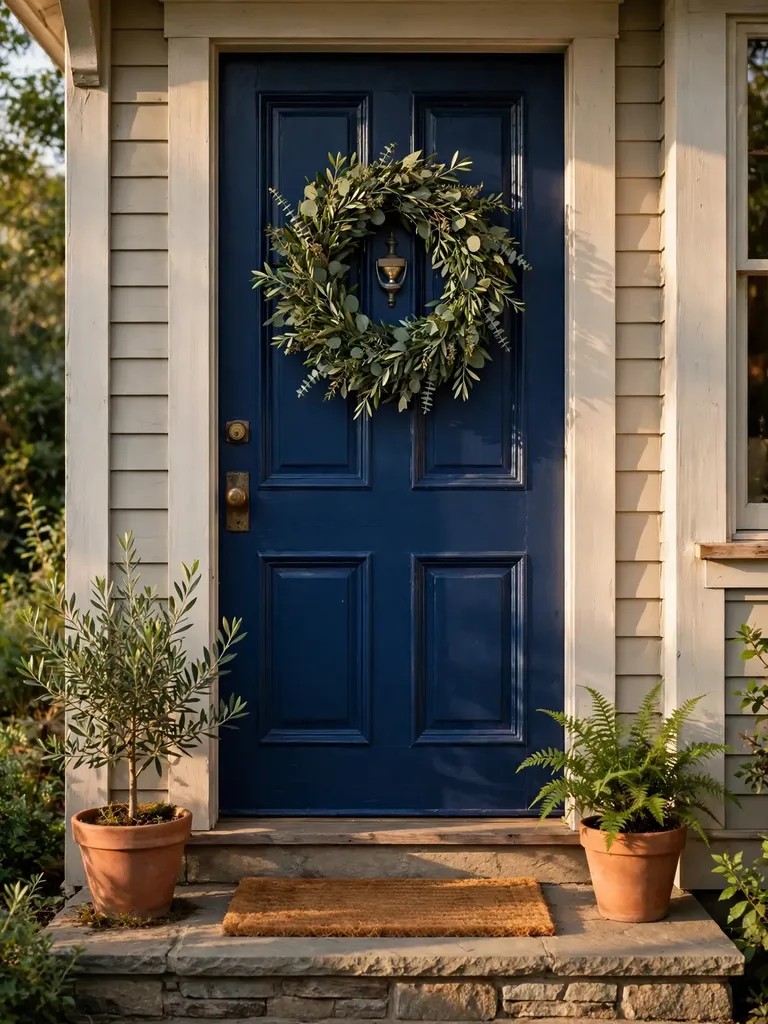
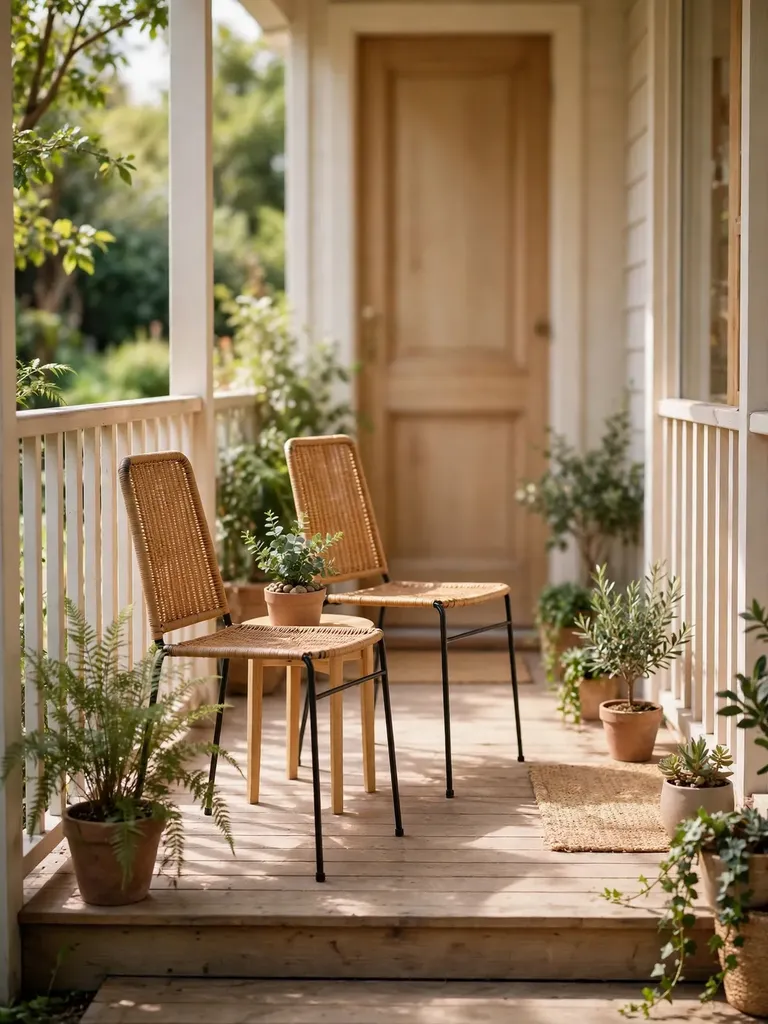
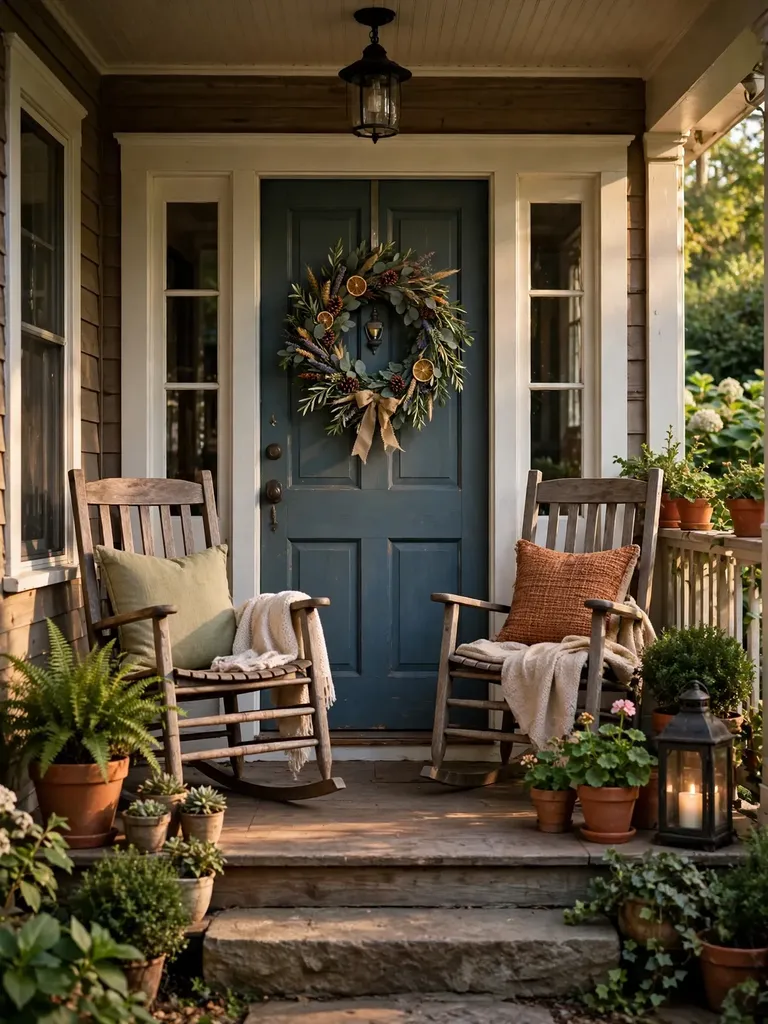
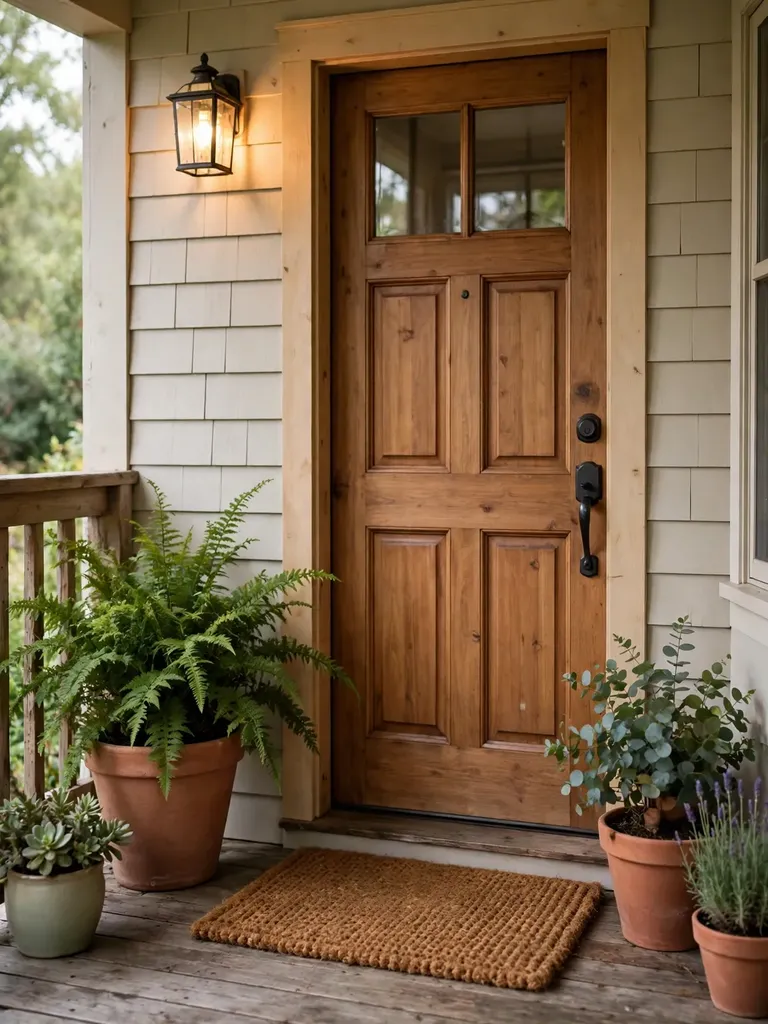
Think about what comes in from outside, too. A small front porch can be the first line of defense: a doormat that actually traps dirt, a boot tray for wet shoes, and a hook or two for muddy gear keep the mess from reaching your hallway. And the same goes for a front porch that opens straight into the entry — if the outside is cared for, the inside starts off on the right foot. Keep a small basket or a cloth handy for quick wipe-downs, and do a deeper tidy once a week. That little bit of upkeep is what keeps the first impression fresh long after the decorating is done.
Frequently Asked Questions
How do I decorate a small entryway?
Start with the essentials and keep everything slim. A narrow console table or floating shelf, a mirror to open up the space, and a few wall hooks can do a lot without crowding the room. Stick to two or three colors, keep the floor clear, and choose one statement piece instead of lots of small ones. A small entryway feels bigger when it is tidy and the surfaces are not overloaded.
What should I put on an entryway console table?
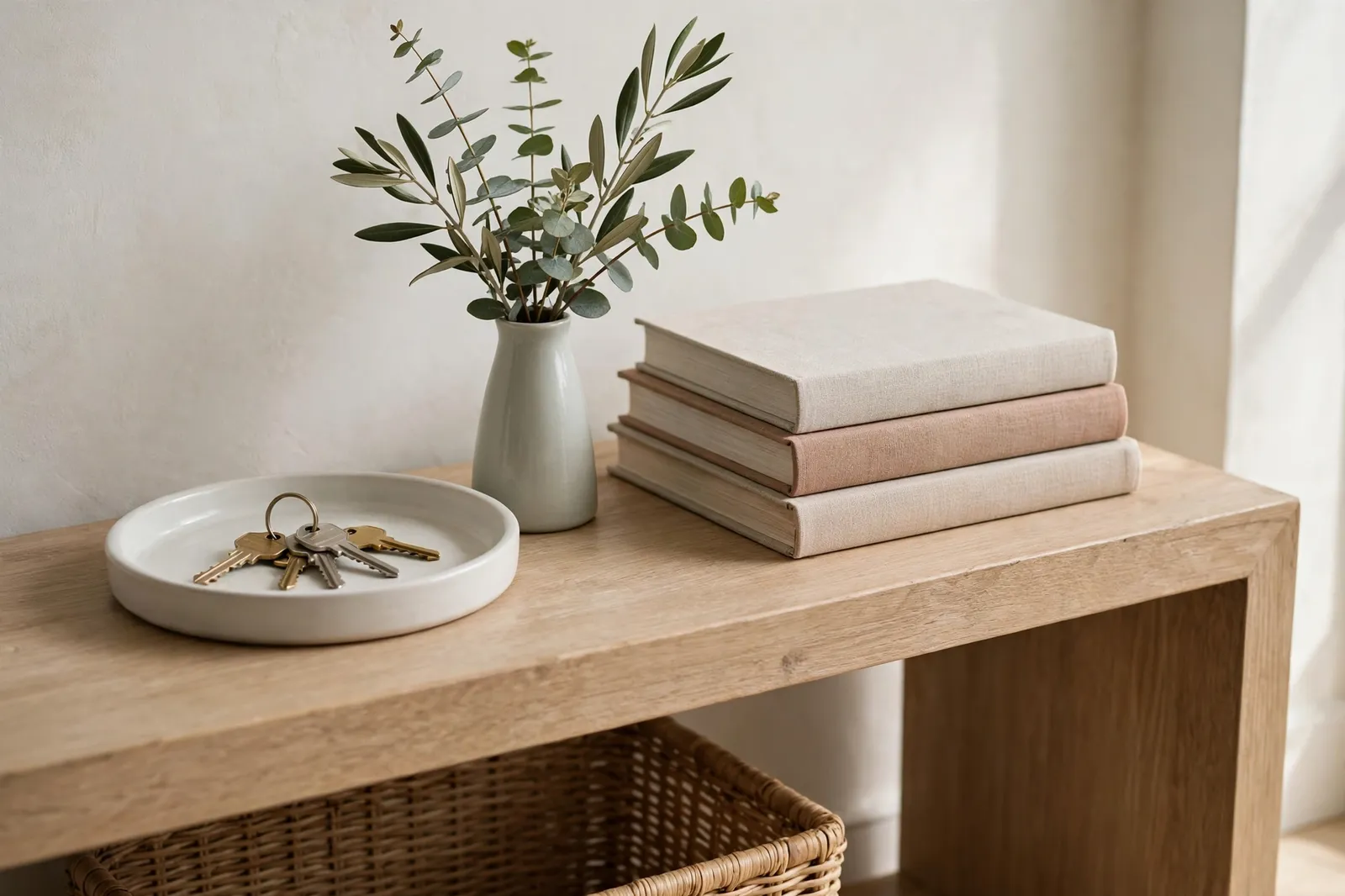
Keep it simple: a small lamp or a vase, a tray or bowl for keys, and one decorative piece you love, like a framed photo or a stack of books. Leave some empty space so the table does not look cluttered. Underneath, a basket for shoes or blankets keeps things tidy. The rule is three or four items on top at most — anything more starts to look messy.
How can I make my entryway look more expensive on a budget?
Focus on a few high-impact, low-cost changes. A fresh coat of paint, a good mirror, warm light bulbs, and a new rug can transform the space for very little money. Swap mismatched hooks for a matching set, add a tray to corral small items, and keep the surfaces clear. Tidy, coordinated, and well-lit reads as expensive — it is rarely about how much you spent.
Do I need a rug in my entryway?
A rug is not essential, but it helps a lot. It protects your floors, catches dirt, adds warmth and color, and makes the entry feel like a proper room. If you skip the rug, make sure the floor is clean and add warmth another way, like a basket or a plant. If you do use one, pick a durable, easy-to-clean rug in a size that fits the space and lets the door open freely.
Related ideas
If you enjoyed these entryway decorating ideas, Front Door Decor Ideas to Improve Curb Appeal is a great next read, since the outside of your door sets up the first impression before anyone steps inside. Small Front Porch Ideas That Maximize Space will help if your entry is tight on room, and Front Porch Decorating Ideas for Every Season shows how to carry the look from the porch right through to your hallway all year round. You might also like Front Door Decor Ideas to Improve Curb Appeal and Small Entryway Ideas With Hooks, Benches, and Storage.