How to Make a Small Room Look Bigger
A small room can still feel open and easy to live in. You do not need to knock down walls or spend a lot of money. A few smart choices — lighter colors, the right furniture, and a little less stuff — can make the same room feel much bigger.
Most of it comes down to what your eyes see. When light moves around the room and you can see the floor, your brain reads the space as bigger than it is. Here are nine simple tricks you can try, one at a time, starting with the easiest.
1. Paint the Walls a Light Color
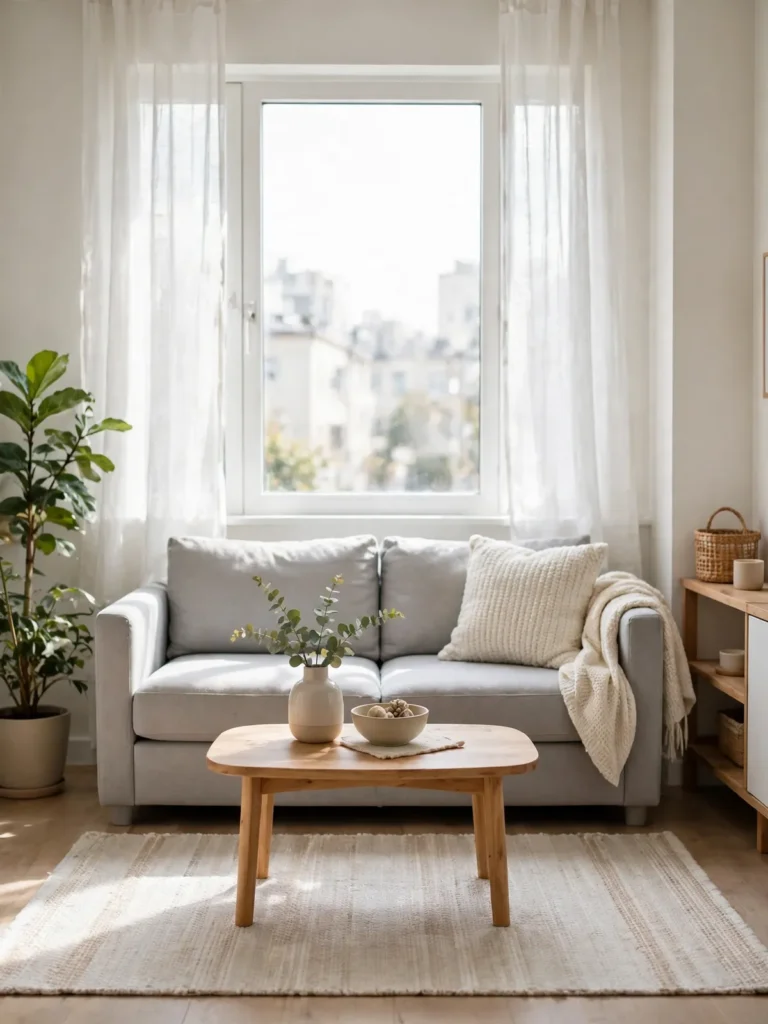
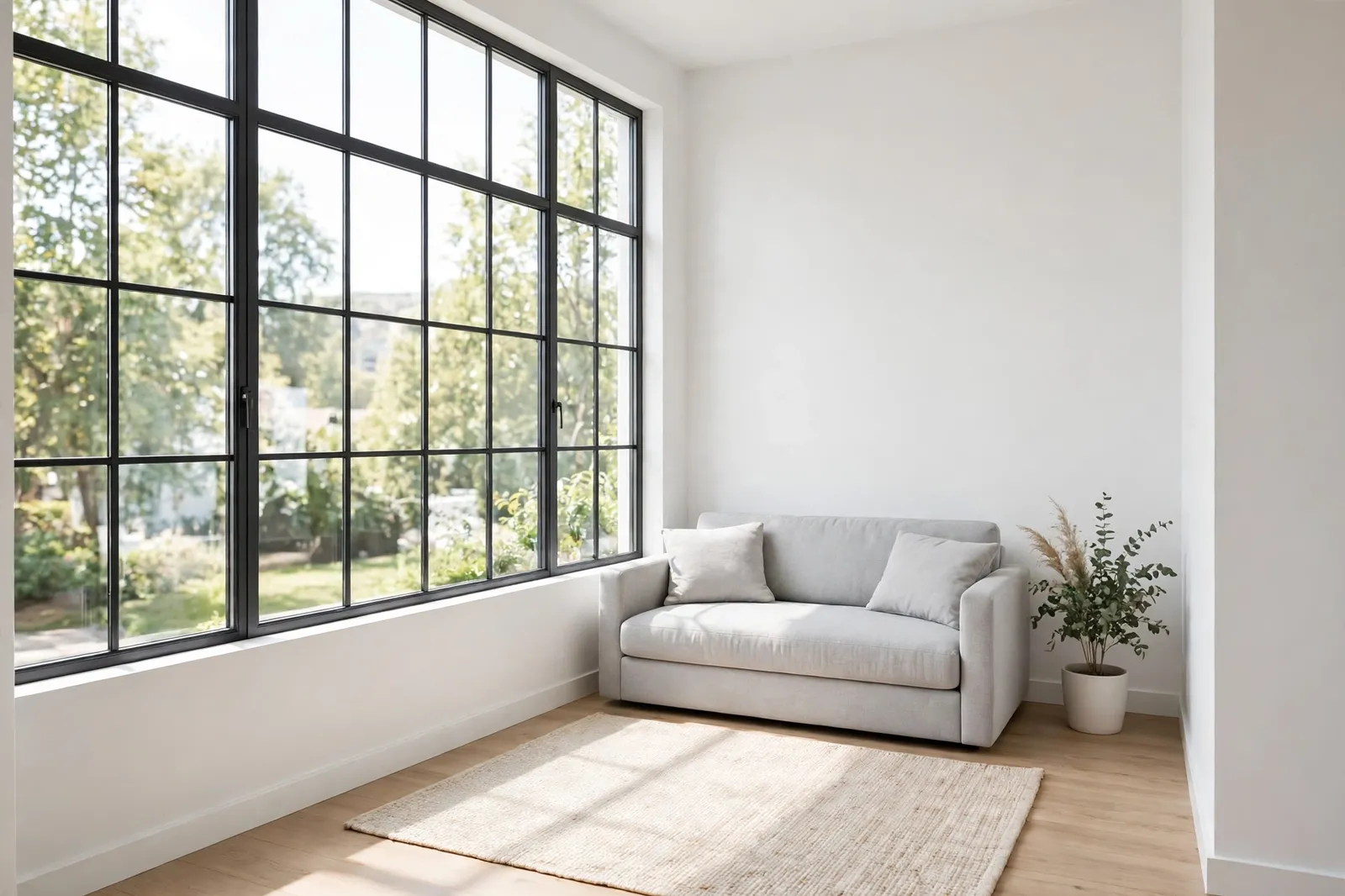
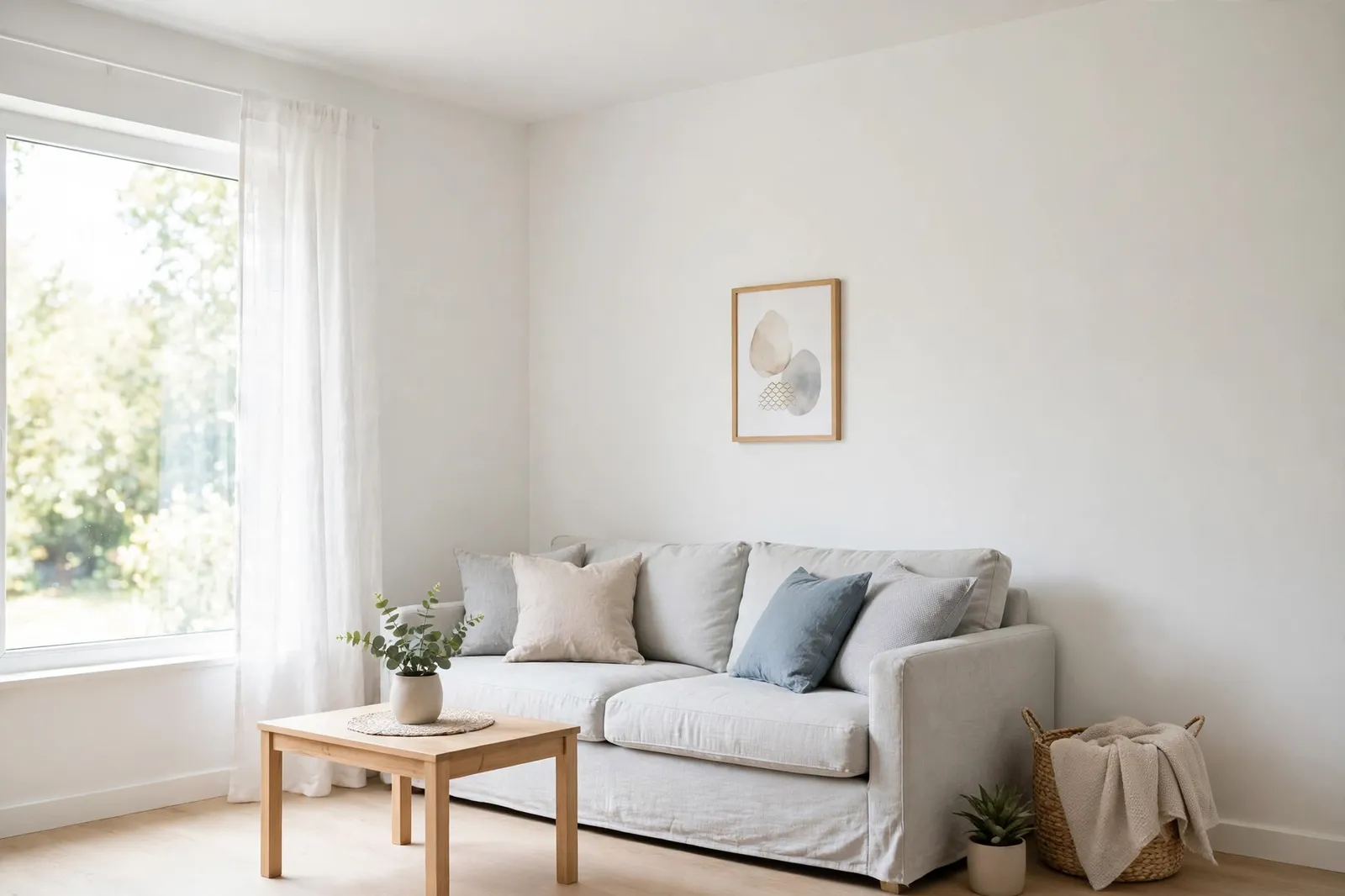
Light colors are the fastest way to make a small room feel bigger. White, pale gray, soft cream, or a very light blue bounce daylight around the room instead of soaking it up. Dark walls close a room in, even if the room itself is not that tiny.
You do not have to paint every wall white. Painting the walls and the ceiling the same light color makes the ceiling look higher, which helps a lot. If all white feels too plain, keep the walls light and bring color in through cushions, art, or a throw.
2. Pick Furniture That Fits the Room
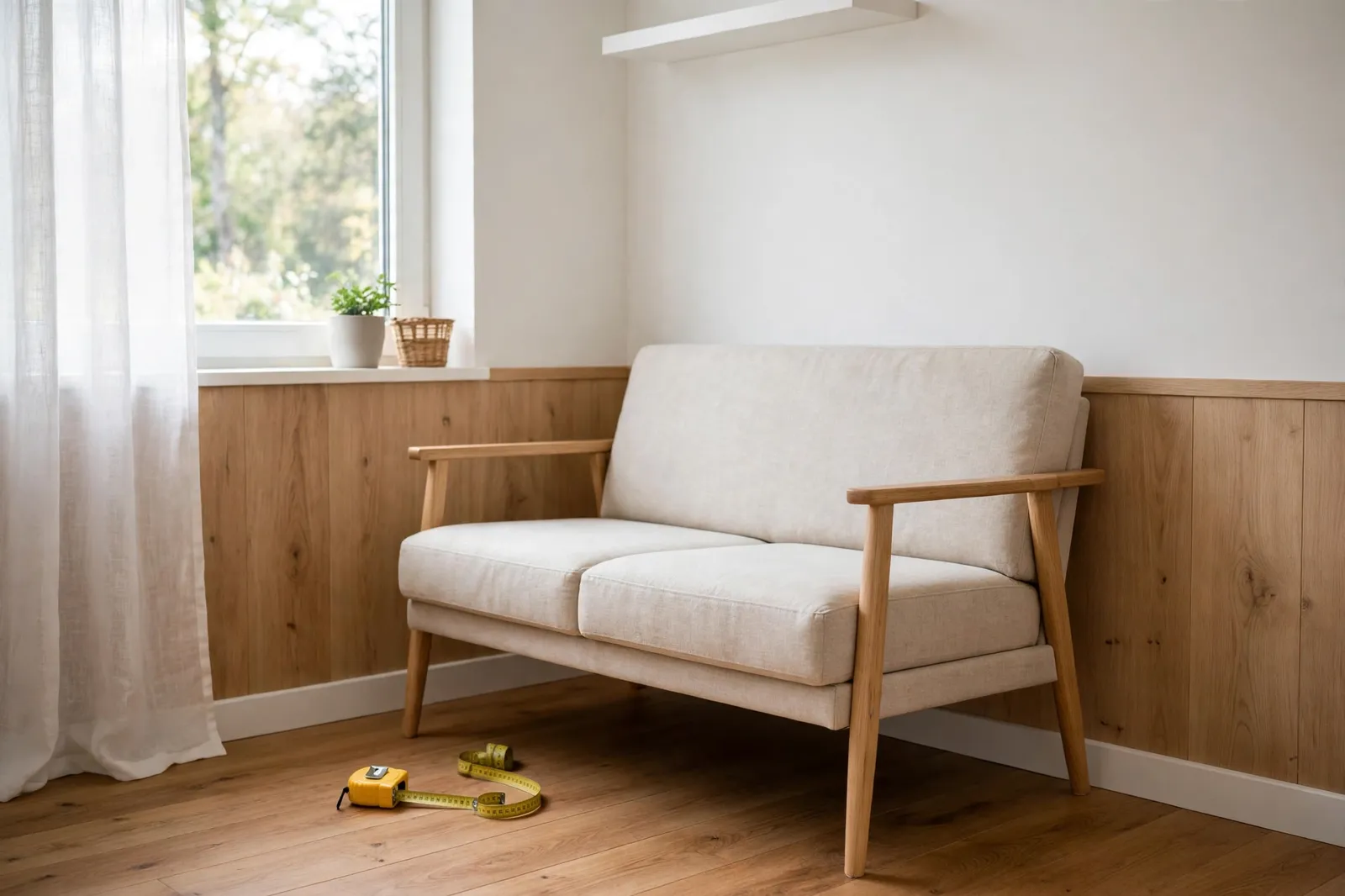
A couch that is too big will eat the whole room. Before you buy, measure the wall it will sit against and leave at least a couple of feet of walking space around it. If you have to squeeze past it sideways, it is too big.
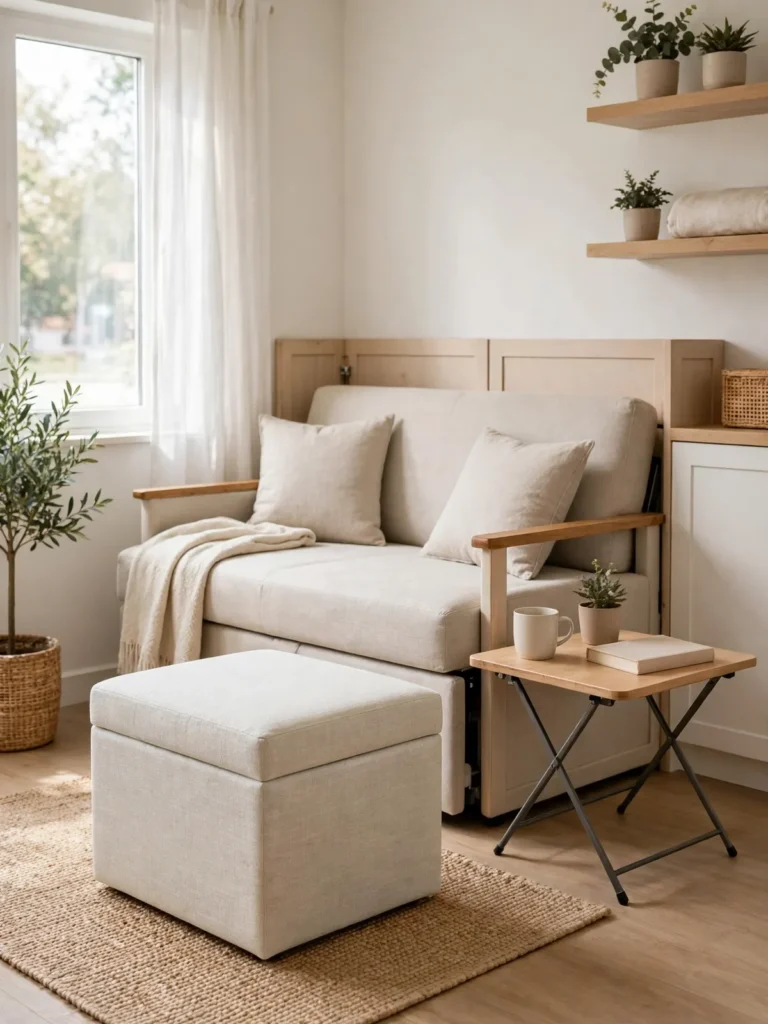
Look for slim arms, raised legs, and pieces you can see underneath. When you can see the floor under a sofa or a chair, the room feels lighter and less crowded. A loveseat or a compact sofa usually works better than a big three-seater in a small room.
3. Hang One Big Mirror
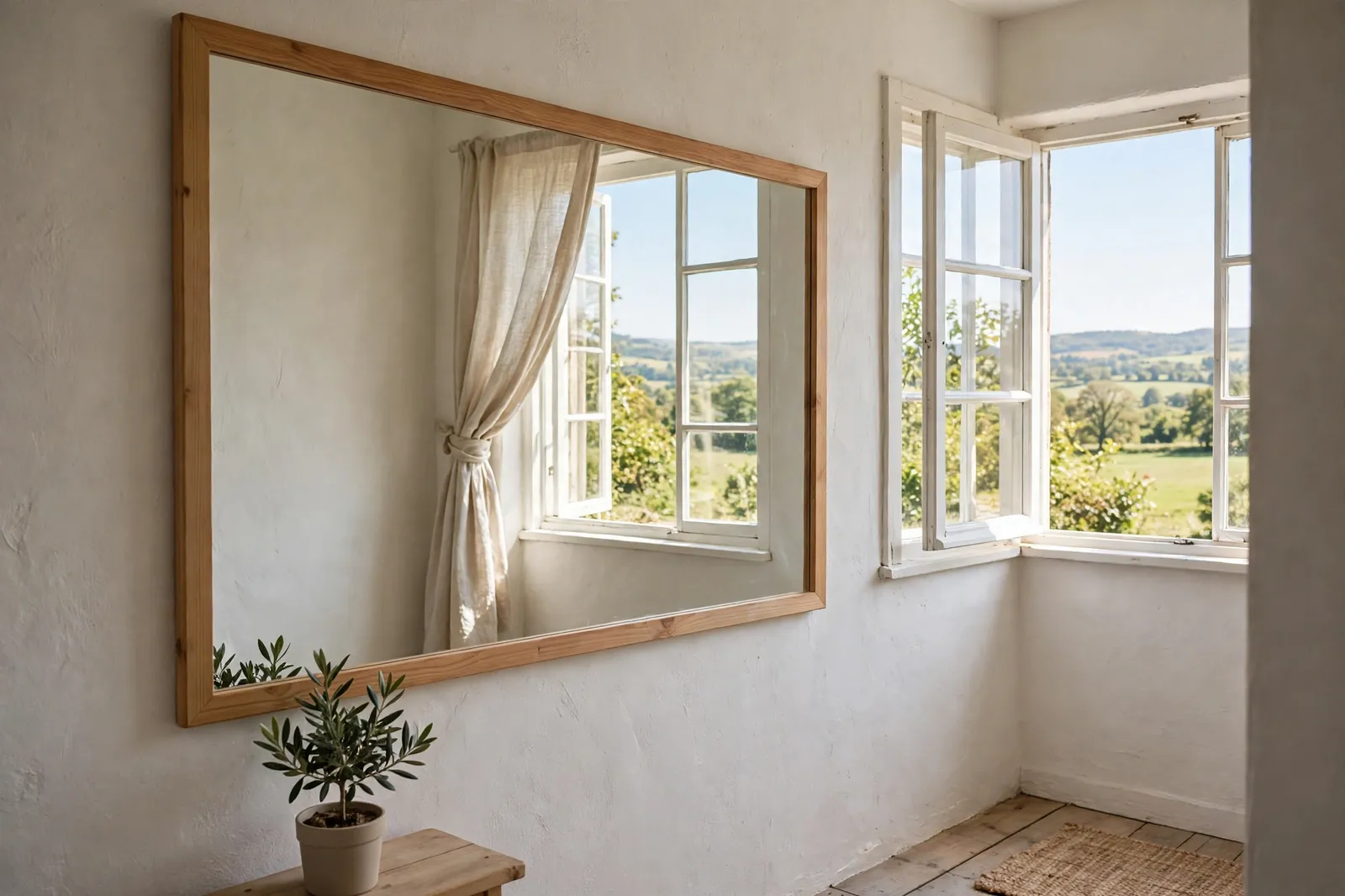
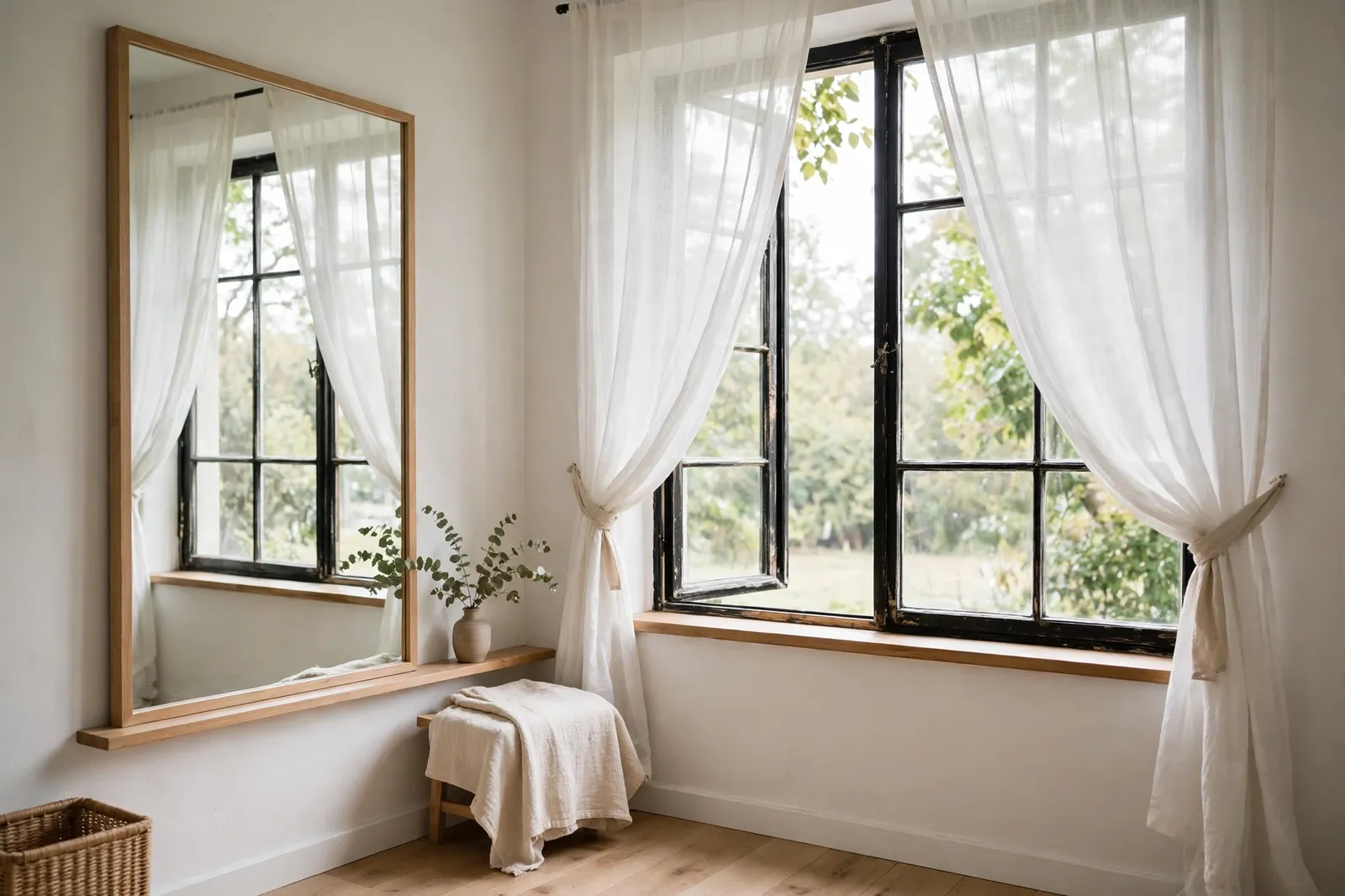
A mirror is the cheapest trick on this list, and it works right away. Hang a large mirror across from a window and it bounces daylight deep into the room. The reflection gives your eyes more to look at, so the room feels wider than it really is.
One big mirror beats a bunch of small ones. A plain frame looks calm, and hanging it at eye level keeps it simple. A full-length mirror leaning against the wall in a bedroom works the same way, and it doubles as a handy place to check your outfit.
4. Leave Some Floor Showing
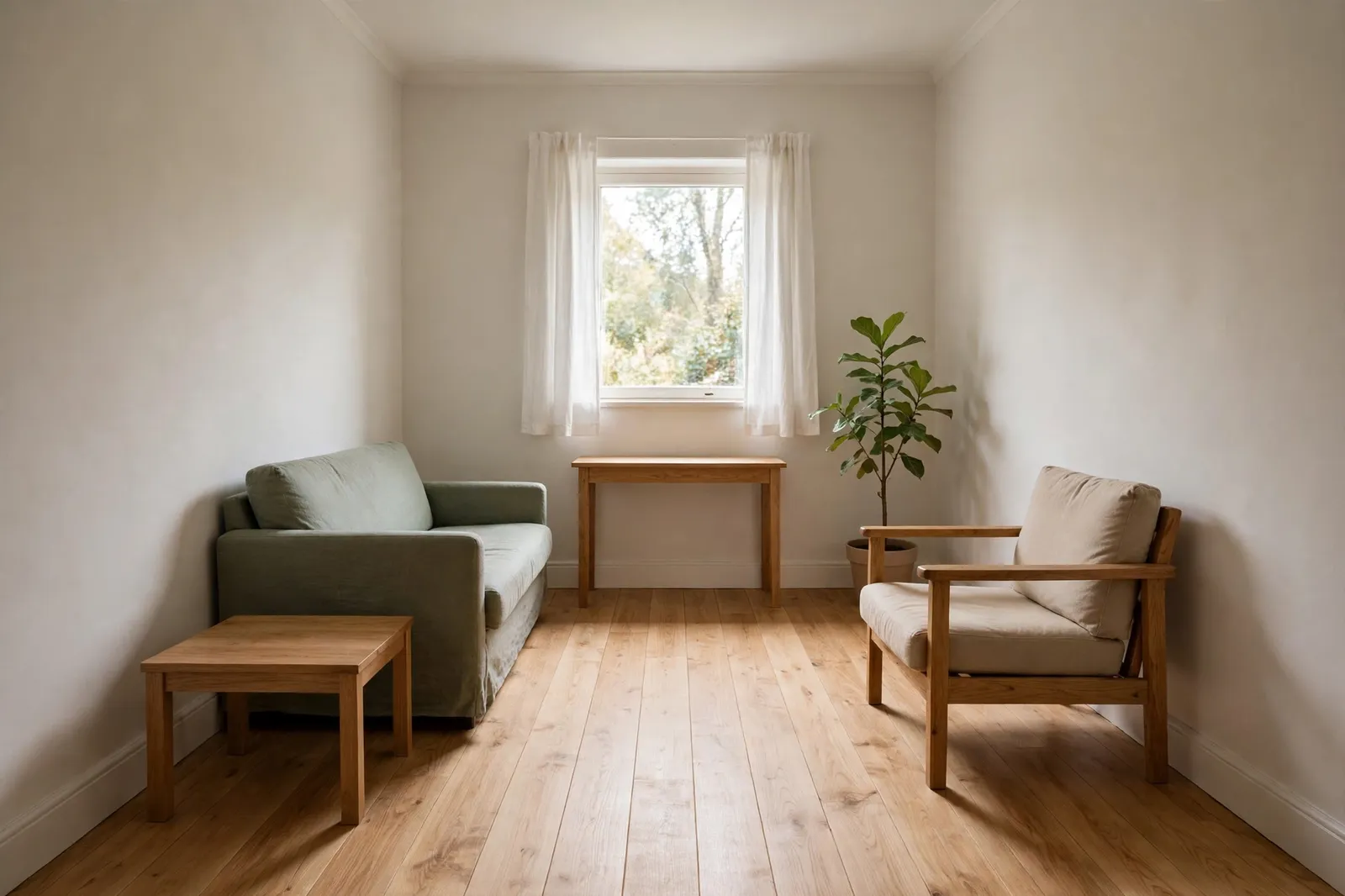
The more floor you can see, the bigger a room feels. That sounds obvious, but it is easy to forget. A rug that covers the whole floor, a bed pushed right into the corner, and boxes piled along the walls all hide the floor and shrink the room.
Pull furniture a few inches away from the walls where you can. It feels strange at first, but the gap lets you see the floor and the walls, and the room opens up. Keep the middle of the room clear too, so there is a path you can walk without stepping around things.
5. Use One Rug — and Make It Big Enough
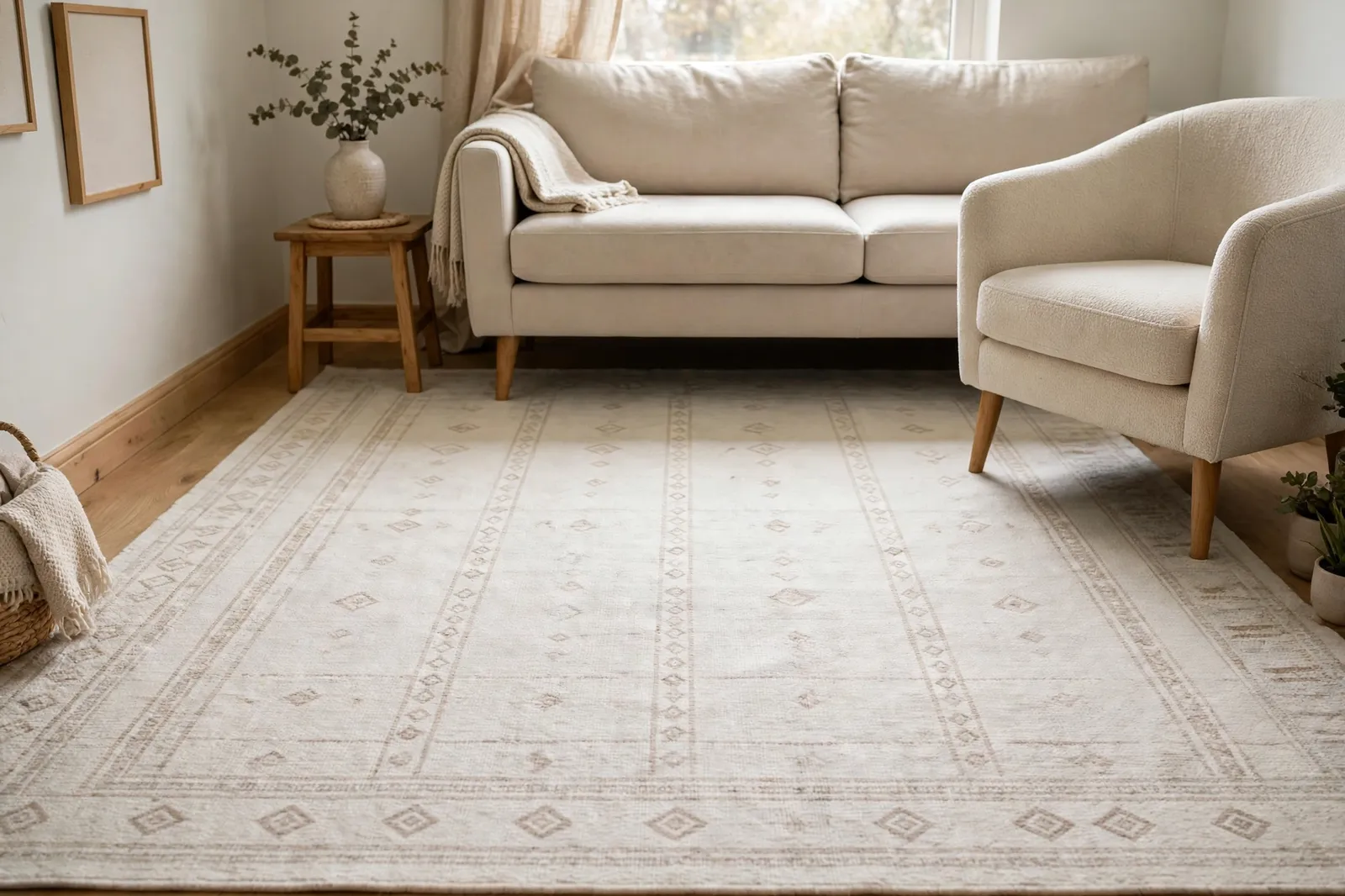
A rug that is too small makes a room look chopped up. The pieces of furniture sit half on it and half off, and your eye stops at the edges. A bigger rug does the opposite: it pulls the furniture into one group and the floor reads as one open space.
As a rule of thumb, the front legs of your sofa and chairs should all sit on the rug. In a bedroom, the rug should stretch out past the sides of the bed. A light color or a simple pattern works best, since a dark, busy rug can make the floor feel heavy.
6. Let in as Much Daylight as You Can
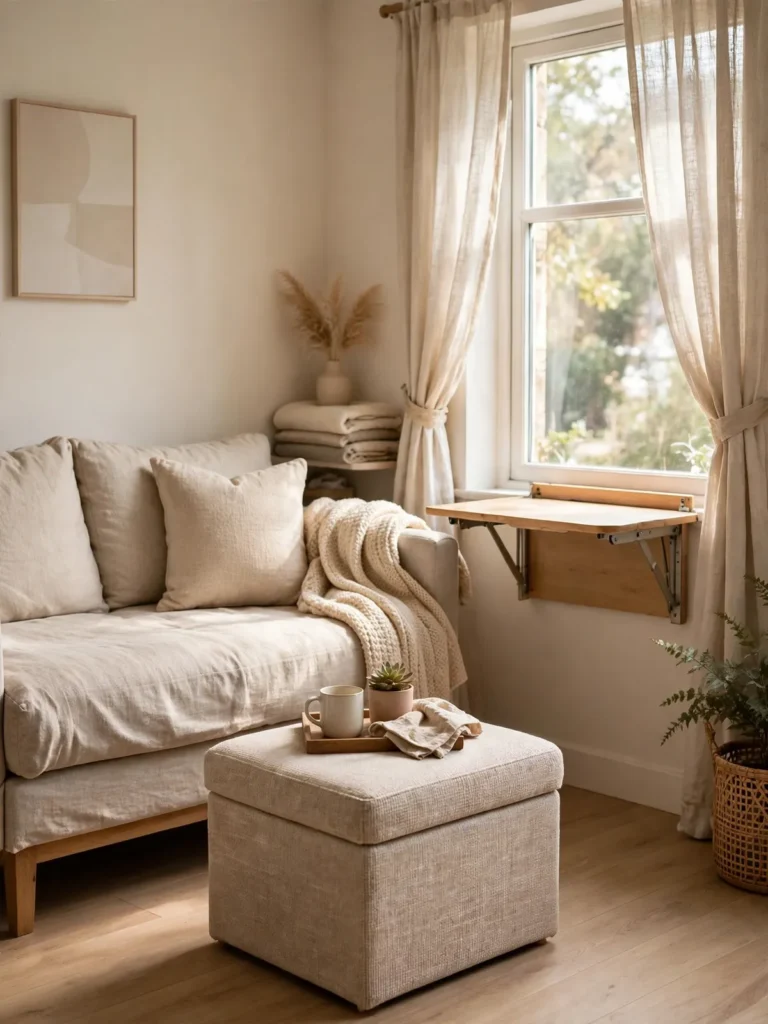
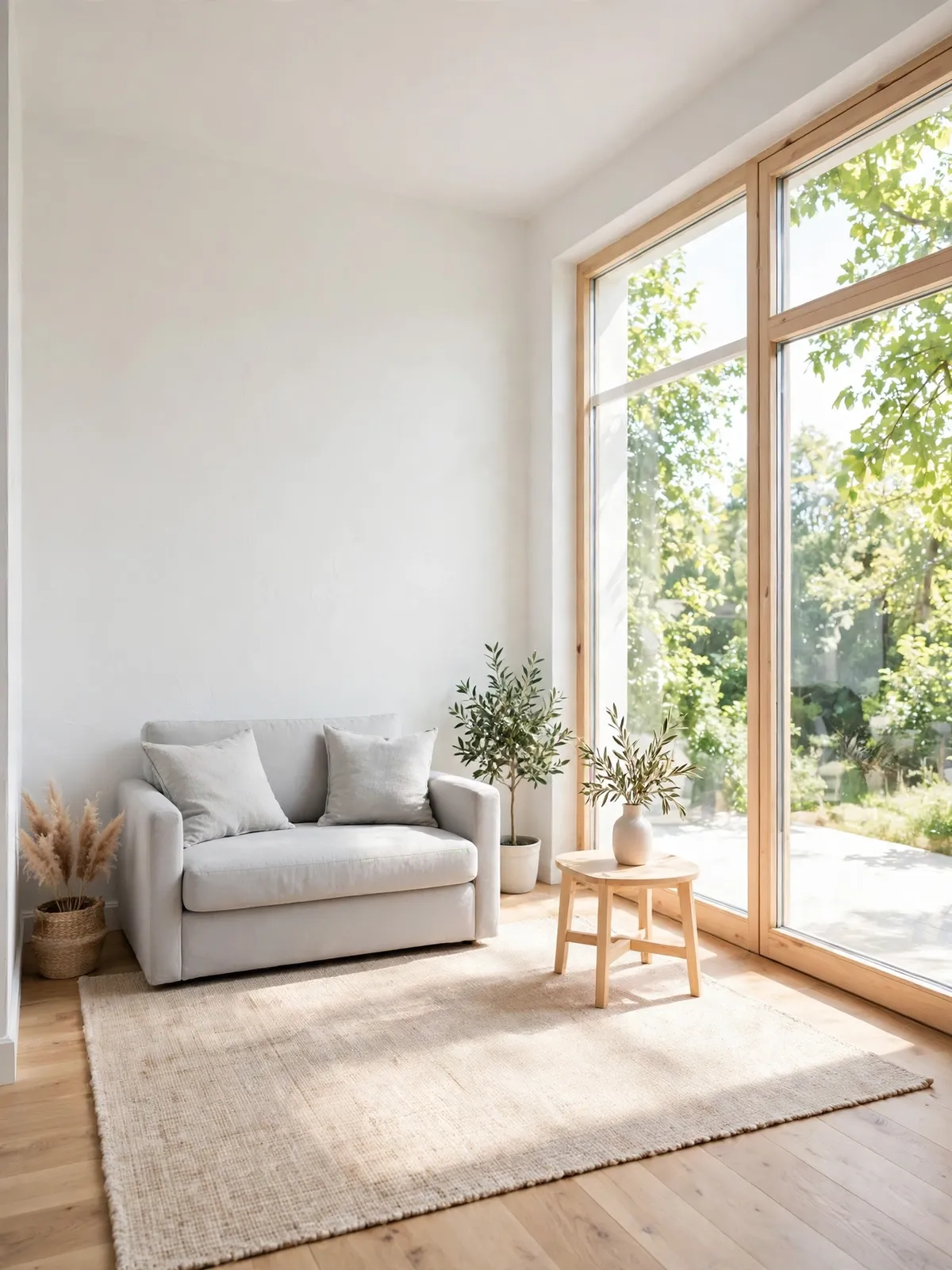
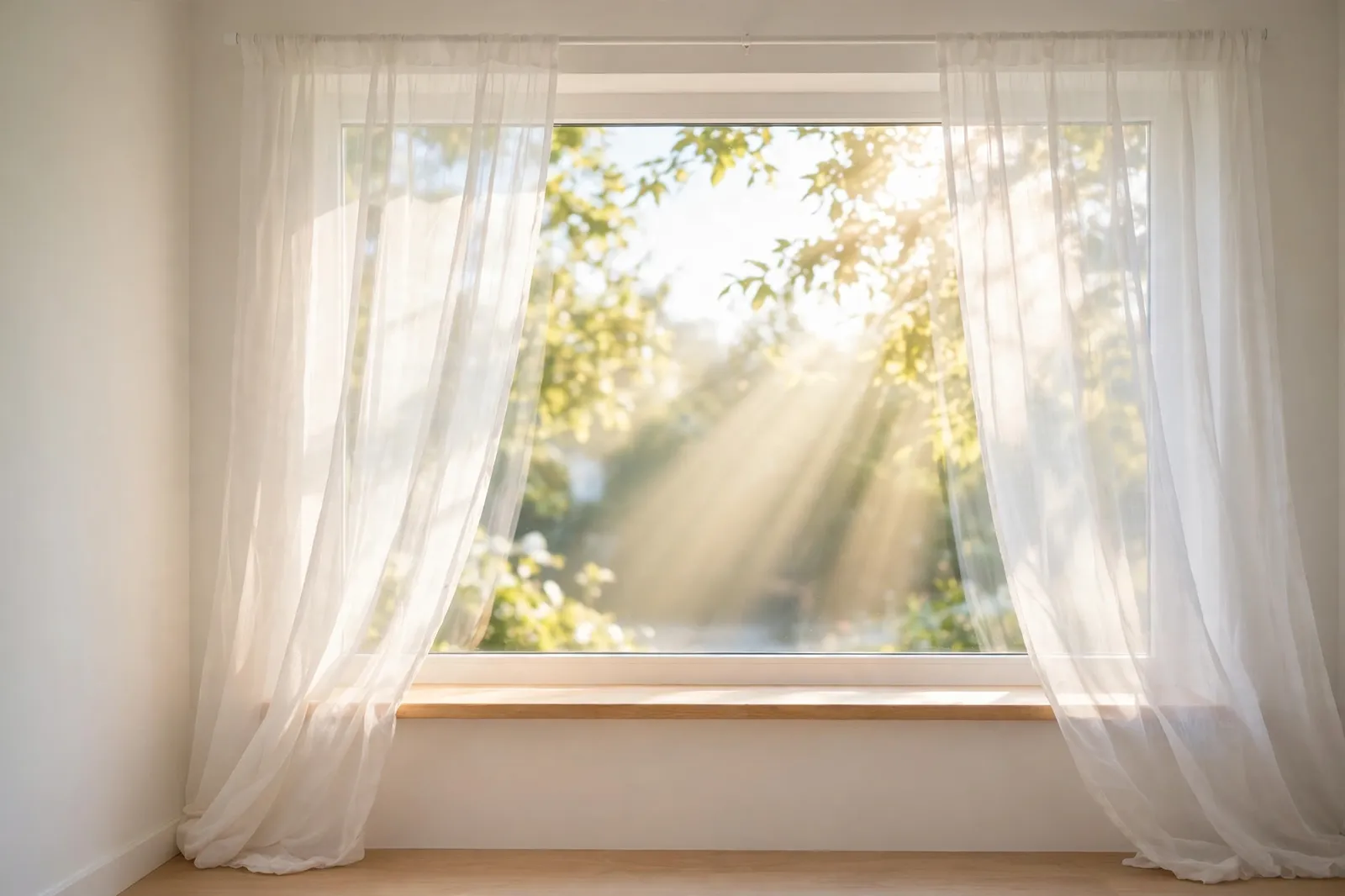
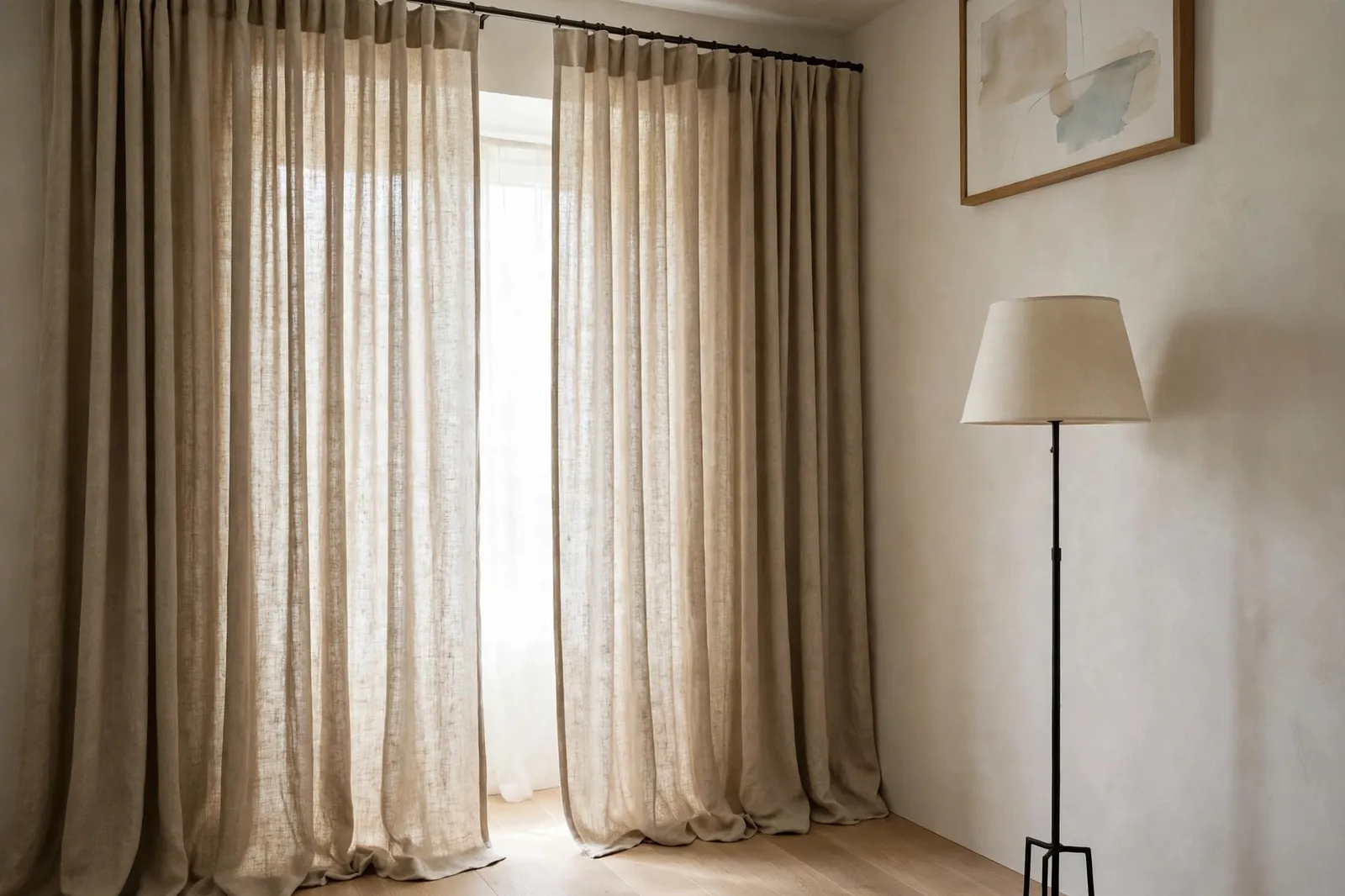
Daylight is free, and it does more for a small room than almost anything else. Heavy curtains and dark blinds block light and make the walls feel closer. Swap them for sheer curtains or light blinds you can pull right up during the day.
Keep the windowsills clear too. Plants, books, and clutter on the sill block light and make the window look smaller. A clean window lets the light pour in, and if the glass is clean, even better — you would be surprised how much difference that makes.
7. Go Up the Walls for Storage
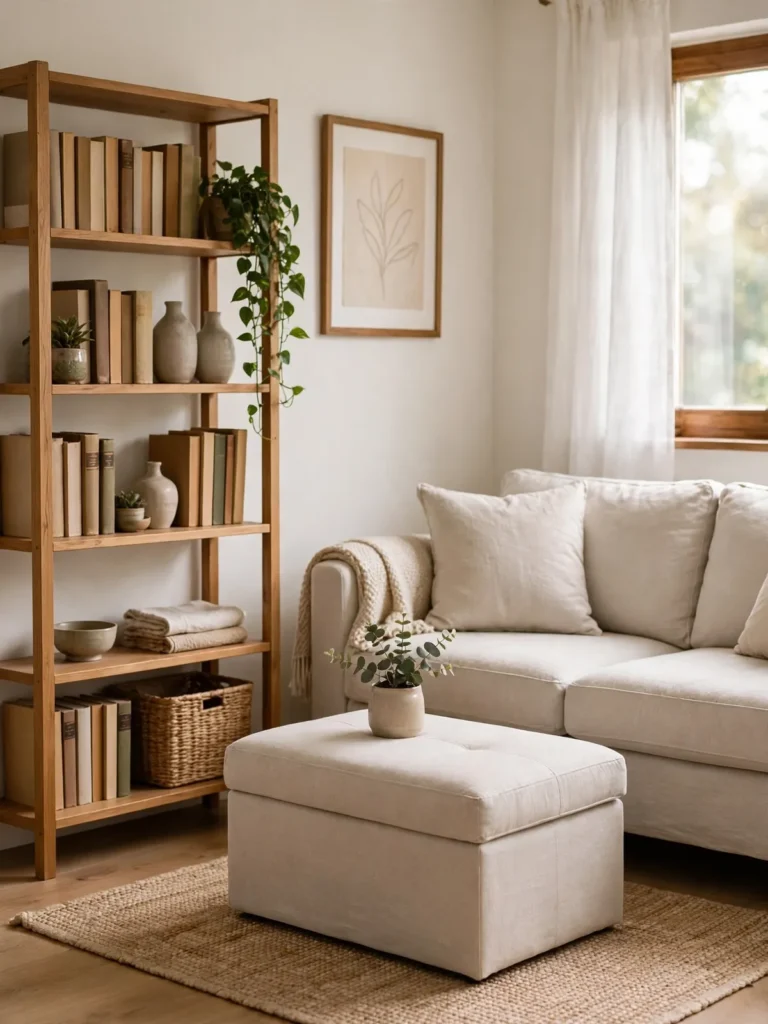
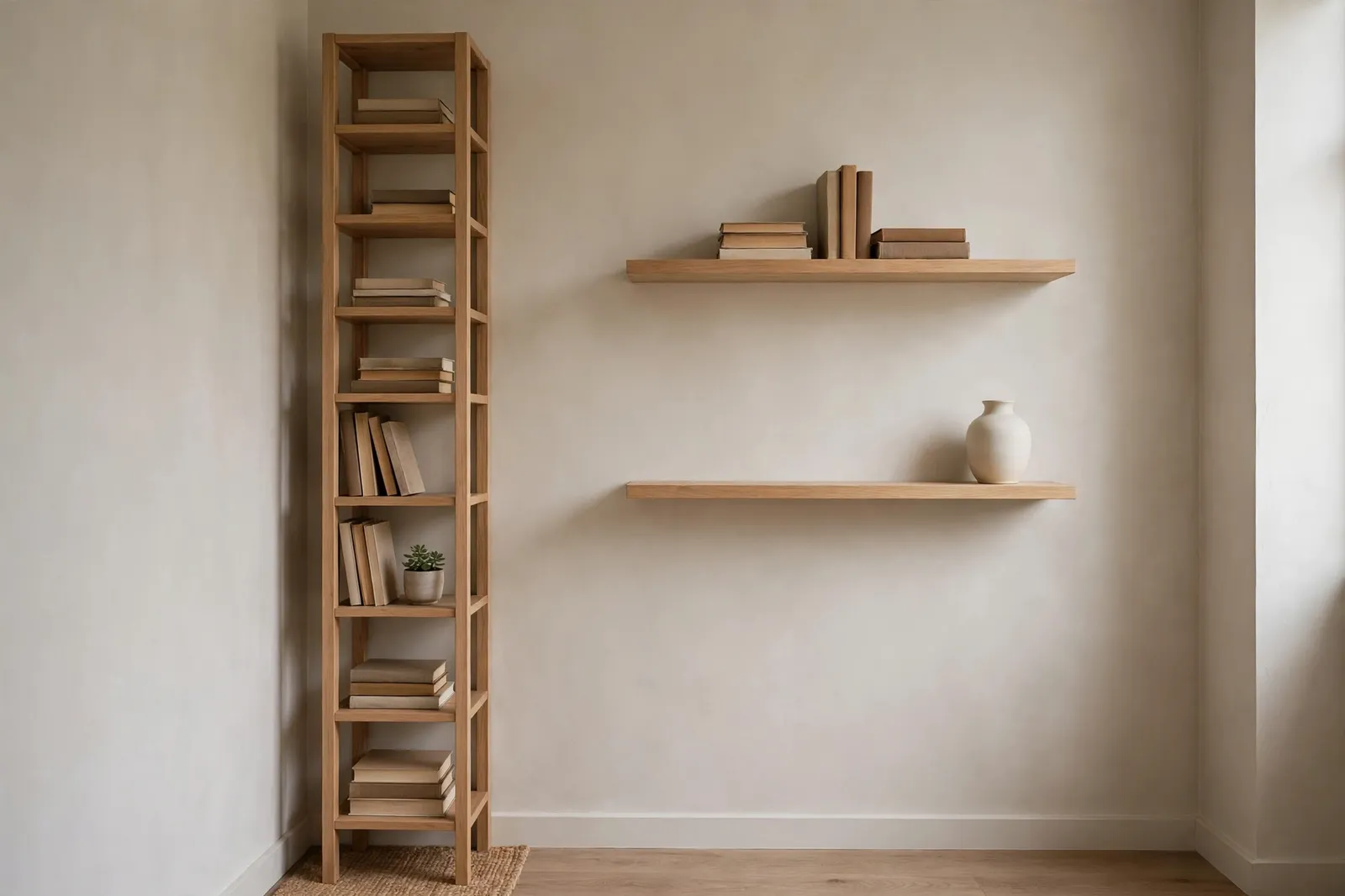
When floor space is tight, the walls are your best friend. A couple of floating shelves or a tall, narrow bookcase gives you storage without taking up any walking space. Tall pieces also pull your eye upward, which makes the ceiling feel higher.
The trick is not to fill every shelf to the edge. Leave some empty space between things, and mix useful items with one or two pretty ones. A wall of packed shelves looks heavy; a few tidy shelves look calm and open.
8. Keep the Clutter Down
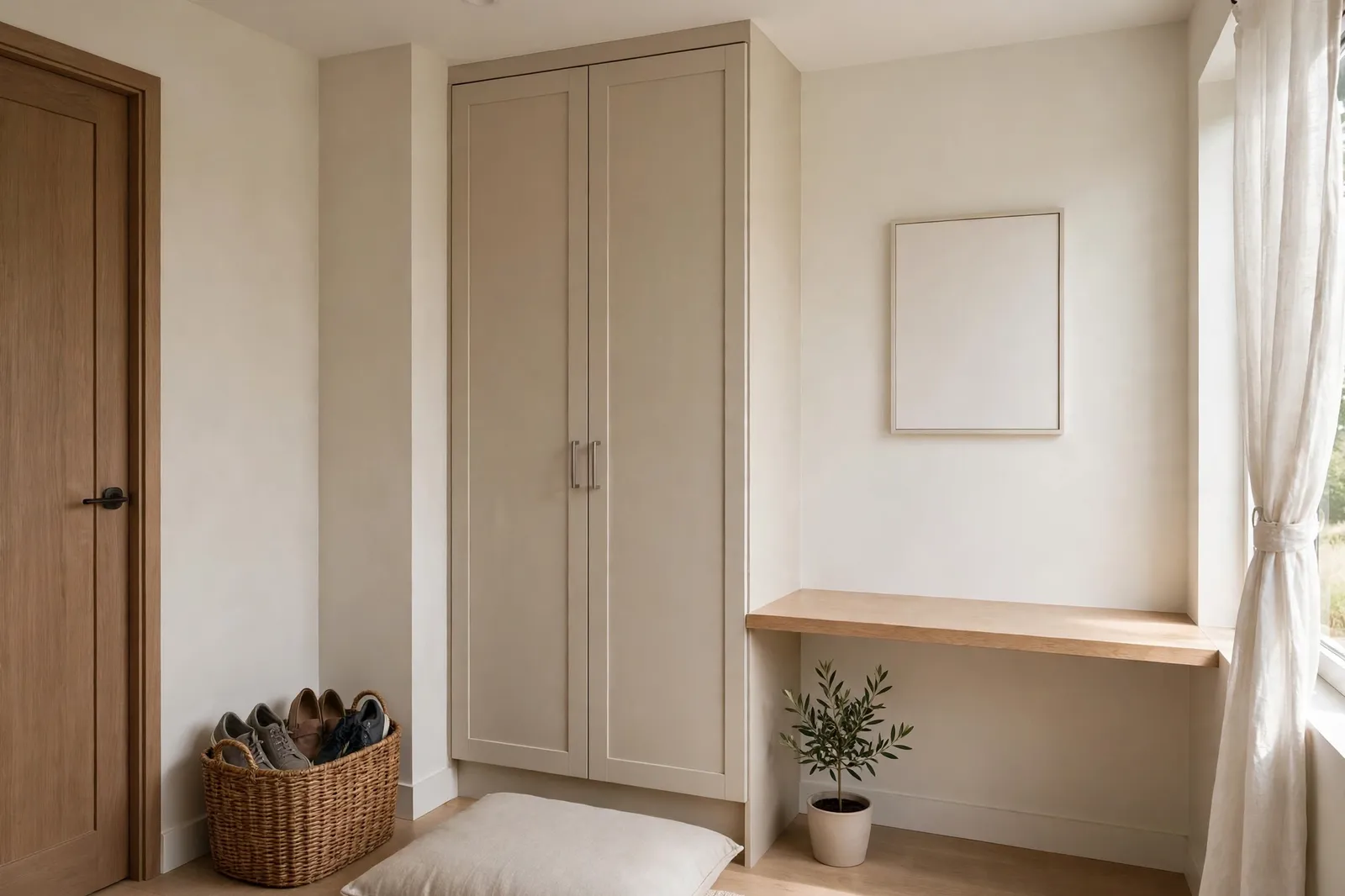
Clutter is the quickest way to make a small room feel tiny. Every pile of clothes, stack of papers, and crowded shelf tells your eyes the room is full. Clearing it out costs nothing, and it changes the room more than almost anything you could buy.
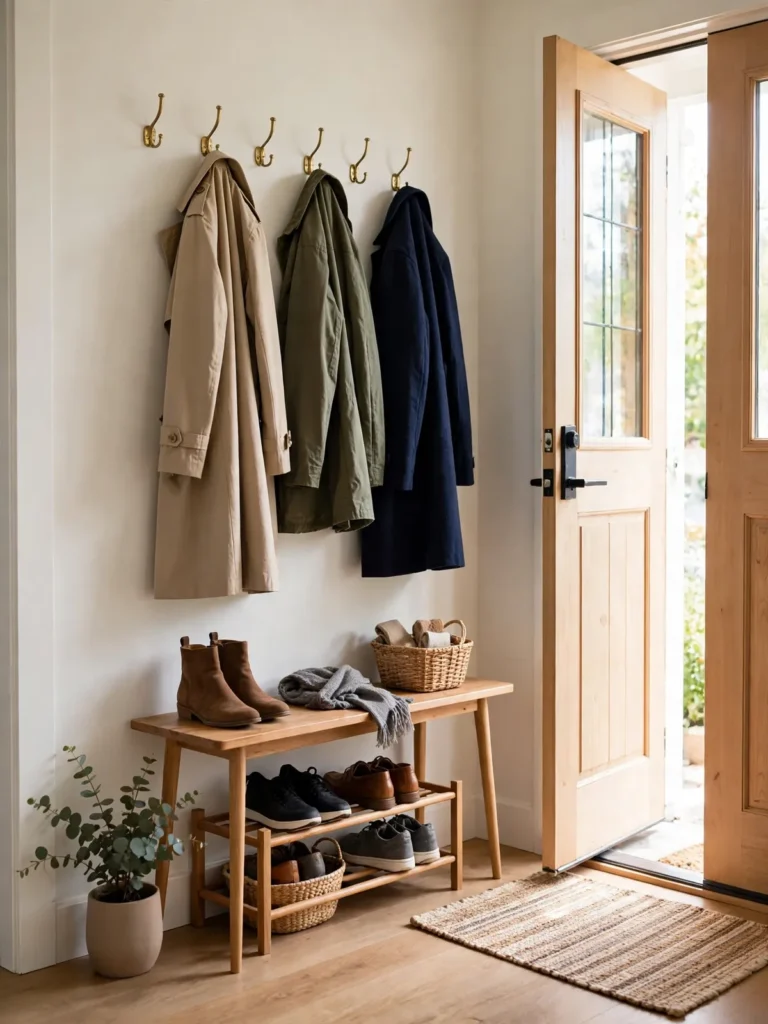
Give everything a home, and make it easy to put things away. A basket by the door for shoes, a box for charging cables, and a closed cupboard instead of open piles. When the surfaces are mostly clear, the room feels bigger and calmer the moment you walk in.
9. Draw the Eye Upward
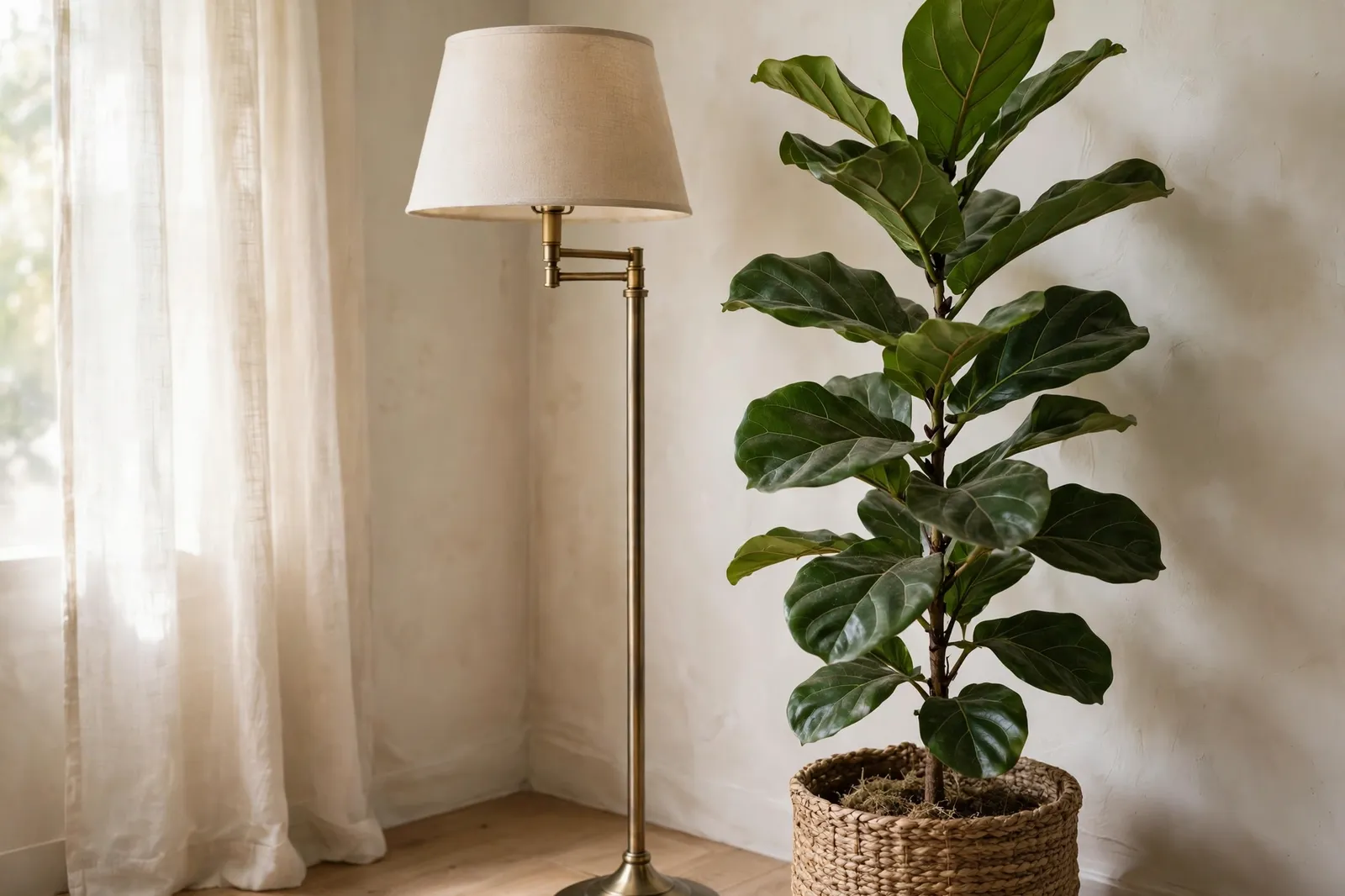
When everything in a room sits at the same low height, the room feels flat and small. Add something tall — a floor lamp, a tall plant, or a piece of art hung a little higher than usual — and your eyes travel upward. That vertical line makes the ceiling feel higher and the room feel bigger.
Curtains help here too. Hang the curtain rod close to the ceiling instead of right above the window, and let the curtains run all the way to the floor. The long lines stretch the wall out, and the window looks taller than it really is.
Frequently Asked Questions
What color makes a small room look bigger?
Light, soft colors work best — white, pale gray, soft cream, or a very light blue on the walls and ceiling. They bounce daylight around the room and make it feel open. Keep the big surfaces light and add color in small doses with cushions or art.
Does a mirror really make a room look bigger?
Yes, it does. A large mirror hung across from a window bounces daylight deep into the room and gives your eyes more to look at, so the room feels wider. One big mirror works better than a lot of small ones.
What size rug should I use in a small room?
Big enough that the front legs of your sofa and chairs sit on it. A rug that is too small chops the room up and makes it look smaller. In a bedroom, pick a rug that stretches out past the sides of the bed.
How can I make a small room look bigger without painting?
Start with what costs nothing: clear the clutter, pull the furniture a few inches off the walls, and let in more daylight. Then add one big mirror and a rug that is big enough. Those four changes alone can make a small room feel much bigger.
Related ideas
Small Space Decorating Ideas That Make Every Inch Count has more ways to squeeze the most out of a tiny home. If the small room is your living room, Small Apartment Living Room Ideas for a Stylish Layout shows how to lay it out so it feels stylish and easy to live in. And Small Bathroom Decor Ideas That Make a Big Difference proves the same tricks work in the smallest room in the house. See Small Dining Room Ideas for Everyday Living and Small Entryway Ideas With Smart Storage for more ideas in a small home.