How to Layer Bedding Like a Hotel Without the Hotel Price
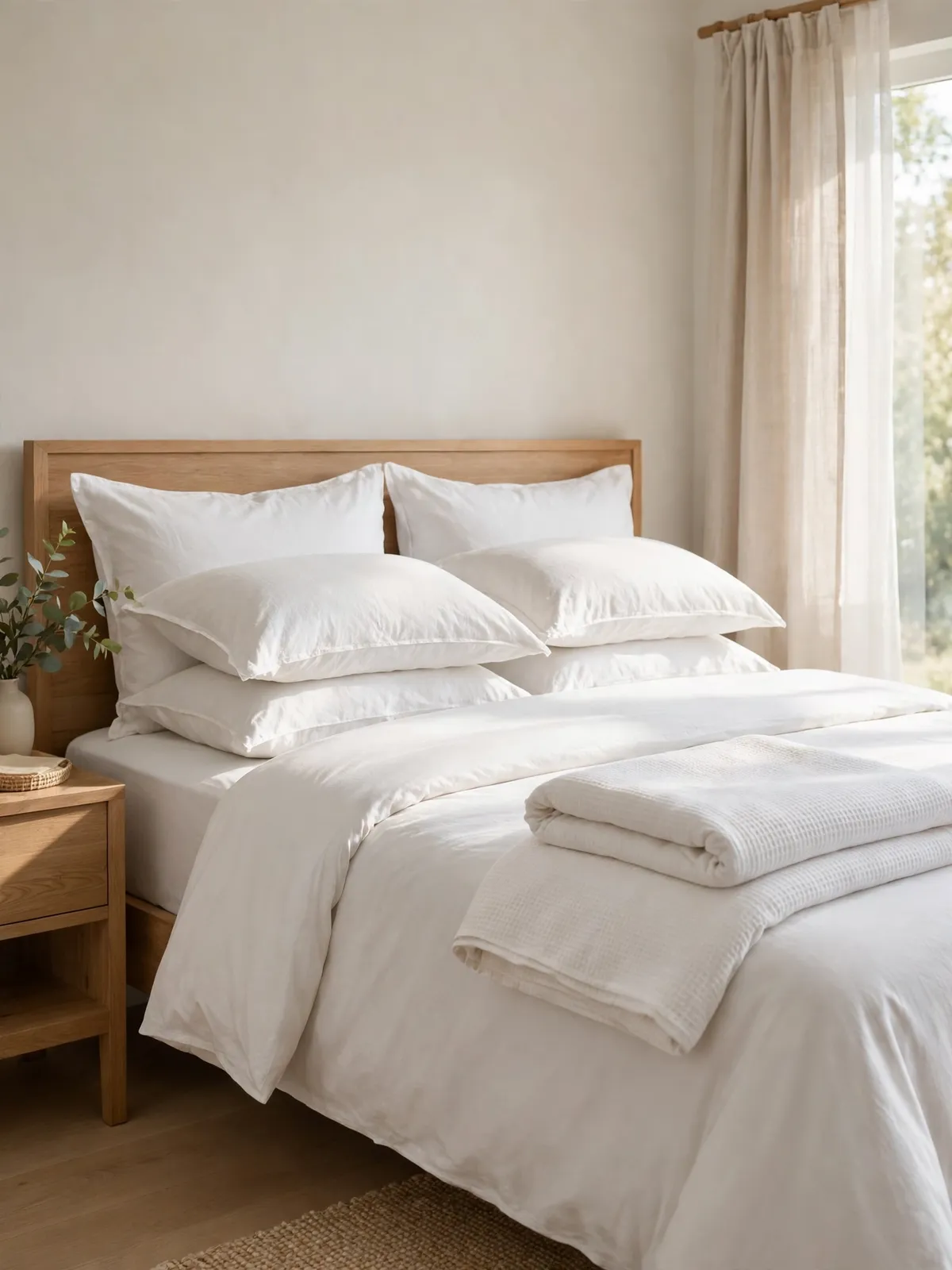
There is something about climbing into a hotel bed that just feels different. The sheets are crisp, the blanket sits just right, and the whole bed looks so neat you almost do not want to mess it up. It is not magic, and it is not expensive bedding either. Hotels just layer things in a certain order, and once you know that order, you can do the same thing at home with the bedding you already own.
The good news is that you do not need to buy a whole new set of sheets or spend a fortune to get the look. A few simple layers, stacked the right way, can turn an ordinary bed into one that looks and feels like a hotel bed. This guide walks you through each layer step by step, using plain pieces you can find at any store — and most of it costs nothing if you already have the basics in your linen closet.

1. Start With Crisp White Sheets
Every hotel bed starts with white sheets, and there is a reason for that. White looks clean, it goes with everything, and it makes the whole bed feel fresh. You do not need fancy high-thread-count sheets to pull this off — a basic cotton set that has been washed and dried properly works just fine. The trick is to put the fitted sheet on tight so there are no wrinkles, and to smooth the flat sheet out before you add anything on top.
If your sheets are a little wrinkled from the dryer, give them a quick shake and smooth them by hand once they are on the bed. You can also pull the flat sheet up to the top of the mattress and tuck it in at the foot and sides, leaving enough slack at the top to fold back later. That smooth, flat base is what makes every layer after it look neat instead of lumpy.
2. Add a Lightweight Blanket
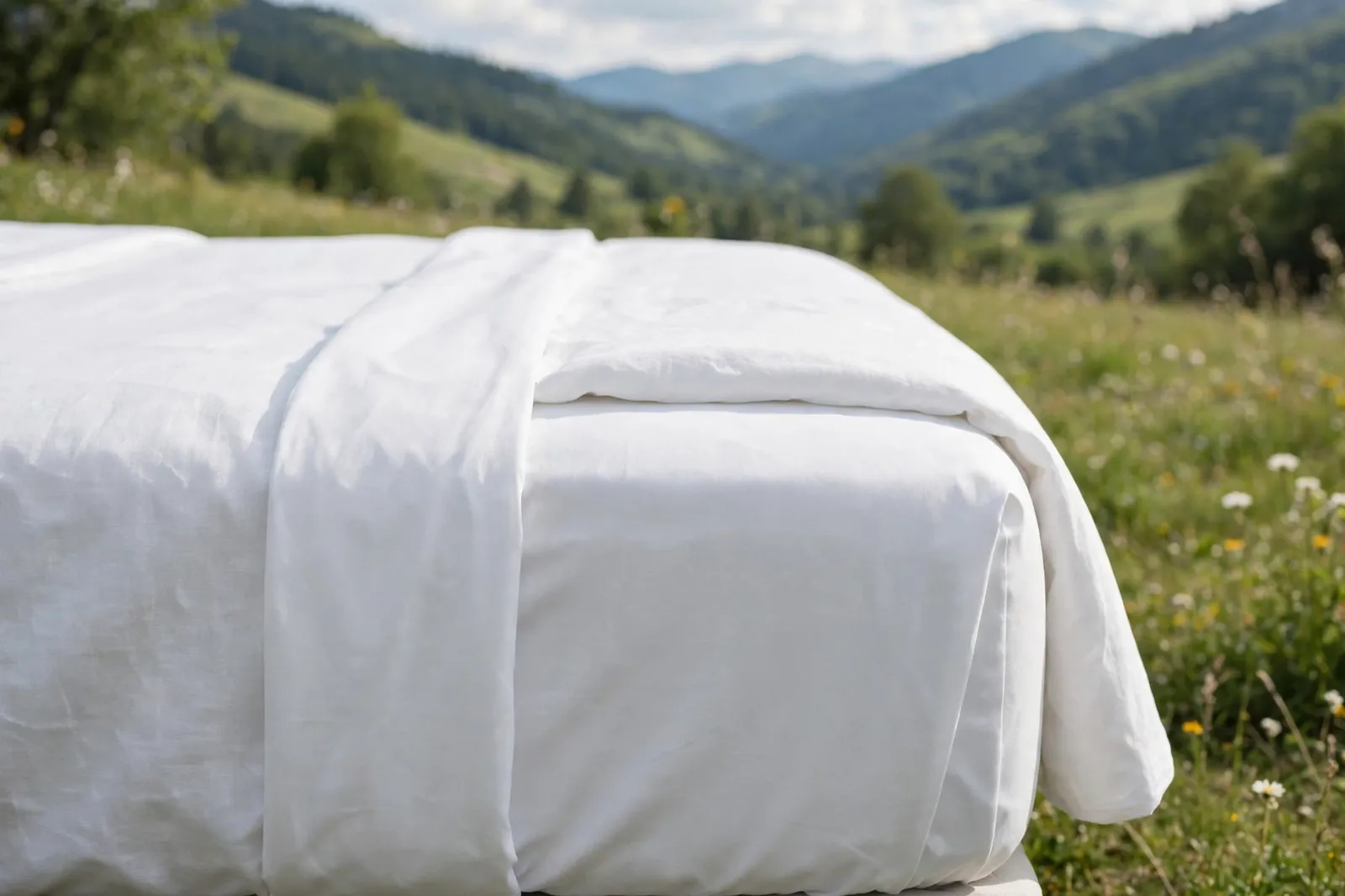
Once the sheets are on, the next layer is a light blanket. Hotels usually use a thin cotton blanket or a waffle-weave one, not a big heavy comforter, because a light blanket adds warmth without making the bed feel bulky. Lay it over the flat sheet so it covers most of the bed, and leave a few inches of sheet showing at the top.
Tuck the blanket in at the foot of the bed and along the sides, just like the sheet. Keeping this layer tucked in is what gives the bed its clean, tailored look. If you tend to get warm at night, pick a thin cotton blanket and skip the heavier layers — the bed will still look layered and put together, and you will actually sleep well in it.
3. Fold the Top Sheet Back
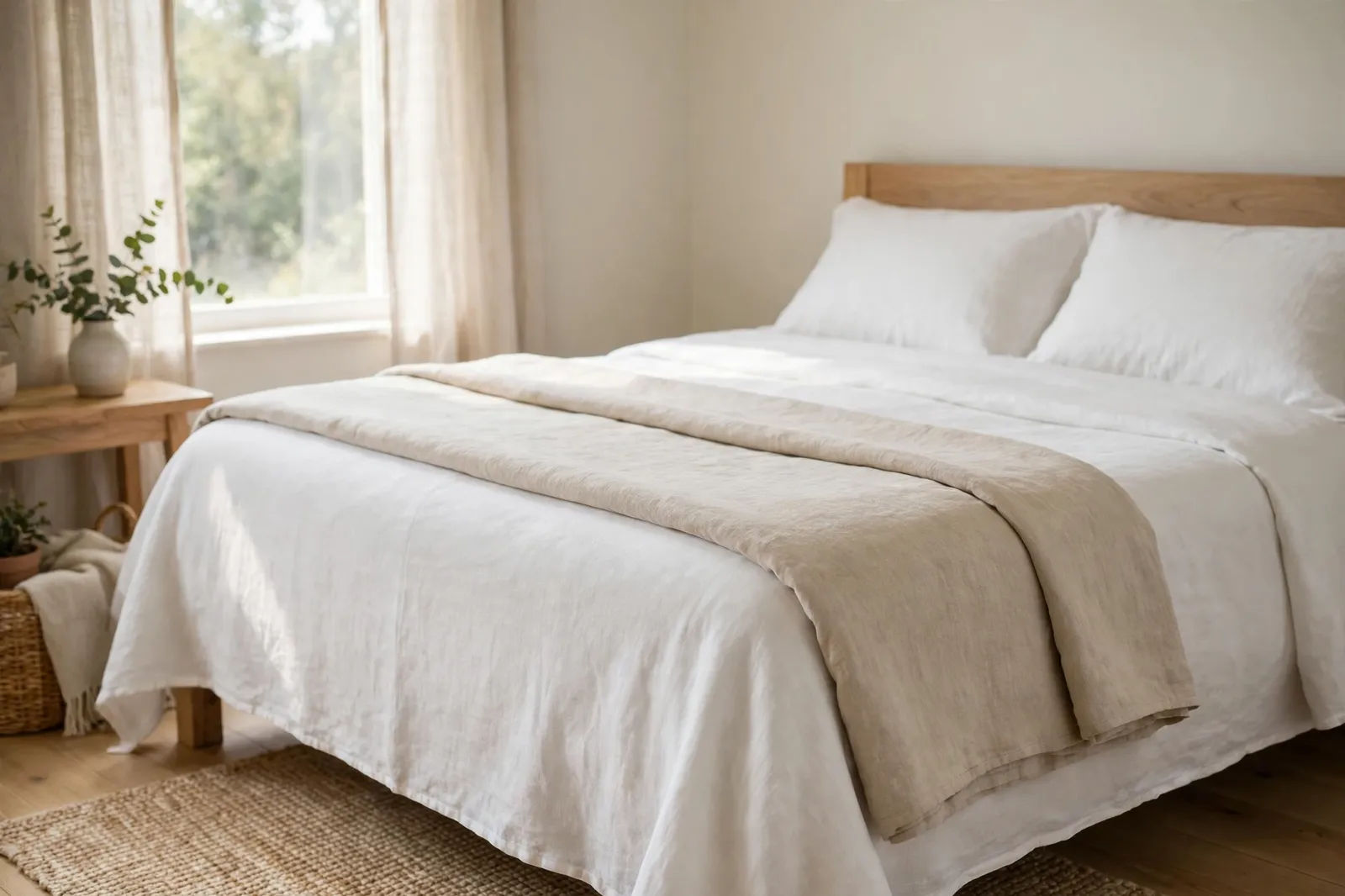
This is the small detail that makes a bed look like a hotel bed. Take the top edge of the flat sheet and fold it back over the blanket, about 8 to 12 inches. That fold creates a clean band of white across the top of the bed, and it is the first thing your eye notices when you walk into the room.
Make sure the fold is straight and even across the whole bed. Run your hand along the fold to smooth it out, and line it up so it sits just above the pillows. If the sheet is too short to fold back nicely, pull the blanket down a few inches first so you have enough sheet to work with. This one fold does more for the hotel look than almost anything else, and it costs nothing.

4. Layer a Duvet or Comforter
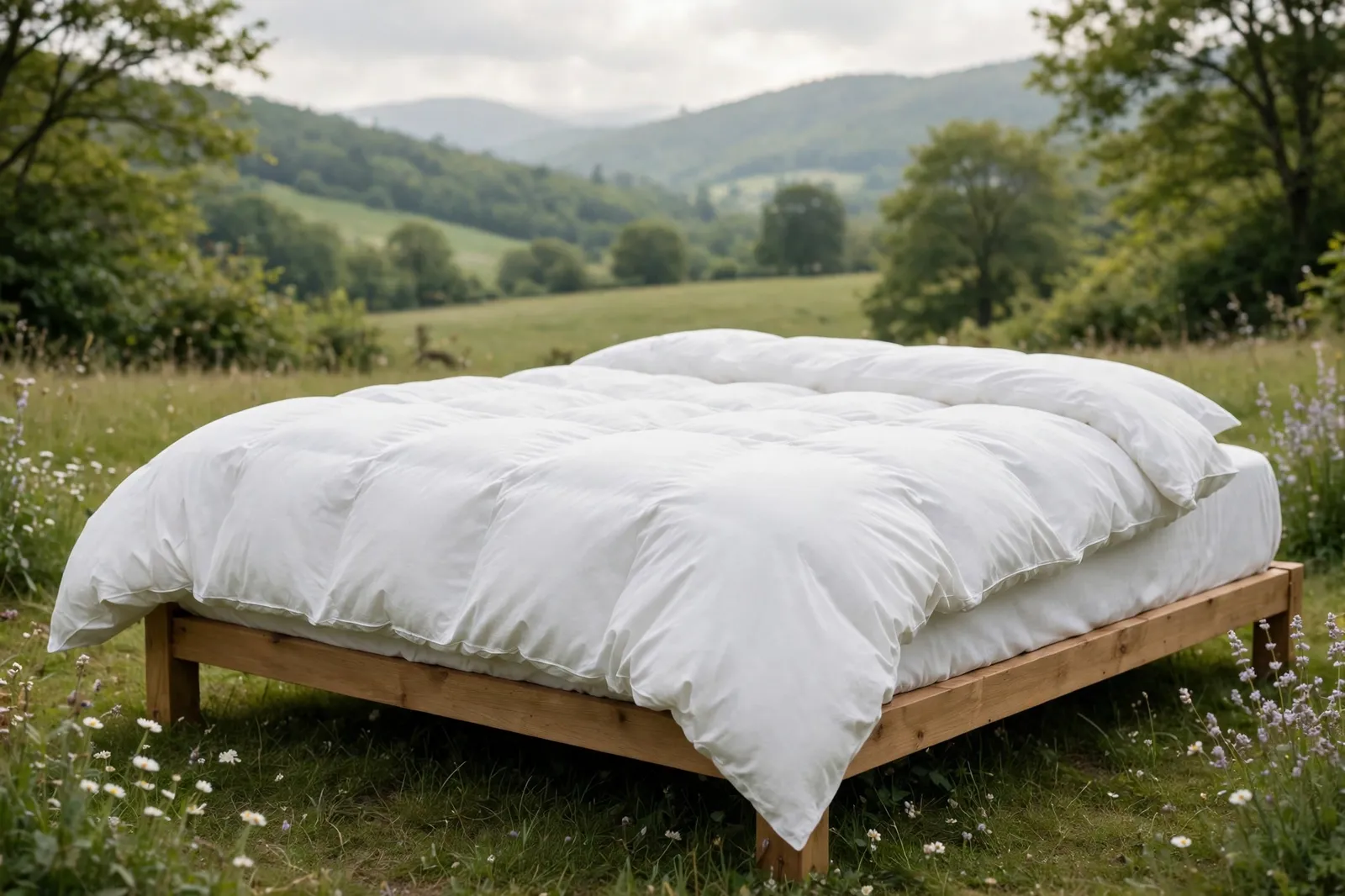
The duvet or comforter goes on next, on top of the blanket. Shake it out well before you lay it down so it is full and even, with no flat spots or clumps. Spread it over the bed so it hangs evenly on both sides, and let it cover the blanket underneath almost all the way to the top — you want just the folded sheet showing above it.
Give the duvet a good fluff with your hands once it is in place, pushing the filling toward the corners so it looks plump instead of flat. If your duvet looks a little thin, a white duvet cover in cotton or linen will make it look fuller and fresher. The duvet is the layer that makes the bed look soft and inviting, so take an extra minute to get it sitting right.
5. Add a Throw at the Foot of the Bed
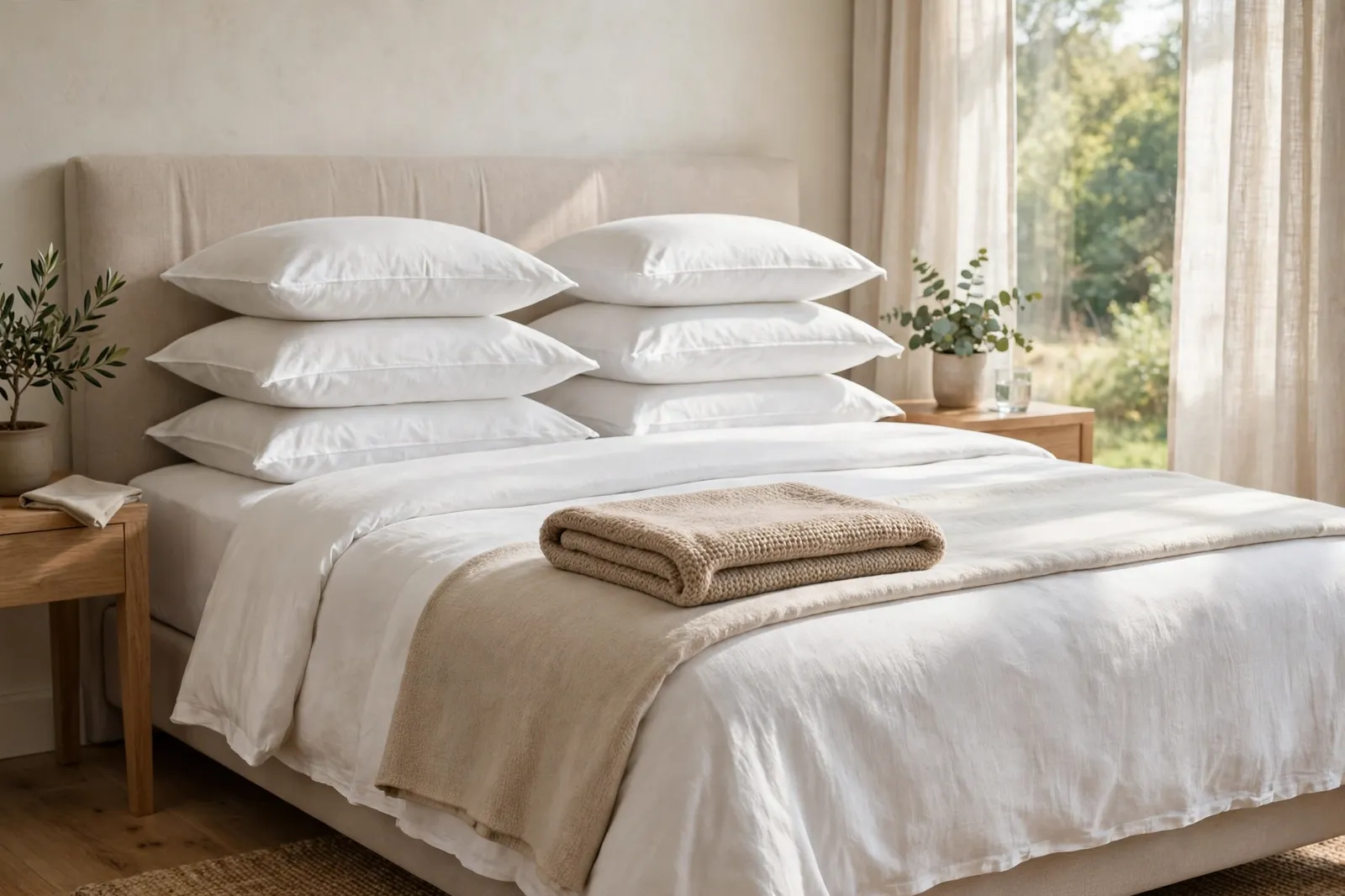
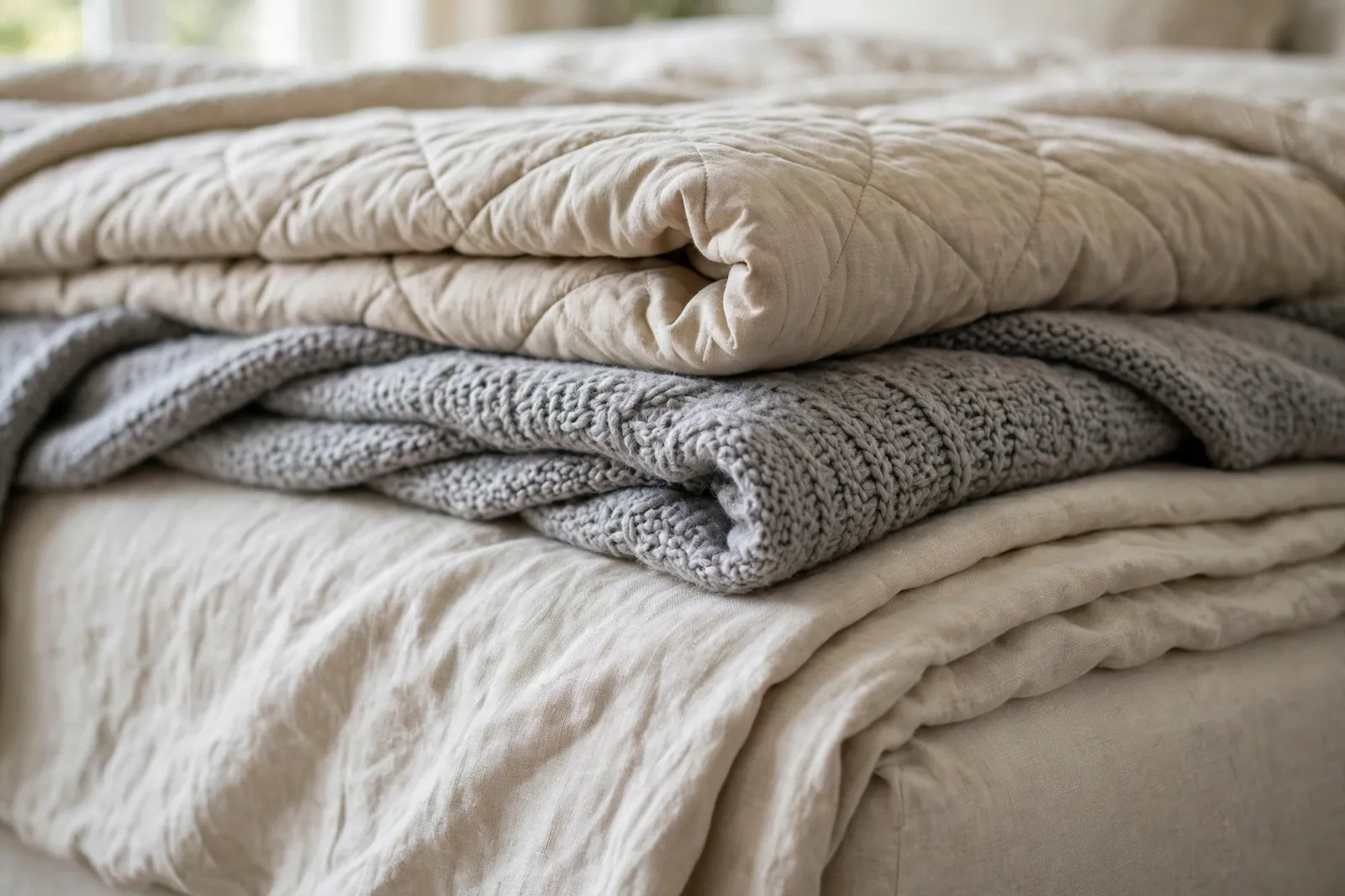
A folded throw across the foot of the bed is the classic hotel finishing touch. Pick a throw in a soft color or a light texture, like a knit or a waffle weave, and fold it into a neat band about a foot wide. Lay it across the bottom third of the bed so it sits straight and even.
The throw is not just for looks — it is handy on a cool night when you want a little extra warmth without pulling the whole duvet up. Keep the color simple and close to the rest of the bedding so it blends in rather than stealing the show. One throw is enough; two or three starts to look busy and makes the bed harder to make in the morning.

6. Stack the Pillows the Hotel Way
Hotels stack pillows in a simple order, and you can copy it exactly. Start with your sleeping pillows flat against the headboard, then stand a second pair of pillows upright in front of them. If you like decorative pillows, add one or two small ones in front of that — a lumbar pillow or a couple of square cushions in a soft color.
Keep the pillow colors close to the bedding so the whole stack looks calm instead of crowded. Fluff each pillow before you place it, and give the front pillows a little karate chop in the middle if you want that soft, lived-in dent hotels use. The goal is a neat stack that still looks soft and comfortable, not a wall of pillows you have to move before you can sleep.

7. Stick to a Simple Color Palette
The reason hotel beds look so calm is that they stick to one or two colors. White is the base, and then they add one soft accent — light gray, pale blue, sage green, or a warm beige. When everything is in the same color family, the layers blend together and the bed looks peaceful instead of busy.
If you already own colored bedding, you do not have to replace it all. Pick one main color for the sheets and duvet cover, and let the throw and pillows carry a soft accent shade. Avoid mixing lots of bright patterns at once, because patterns fight with the layers and hide the neat edges you worked so hard on. Simple colors let the layering itself be the star.

8. Keep It Easy to Make Every Morning
A hotel-style bed only works if you actually make it every day, so keep the layers simple enough that making the bed takes two minutes, not ten. If you have too many layers or too many pillows, you will stop bothering — and an unmade layered bed looks worse than a plain one. Stick to the layers you will really use and really remake each morning.
Build a quick routine: pull the sheets smooth, straighten the duvet, fold the throw back into place, and stack the pillows. Once you have done it a few times, it becomes automatic. A bed that takes two minutes to make is a bed that stays made, and that is what keeps the hotel look going day after day.

9. Add the Small Finishing Touches
The last step is the small stuff that makes the bed feel finished. Smooth the duvet with your hands so there are no wrinkles, straighten the throw so it sits even, and make sure the folded sheet at the top is still crisp. Step back and look at the bed from the doorway — that is the view that matters most.
If something looks off, it is usually one thing: a crooked throw, a flat pillow, or a duvet that has slid to one side. Fix that one thing and the whole bed snaps back into place. These little touches take less than a minute, but they are what turn a nicely made bed into one that makes you smile when you walk into the room at night.
Frequently Asked Questions

How many layers should a bed have?
Three to four layers is the sweet spot for most beds: a fitted sheet, a flat sheet, a light blanket, and a duvet or comforter on top. Add a throw at the foot of the bed if you like, but skip extra layers you will not actually use — too many layers make the bed hard to make and uncomfortable to sleep in.
What is the correct order for layering bedding?
Start with the fitted sheet on the mattress, then the flat sheet, then a lightweight blanket, then the duvet or comforter. Fold the top sheet back over the duvet, add a throw across the foot of the bed, and finish with the pillows stacked against the headboard. That order keeps the bed neat and easy to get into at night.
Do hotels use a flat sheet or a duvet cover?
Most hotels use both: a flat sheet under a light blanket, with a duvet in a white cover on top. The flat sheet is the layer you sleep under, and the duvet cover keeps the duvet clean and looking crisp. At home, a flat sheet plus a washable duvet cover gives you the same look and makes laundry much easier.
How do I keep layered bedding from looking messy?
Tuck each layer in at the foot of the bed before adding the next one, and smooth each layer flat as you go. Keep the colors simple, limit the pillows to two rows plus one or two decorative ones, and make the bed every morning with the same quick routine. When the layers stay in order, the bed stays neat.
Related ideas
If you want more ideas for the same room, How to Style a Bed With Pillows and Layers goes deeper into pillow arrangements, which pair perfectly with the layering steps above. Cozy Bedroom Lighting Ideas for a Relaxing Retreat will help you light the room so your freshly layered bed looks just as good in the evening, and How to Choose the Right Bedroom Rug Size covers the rug under the bed, which frames the whole layered look from the floor up. You might also like Small Bedroom Storage Ideas That Hide the Clutter and Bedroom Accent Wall Ideas Beyond Paint.