Small Entryway Ideas With Smart Storage
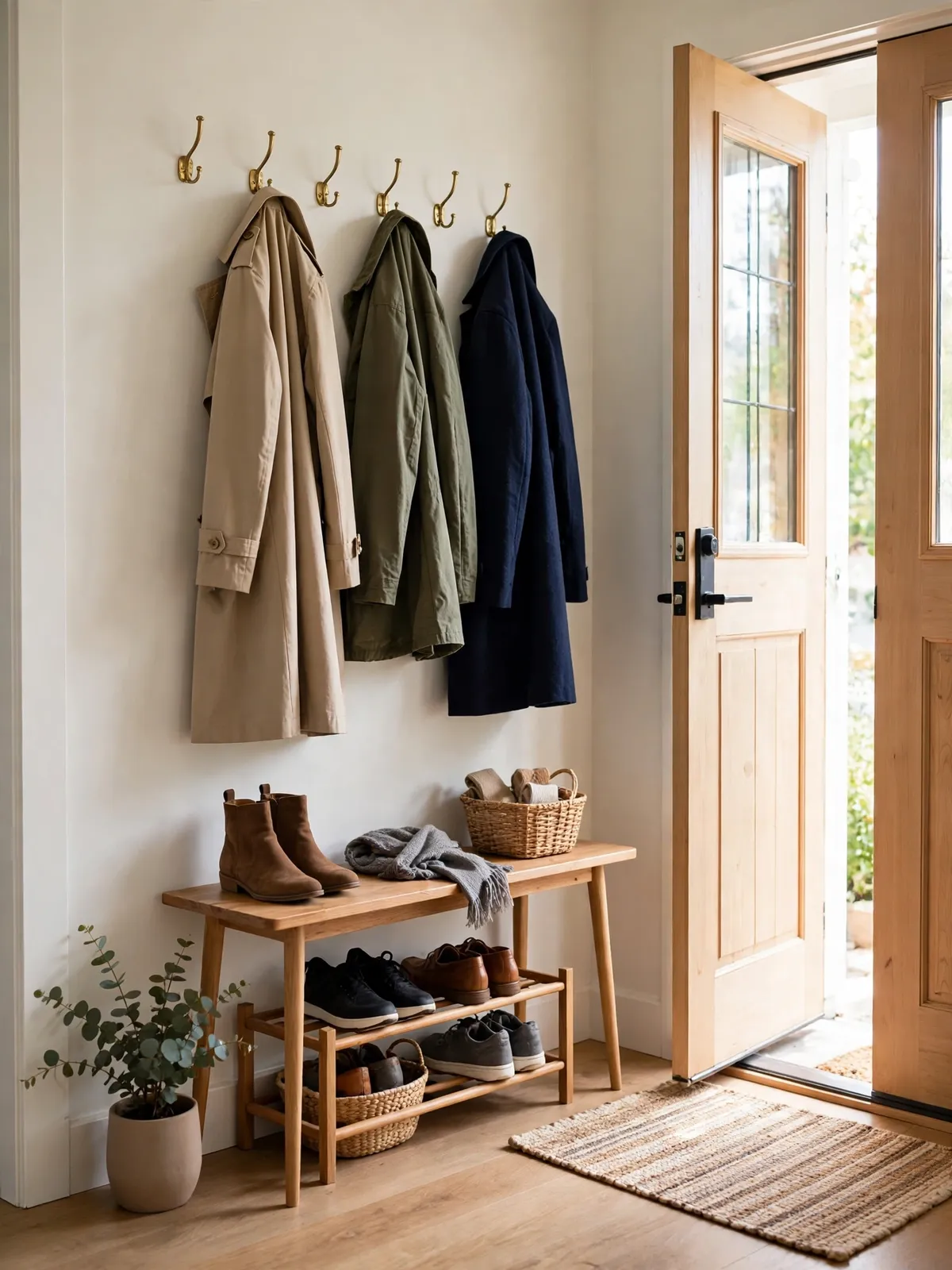
A small entryway does not have to be a pile of shoes, coats, and bags by the door. With a few smart storage pieces, even the tiniest entry can feel neat and welcoming. You do not need a big mudroom or a big budget. You just need a place for everything that comes in the door with you.
The trick is to give every item a home before it lands on the floor. A hook for your coat, a spot for your keys, and a place for your shoes can change the whole feel of coming home. Here are simple ideas you can try one at a time, starting this weekend.
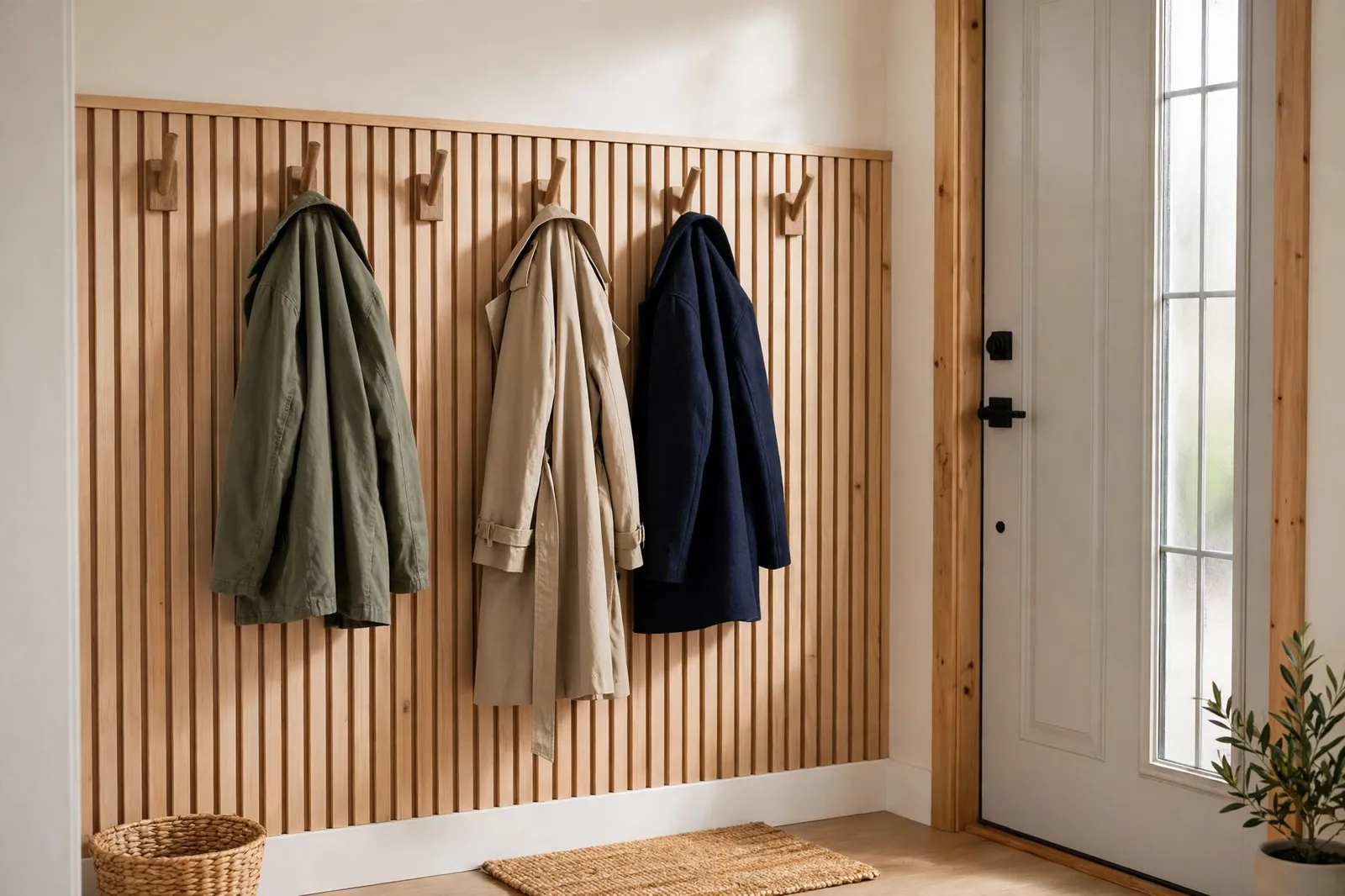
1. Start With a Hook for Every Coat
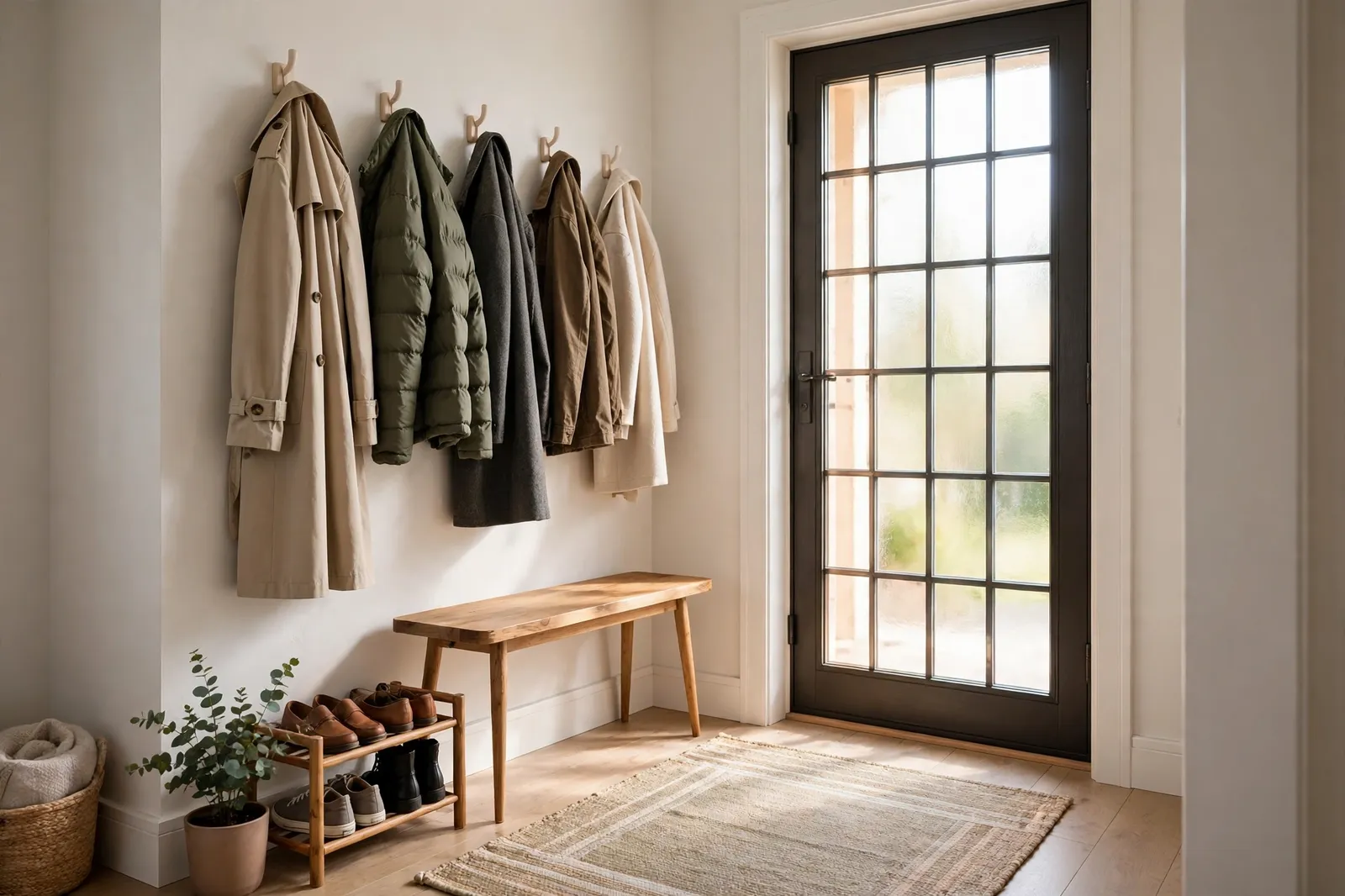
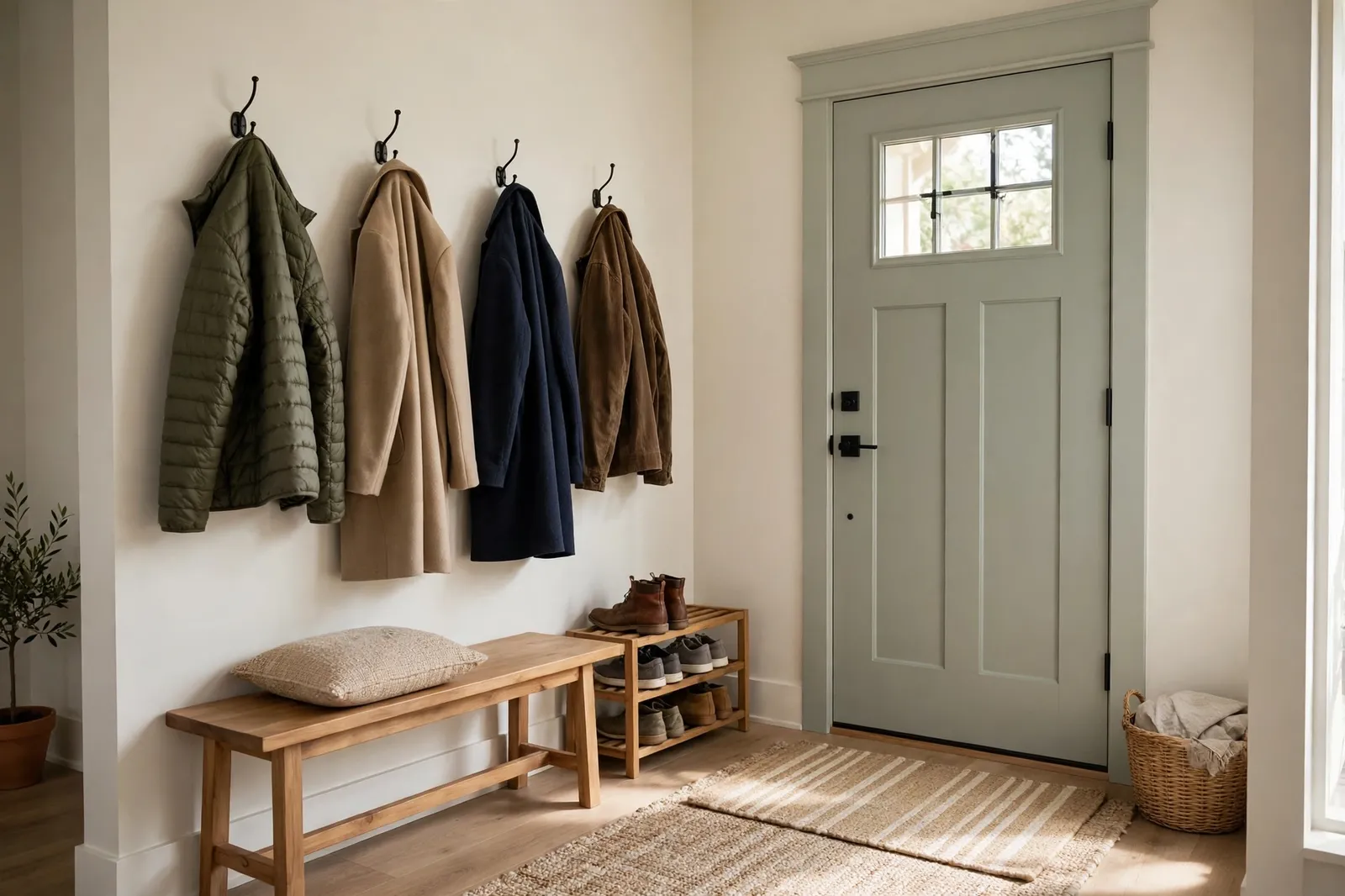
Coats end up on chairs and on the floor when there is nowhere to hang them. A row of wall hooks by the door fixes that in one step. Give each person in the house one or two hooks, and coats will have a home the moment you walk in.
Keep the hooks at a height everyone can reach, and do not crowd them. Hooks spaced about a foot apart hold coats without squashing them together. A simple wooden peg rail or a few sturdy metal hooks is all you need, and the entry looks tidy right away.
2. Add a Bench You Can Sit On
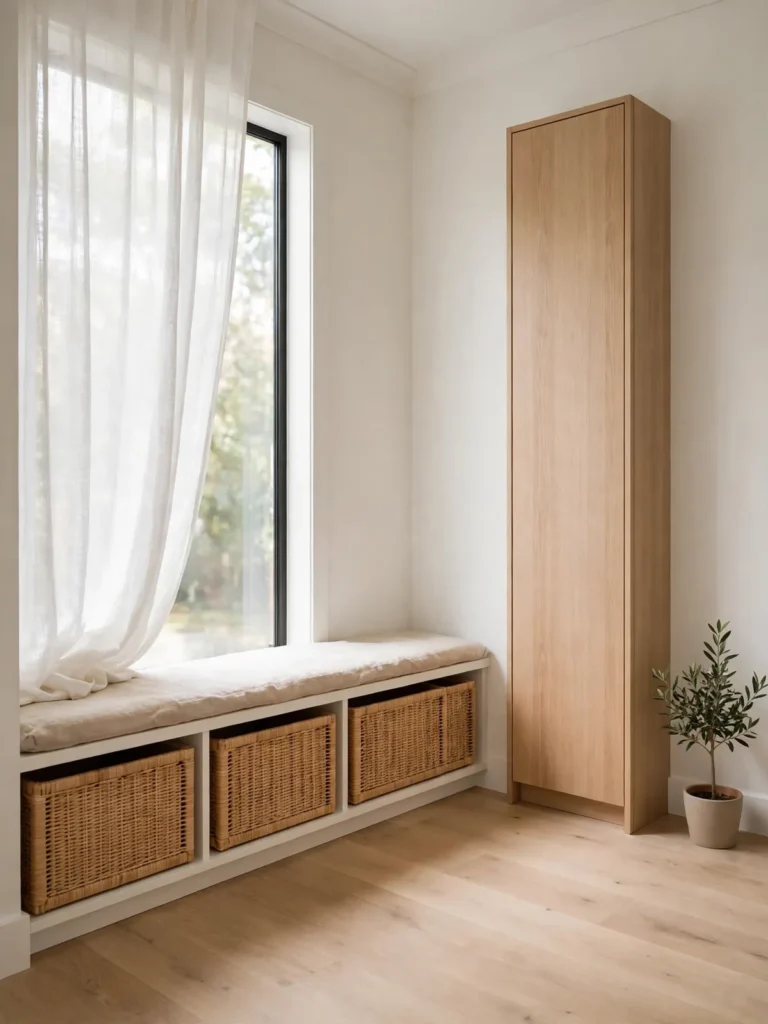
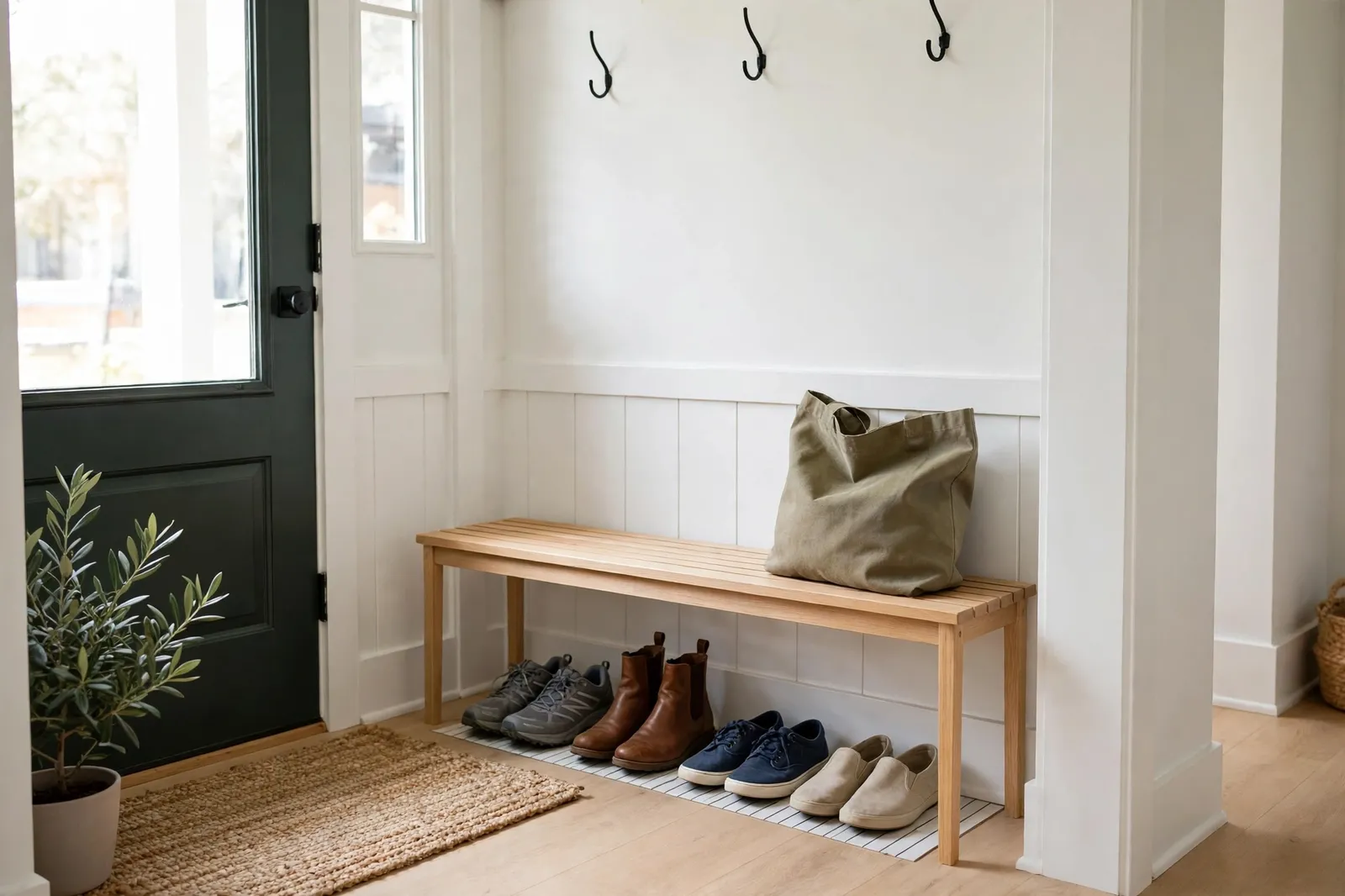
A bench makes a small entryway work so much harder. You can sit down to put your shoes on, set bags down when your hands are full, and tuck shoes or baskets underneath. It turns a bare patch of wall into a real drop zone.
Pick a bench that fits the wall without blocking the door. A slim bench about a foot deep is usually enough. If it has a shelf or cubbies underneath, even better — shoes slide right in instead of piling up on the floor.
3. Give Shoes a Real Home
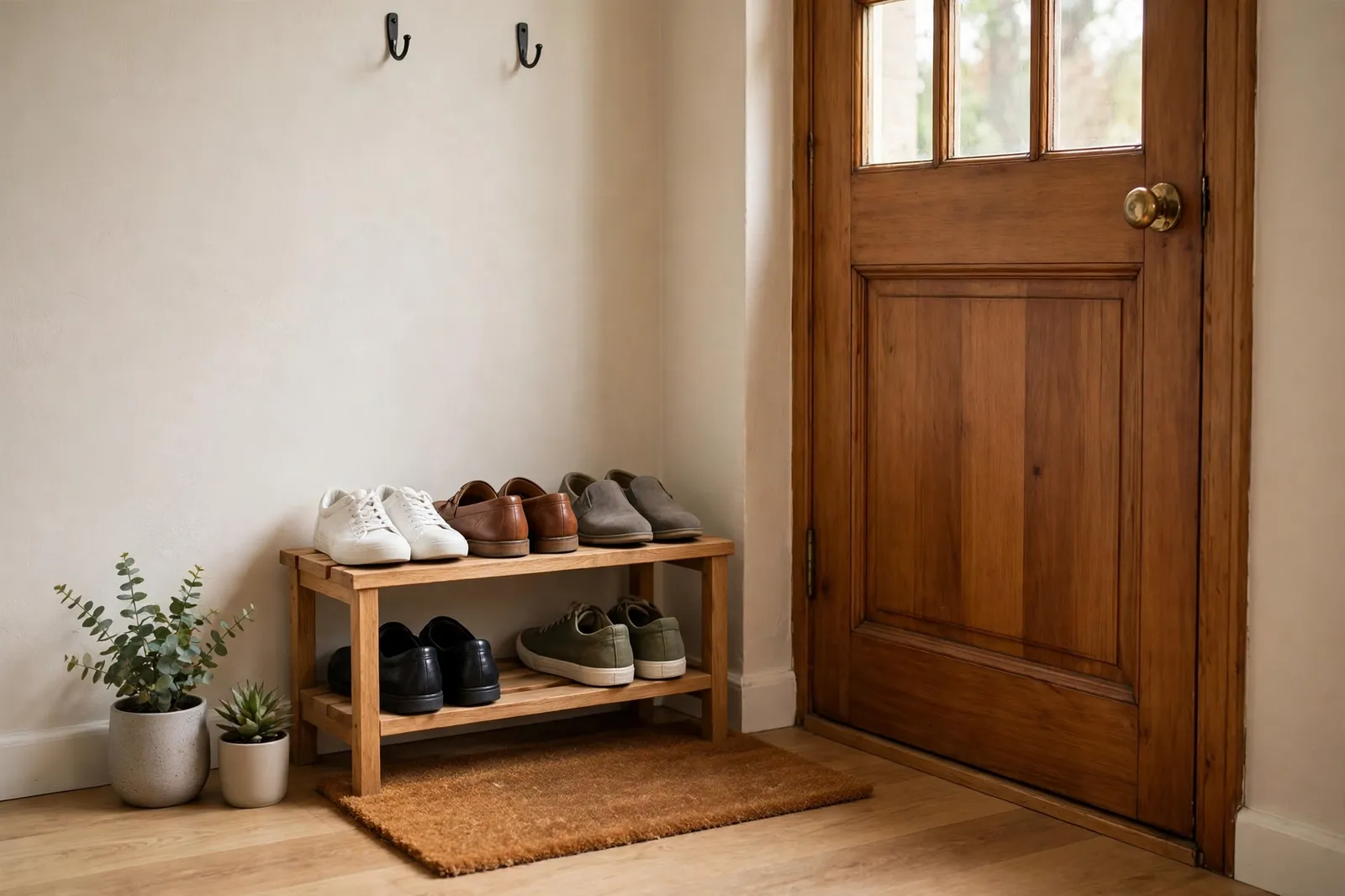
Shoes are the biggest mess in most entryways. A shoe rack, a couple of low cubbies, or a tray by the door keeps them in one place. When shoes have a clear spot, nobody has to step over them to get inside.
Keep only the shoes you wear every day by the door. The rest can live in a closet. A two-tier rack or a small cabinet with a door hides the everyday pairs and keeps the entry looking calm, even when the whole family is coming and going.
4. Use a Tray or Basket for Keys and Small Things
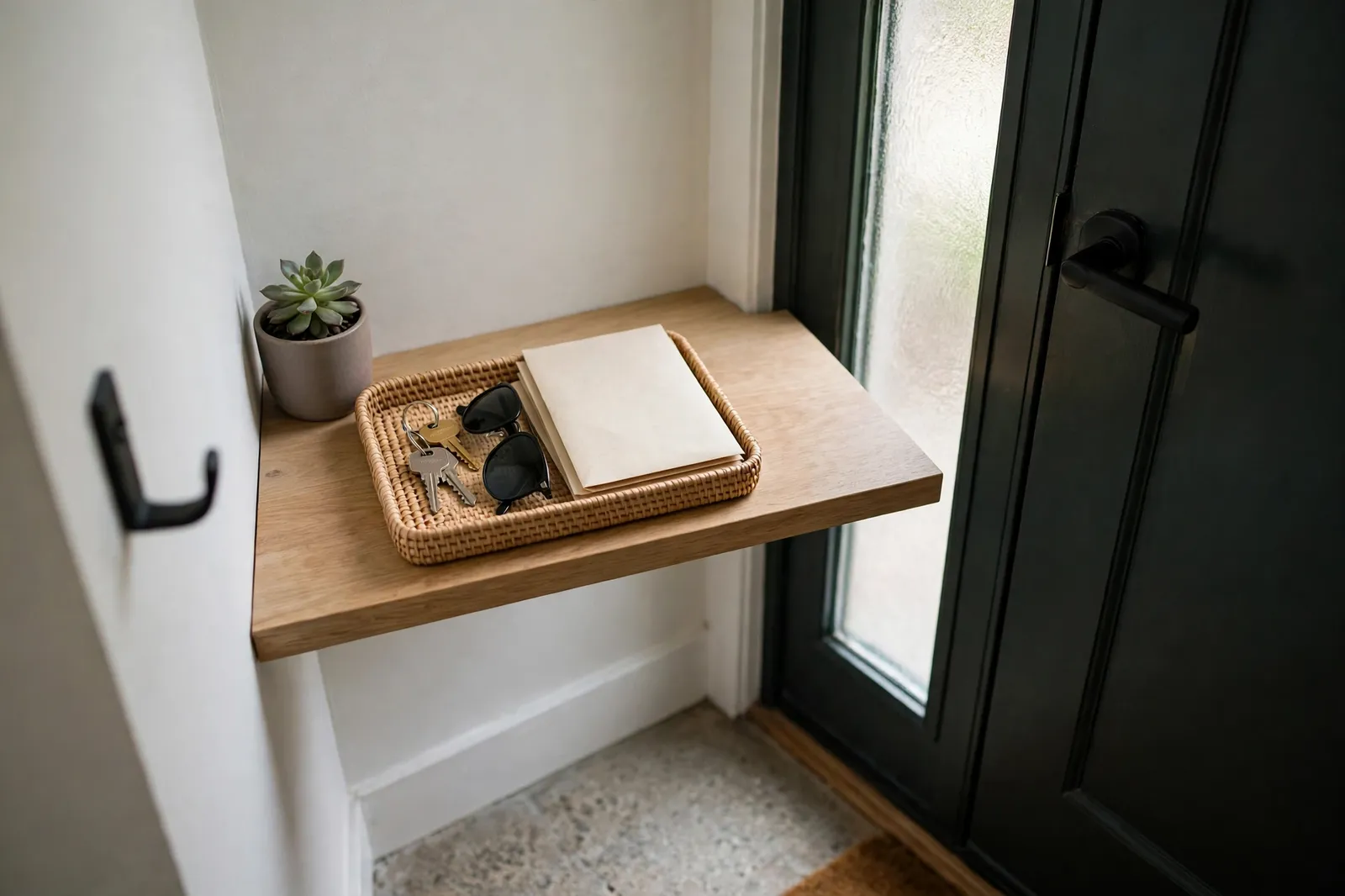
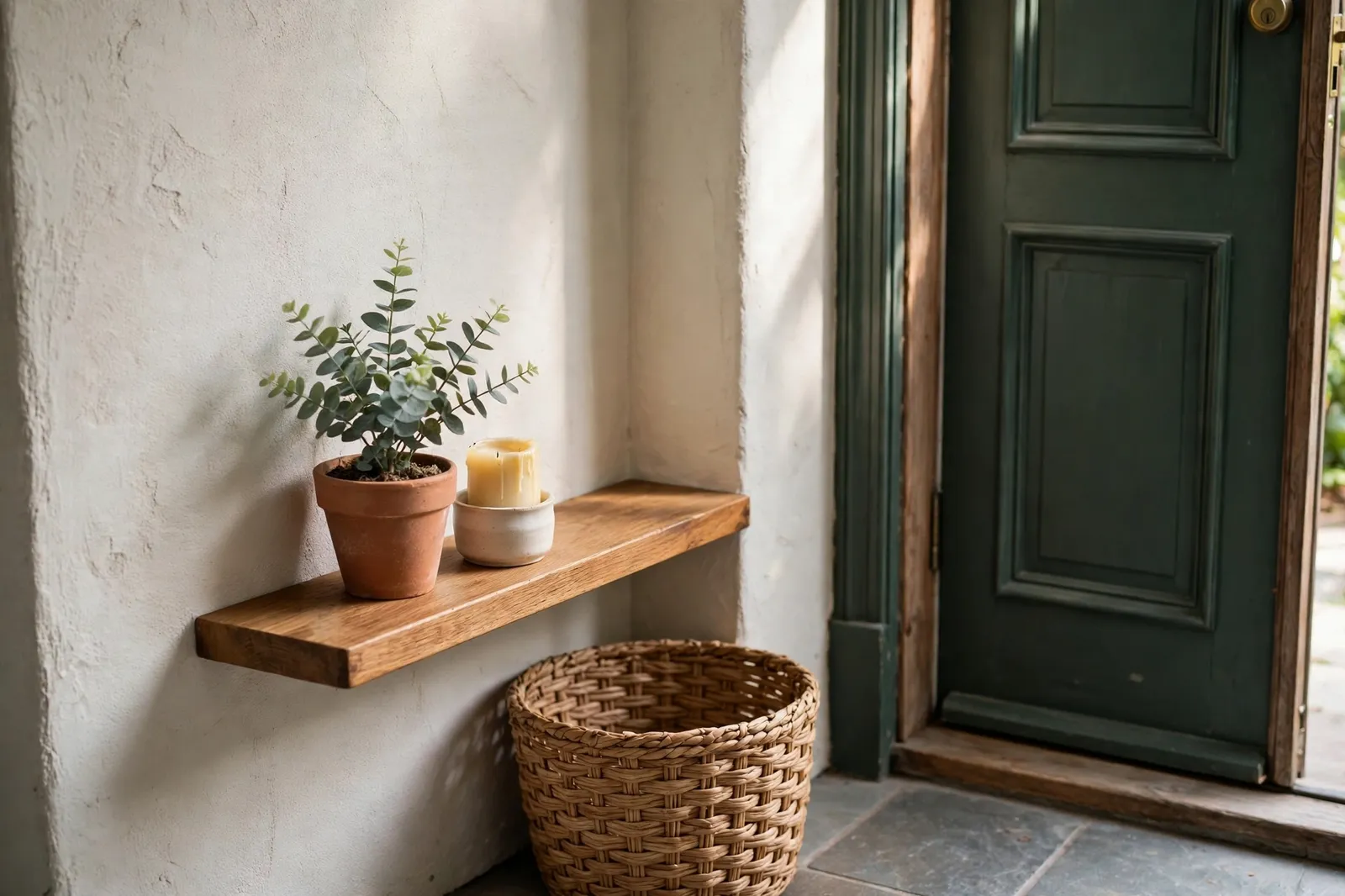
Keys, sunglasses, and mail have a way of disappearing into the entryway clutter. A small tray on a shelf or a basket on the bench gives them one spot. When you always drop your keys in the same place, you always know where they are.
Pick a tray that is big enough for the whole family’s keys but small enough to sit on a narrow shelf. A little dish by the door or a small basket on a wall shelf does the job. It is a tiny change, but it saves you from hunting for keys every morning.
5. Go Up the Wall With Shelves and Pegs
When floor space is tight, the wall is your best friend. A floating shelf above the bench can hold a basket for hats and gloves, and a peg rail can hold bags and dog leashes. You get storage without taking up a single inch of walking space.
Just do not overload the wall. One shelf and a row of hooks is plenty for a small entry. Leave some empty space so the wall looks tidy, not stuffed. The things you grab every day go on the hooks, and the rest goes on the shelf in a basket.
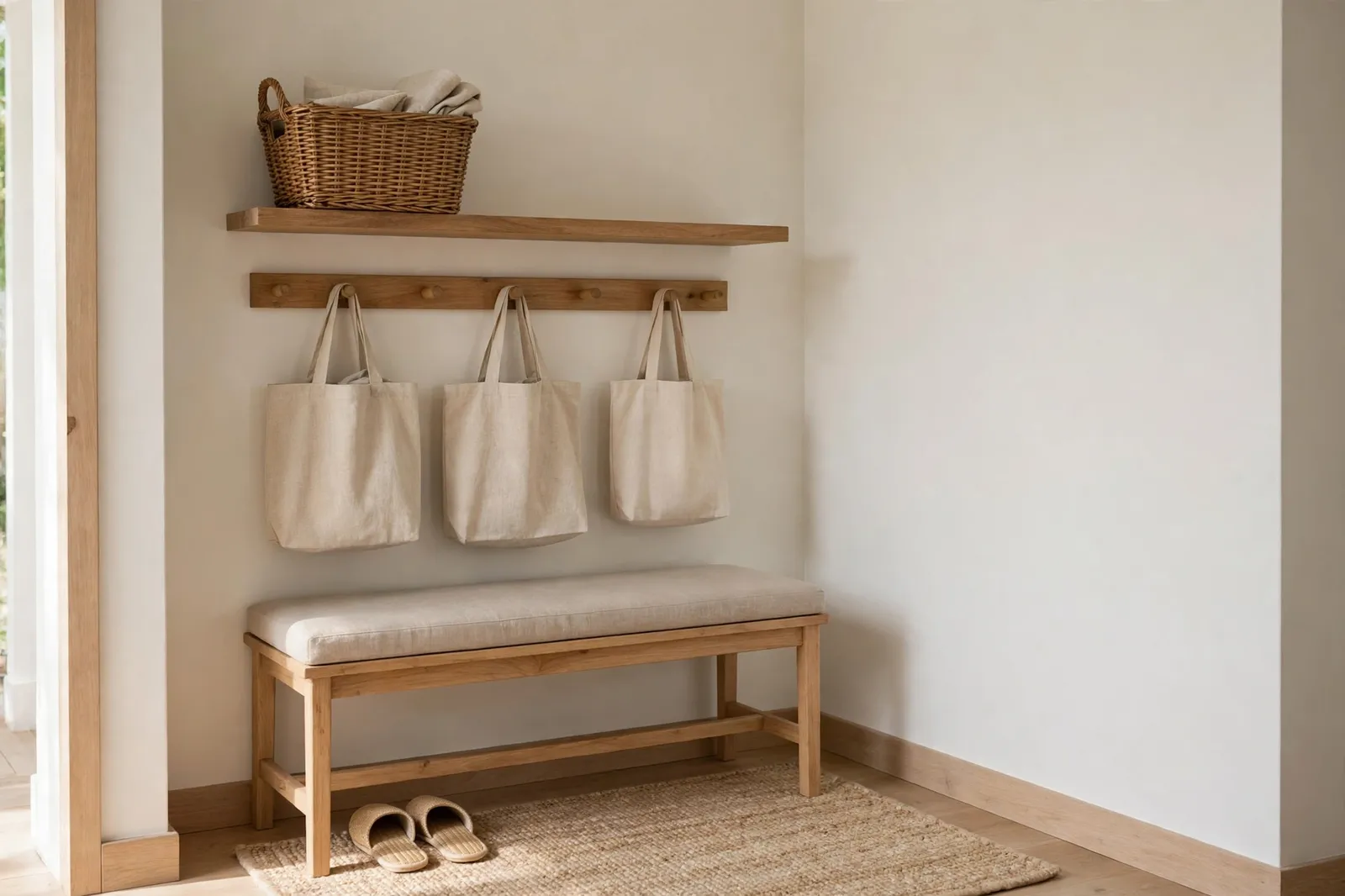
6. Hide the Clutter in Closed Storage
Open shelves are great for things you grab daily, but some things just look messy on show. A small cabinet with a door, a bench with a lift-up seat, or a couple of baskets with lids can hide the stuff you do not want to see. Less clutter on show means the entry looks bigger and feels calmer.
Use closed storage for the extras — out-of-season hats, spare umbrellas, and the odds and ends that collect by the door. Label the baskets if it helps, so everyone in the house knows where things go. When the door closes on the mess, the entryway stays welcoming.
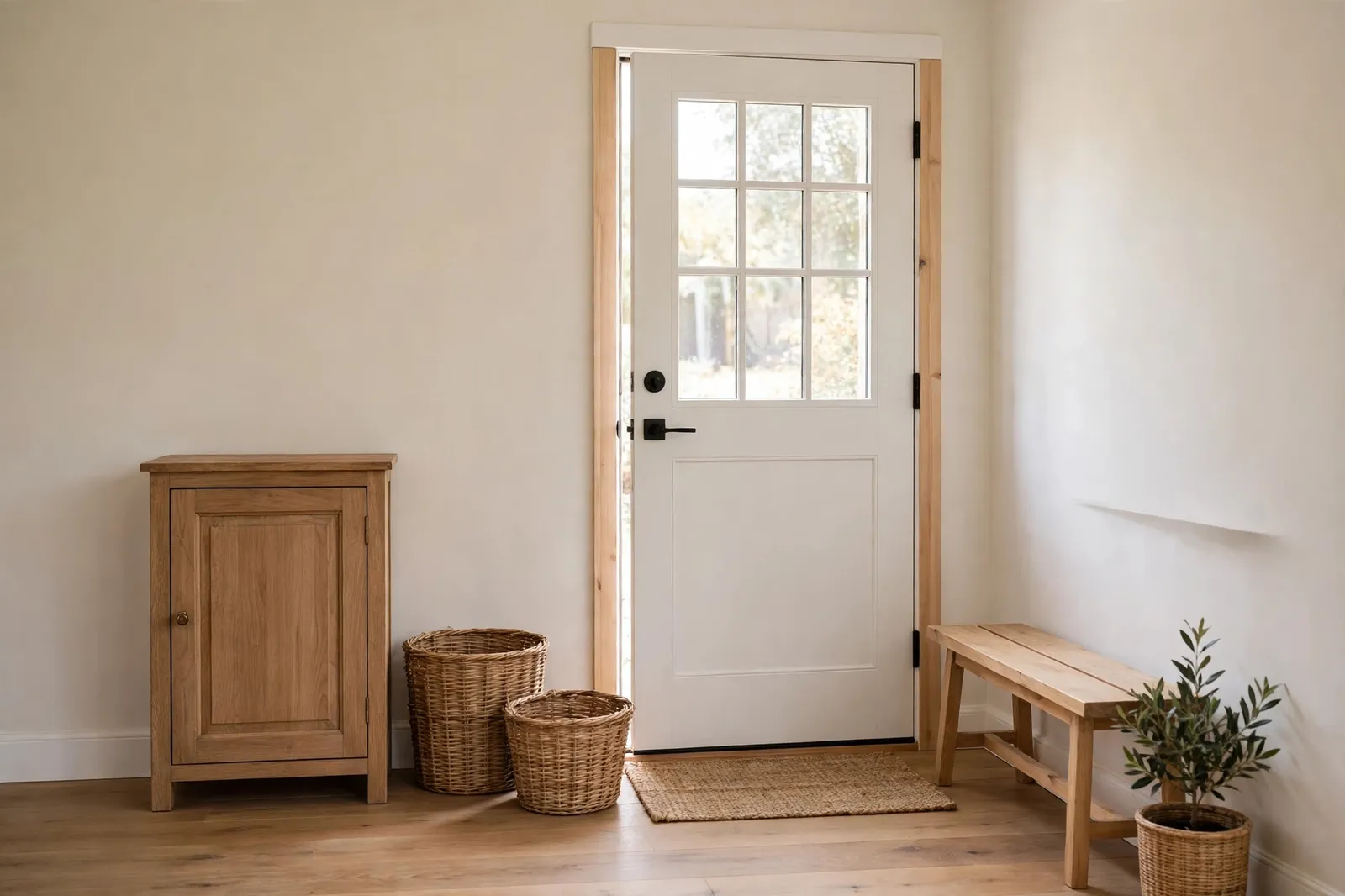
7. Add a Mirror to Open the Space Up
A mirror is one of the cheapest tricks for a small entryway. Hang it above the bench or on the wall across from the door and it will bounce light around the space. It also gives you a quick last look before you head out, which is handy.
Keep it simple. One mirror with a plain frame works better than a lot of small ones. Hang it at eye level, and let it do the work. The reflection gives your eye more to look at, so the entry feels wider than it really is.
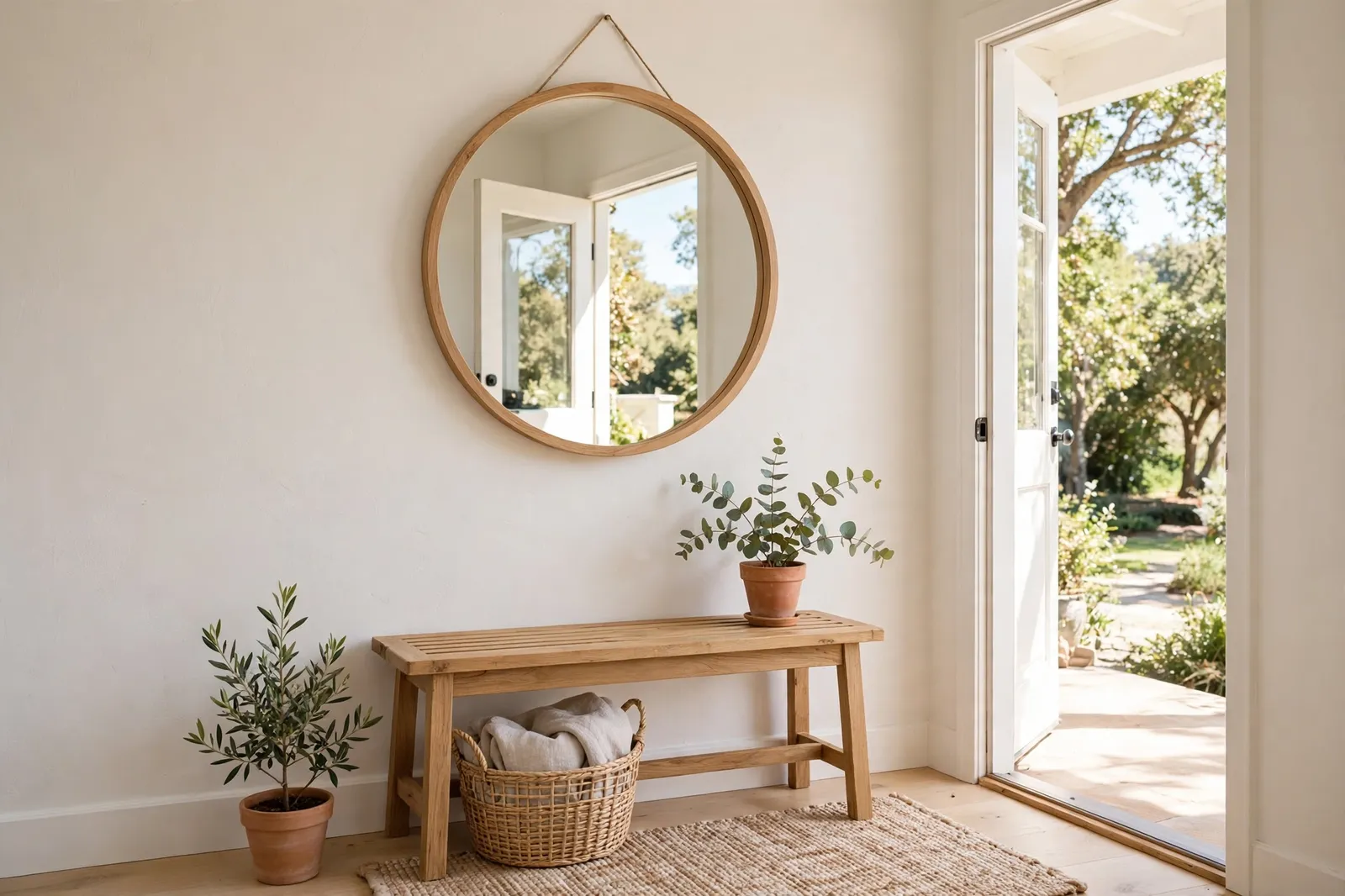
8. Keep the Floor Clear With a Slim Rug
A small rug by the door catches dirt and marks the entry as its own little space. Pick a rug that is slim and low, so the door swings over it without catching. A washable rug is the smart choice here, because entryways get dirty fast.
A light color or a simple pattern works best in a small entry. A busy, dark rug can make the floor feel heavy. Keep the pattern simple, and let the rug quietly tie the bench, the hooks, and the shoe rack together into one finished spot.
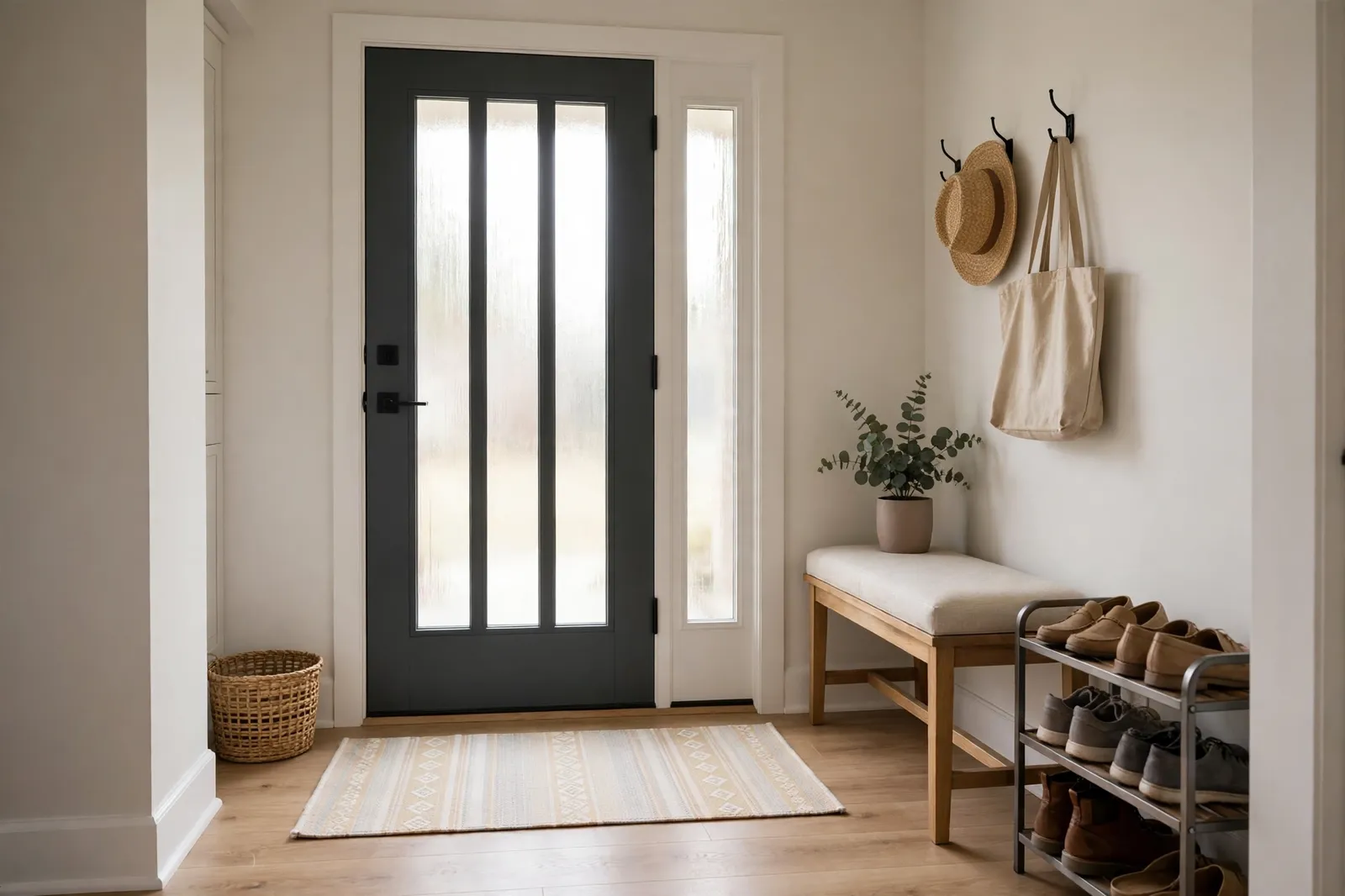
9. Add Small Touches That Make It Feel Like Home
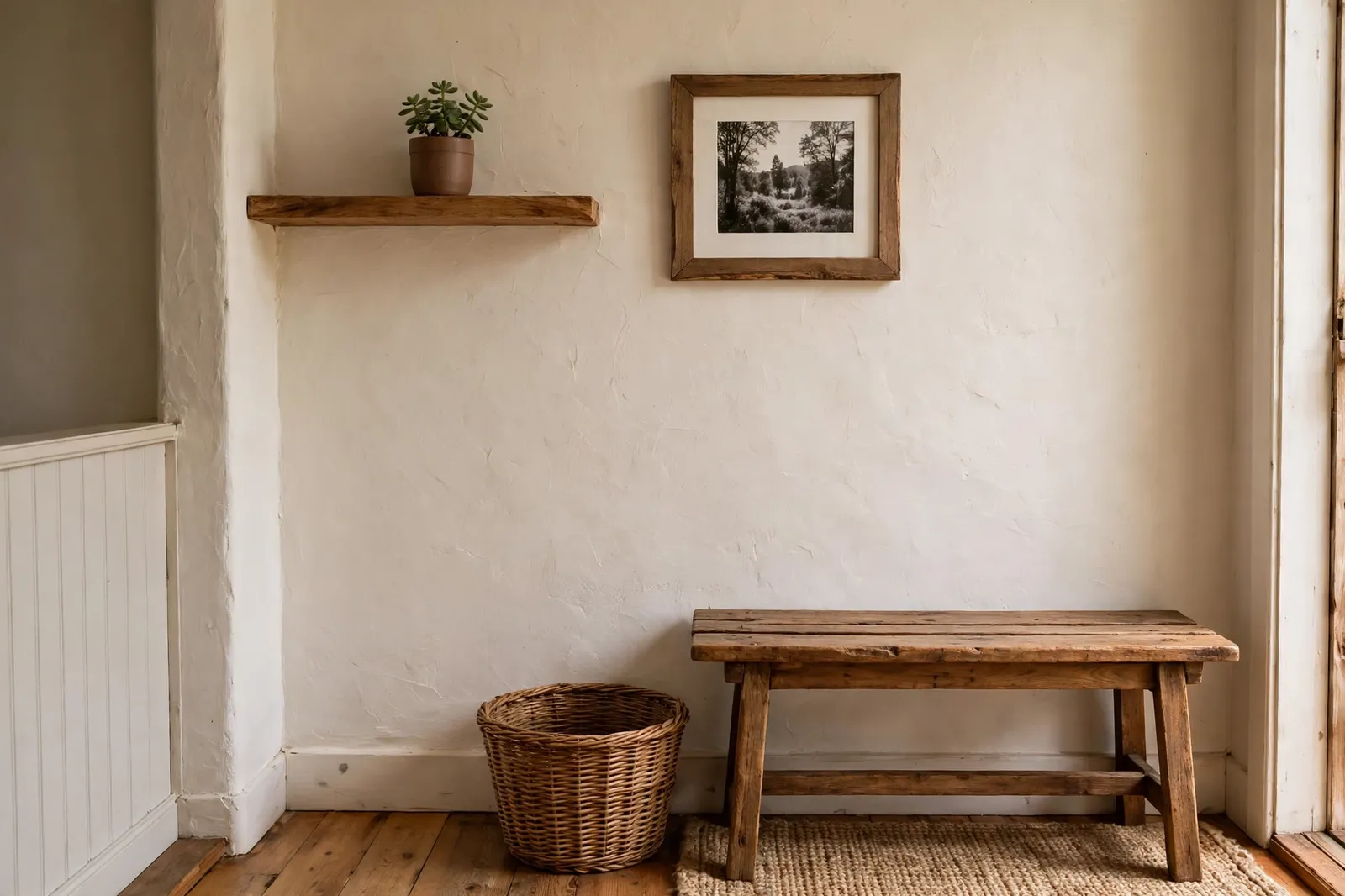
The last step is the fun one. A small plant on the shelf, a framed photo on the wall, or a pretty basket for the dog’s things. These are the touches that make the entryway feel like yours, not like a storage closet.
Do not overdo it, though. In a small entry, two or three personal touches are enough. Too many little things on every surface just look like clutter. Pick the pieces you really love, give each one a clear spot, and let the space breathe around them.
Frequently Asked Questions
How do I organize a small entryway with no closet?
Start with hooks on the wall for coats and bags, a slim bench with storage underneath, and a shoe rack or tray by the door. Add a small shelf or basket for keys and hats. When every item has one clear spot, even an entryway with no closet stays tidy.
What is the best storage for a tiny entryway?
A bench with storage underneath is the best all-rounder, because it gives you a seat and a place for shoes in one piece. Pair it with wall hooks for coats and a small basket for keys and odds and ends. Closed storage like a cabinet or lidded baskets hides the rest.
How can I keep shoes from piling up by the door?
Keep only the pairs you wear every day by the door, and move the rest to a closet. Give shoes a rack, cubbies, or a tray so they always land in the same spot. A simple rule helps too: one pair per person by the door, no more.
How do I make a small entryway look bigger?
Use light colors, a mirror to bounce light around, and furniture that sits slim against the wall. Keep the floor clear, hide clutter in closed storage, and leave some empty wall space. A tidy entry with a few well-chosen pieces always feels bigger than a crowded one.
Related ideas
Studio Apartment Decorating Ideas for Separate Living Zones shows how to carve out clear zones in one open space, which helps when your entryway flows straight into the living room. See Small Apartment Living Room Ideas for a Stylish Layout for small-space tricks that keep a tiny living room feeling open and calm. See How to Style Bathroom Countertops Without Clutter for the same simple, clutter-free approach in another small spot in your home. See Space-Saving Furniture Ideas for Compact Homes and How to Make a Small Room Look Bigger for more ideas in a small home.