Pantry Organization Ideas for a Functional Kitchen
A messy pantry can make cooking feel harder than it needs to be. You open the door looking for one thing, and you end up digging past three bags of pasta, a can you do not recognize, and something that expired last year.
The good news is that a pantry does not need a full makeover to work better. A few simple changes — clear bins, honest labels, and putting things where you actually reach for them — can turn a jumbled shelf into a kitchen that just makes sense. Here are pantry organization ideas that keep things simple and easy to stick with.
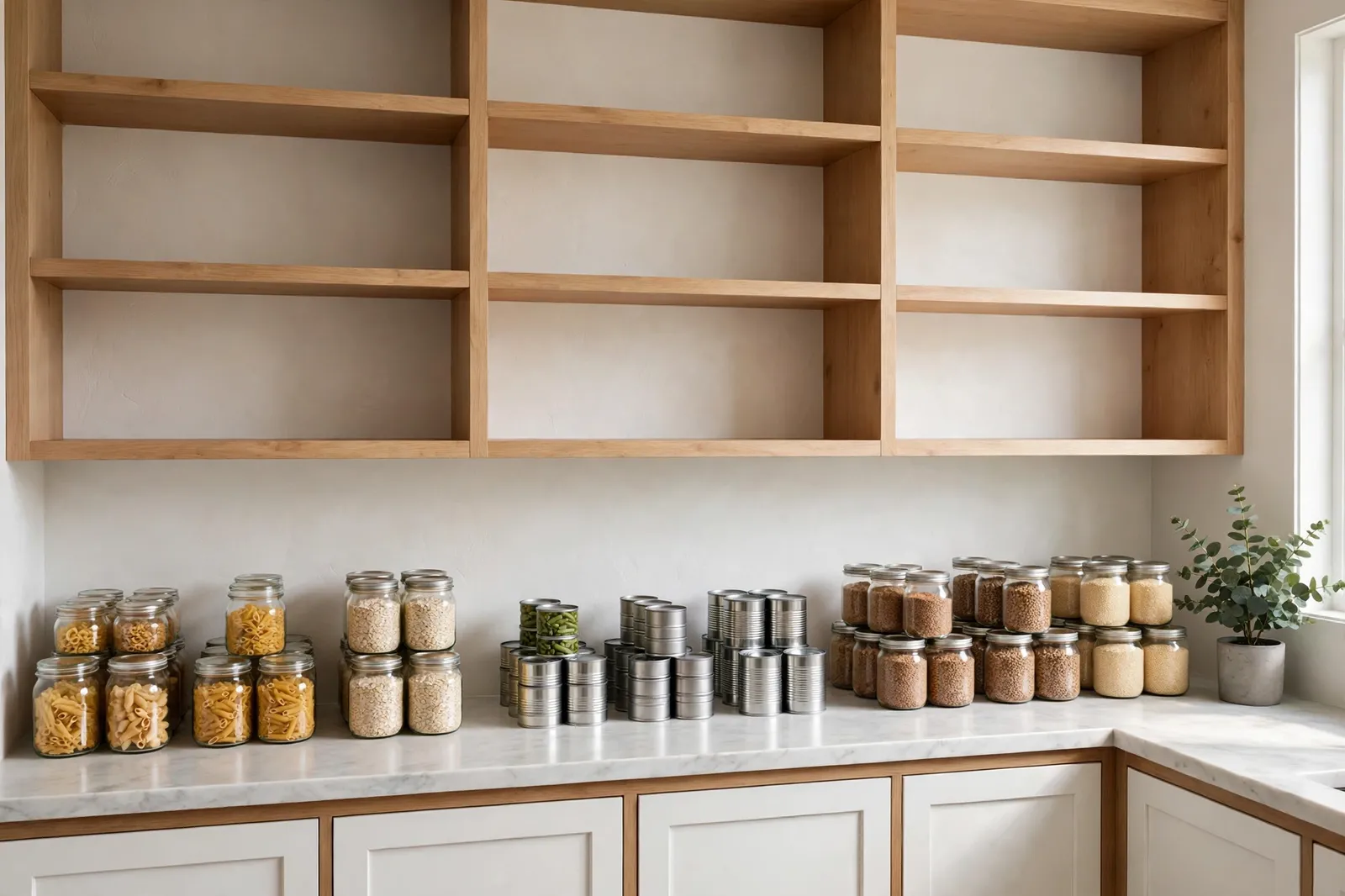
1. Start by Taking Everything Out
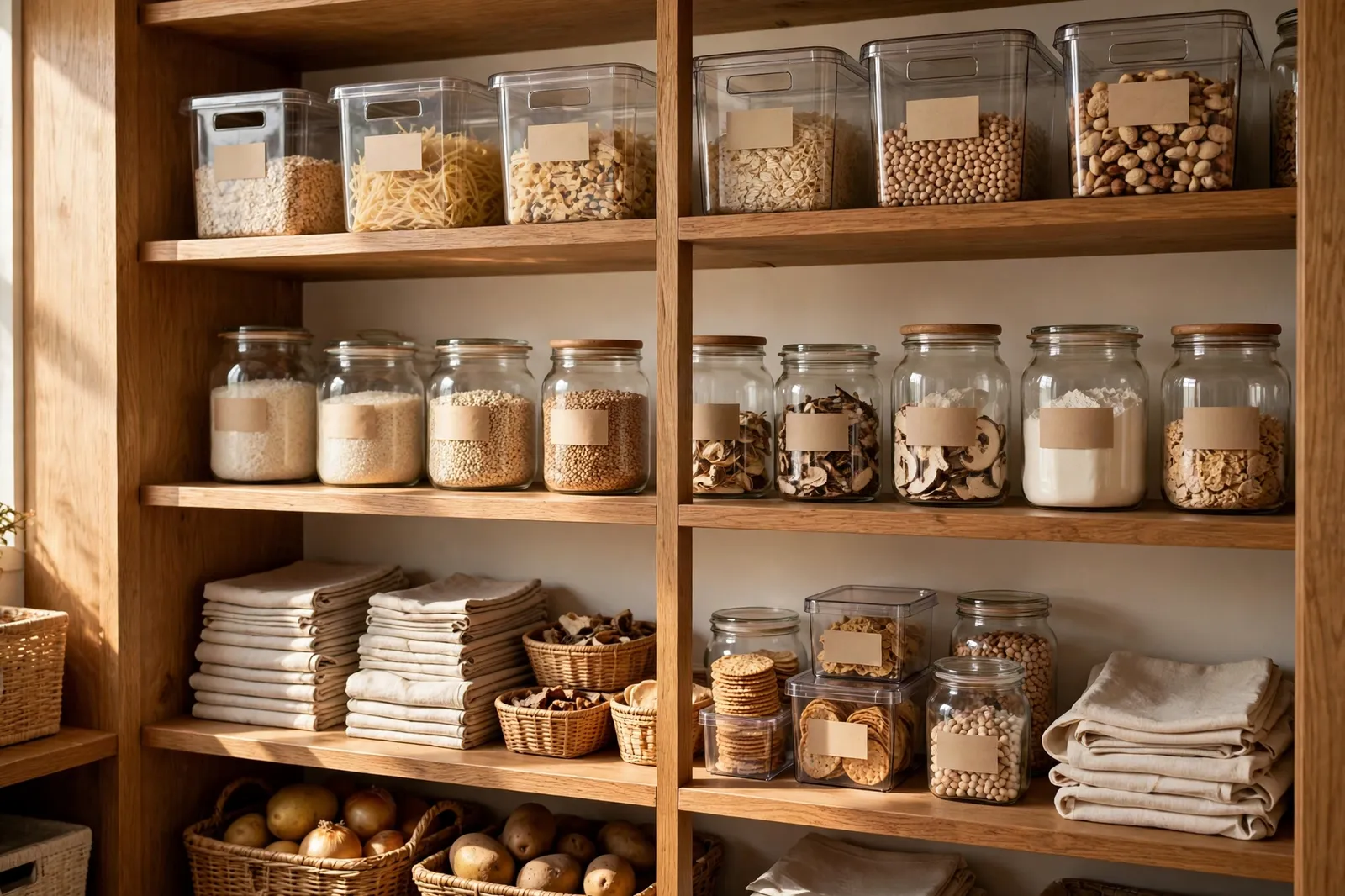
Before you buy a single bin, empty the pantry completely. Take everything out onto the counter or the kitchen table so you can see what you actually have. You will probably find doubles, things you forgot you bought, and a few items that are past their best.
Toss anything expired or stale, and set aside food you know you will not use — a local food bank will often take unopened items. Wipe the shelves down while they are empty, and you have a clean slate to work with. It takes a little time, but it makes every step after this one easier.
2. Group Things by How You Use Them
Put things together the way you actually cook. Keep the baking stuff in one spot, the breakfast things in another, and the snacks where everyone can reach them. When things are grouped by use, you stop hunting through the whole pantry for one ingredient.
This also helps at the grocery store. When you can see at a glance that you are out of rice or low on flour, you buy only what you need. Try it for a week and you will notice how much faster dinner prep feels.
3. Use Clear Bins and Containers
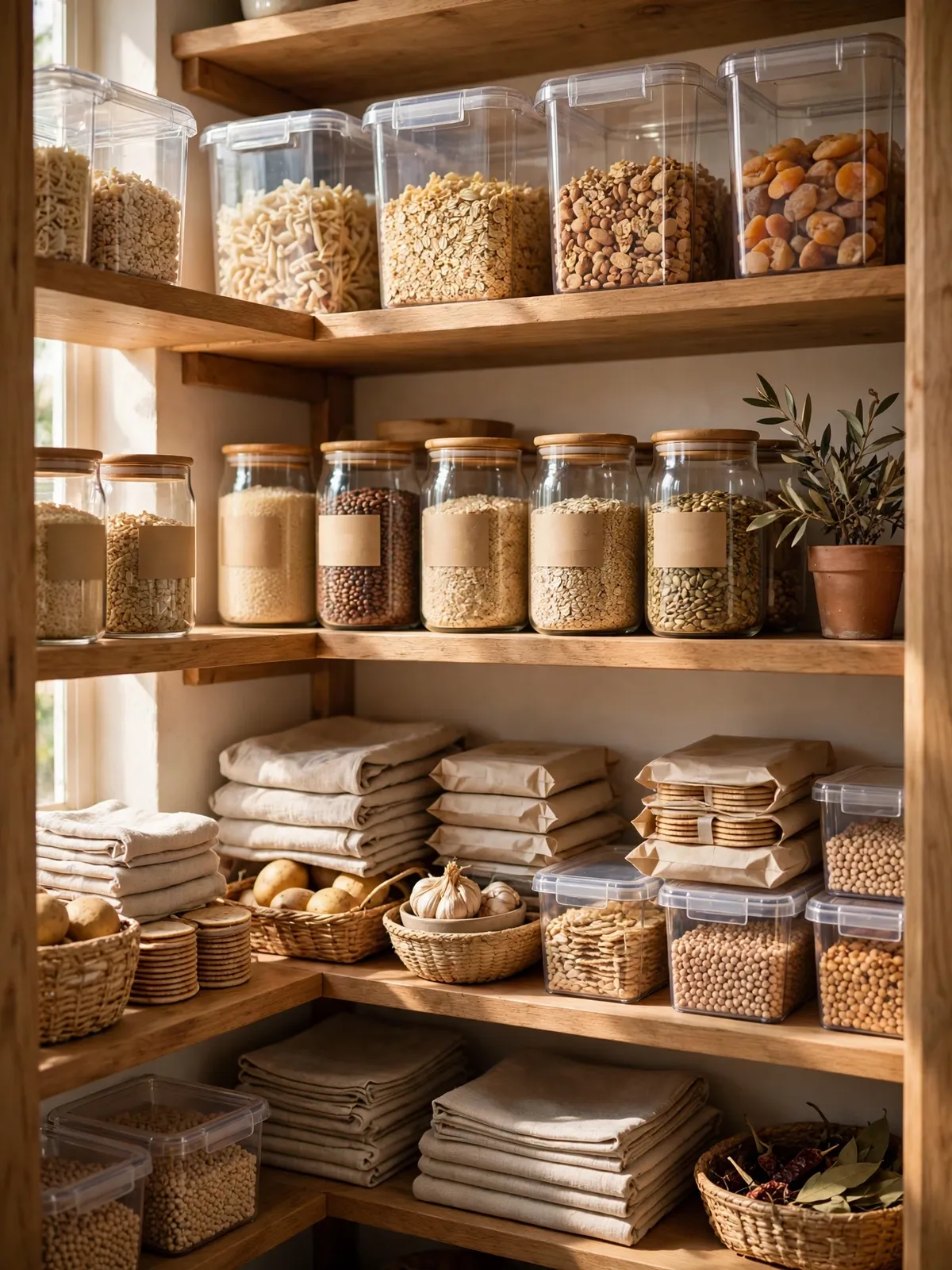
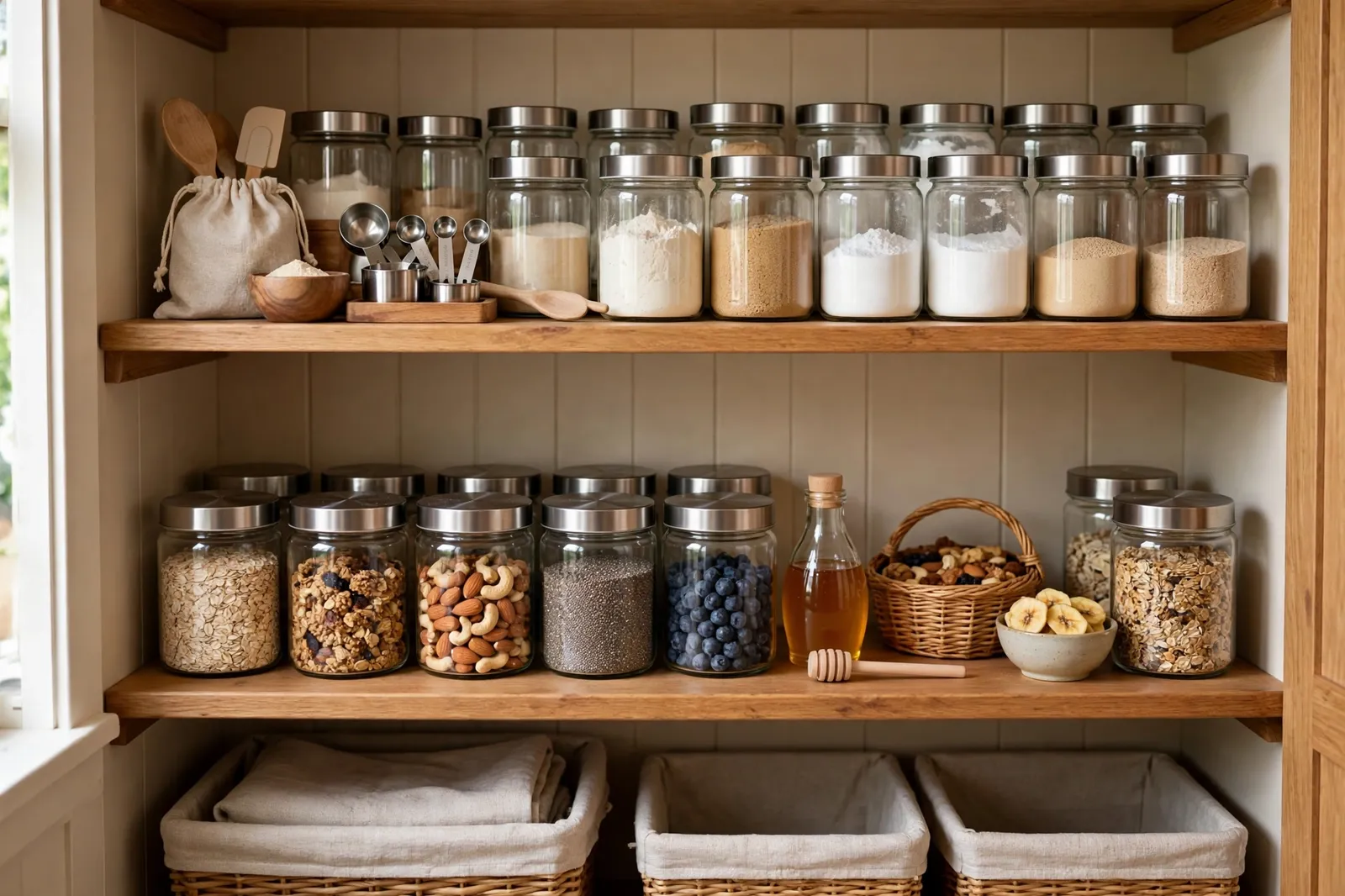
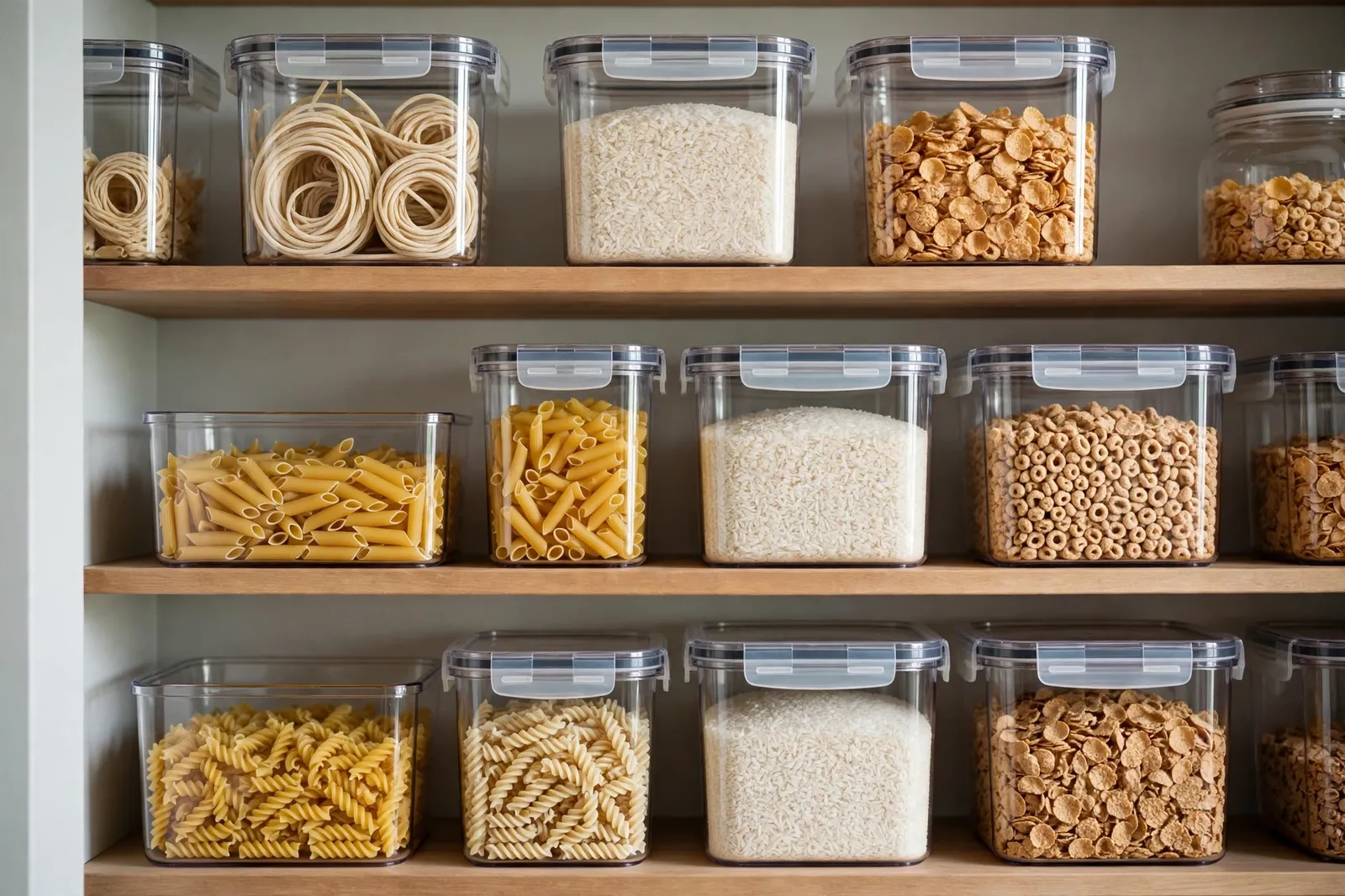
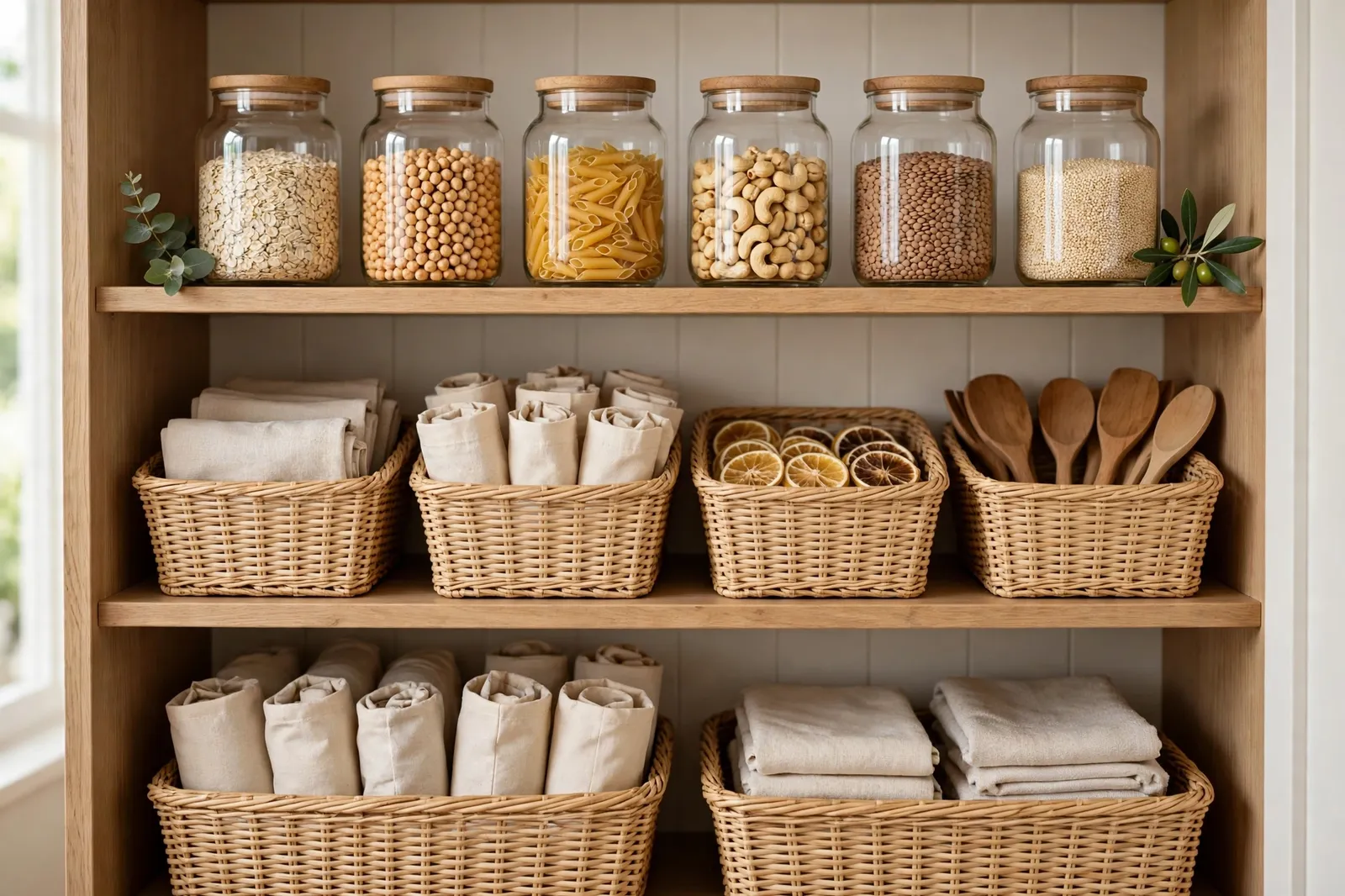
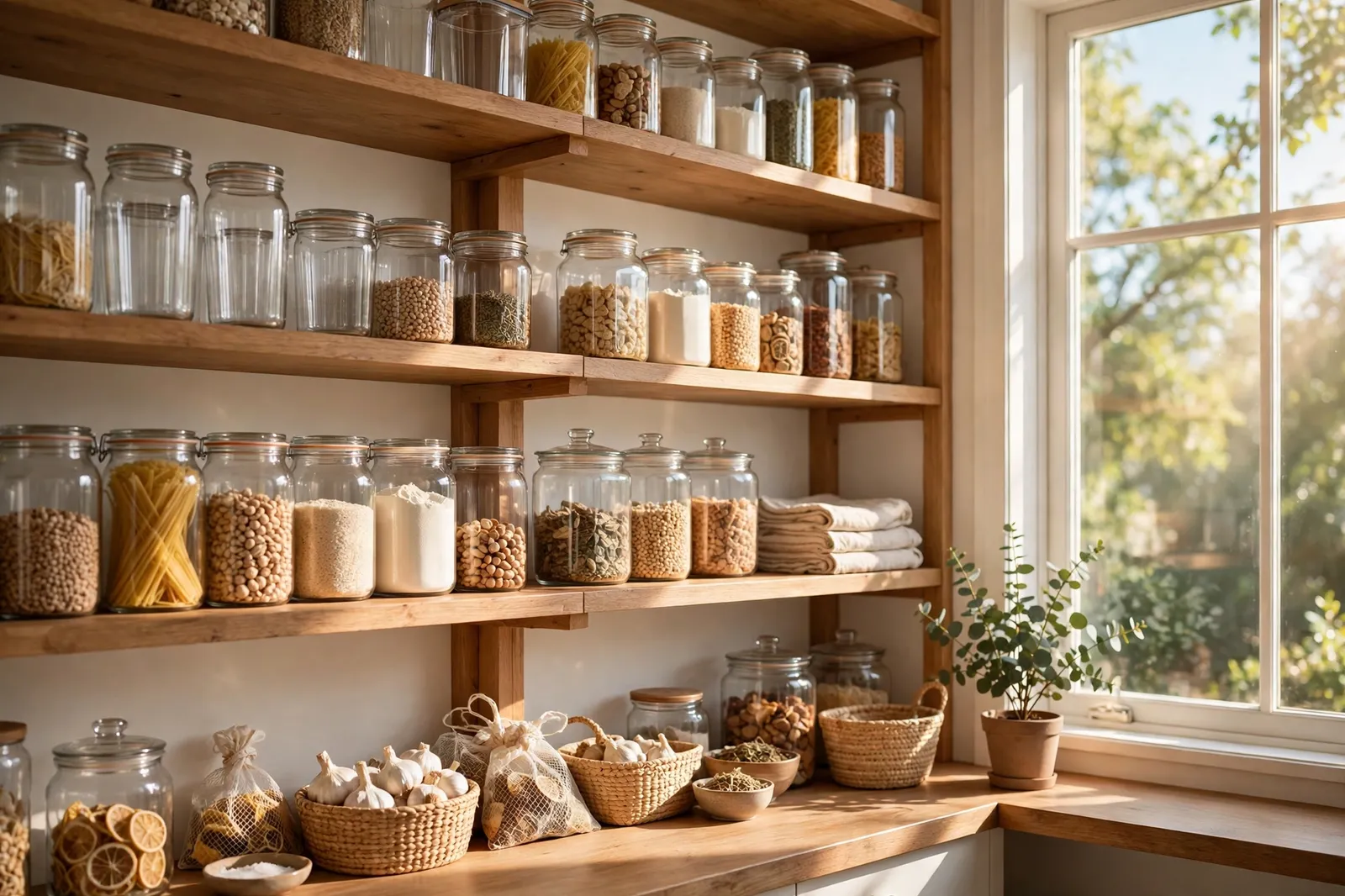
Clear bins are the easiest win in any pantry. You can see what is inside without pulling everything out, and they keep small things from getting lost at the back of a shelf. Use one bin for snacks, one for pasta and grains, and one for the odds and ends that never seem to have a home.
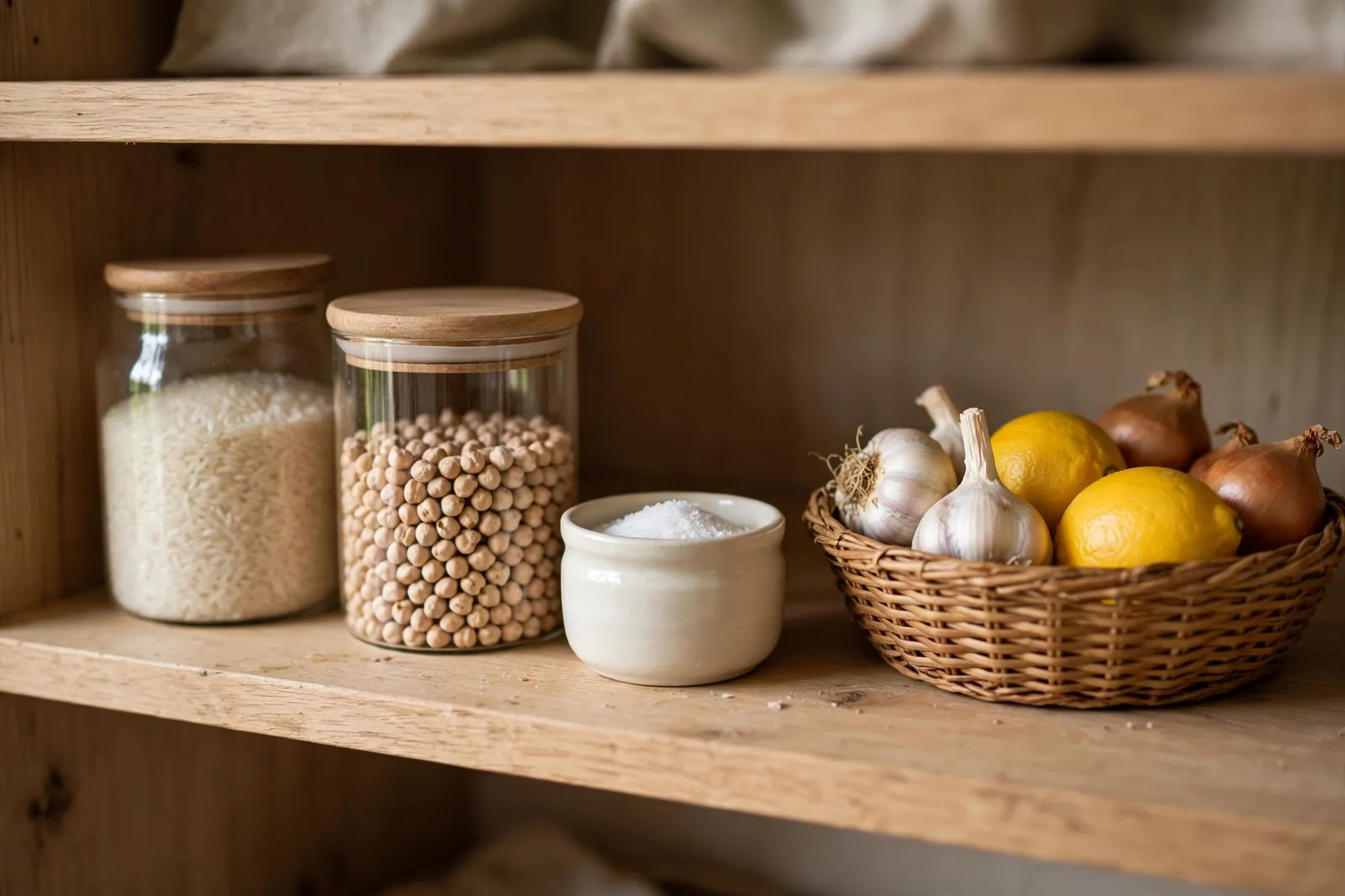
Airtight containers work great for things like flour, sugar, rice, and cereal. They keep food fresh longer and look tidy on the shelf. You do not need matching sets — start with a few and add more as you figure out what works for your space.
4. Label Everything in Plain Words
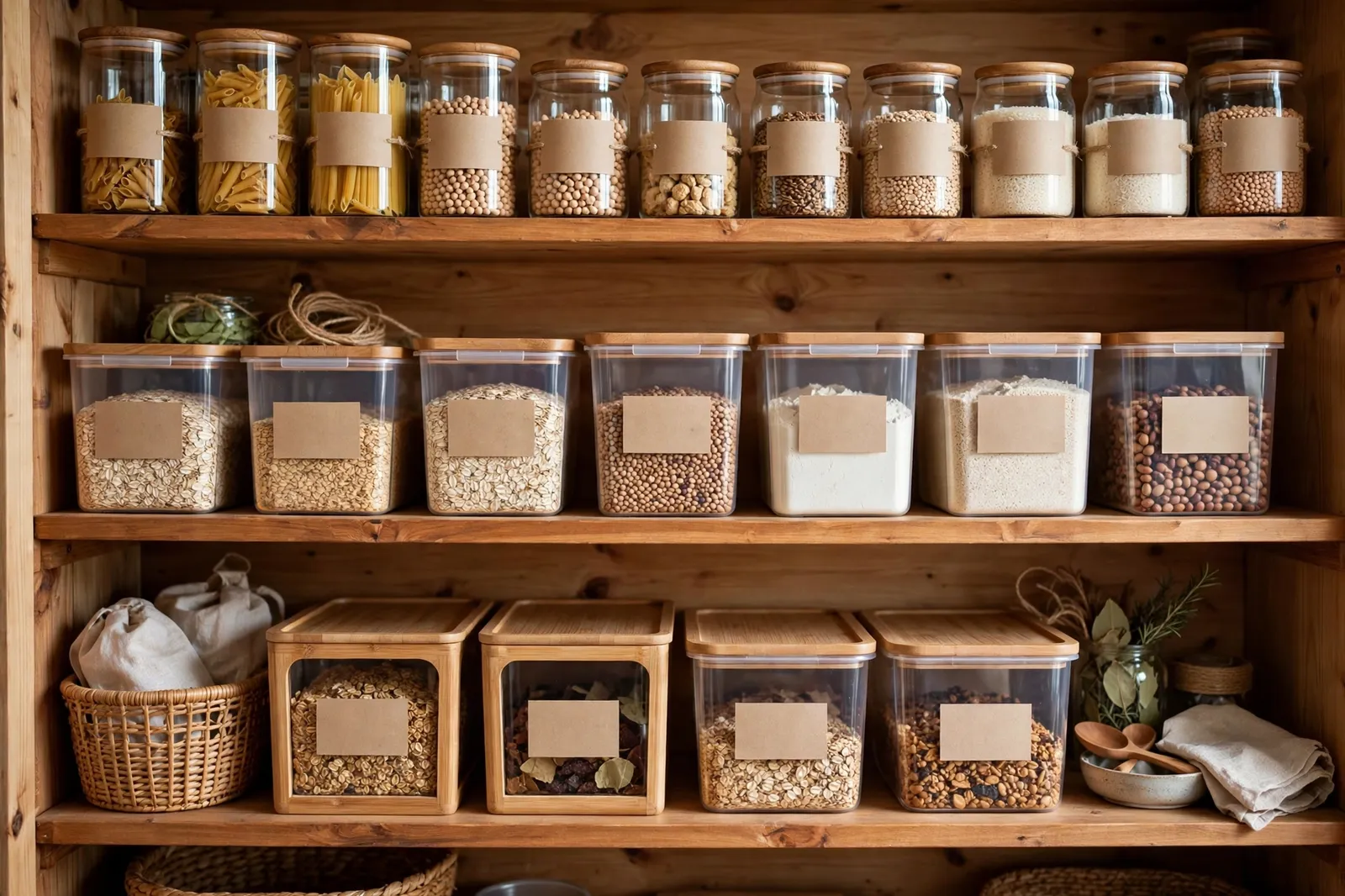
Labels sound fussy, but they are what keep a pantry organized after the first week. A simple label on a bin or jar tells everyone in the house where things go, so the system does not fall apart the minute you are not the one putting groceries away.
Keep the labels simple and easy to read — “Pasta,” “Snacks,” “Baking” is all you need. A piece of masking tape and a marker works just fine, or you can use a label maker if you have one. The point is that anyone can find things and put them back without thinking.
5. Keep Everyday Items at Eye Level
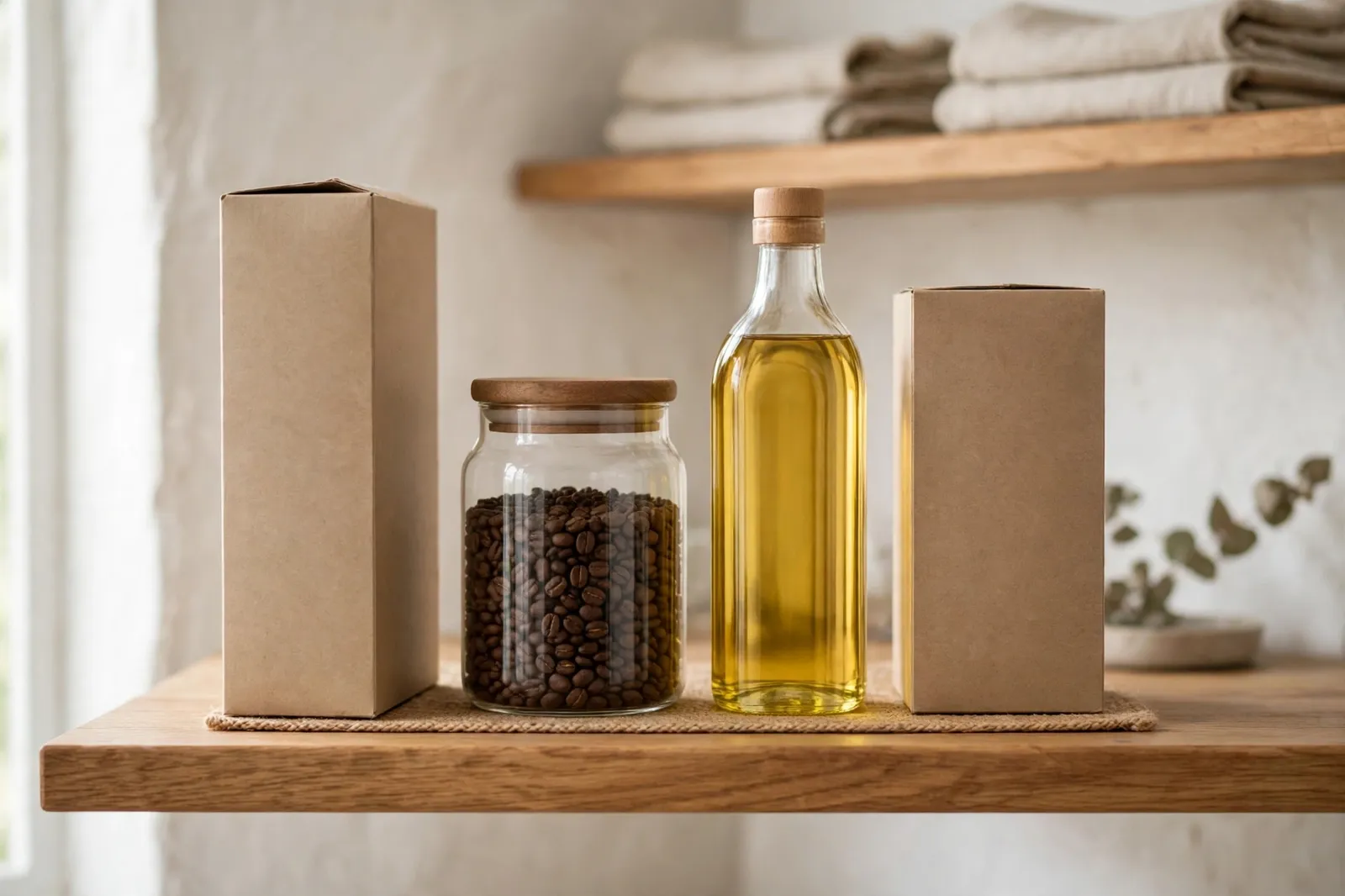
The things you grab every day should be the easiest to reach. Put your coffee, cereal, cooking oil, and go-to spices at eye level, right where your hand lands when you open the door. It sounds obvious, but most pantries have the daily stuff buried behind things that get used once a month.
Save the top shelf for the things you rarely need — the holiday baking supplies, the extra paper towels, the big pot you use twice a year. And put the heavy stuff low, where it is safe to lift. When the layout matches how you actually cook, the pantry starts to feel like it is working with you.
6. Use the Door and the Vertical Space
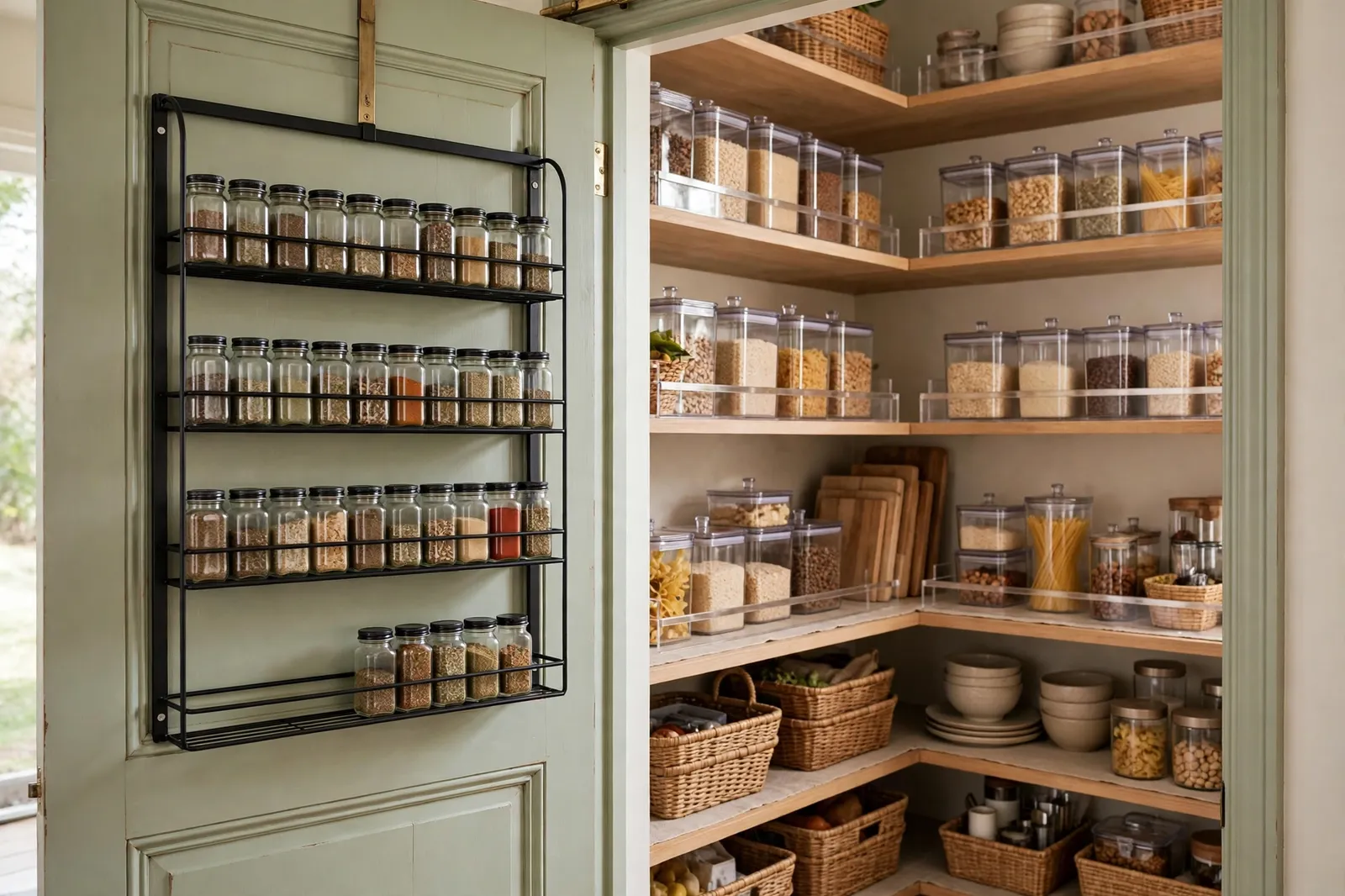
The inside of the pantry door is free storage, so use it. A simple over-the-door rack can hold spices, small jars, or packets that would otherwise get lost on a shelf. It is one of the cheapest ways to add space without changing anything else.
Look up, too. Shelf risers and small stackable shelves let you use the tall gaps between shelves instead of wasting them. A lazy Susan in a corner or on a deep shelf keeps things from hiding at the back. Small changes like these can nearly double the space you actually use.
7. Make Zones for Baking, Snacks, and Cooking
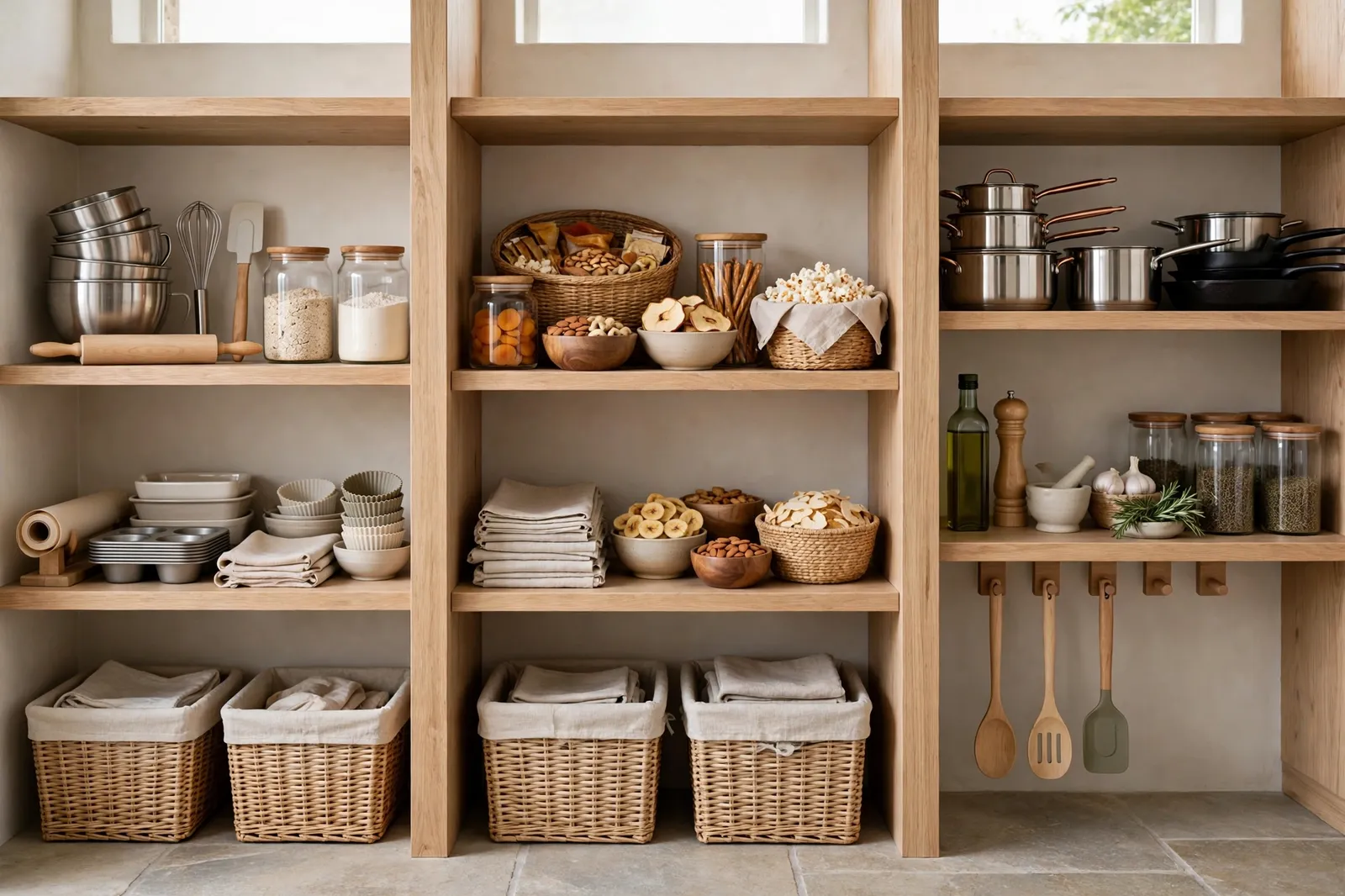
Zones make a pantry feel calm. Give baking its own shelf, snacks their own bin, and everyday cooking its own spot. When everything has a zone, you know exactly where to look, and putting groceries away takes a couple of minutes instead of a whole project.
Zones also help the rest of the family. Everyone knows where the snacks live, and anyone can help with dinner without asking where the rice is. You do not need a big pantry for this to work — even one shelf split into two or three zones makes a real difference.
8. Keep a Small Backup Stock
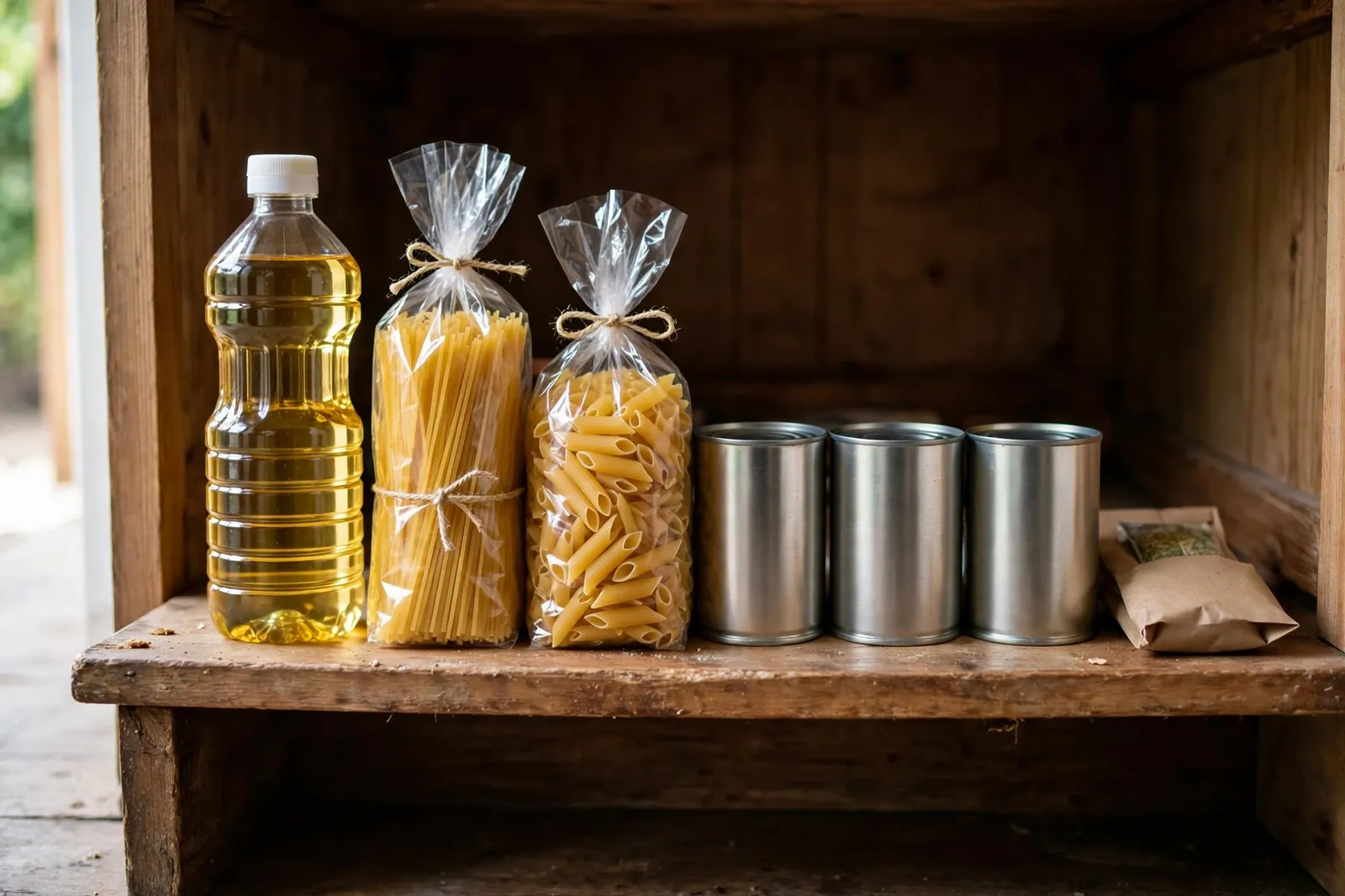
A little backup stock saves those mid-recipe trips to the store. Keep one extra of the things you always run out of — cooking oil, pasta, canned tomatoes, your favorite sauce — on a lower shelf or in a bin at the back. When you open the last one, move the backup forward and add it to the shopping list.
The trick is to keep the backup small. A pantry full of extras you never use is just clutter with a nicer name. Pick five or six staples you truly use every week, keep one spare of each, and leave the rest of the space for the food you are actually cooking with.
9. Do a Quick Weekly Reset
No pantry stays tidy on its own, so give it five minutes once a week. Pick a day — maybe before your grocery run — and pull out anything that is empty, expired, or in the wrong spot. Toss the crumbs, straighten the bins, and check what you are running low on.
That little reset is what makes the whole system last. It keeps small messes from turning into a full reorganization, and it means you always know what you have before you shop. Five minutes a week beats a whole afternoon of starting over.
Frequently Asked Questions
How do I start organizing a pantry that is a total mess?
Start by taking everything out and sorting it on the counter. Toss what is expired, group the rest by how you use it, and only put back what you actually need. A clean, empty shelf makes it much easier to set up a simple system that sticks.
What are the best containers for pantry storage?
Clear, airtight containers work best for staples like flour, rice, and cereal, because you can see what is inside and the food stays fresh. For everything else, simple open bins are great for grouping snacks, pasta, and packets. You do not need matching sets — start with a few and add more later.
How do I keep my pantry organized long-term?
Do a quick five-minute reset once a week, before your grocery run. Toss anything empty or expired, put stray items back in their spots, and check what you are low on. Small, regular resets keep the system working without ever needing a big overhaul.
How can I organize a small pantry with no extra space?
Use the door for a spice rack, add shelf risers to use the vertical gaps, and keep only what you use every week. Group things into a few clear zones, and store rarely used items somewhere else in the kitchen so the pantry holds only the daily essentials.
Related ideas
How to Create Storage Without Making a Room Feel Crowded has smart ideas for adding storage that still feels light and open, and Small Entryway Ideas With Smart Storage shows how the same thinking works in a tight entryway. For the kitchen table area, Small Dining Room Ideas for Everyday Living pairs nicely with a pantry that finally makes sense. You might also like Home Organization Ideas for a Clutter-Free Home and Entryway Organization Ideas for Busy Households.