How to Choose Bathroom Mirrors and Lighting
Picking the right mirror and the right light can change a bathroom more than almost anything else. A good mirror makes the room feel bigger and brighter, and good lighting makes it easy to get ready in the morning. Get either one wrong, though, and the bathroom can feel dark, cramped, or just plain hard to use.
The good news is that you do not need a big budget or a remodel to get this right. A few simple rules about size, shape, placement, and light will help you pick a mirror and lighting that work for your bathroom. Here is how to choose bathroom mirrors and lighting that look great and work every day.
1. Start With the Right Mirror Size
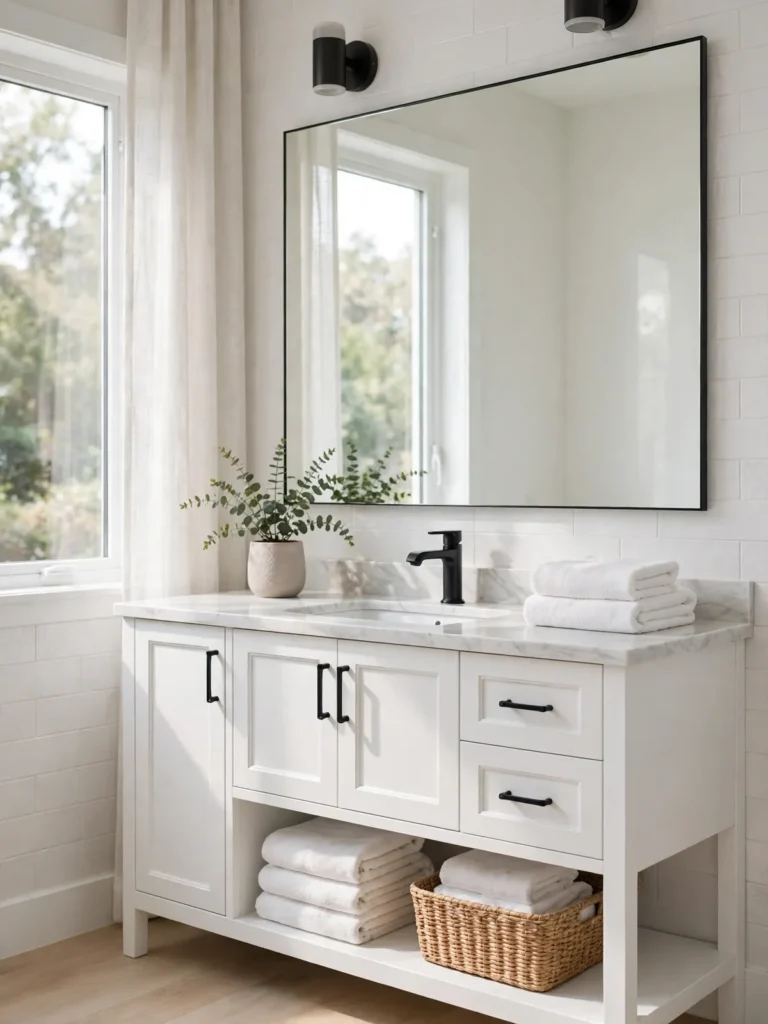
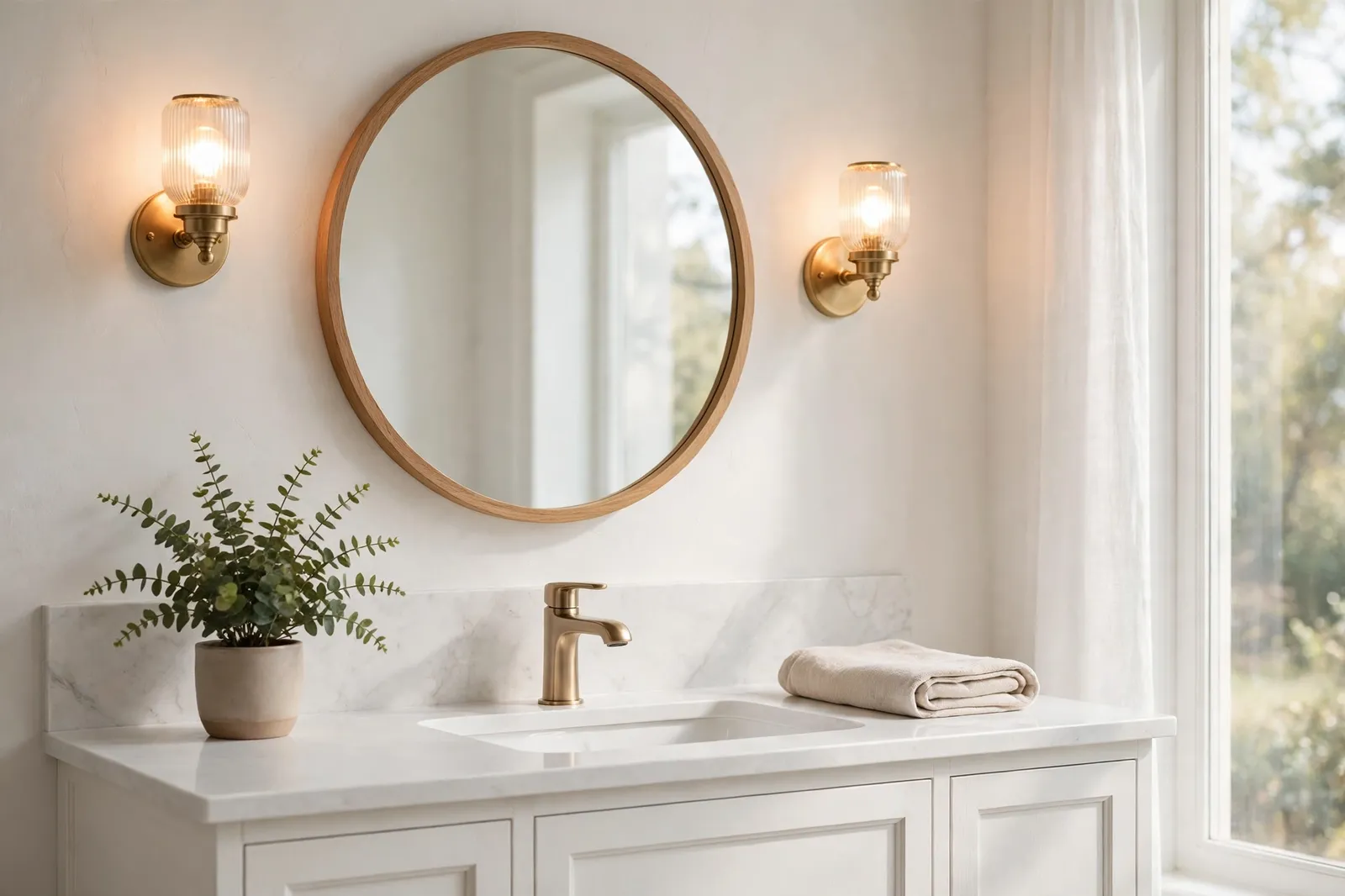
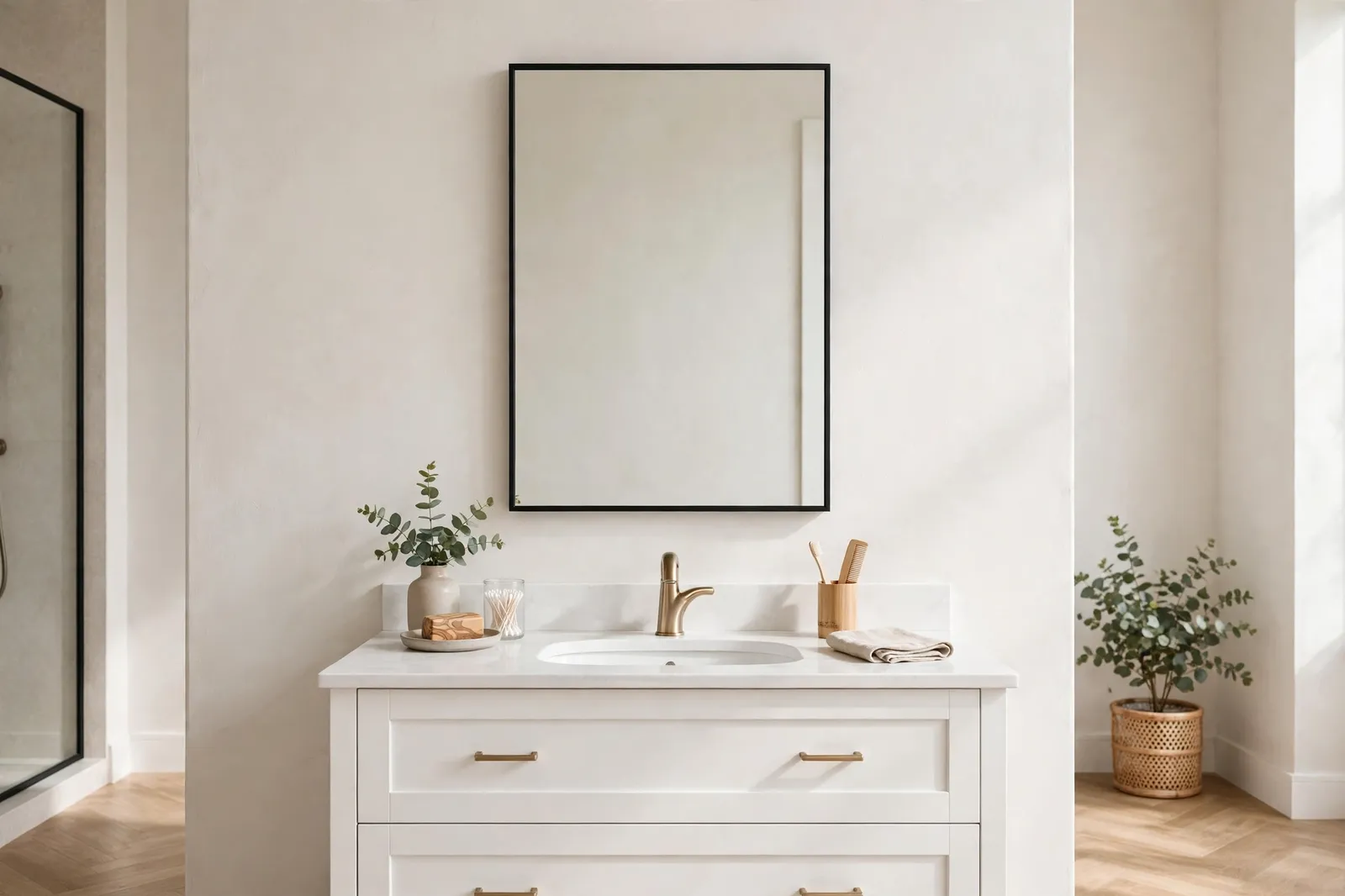
The first rule is simple: the mirror should fit the vanity, not the whole wall. A good starting point is a mirror that is a little narrower than the vanity below it, usually two to four inches narrower on each side. That leaves a small margin of wall on both sides and keeps the mirror from looking like it is taking over the room.
If you have a double vanity, you have two choices. One big mirror across the whole vanity looks clean and simple, or two matching mirrors, one over each sink, gives each person their own space. Both work well, so pick the one that fits your style and your budget. Just make sure the mirror does not hang lower than the faucet or higher than the ceiling allows.
2. Pick a Shape That Fits the Room
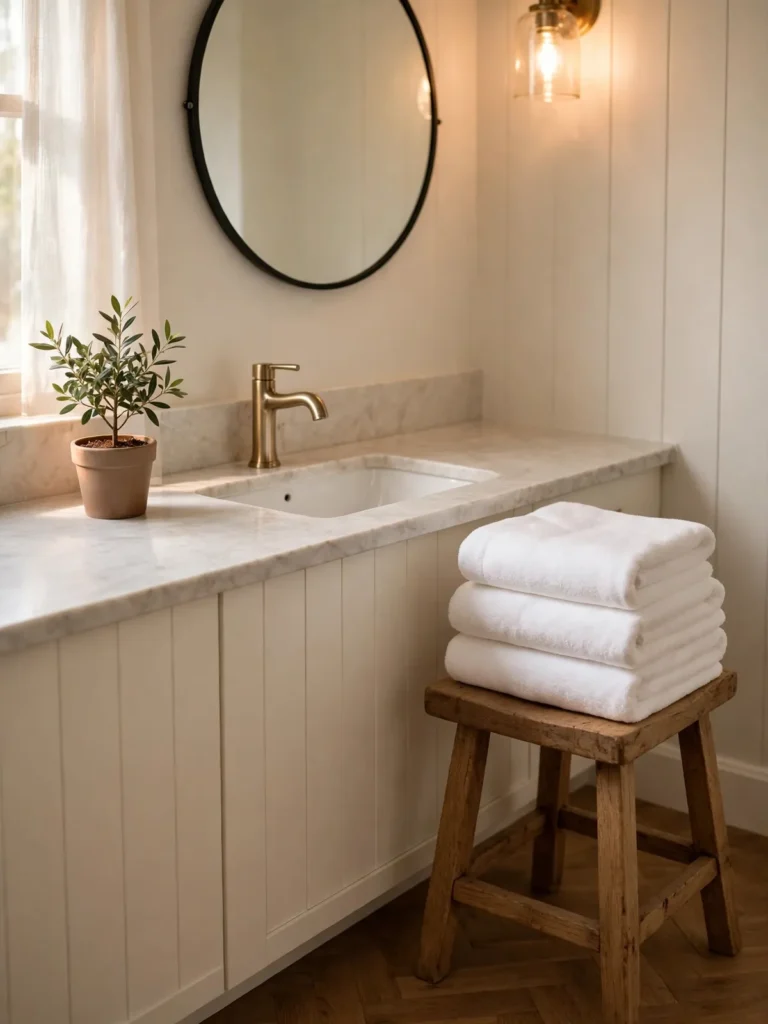
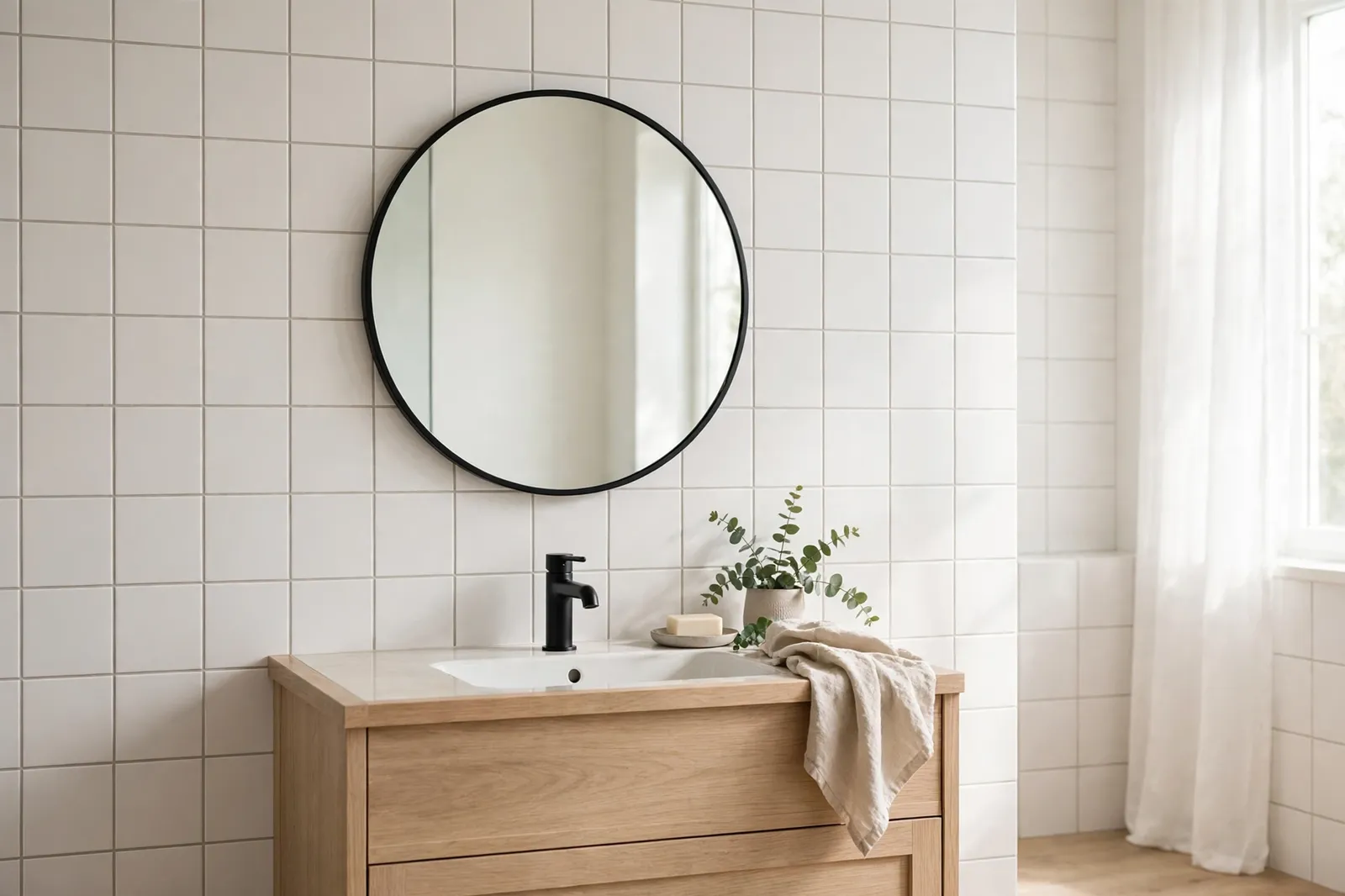
Round mirrors are a great pick for softening a bathroom full of straight lines and square tiles. They work well over a small vanity and add a bit of charm without taking up much visual space. An arched mirror gives a similar soft feel but with a little more height, which is nice if your ceiling is low.
Rectangular mirrors are the classic choice and they suit most bathrooms. A tall rectangle can make a low ceiling feel higher, while a wide one works well over a long vanity. Square mirrors fit nicely in small, boxy bathrooms where everything is about the same size. The shape does not have to match anything else in the room exactly, but it should feel balanced with the vanity and the wall around it.
3. Choose a Frame or Go Frameless
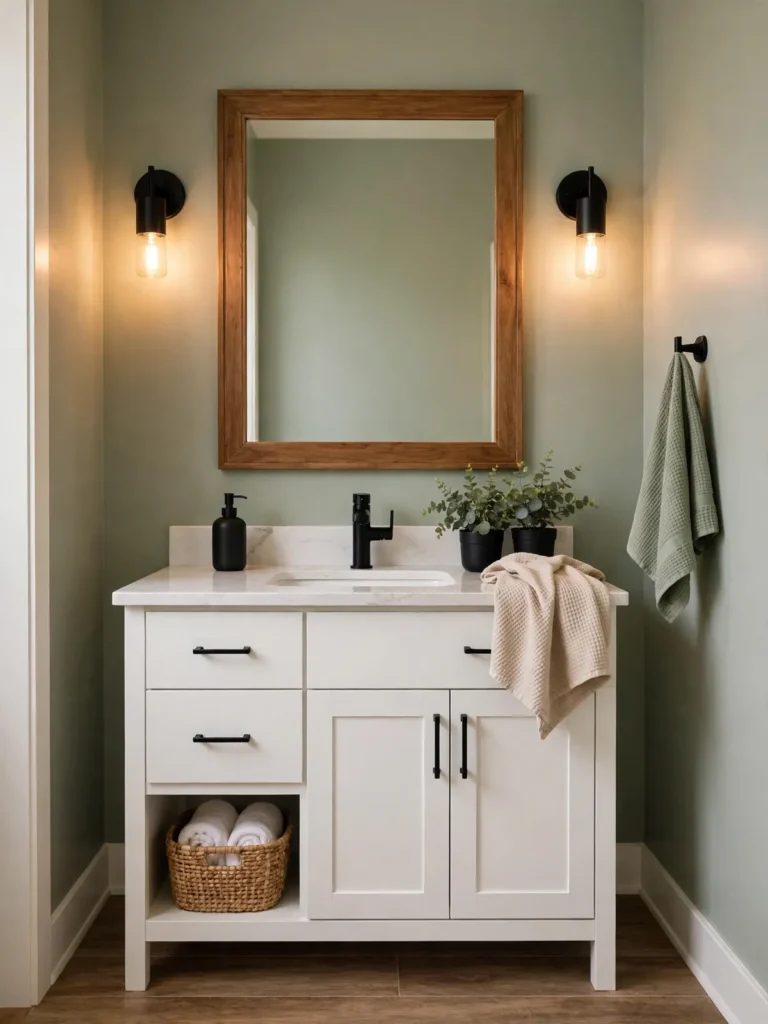
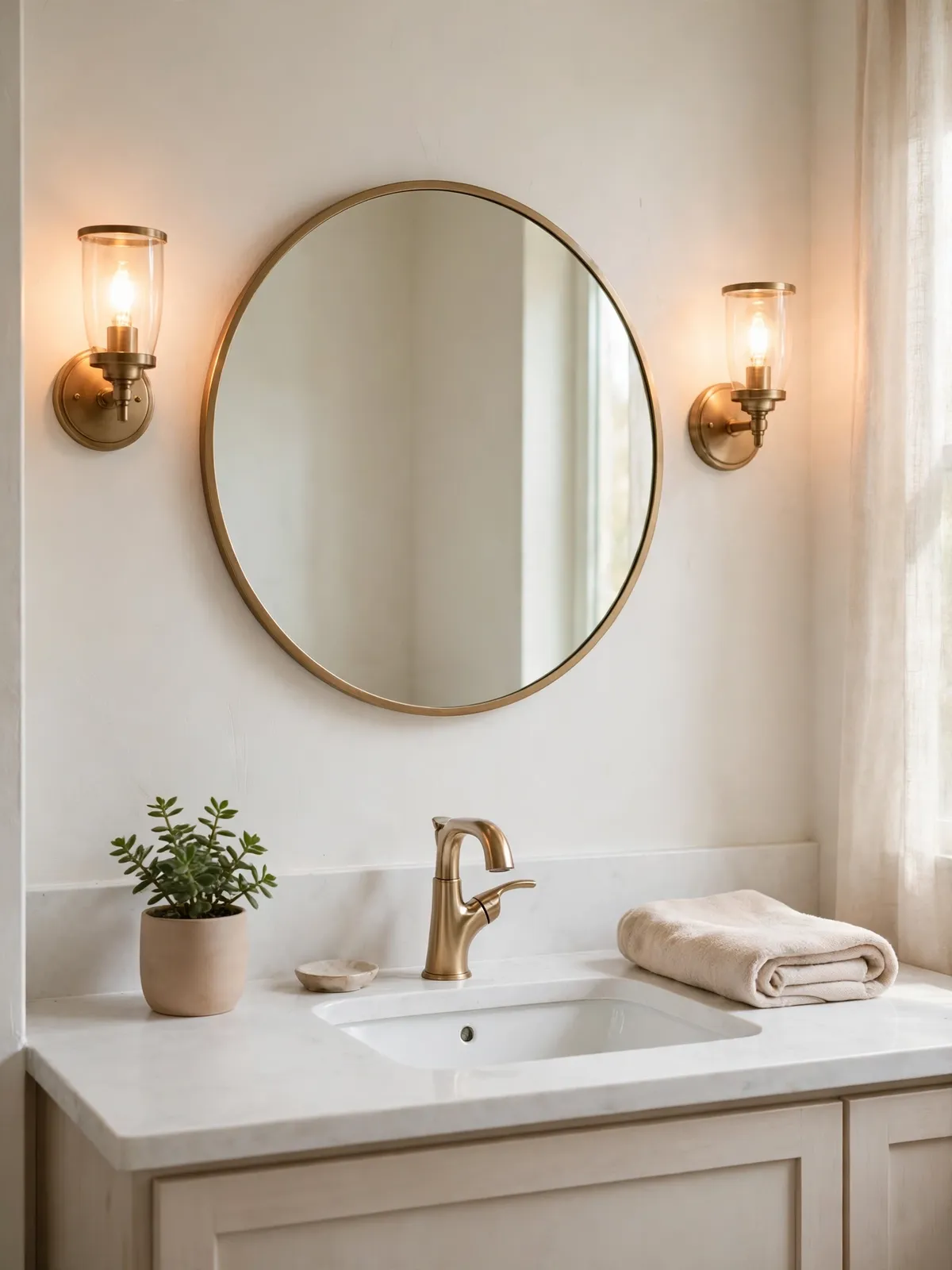
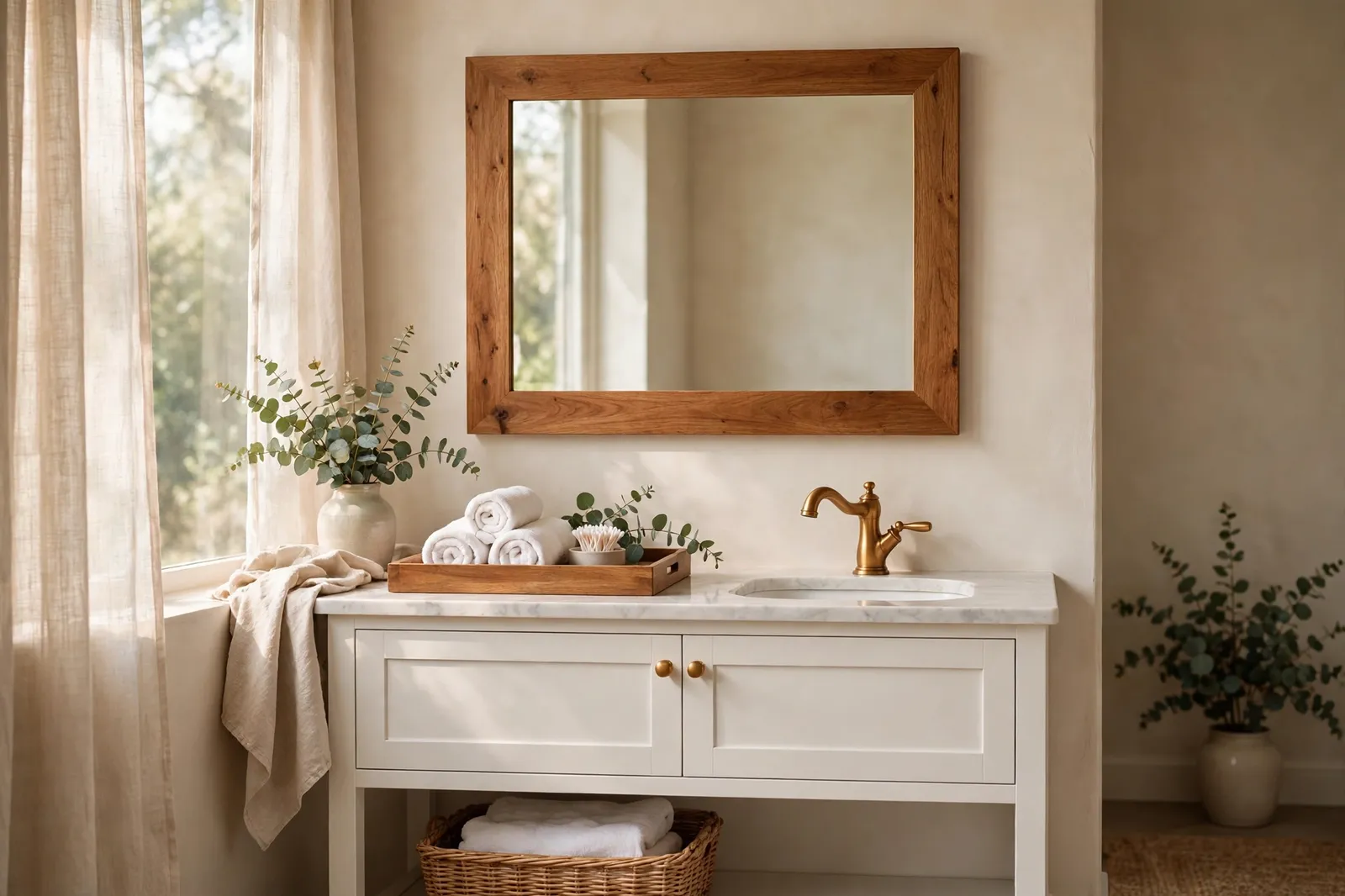
A framed mirror adds color and texture to the bathroom. A wood frame feels warm and works well in a cozy or farmhouse-style bathroom, while a thin black metal frame looks clean and modern. A gold or brass frame adds a little shine and pairs nicely with matching faucets and hardware.
A frameless mirror is the simplest option and it works in almost any bathroom. It keeps the focus on the reflection instead of the frame, and it can make a small bathroom feel a little bigger because there is nothing breaking up the wall. Frameless mirrors are also easy to clean since there is no frame edge where dust and water can collect. If your bathroom already has a lot going on, a frameless mirror is often the calmest choice.
4. Hang the Mirror at the Right Height
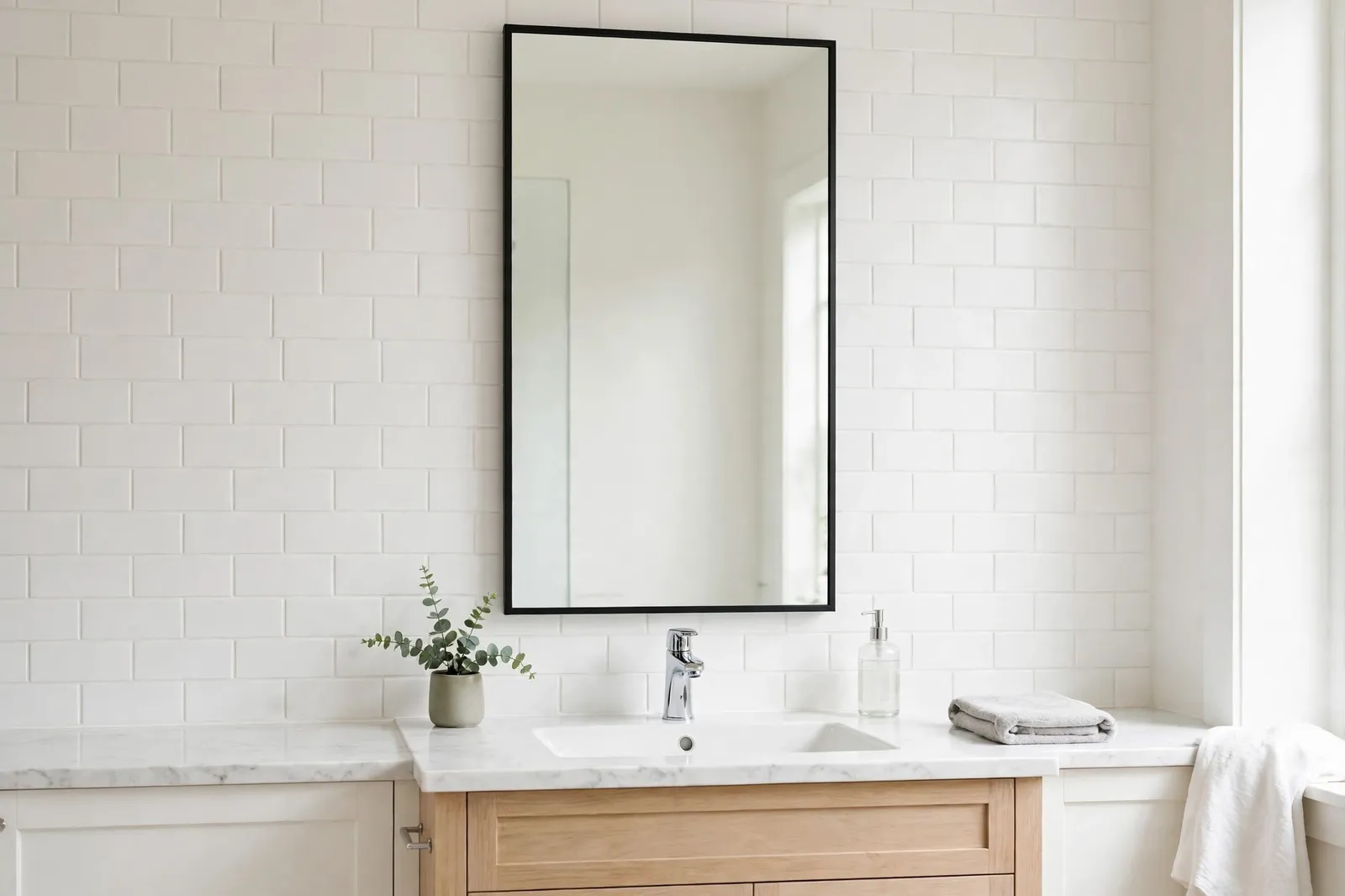
Mirror height matters more than most people think. The center of the mirror should sit at about eye level, which for most adults is around 57 to 60 inches from the floor. That way, everyone in the house can see their whole face without bending down or standing on their toes.
If the people using the bathroom are very different heights, aim for the middle. A taller mirror gives you more room to work with, since it covers a wider range of eye levels. Leave a few inches between the bottom of the mirror and the backsplash or faucet, so water splashes do not hit the mirror edge every day. A mirror hung too high is one of the most common bathroom mistakes, and it is easy to avoid.
5. Layer Your Bathroom Lighting
One ceiling light is almost never enough for a bathroom. Good bathroom lighting comes in layers: a light on the ceiling for general brightness, lights by the mirror for getting ready, and maybe a small accent light if the room is big enough. Each layer does a different job, and together they keep the bathroom from having dark corners or harsh shadows.
Start with the ceiling light, then add the mirror lights, which matter most. If you can only add one thing, add lights beside the mirror. They make the biggest difference in how you look and how easy it is to shave, put on makeup, or check your hair. A dimmer switch is a nice extra, since it lets you turn the lights down for a relaxing bath and up when you need to see clearly.
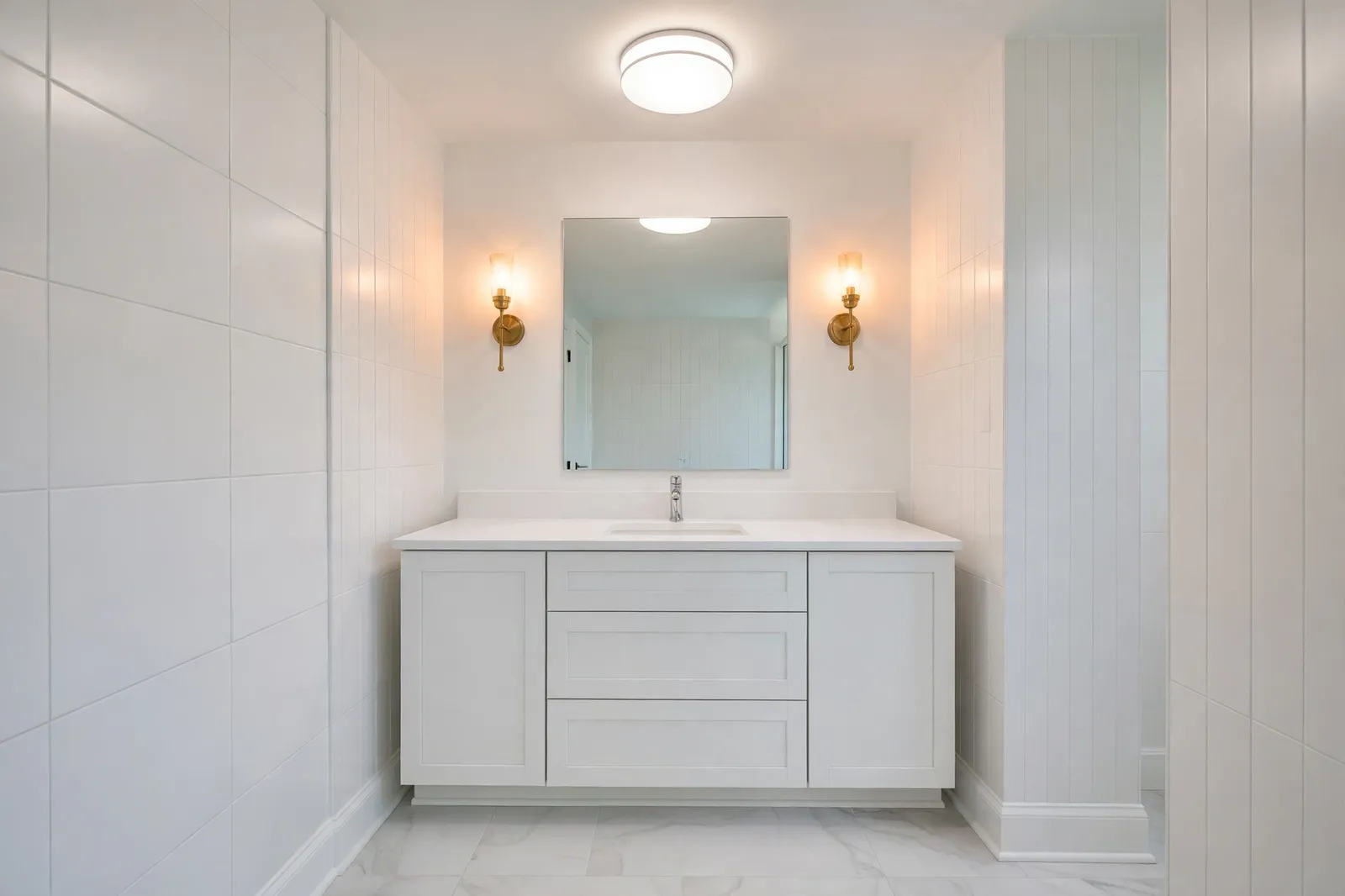
6. Put Lights Beside the Mirror, Not Just Above It
Lights above the mirror are common, but they are not the best on their own. A light shining down from above casts shadows under your eyes, nose, and chin, which makes it hard to see your face clearly. It also makes the light feel harsh, especially first thing in the morning.
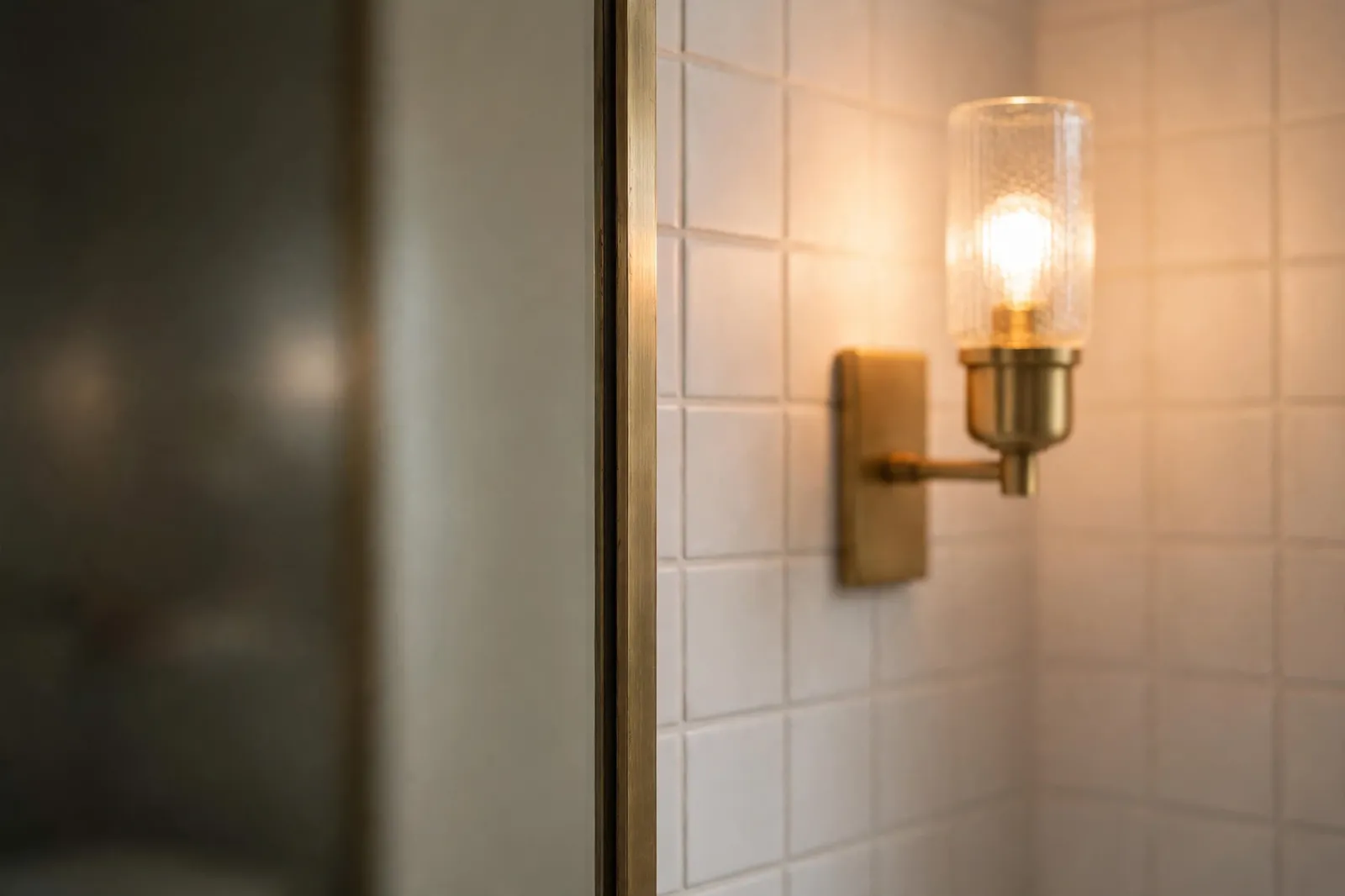
Sconces on either side of the mirror fix this problem. They shine light straight at your face from both sides, which fills in shadows and gives you even, natural-looking light. If you only have room for one fixture, a light bar above the mirror still works, but try to pick one that spreads light evenly and sits close to the mirror. Two sconces, one on each side, is the setup most people end up happiest with.
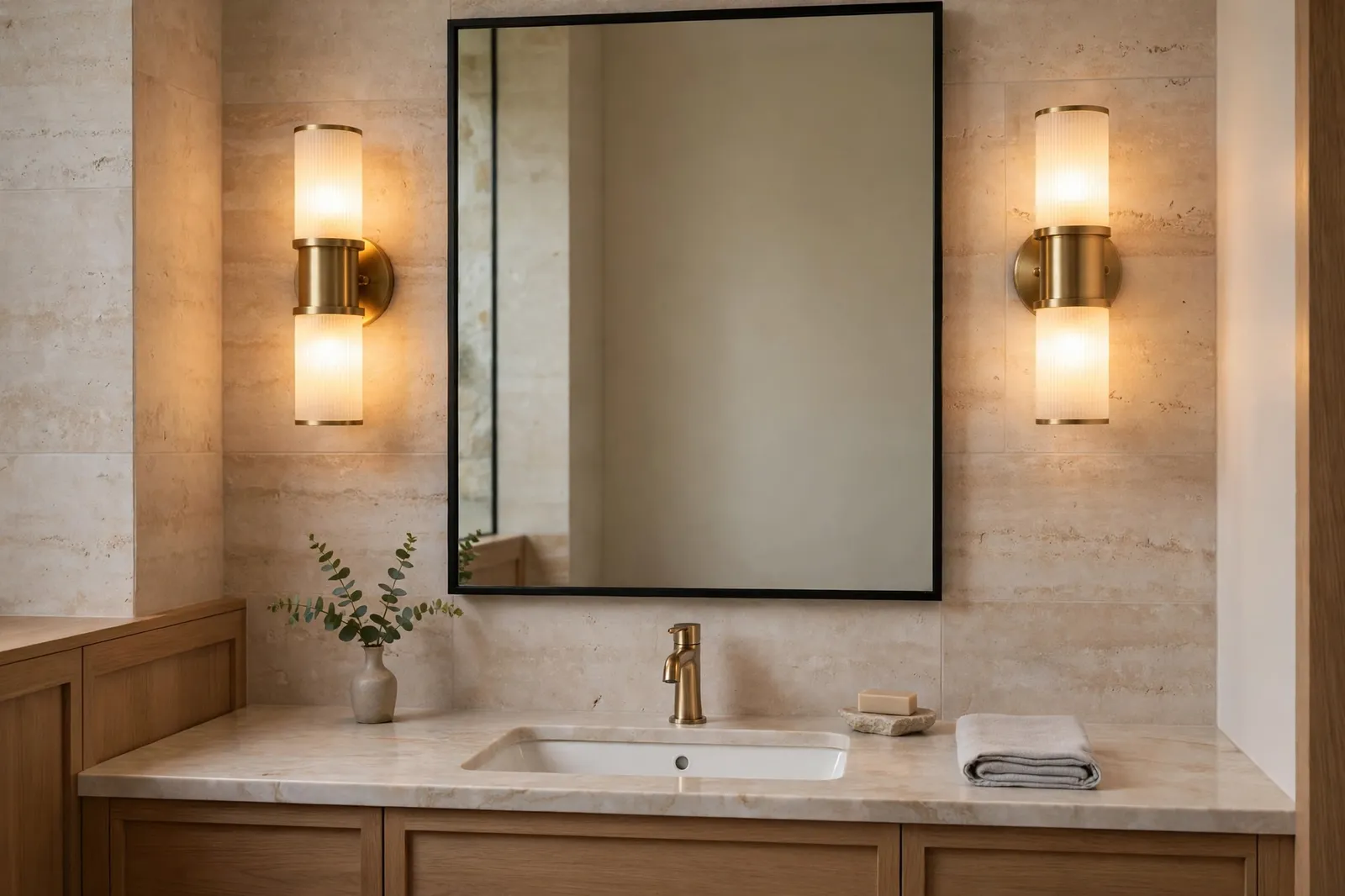
7. Pick the Right Brightness and Color
Bathroom lights should be bright enough to see clearly but not so bright that they hurt your eyes. Look for bulbs around 2700 to 3000 Kelvin, which give off a warm white light that looks a lot like daylight. That warm white is flattering on skin and makes the bathroom feel cozy instead of cold.
Avoid cool, blue-white bulbs in the bathroom. They can make skin look washed out and the whole room feel like an office. Also check the brightness, which is measured in lumens. A small bathroom needs around 1,500 to 2,000 lumens total, while a bigger bathroom may need more. If your lights feel dim, the fix is often just a brighter bulb, not a whole new fixture.
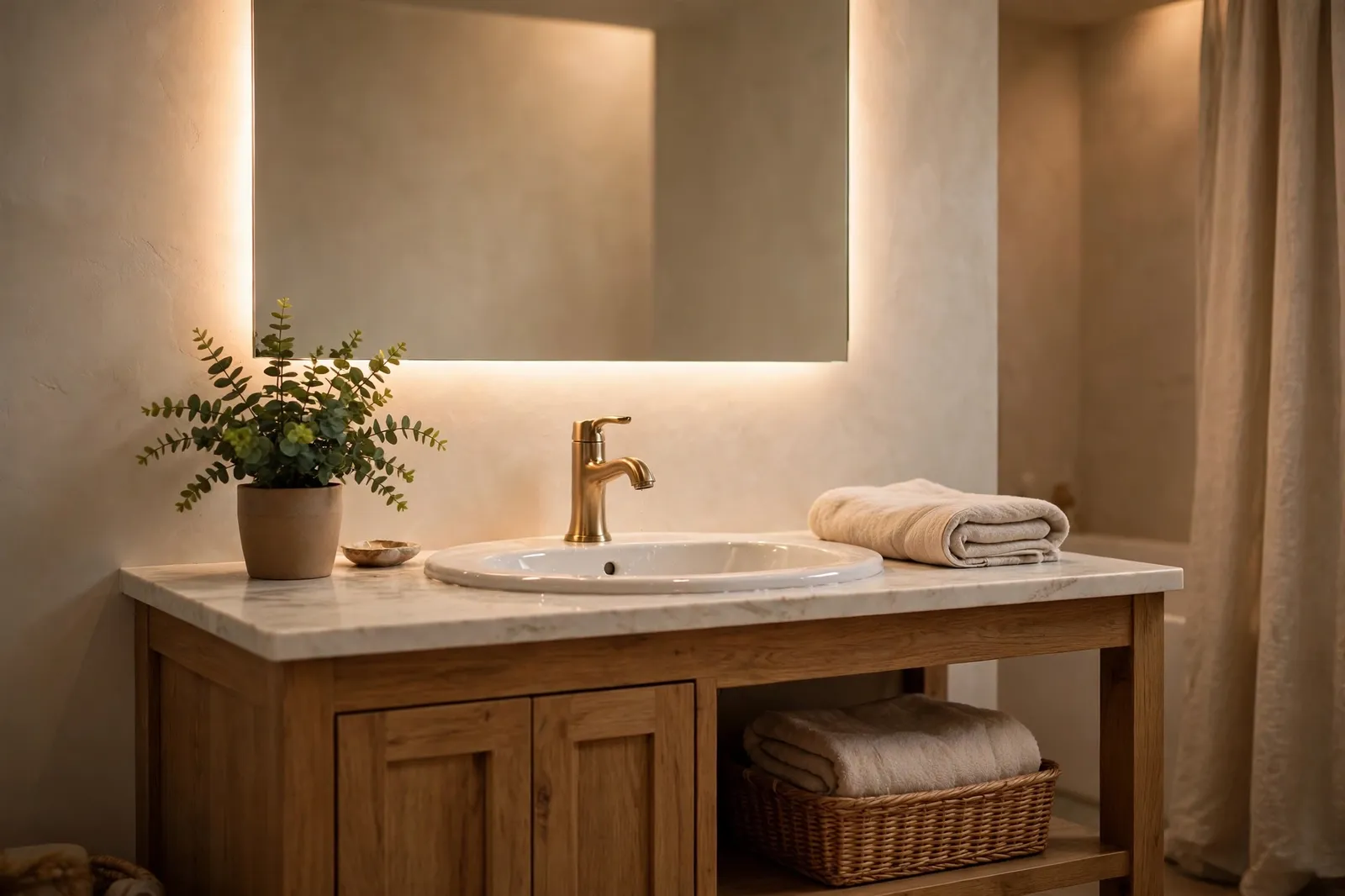
8. Match the Mirror and Lights to Your Style
The mirror and the lights should feel like they belong together and belong in your bathroom. If your faucets are brushed nickel, pick a mirror frame and light fixtures in the same finish, or in a finish that goes well with it. Matching finishes make the whole bathroom look planned and put together.
You do not have to buy a matching set from one store. Just keep the finishes close and the styles in the same family. A modern bathroom looks best with clean, simple fixtures, while a more traditional bathroom suits curved frames and warmer finishes. If you are not sure, a simple round mirror with a thin black frame and two matching sconces is a safe combo that works in almost any bathroom.
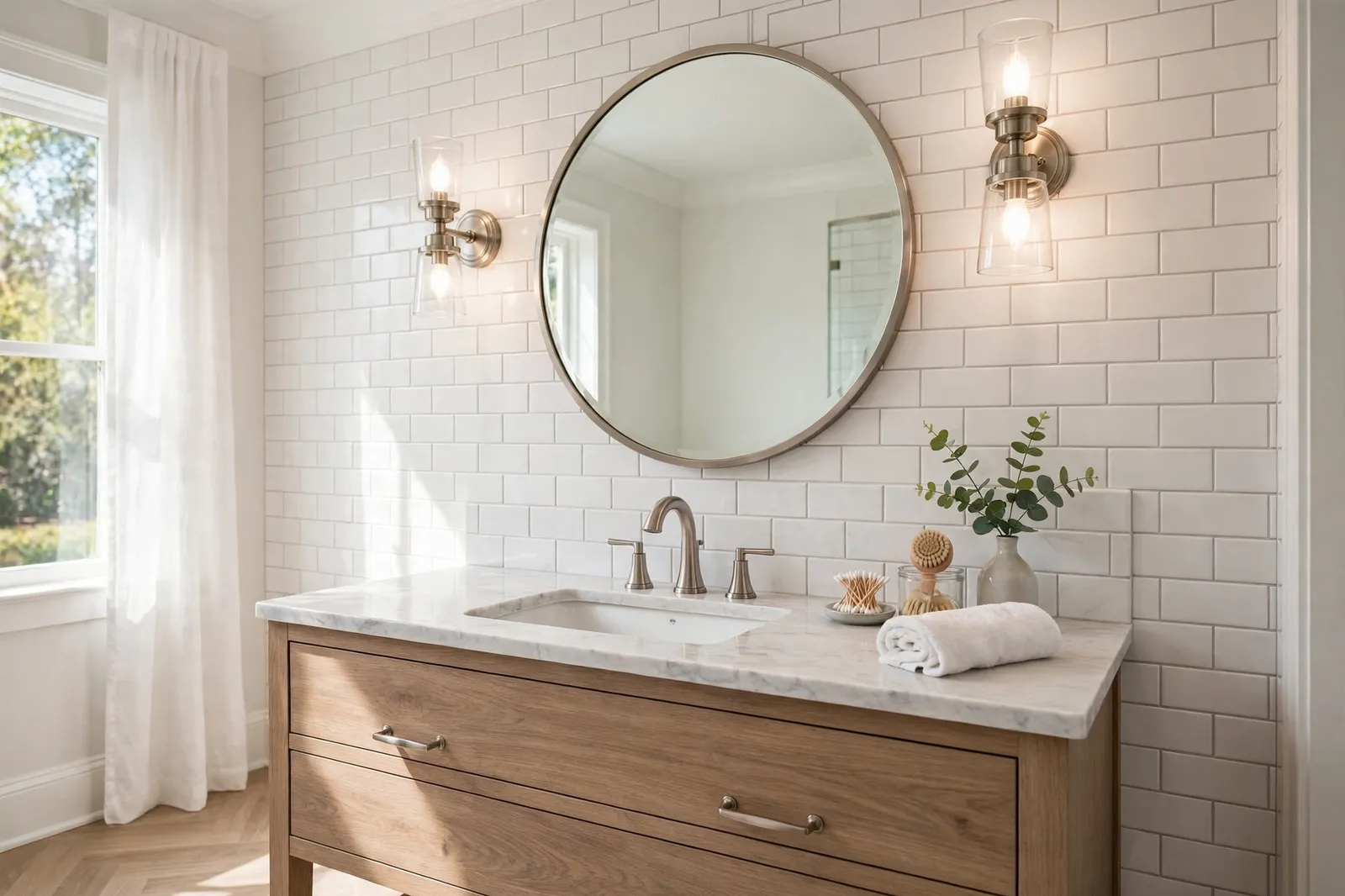
9. Small Bathroom Mirror and Lighting Ideas
Small bathrooms benefit the most from a good mirror and good lighting. A large mirror on one wall can almost double how big the room feels, especially if it catches light from a window or a bright fixture. A mirror that goes nearly to the ceiling makes the walls feel taller too.
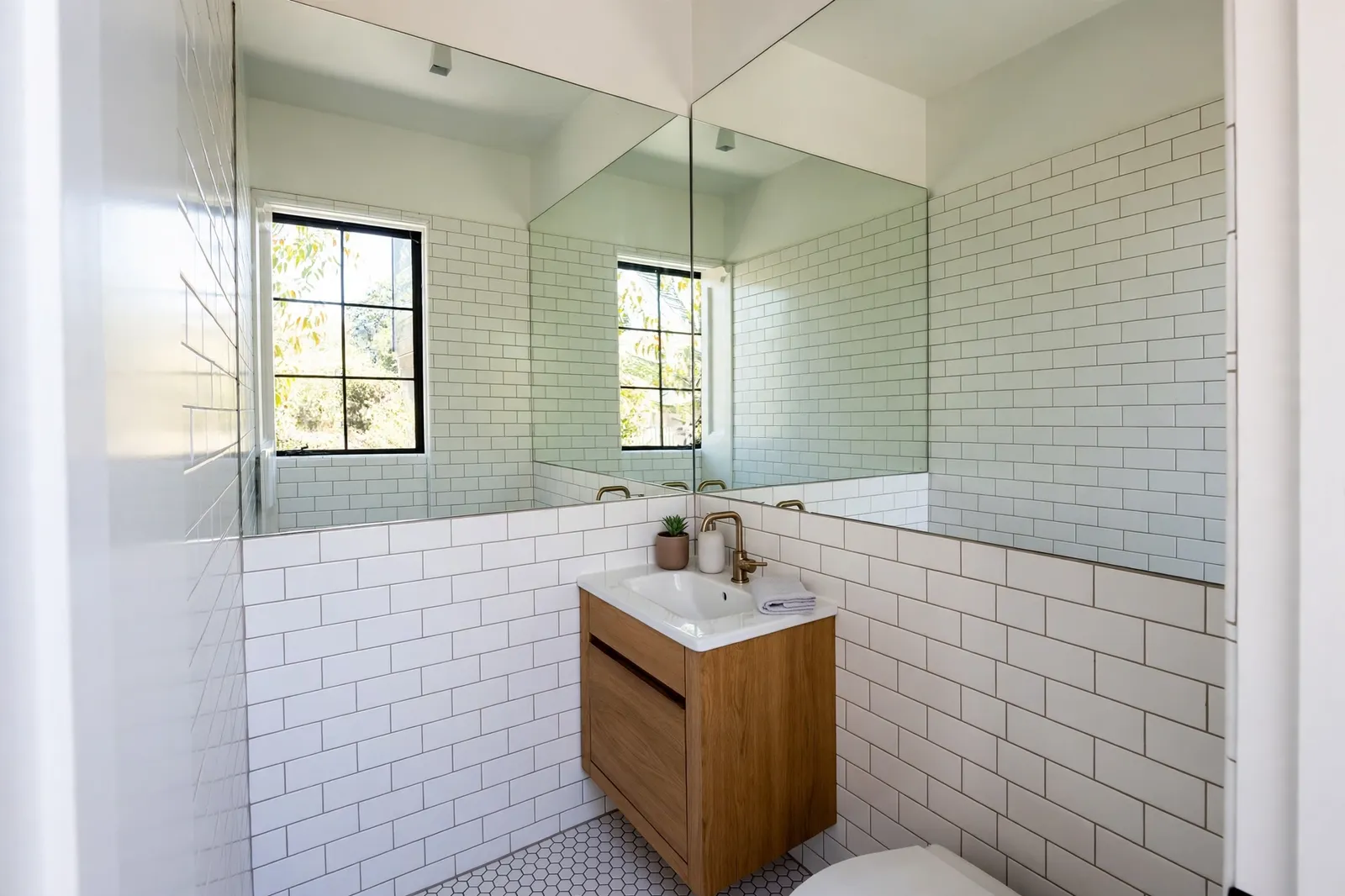
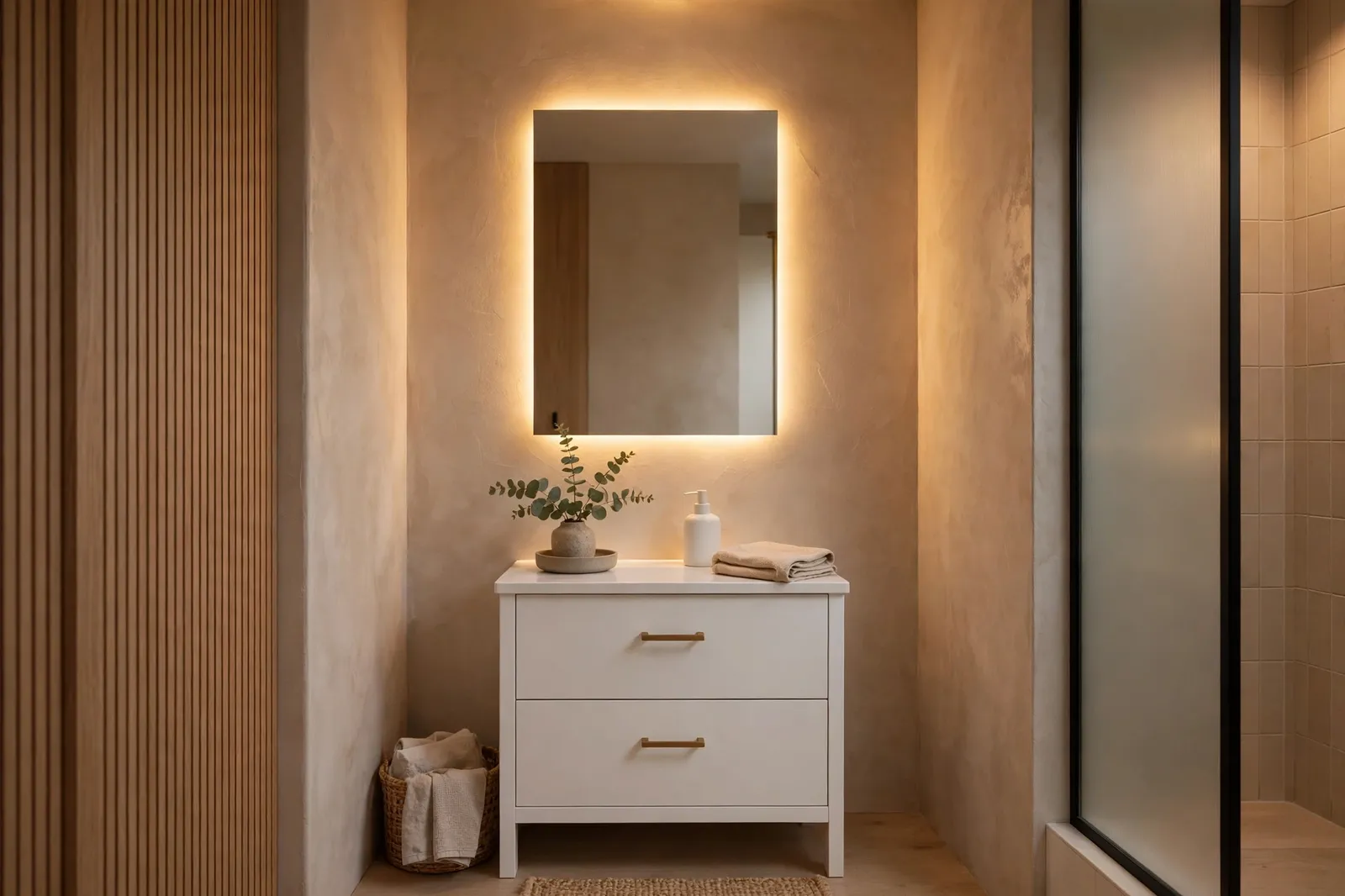
For lighting in a small bathroom, keep it simple. One bright ceiling light plus two small sconces beside the mirror is usually plenty. Skip big chandeliers or bulky fixtures that eat up space. A backlit mirror is another smart pick for a small bathroom, since it gives you light and a mirror in one piece and takes up no extra room on the wall.
Frequently Asked Questions
What size mirror should I choose for my bathroom vanity?
Pick a mirror that is two to four inches narrower than your vanity on each side. For a single vanity, one mirror centered over the sink works best, and for a double vanity you can use one wide mirror or two matching mirrors, one over each sink.
Where should bathroom lights go around a mirror?
Put sconces on either side of the mirror at about eye level, around 60 to 65 inches from the floor. Side lighting gives even light on your face without harsh shadows, and it works much better than a single light above the mirror alone.
What color light is best for a bathroom?
Warm white light around 2700 to 3000 Kelvin is best for most bathrooms. It looks close to daylight, flatters skin tones, and keeps the room feeling warm and cozy instead of cold and washed out like cool blue-white bulbs can.
Can a mirror make a small bathroom look bigger?
Yes, a large mirror can make a small bathroom feel much bigger, especially when it reflects light from a window or a bright fixture. Hang it so it catches the light, and keep the frame simple so the mirror itself does the work.
Related ideas
Small Bathroom Decor Ideas That Make a Big Difference shows how a good mirror and the right lights can open up even the tiniest bathroom. See Bathroom Decorating Ideas for Every Size and Style for ideas on pulling your mirror, lighting, and the rest of the room together. See How to Style Bathroom Countertops Without Clutter for keeping the counter under your new mirror tidy and calm. See Bathroom Shelf Decor Ideas for Functional Storage for shelves that keep your mirror area tidy. See Bathroom Color Schemes for a Fresh, Timeless Look for colors that work beautifully with your mirror and lights.