Bedroom Color Schemes for a Relaxing Atmosphere
Color is one of the first things you notice in a bedroom, and it affects how restful the room feels. Soft, muted colors tend to calm the mind, while very bright or clashing colors can make it harder to wind down. That does not mean a relaxing bedroom has to be boring — it just means the colors should work together quietly.
The best bedroom schemes are simple: one main color, one supporting color, and a small accent. Pick colors you actually like living with, not just colors that look good in a photo, because you will see them first thing in the morning and last thing at night. The schemes below are a good place to start.
1. Why Color Affects How Well You Relax
Color affects mood in a simple, everyday way: bright, high-contrast rooms feel energetic, while soft, low-contrast rooms feel calm. In a bedroom, calm is usually what you want. Pale blues, soft greens, warm neutrals, and dusty pinks all lower the visual noise in a room, which helps it feel like a place to rest.
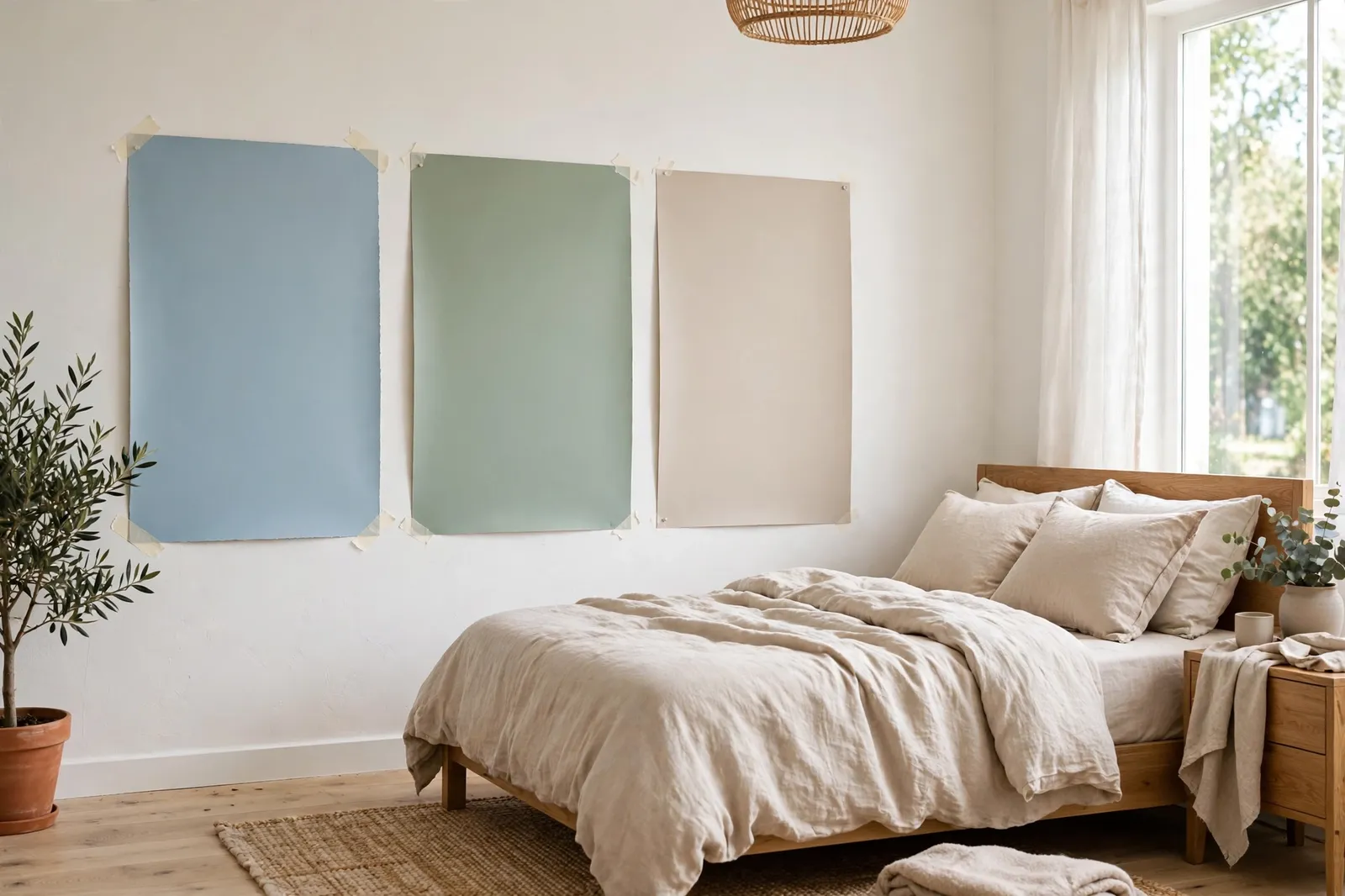
Light matters too. The same paint color looks different in morning light, evening light, and under a lamp. Before committing, paint a large sample on the wall and live with it for a couple of days. A color that looks relaxing in daylight but gloomy at night may need a lighter shade, or a warmer bulb, to work all day.
2. Soft Neutrals That Always Work
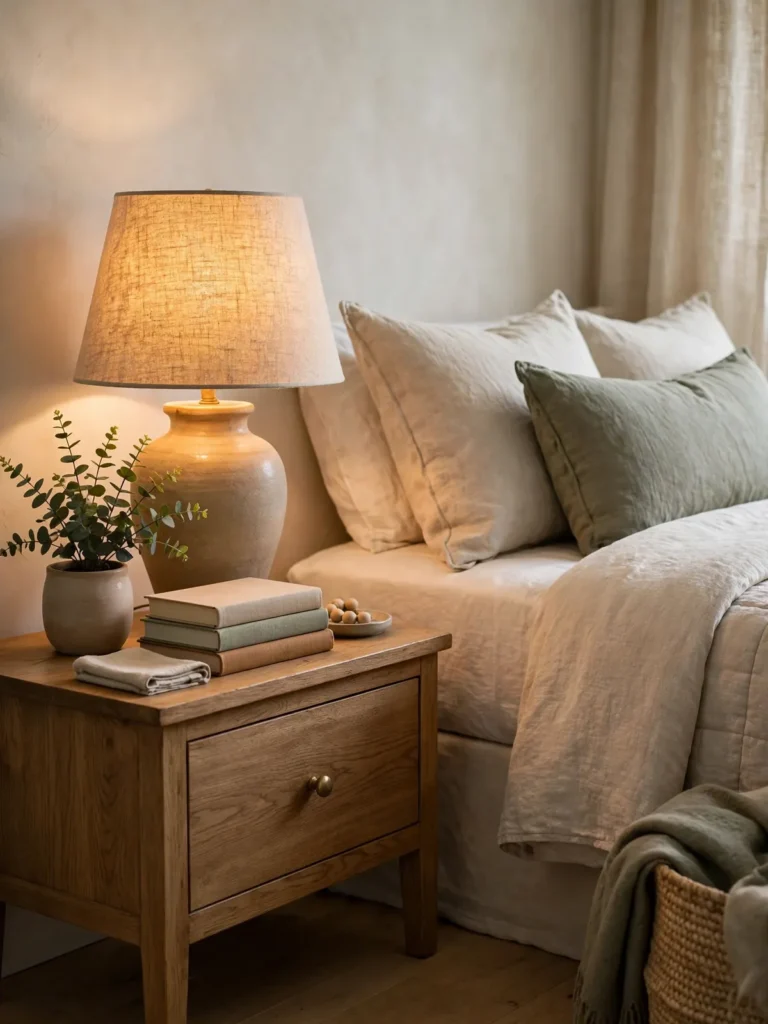
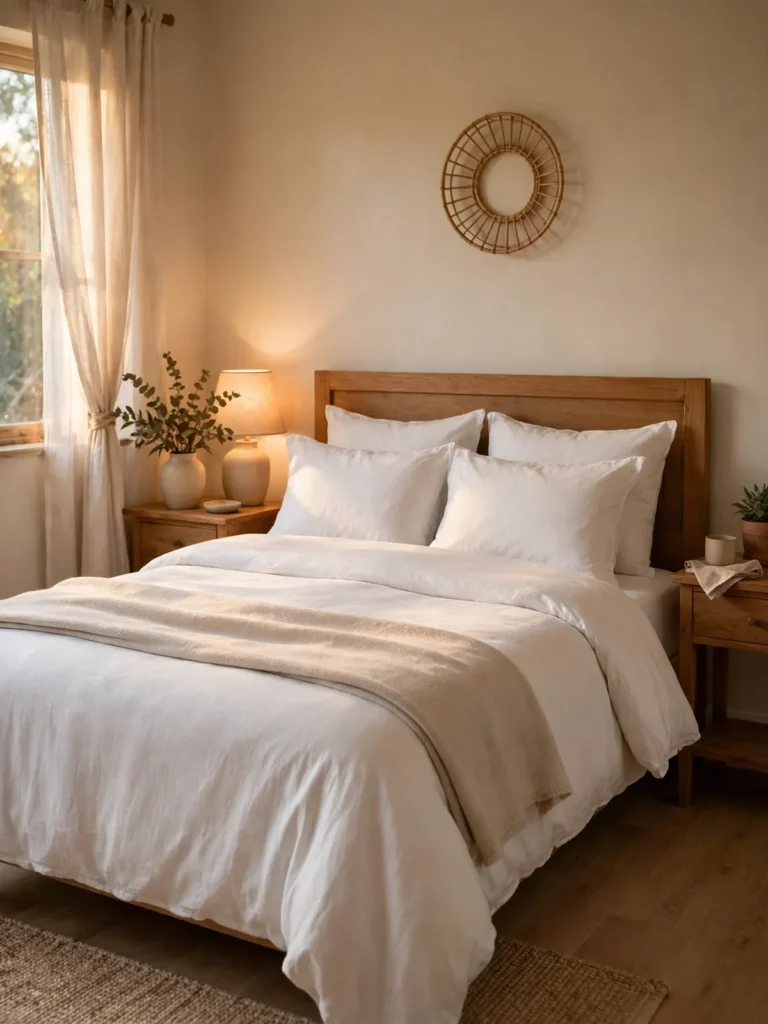
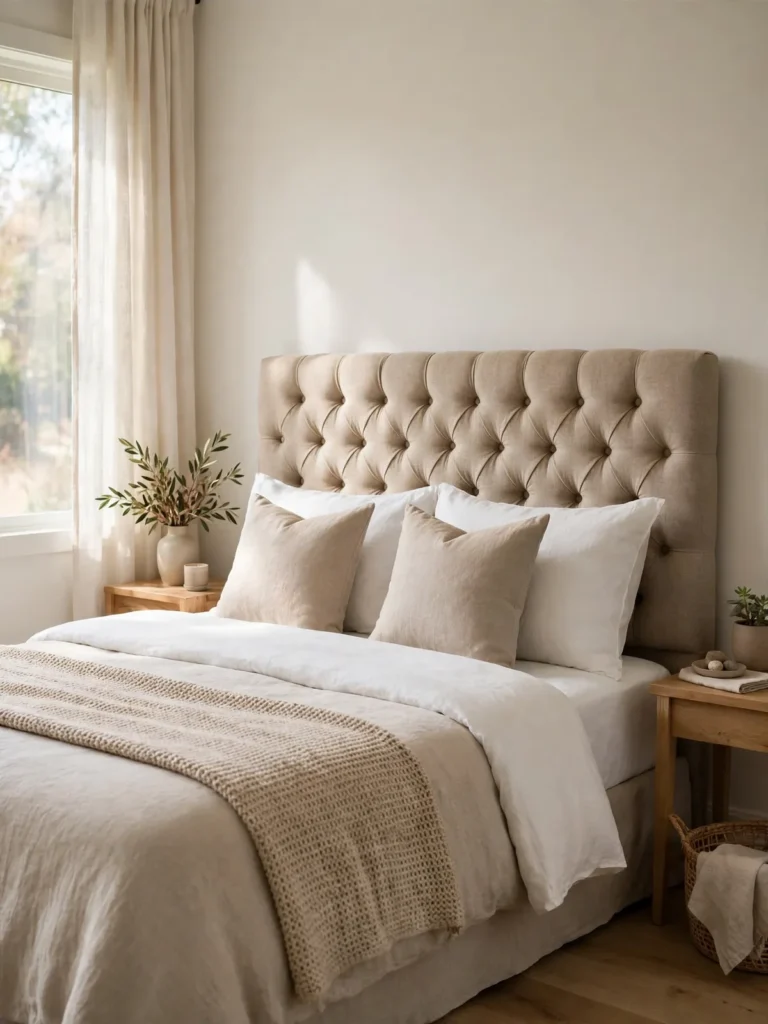
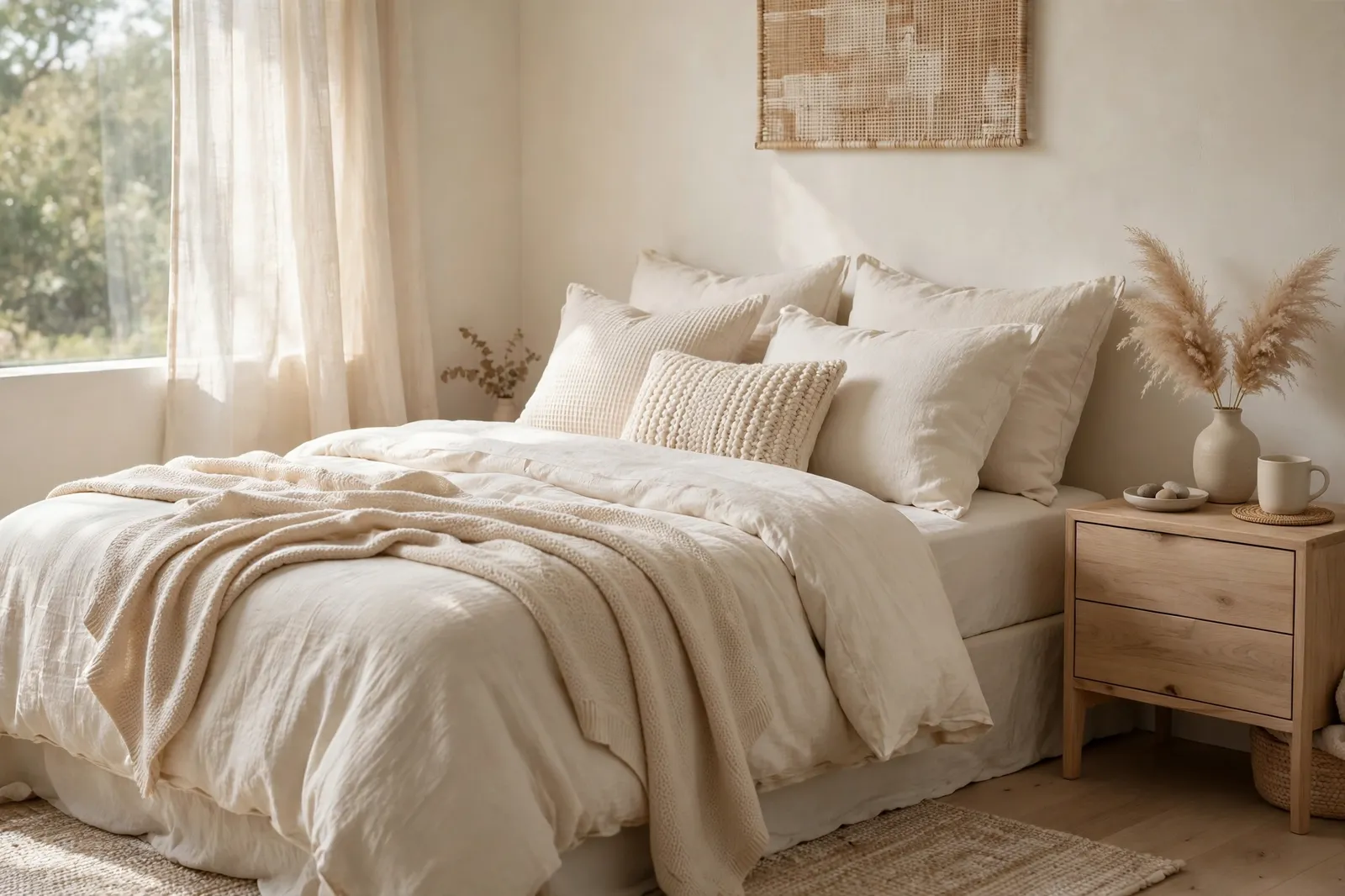
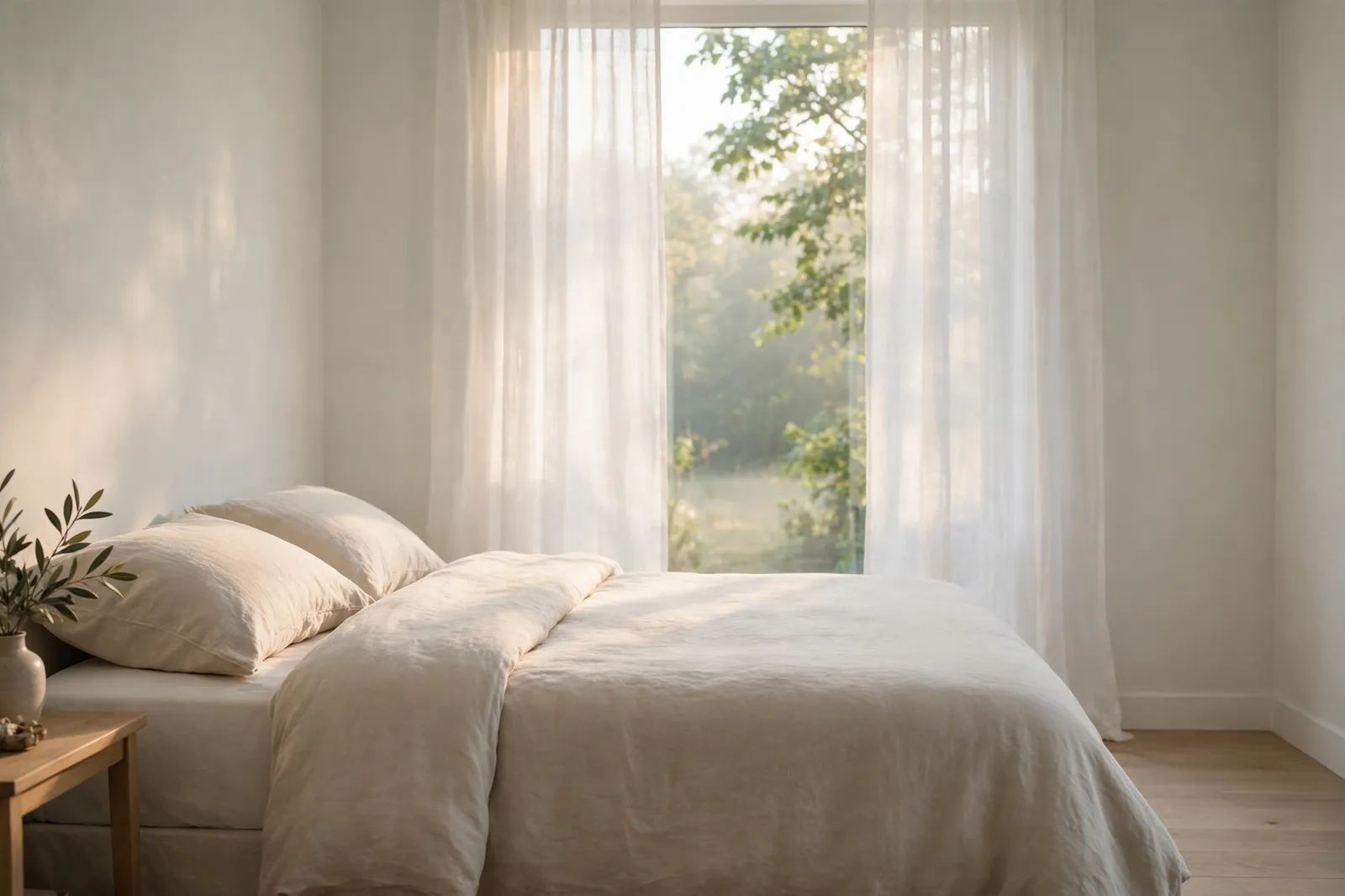
If you are not sure where to start, soft neutrals are the safest relaxing scheme. Warm white, cream, light beige, and pale greige (a mix of grey and beige) make a room feel clean, open, and calm. They also go with almost any furniture, which makes decorating the rest of the room much easier.
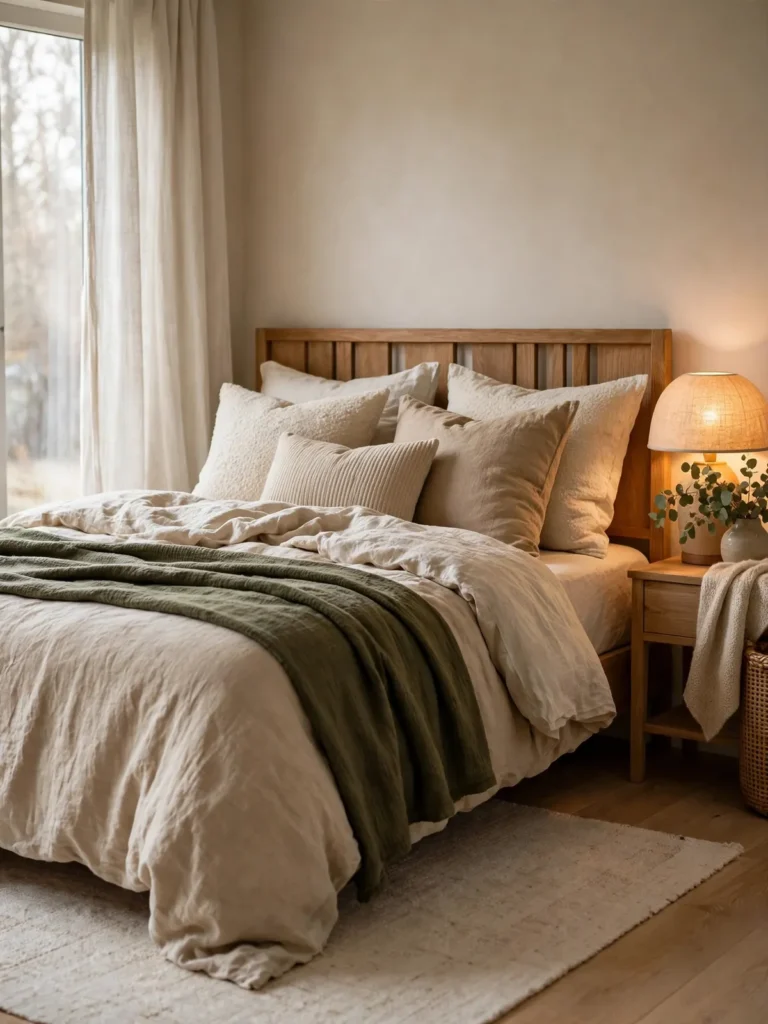
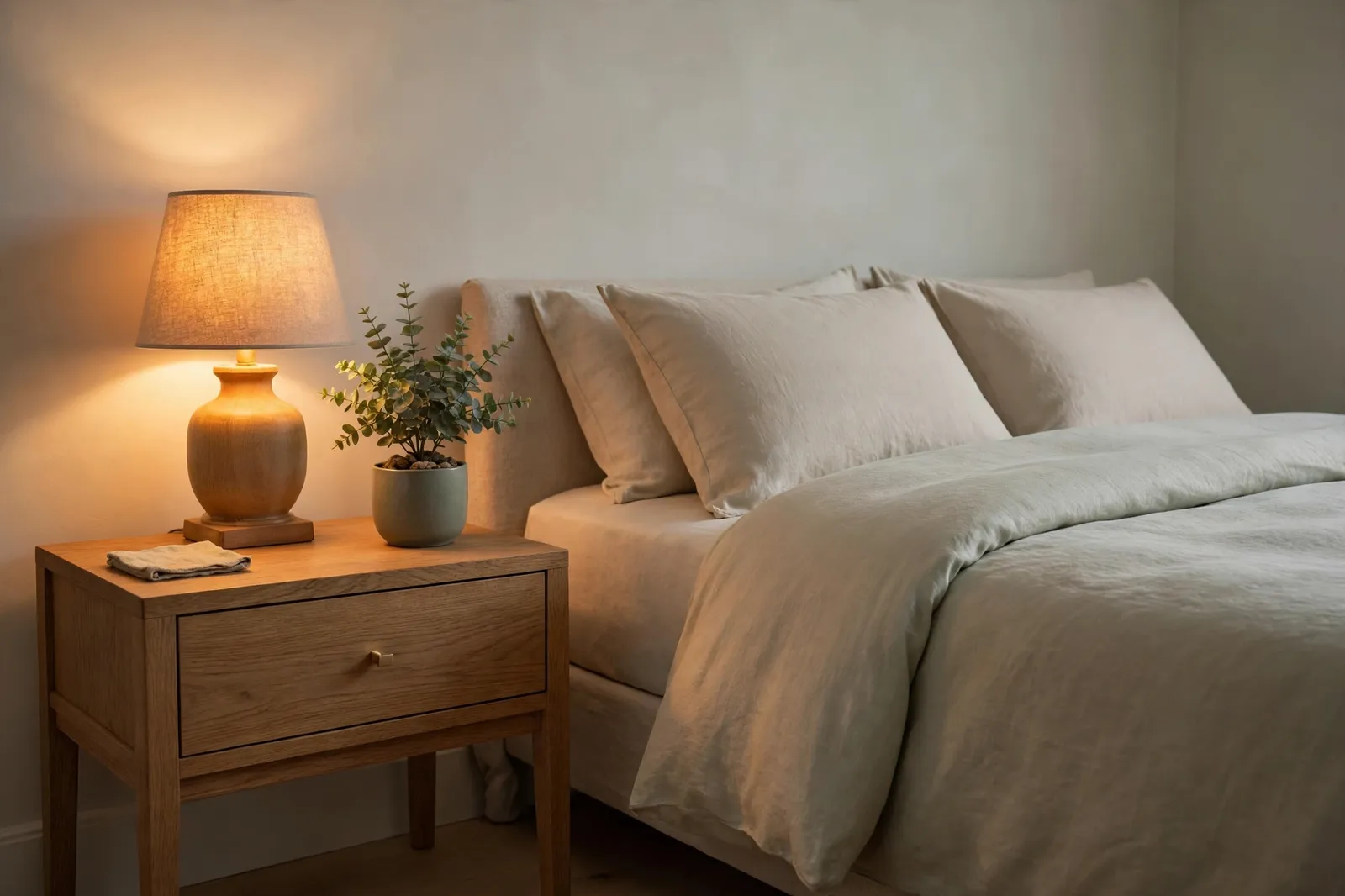
Neutrals work best when they are not flat. Layer different shades and textures: warm white walls, cream bedding, a beige throw, a light wood nightstand. That layering keeps the room from looking blank. Add one natural accent, like a plant or a woven basket, to keep it feeling warm rather than clinical.
3. Cool Blues and Greens for Calm
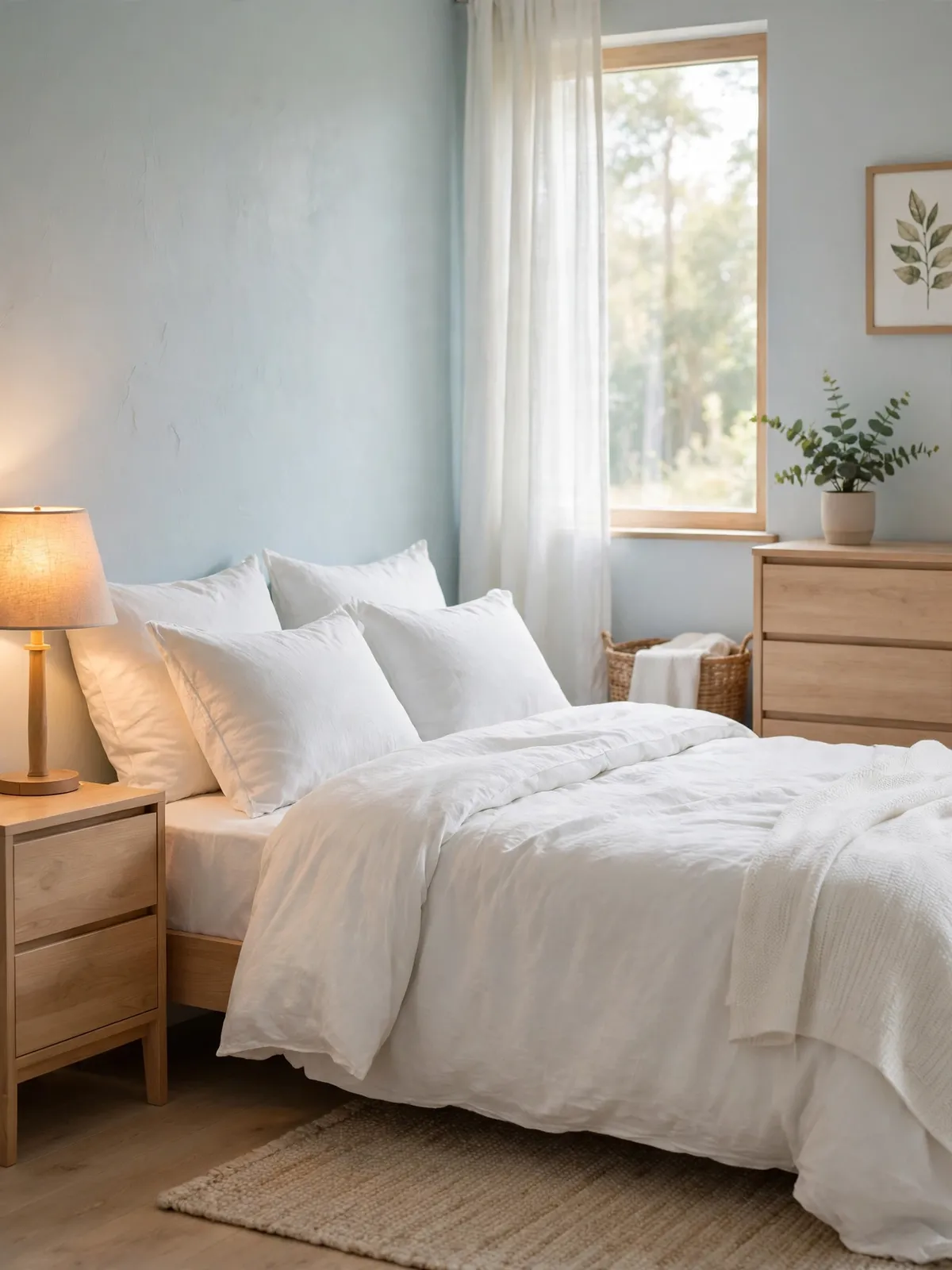
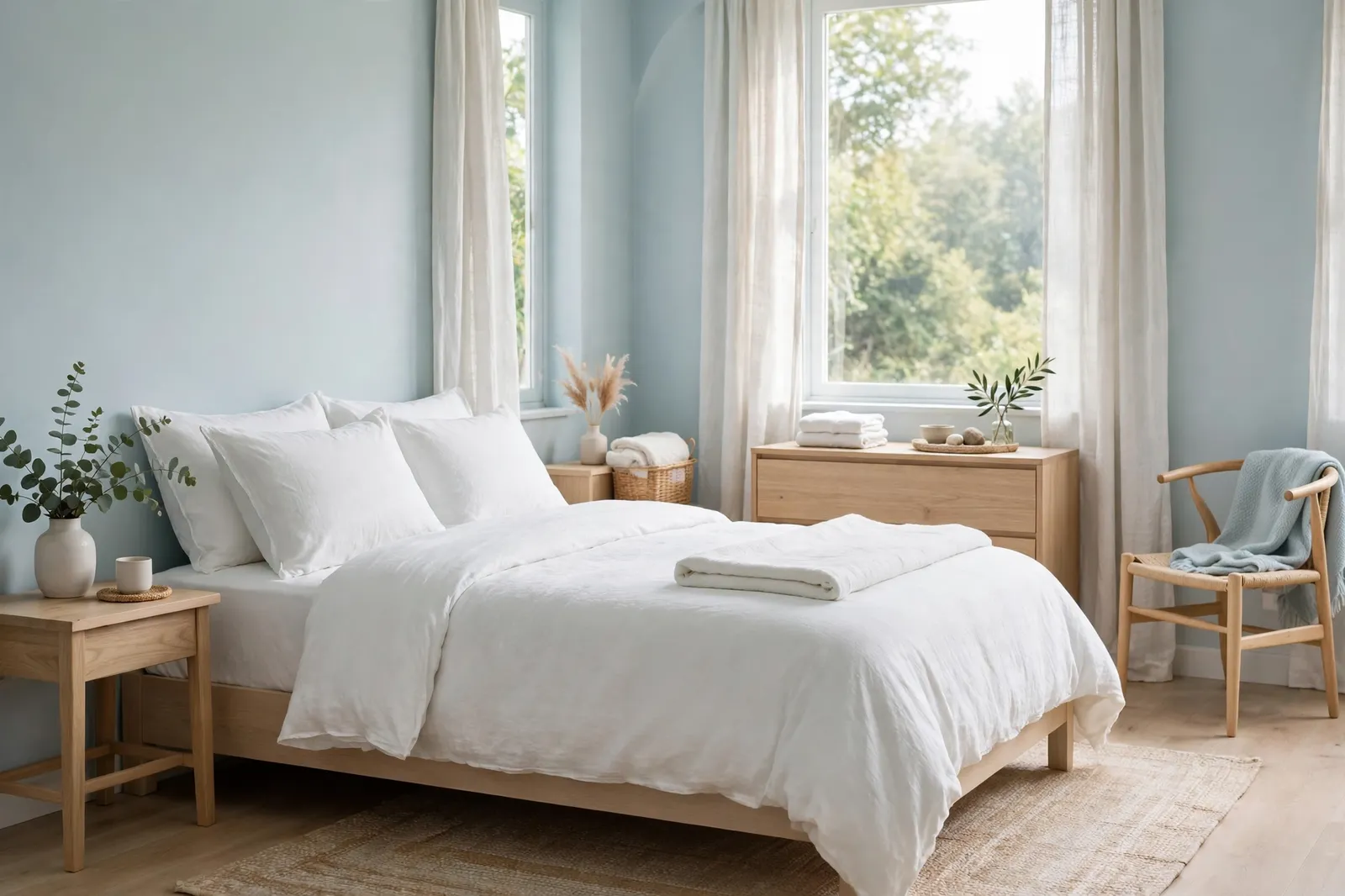
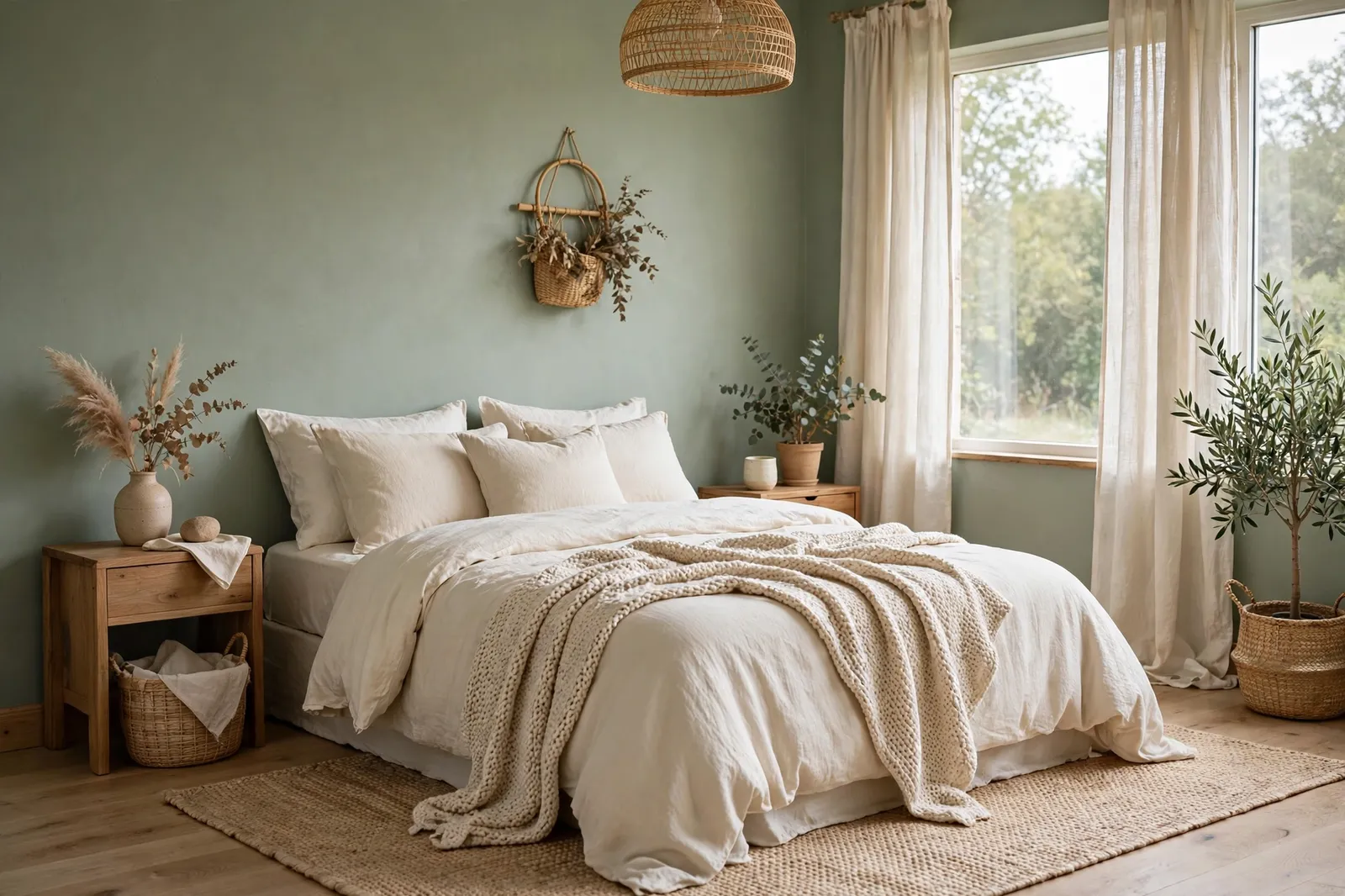
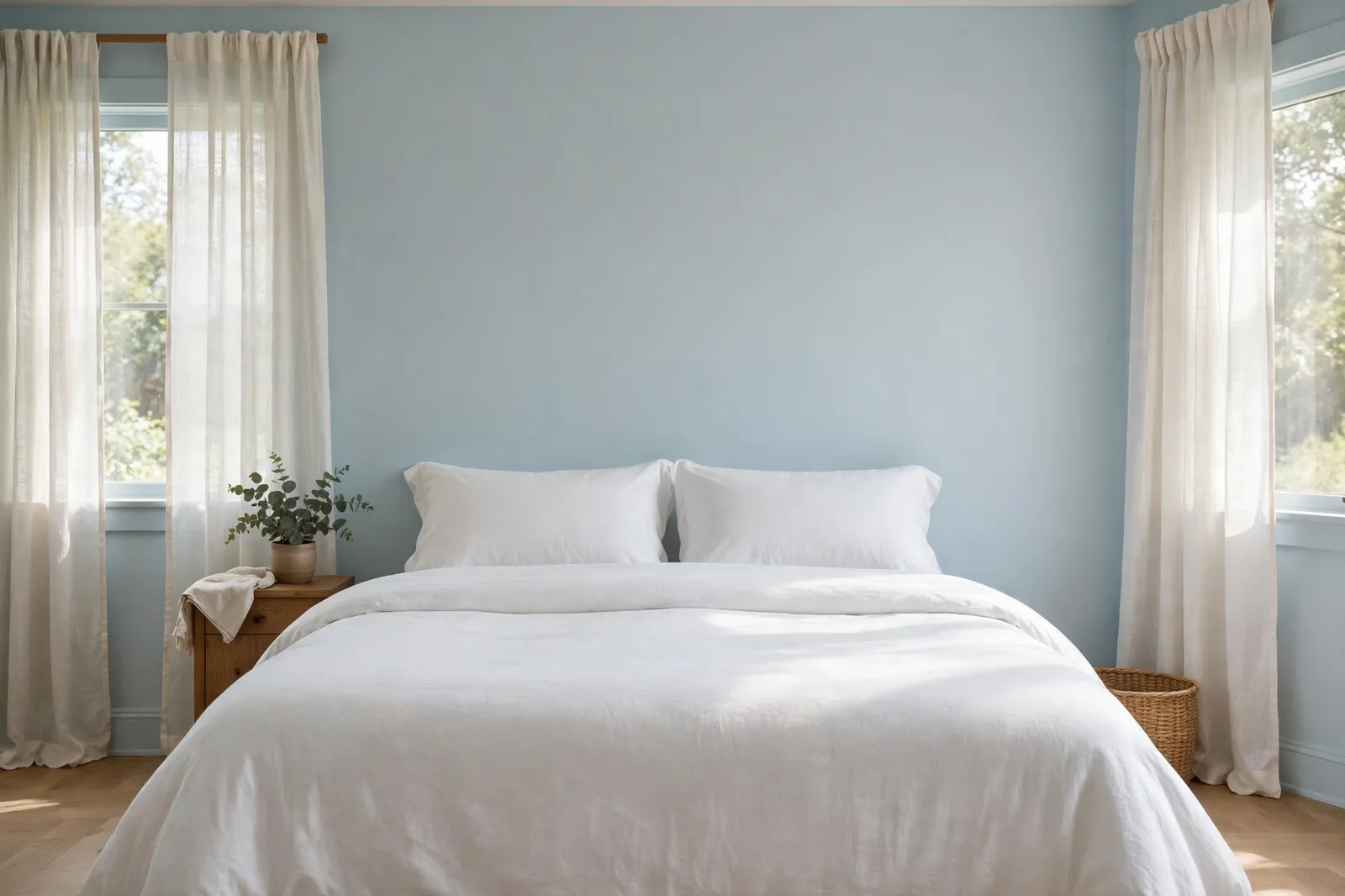
Blue and green are the classic relaxing colors, and for good reason — they remind most people of sky, water, and nature. A pale blue bedroom feels fresh and airy, while a soft sage green feels grounded and peaceful. Both work well for sleep, as long as you keep them muted rather than bright.
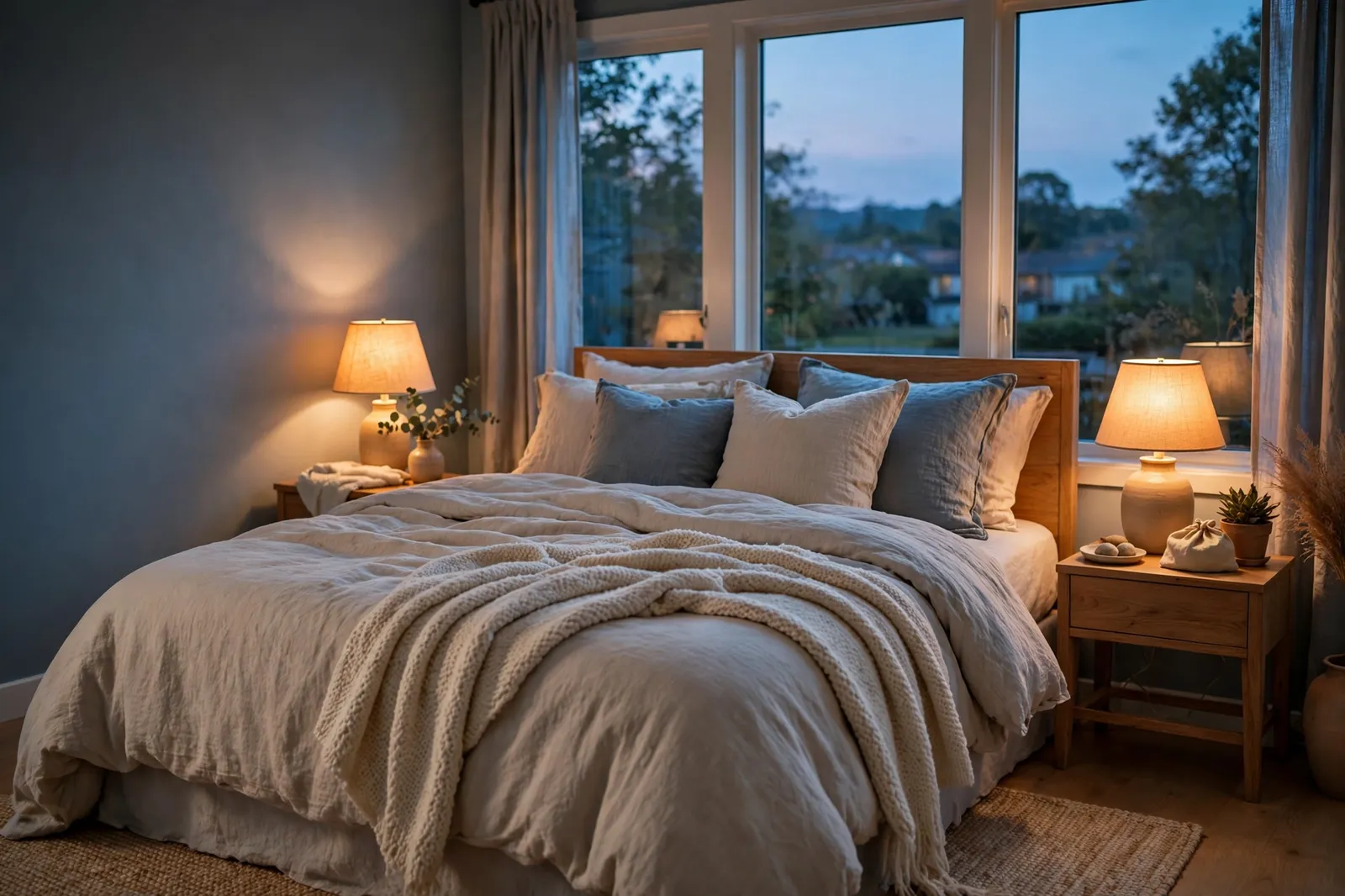
Pair a pale blue wall with white bedding and light wood for a fresh look, or pair sage walls with cream bedding and natural textures for a softer feel. Avoid electric blues or lime greens in a bedroom; the softer the shade, the more relaxing it feels. If you love a deeper blue or green, use it on one accent wall or in bedding, not on every wall.
4. Warm Earthy Tones for Coziness
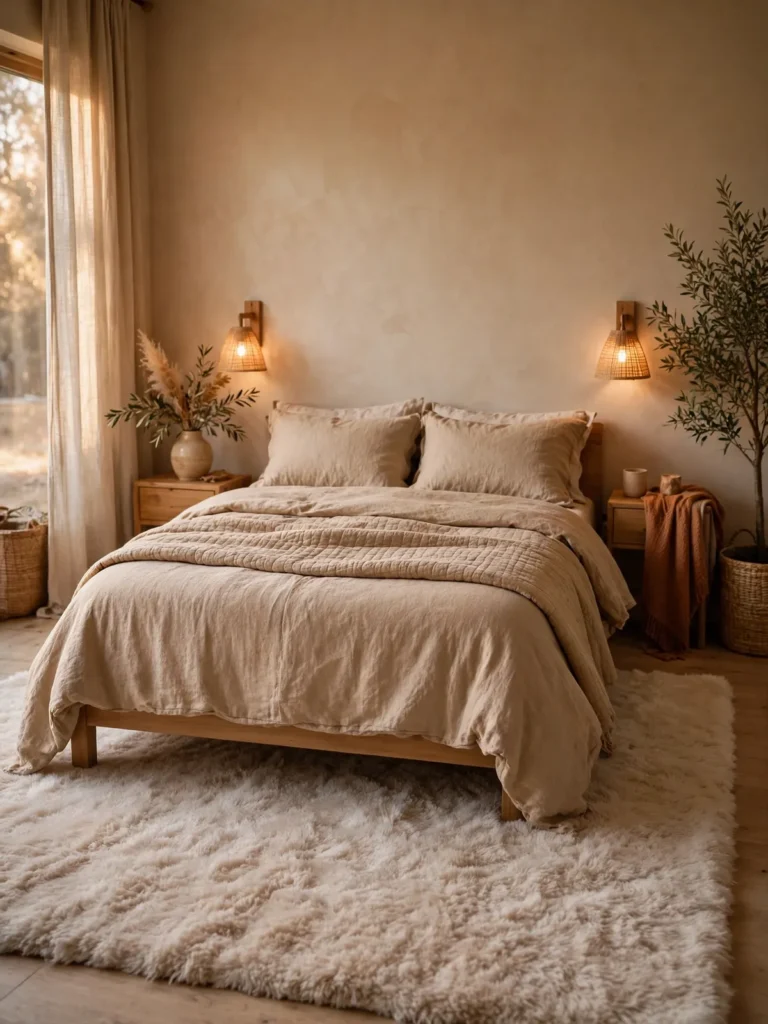
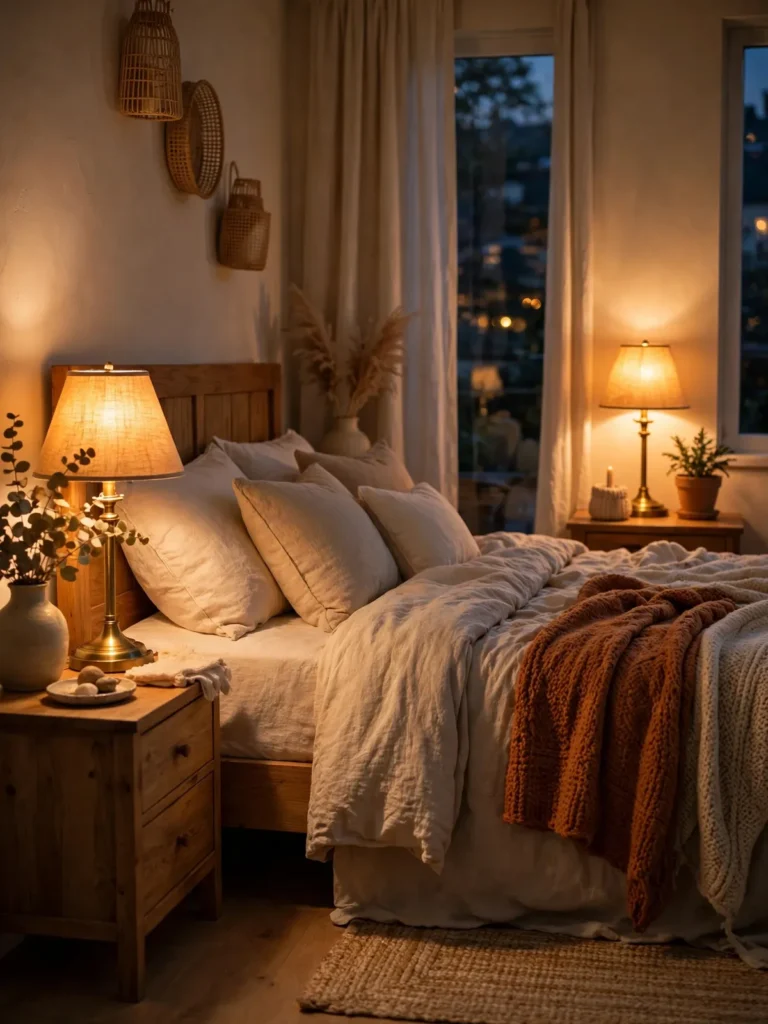
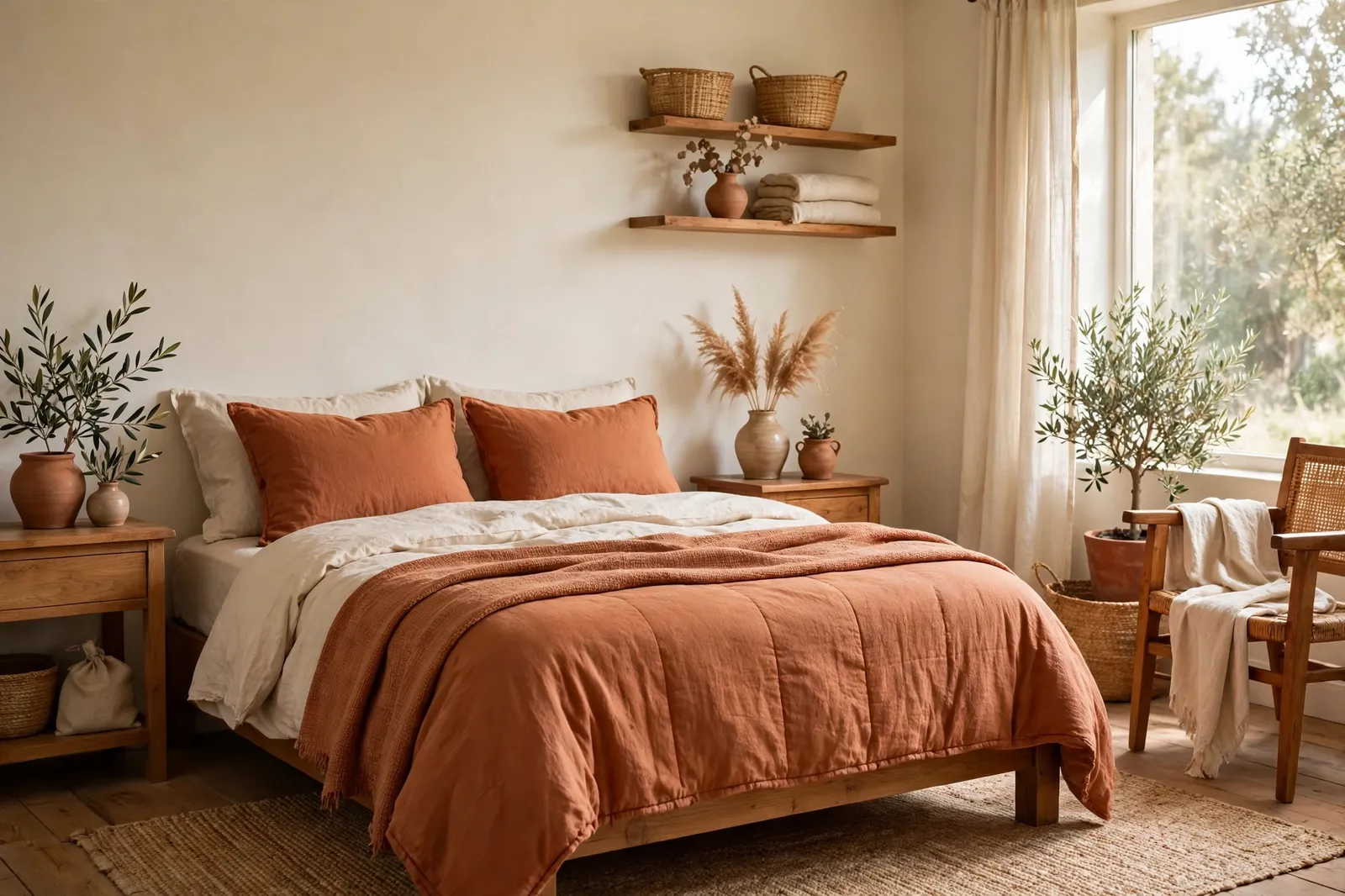
If cool colors feel too cold to you, warm earthy tones are a good alternative. Terracotta, warm taupe, soft clay, and muted ochre make a bedroom feel cozy and sheltered, like a warm room on a cold evening. They work especially well in rooms that do not get much natural light, because they add warmth the light does not.
Balance warm tones with plenty of light neutrals so the room does not feel heavy. Terracotta bedding with cream walls, or a clay accent wall with white bedding, keeps the warmth without making the room dark. Natural materials — wood, linen, cotton — suit this scheme perfectly and add to the cozy feel.
5. Dark Colors, Used Carefully
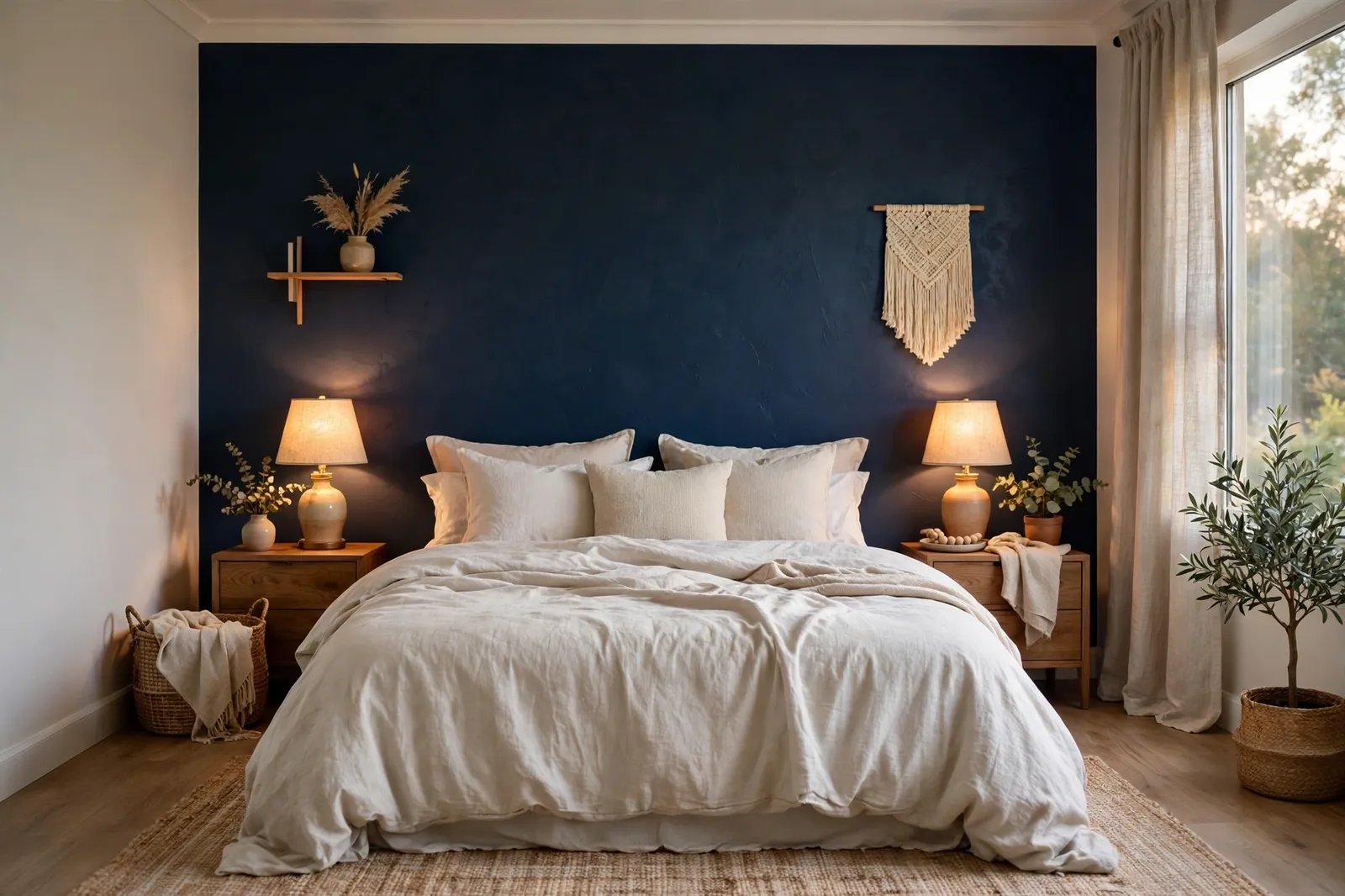
Dark bedrooms can feel wonderfully cozy, but they need care. A deep navy, charcoal, or forest green on all four walls can make a small or dark room feel smaller, so it is often better to use dark colors on one wall — usually behind the bed — with lighter colors elsewhere. That gives you the cozy feeling without closing the room in.
If you go dark, lighting becomes more important. Warm lamps on both sides of the bed, light bedding, and a light rug keep the room from feeling like a cave. Dark schemes suit larger bedrooms and rooms with good natural light best. In a small bedroom, keep the dark color to bedding or an accent wall and let the other walls stay light.
6. Pair Wall Color With Bedding
The wall color and the bedding are the two biggest color blocks in a bedroom, so they need to work together. A simple rule: if the walls are colored, keep the bedding mostly neutral, and if the walls are neutral, let the bedding carry the color. That balance keeps the room from feeling like too much of one color.
Try the combination before you commit. Hold the bedding up against the painted wall, or lay fabric samples on the bed in daylight. White or cream bedding is the easiest partner for any wall color, and it always looks fresh. If you want pattern, keep it to the pillows or throw, not the whole duvet, so the room stays calm.
7. Test Samples in Your Own Light
Paint chips and phone screens lie. A color that looks soft grey in the shop can look blue or purple on your wall, depending on your light and your furniture. Always test a real sample on the wall, at least a large square, and look at it in the morning, afternoon, and evening before you buy the full can.
The same goes for bedding and curtains. Bring samples home if you can, or order one pillowcase before the whole set. It is much cheaper to change your mind on a sample than on a whole room of paint and bedding. Give yourself a few days with the sample — the color you like on day three is the right one, not just the one that looked exciting on day one.
8. Add Accent Colors Without Breaking the Calm
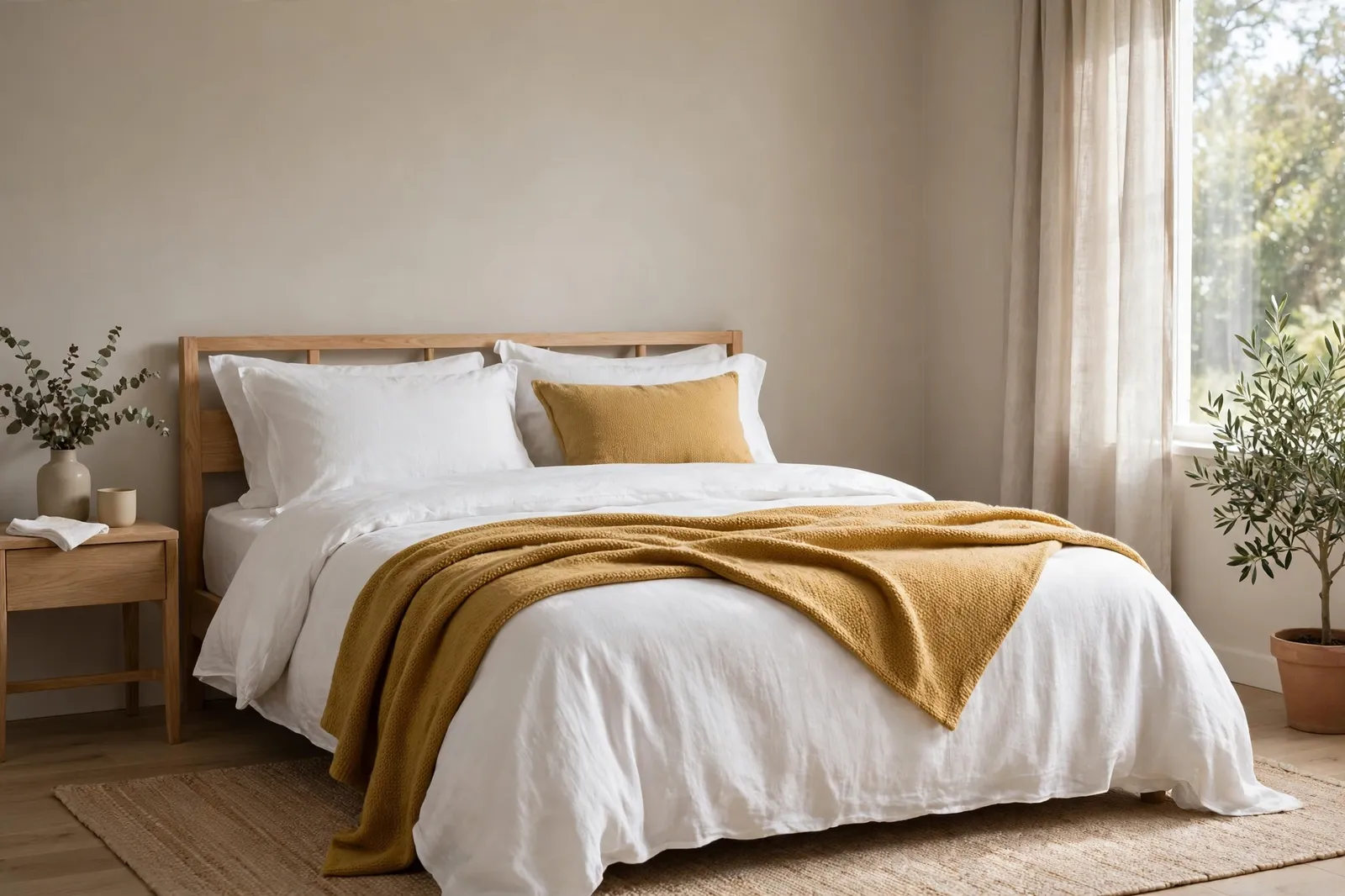
A relaxing bedroom does not have to be one color. Accents add personality, as long as they stay small. Pick one accent color — a soft mustard, dusty rose, muted gold, or gentle rust — and use it in just two or three places: a pillow, a throw, a piece of art. That repetition ties the room together without making it busy.
Avoid adding a new accent in every corner. If every item is a different bright color, the room loses its calm, even if the walls are pale. Keep accents muted rather than neon, and let the main scheme do most of the work. One well-chosen accent, repeated sparingly, looks far more stylish than a rainbow of small pops.
9. Put Your Scheme Together With the Three-Color Rule
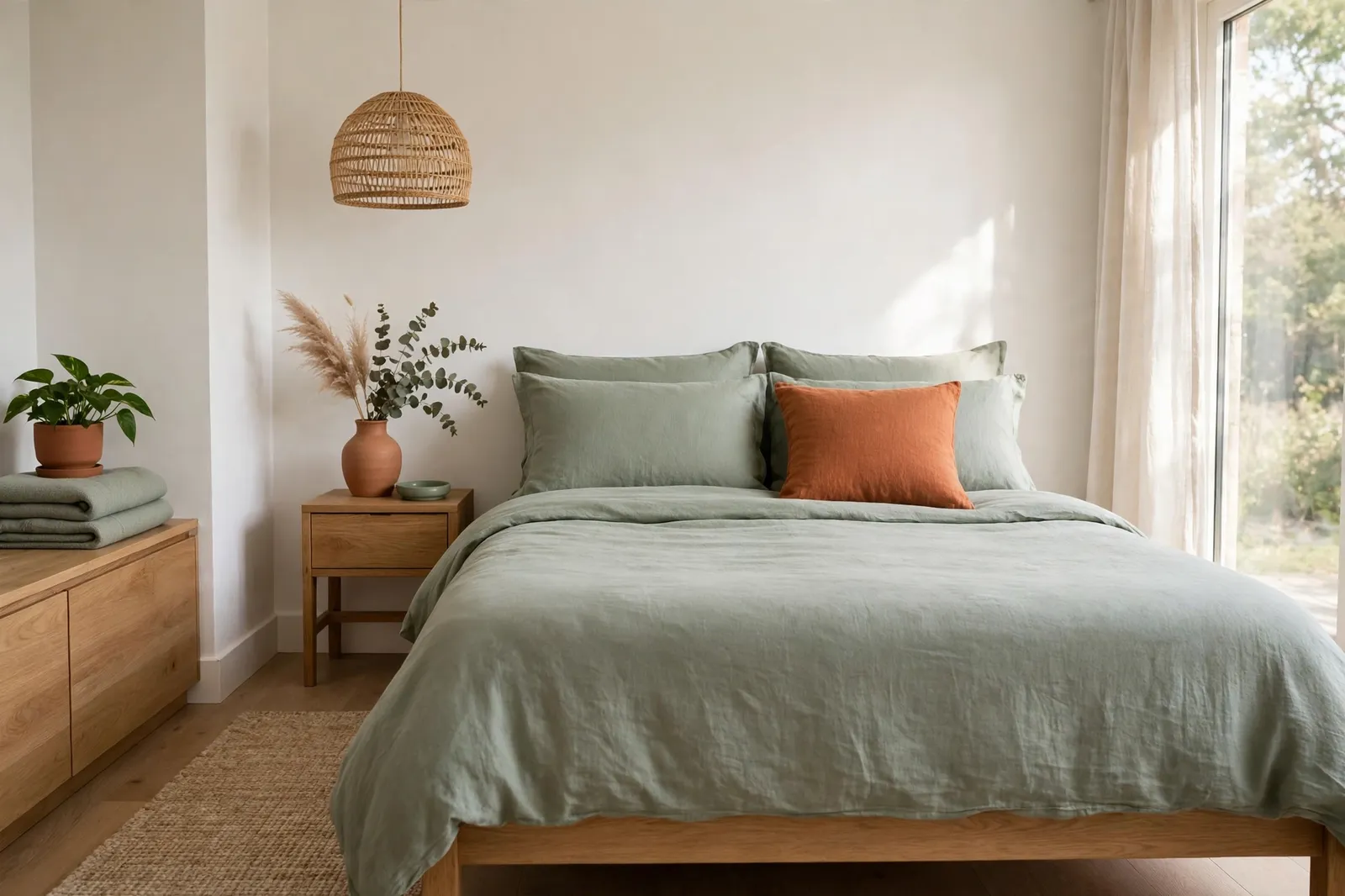
The simplest way to build any bedroom scheme is the three-color rule: one main color (about 60 percent of the room — usually walls and large bedding), one supporting color (about 30 percent — furniture, curtains, rugs), and one accent (about 10 percent — pillows, throws, art). When those three work together, the room looks intentional without much effort.
Write your three colors down before you shop. For example: warm white walls, sage bedding and curtains, and a soft terracotta accent. Or pale blue walls, white bedding, and light wood with a dusty gold accent. Shopping with a short list stops impulse buys in colors that do not fit, and it makes the finished room feel calm and put together.
Frequently Asked Questions
What is the most relaxing color for a bedroom?
Soft, muted colors are the most relaxing: pale blue, sage green, warm white, cream, and light beige. They keep visual contrast low, which helps the room feel calm. The best choice is a soft shade you personally like, since you will live with it every day.
Should bedroom walls be light or dark for relaxation?
Light walls usually feel more relaxing and open, especially in small rooms or rooms with little natural light. Dark colors can feel cozy too, but they work best on one accent wall with light bedding and warm lighting, rather than on every wall.
How many colors should a bedroom have?
Three is a good number: one main color, one supporting color, and one small accent. That keeps the room calm and coordinated without looking flat. More than three strong colors can make a bedroom feel busy, which works against relaxation.
How do I test a bedroom paint color before committing?
Paint a large sample on the wall and look at it in morning, afternoon, and evening light for a couple of days. Check it against your bedding and furniture too, since those change how the color reads. A color you still like on day three is a safer choice than one that only looked good in the shop.
Related ideas
If you are planning the whole bedroom, these guides go well with this one. Start with these bedroom decorating ideas for the cozy, stylish basics, then see these master bedroom decorating ideas on a budget for a low-cost refresh, and how to style a bed with pillows and layers for finishing the bed in your new scheme. And for a tight room, these small bedroom ideas show how to make the space feel bigger.